Award-Winning Middle School Math Tutors
serving Knoxville, TN
Middle School Math
Tutors in Knoxville
Private 1-on-1 tutoring, weekly live classes for academic support, test prep & enrichment, practice tests and diagnostics, and more to elevate grades and test scores.
Based on 3.4M Learner Ratings
UniversitiesSchools & Universities
DeliveredHours Delivered
ProficiencyGrowth in Proficiency
Who needs tutoring?
No obligation. Takes ~1 minute.

Growing up bilingual in Mandarin and English taught Lisa something useful for middle school math: switching between symbol systems is a learnable skill, and the jump from arithmetic into expressions and variables is really just another kind of translation. Her sociology training at the college level sharpened her ability to break down abstract concepts into concrete, step-by-step reasoning — exactly what's needed when a sixth grader hits fractions or proportional relationships for the first time. She scored a 1600 on the SAT, so the quantitative fundamentals are locked in.
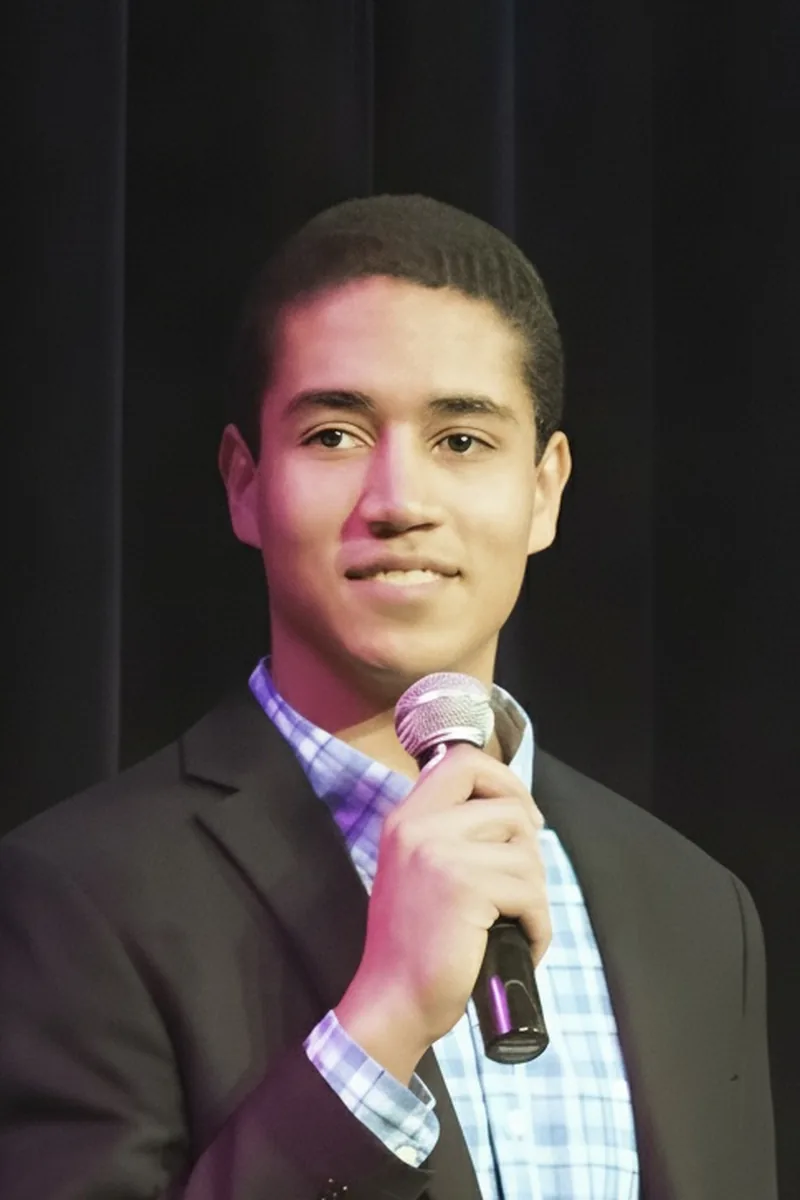
Coming out of Thomas Jefferson High School for Science and Technology — one of the most math-intensive programs in the country — Rhamy built the kind of number sense in middle school that he now teaches back to students tackling fractions, decimals, and early variable work. His computer engineering major at Vanderbilt means he still uses that foundational math daily, so he can show a seventh grader exactly how today's equation-solving becomes tomorrow's real engineering. Rated 5.0 by students.
During a summer with Higher Achievement in D.C., Nat taught classes and individually tutored middle school scholars — so he knows firsthand where students in this age group get stuck on ratios, proportions, and early equation-solving. His math major at Vanderbilt gives him the depth to explain not just how to solve a problem, but why the method works.
Heather's Vanderbilt minor in Quantitative Methods means she didn't just pass math courses — she learned to think statistically, which sharpens how she teaches middle schoolers to spot patterns in data, work with ratios, and reason through multi-step problems. Her 34 ACT score backs up that quantitative fluency, and her 4.9 rating suggests she knows how to translate it into language that clicks for younger students still building comfort with abstract thinking.
The jump from elementary arithmetic to middle school math — fractions, proportions, negative numbers, introductory geometry — trips up more students than most parents realize. Mary's clinical training in language and cognition gives her a sharp eye for where a student's understanding is breaking down, and she restructures explanations on the fly to match how that student actually processes information.
Building confidence with fractions, decimals, and proportional reasoning in middle school sets the trajectory for every math class that follows. Megan approaches these topics with concrete examples and lots of practice variations so that the underlying number sense actually clicks. She's tutored across the full math spectrum from pre-algebra through differential equations, so she knows exactly which skills matter most at this stage.
Every concept in middle school math — ratios, proportional reasoning, negative numbers, basic graphing — becomes a building block for high school. Monika treats each topic as a chance to develop mathematical thinking, not just get the right answer on tonight's homework. Her approach to something like fraction operations, for instance, connects visual models to procedures so students actually understand what they're doing.
Fractions, decimals, and proportional reasoning can feel abstract at the middle school level, but Elsa grounds each concept in concrete examples that build genuine number sense. Her chemistry background at Vanderbilt means she uses math daily and can show students why these skills actually matter beyond the worksheet.
Fractions, ratios, and proportional reasoning can feel like a maze when students first encounter them — Karen breaks these concepts down into logical steps that actually click. Training as a secondary education major at Vanderbilt's Peabody College means she's studied how middle schoolers learn math, not just the math itself. Rated 5.0 by students.
Elena's Child Development studies at Vanderbilt give her a research-backed understanding of how adolescent brains handle the jump from concrete arithmetic to abstract thinking — the exact cognitive shift happening when middle schoolers encounter variables and negative numbers for the first time. She pairs that developmental knowledge with strong math chops (1540 SAT), so she can both diagnose where a concept isn't landing and rework the explanation on the fly. Rated 5.0 by students.
Between fractions, ratios, and the first taste of negative numbers, middle school math packs in a surprising amount of new territory. Grant's economics background means he's constantly pulling in real-world examples — budgeting, percentages, data interpretation — that give abstract concepts a reason to exist. His 5.0 client rating speaks to how well that approach lands with younger learners.
Proportional reasoning, integer operations, and early equation-solving are the concepts that make or break a student's confidence heading into high school math. Juan has taught middle school math across public, charter, and private school settings, and his common core math training means he knows exactly how these standards are assessed and where students tend to get stuck.
From fractions and ratios in sixth grade to linear equations in eighth, middle school math covers a huge range of skills in a short time. Jessica's education degree from Vanderbilt trained her specifically in how students at this age process mathematical reasoning, so she knows when to use visual models and when to push toward more formal problem-solving.
Fractions, ratios, and pre-algebra concepts trip up a lot of middle schoolers — not because the math is impossibly hard, but because earlier gaps in number sense start compounding. Megan's special education training at Vanderbilt gave her sharp diagnostic instincts for pinpointing exactly where a student's understanding broke down, so she can rebuild from that specific spot. Rated 5.0 by students and families.
Fractions, ratios, and pre-algebra concepts click faster when a student sees how they connect to each other instead of treating every chapter like a separate topic. Julia's years of tutoring math across age groups mean she knows exactly where middle schoolers tend to get stuck — and how to get them unstuck quickly.
Having tutored calculus and algebra since her freshman year of college, Kira knows exactly which middle school concepts — like operations with integers and translating word problems into expressions — need to be rock-solid before higher math makes sense. Her computer science degree means she thinks about math as a set of logical instructions, and she teaches pre-algebraic topics the same way: one clear step building on the last, so nothing feels like a random rule to memorize.
Whether it's proportional reasoning, solving multi-step equations, or interpreting coordinate graphs, middle school math piles on new concepts fast. Alexandra tackles each topic by connecting it to skills a student already has, building confidence alongside competence. Her 5.0 rating speaks to how well that approach lands with middle schoolers.
Every middle school math concept — from decimal operations to basic geometry to intro statistics — is a building block that either holds firm or wobbles under future coursework. Matthew zeroes in on whichever block is shaky, whether that's fraction arithmetic or setting up simple equations, and reinforces it until the student can explain the reasoning back to him.
At the middle school level, math confidence matters almost as much as math skill — a student who shuts down at fractions or proportional reasoning carries that anxiety into high school. Kunal keeps sessions low-pressure and builds genuine number sense through problems that feel more like puzzles than homework. His background across multiple STEM disciplines means he always has a real-world example ready when a student asks, "When will I ever use this?"
The jump from arithmetic to pre-algebra thinking is where many middle schoolers start feeling lost, especially around fractions, ratios, and basic equation solving. Katherine takes the anxiety out of that transition by building each concept visually and step-by-step, adjusting her explanations to match how each student actually processes new ideas. Her 5.0 rating speaks to how well that approach lands with younger learners.
From fractions and ratios to basic equation solving, middle school math builds the toolkit students will rely on for years. Brennan approaches each topic by connecting it to something concrete — proportions through scaling artwork, percentages through everyday scenarios — so the reasoning clicks before the formulas come out.
The jump from arithmetic to algebraic thinking is one of the biggest shifts in a student's math life, and it happens in middle school. Kevin breaks down concepts like proportional reasoning, integer operations, and introductory geometry using concrete examples that make abstract ideas tangible. His engineering background gives him a knack for explaining the "why" behind every rule.
Fractions, decimals, ratios, and pre-algebra concepts click faster when a student understands the reasoning behind each step instead of just following a formula. Fay breaks down word problems and multi-step operations into clear, logical pieces, building the kind of number sense that carries into high school math. Rated 4.9 by students.
Fractions, ratios, and proportional reasoning are the concepts that separate students who coast through middle school math from those who start to struggle. Teo zeroes in on these sticking points early, making sure the reasoning behind each operation is solid before layering on more complexity. Rated 36 on the ACT, he clearly built his own math skills from the ground up.
Ratios, proportions, and early equation-solving can feel like a sudden leap from elementary arithmetic, and that's exactly where a clear explanation makes the biggest difference. Elliot's tutoring style emphasizes building number sense — understanding why cross-multiplication works, for instance — so students carry real comprehension into high school math.
Fractions, ratios, and proportional reasoning tend to be the concepts where middle schoolers start losing confidence in math. Christean breaks these topics into manageable steps and ties them to real-world scenarios — splitting a recipe, calculating a discount — so the logic clicks before the formulas pile up.
From fractions and ratios to early equation-solving, middle school math piles on new ideas fast. Sarah tackles each topic by tying it back to concrete examples — her background in statistics gives her a knack for showing students why a concept matters, not just how to get through the homework.
I am able to get back to my passion of teaching students.
Fractions, ratios, and early equation-solving are where students either start trusting their math instincts or start doubting them. Kacey brings patience and a knack for finding the right analogy, whether that means using building dimensions to explain proportions or sketching out how negative numbers actually behave on a number line.
From fractions and ratios to early equation-solving, middle school math piles on topics fast, and gaps from one unit snowball into the next. Elizabeth's science background means she constantly ties math to real-world applications — showing why proportional reasoning or coordinate graphing actually matters beyond the worksheet.
Fractions, ratios, and proportions trip up a lot of middle schoolers not because the math is hard, but because the reasoning behind it isn't explained well enough. Ria breaks these concepts down using real-world examples — splitting a bill, scaling a recipe — so the logic clicks before the formulas come out. Her economics coursework at Vanderbilt keeps her sharp on the applied math that middle school is building toward.
I'm a graduate student in Applied Statistics with experience in general math and computer programming to boot. I currently have a PhD in Applied Statistics with experience in data analytics. I've had the opportunity to do some math and statistics work for hospitals and research facilities, and I enjoy getting to share my passion for math with others to assist them in their education.
Having taught himself math through a homeschool curriculum from elementary through high school, Matthew knows firsthand what it takes to push through a confusing topic without a classroom to fall back on — and he brings that self-teaching instinct to middle schoolers who need to build genuine independence with concepts like integer operations and early equation-solving. His experience at Mathnasium tutoring students across every grade level means he's watched hundreds of kids hit the same stumbling points in the transition from arithmetic to algebraic thinking, and he knows how to unstick each one.
Fractions, ratios, and pre-algebra concepts click faster when a student sees how they connect to real-world problems instead of just following steps on a worksheet. Nicole's science background means she naturally ties math to practical scenarios — calculating proportions in a recipe or figuring out rates and percentages — which gives middle schoolers a reason to care about the numbers.
The jump from basic arithmetic to ratios, proportions, and introductory equations is one of the biggest leaps a student makes in their entire math education. Ismael takes a patient, step-by-step approach that turns confusing problems — like solving for an unknown or working with fractions and decimals together — into a process students can repeat on their own.
The jump from arithmetic to algebraic thinking is one of the biggest shifts in a student's math life, and it happens in middle school. Chad tackles concepts like ratios, proportional reasoning, and basic equation-solving by connecting them to tangible scenarios — a habit he picked up designing assistive devices for kids at LeBonheur Children's Hospital, where every measurement mattered.
The jump from elementary to middle school math is where many students quietly lose confidence — suddenly they're juggling negative numbers, proportional reasoning, and basic equation-solving all at once. Matthew tackles this by slowing down at the exact point where confusion starts and rebuilding understanding from there. His patient, structured approach comes from years of tutoring students who felt stuck and helping them see that the logic was within reach all along.
Every concept in middle school math — ratios, proportional reasoning, negative numbers, basic geometry — becomes a tool students will rely on for years. Braden makes those connections visible, showing a sixth grader working on fractions exactly why the skill matters when they hit algebra. He keeps sessions engaging without dumbing down the actual mathematics.
Fractions, ratios, and proportions trip up more middle schoolers than almost any other topic — and the confusion usually traces back to a shaky grasp of what these numbers actually represent. Kara breaks down each concept with visual models and real-world examples, like adjusting a recipe or splitting a bill, so the math clicks before students ever touch a formula.
From fraction operations in 6th grade to linear equations in 8th, middle school math covers an enormous range in a short time. Jason's ongoing volunteer work tutoring middle schoolers in Waco means he sees these curriculum gaps in real time and knows which misconceptions — like confusing ratios with fractions, or misapplying order of operations — need to be addressed head-on.
Testimonials
Because the right Middle School Math tutor makes all the difference.
Average Session Rating – Based on 3.4M Learner Ratings
Nearby Middle School Math Tutors
Other Knoxville Tutors
Related Math Tutors in Knoxville
Frequently Asked Questions
Middle school math introduces a critical shift from memorizing procedures to understanding why those procedures work. Many students struggle with multi-step equations, word problems that require translating real-world scenarios into mathematical language, and graphing concepts. Additionally, topics like fractions, decimals, and proportional reasoning build on earlier foundations—if gaps exist there, they compound quickly. Math anxiety is also common at this level, especially as concepts become more abstract.
Showing work reveals a student's thinking process and helps tutors identify exactly where misconceptions occur. Rather than just getting the answer right, middle school math emphasizes understanding the reasoning behind each step. This builds problem-solving skills that transfer to more complex math later. When students can explain their work clearly, they're also better prepared for standardized tests and high school coursework.
Tutors work at each student's pace to uncover gaps and rebuild foundational concepts that may be blocking progress. Instead of rushing through procedures, personalized instruction allows students to explore patterns, make connections between topics, and develop intuition about why math works the way it does. This deeper understanding makes new concepts easier to learn and reduces the need for rote memorization.
Word problems require students to translate language into mathematical equations—a skill that takes practice. Tutors teach strategies like identifying key information, breaking problems into smaller steps, and checking whether answers make sense in context. With guided practice and feedback, students build confidence and develop a systematic approach rather than feeling overwhelmed by the reading component.
Yes. Knoxville's schools use various approaches and materials, and tutors are familiar with the different ways concepts are presented across curricula. Whether your student's class emphasizes traditional methods, inquiry-based learning, or a blend, tutors can align their instruction with what's happening in the classroom while also reinforcing core understanding. This consistency helps students feel confident both in tutoring sessions and at school.
Absolutely. Math anxiety often stems from feeling lost or falling behind, and personalized tutoring addresses both by building competence and confidence. When students work one-on-one with a tutor in a low-pressure environment, they can ask questions freely, make mistakes safely, and experience success on their own terms. Over time, this positive experience rewires their relationship with math and reduces the stress that blocks learning.
Varsity Tutors connects you with expert tutors who have experience teaching middle school math and understand the specific curriculum and challenges in Knoxville schools. You can describe your student's needs, grade level, and areas of struggle, and you'll be matched with someone qualified to help. The process is straightforward and designed to get your student the right support quickly.
The first session is typically a diagnostic and relationship-building meeting. The tutor will assess your student's current understanding, identify specific gaps or challenges, and learn about their learning style and goals. This information helps the tutor create a personalized plan for the weeks ahead. Most students leave feeling more hopeful about math after understanding where they stand and what they'll work on together.
Let’s find your perfect tutor
Answer a few quick questions. We’ll recommend the right plan and match you with a top 5% tutor.