Award-Winning Electrical Engineering
Tutors
Electrical Engineering
Tutors
Private 1-on-1 tutoring, weekly live classes for academic support, test prep & enrichment, practice tests and diagnostics, and more to elevate grades and test scores.
Based on 3.4M Learner Ratings
UniversitiesSchools & Universities
DeliveredHours Delivered
ProficiencyGrowth in Proficiency
Who needs tutoring?
No obligation. Takes ~1 minute.

Jai earned his Bachelor's in Electrical Engineering and Computer Science from Stanford, where he dug into circuit analysis, signal processing, and semiconductor physics firsthand. He connects theoretical concepts like Kirchhoff's laws and Fourier transforms to practical applications, making dense material easier to internalize.
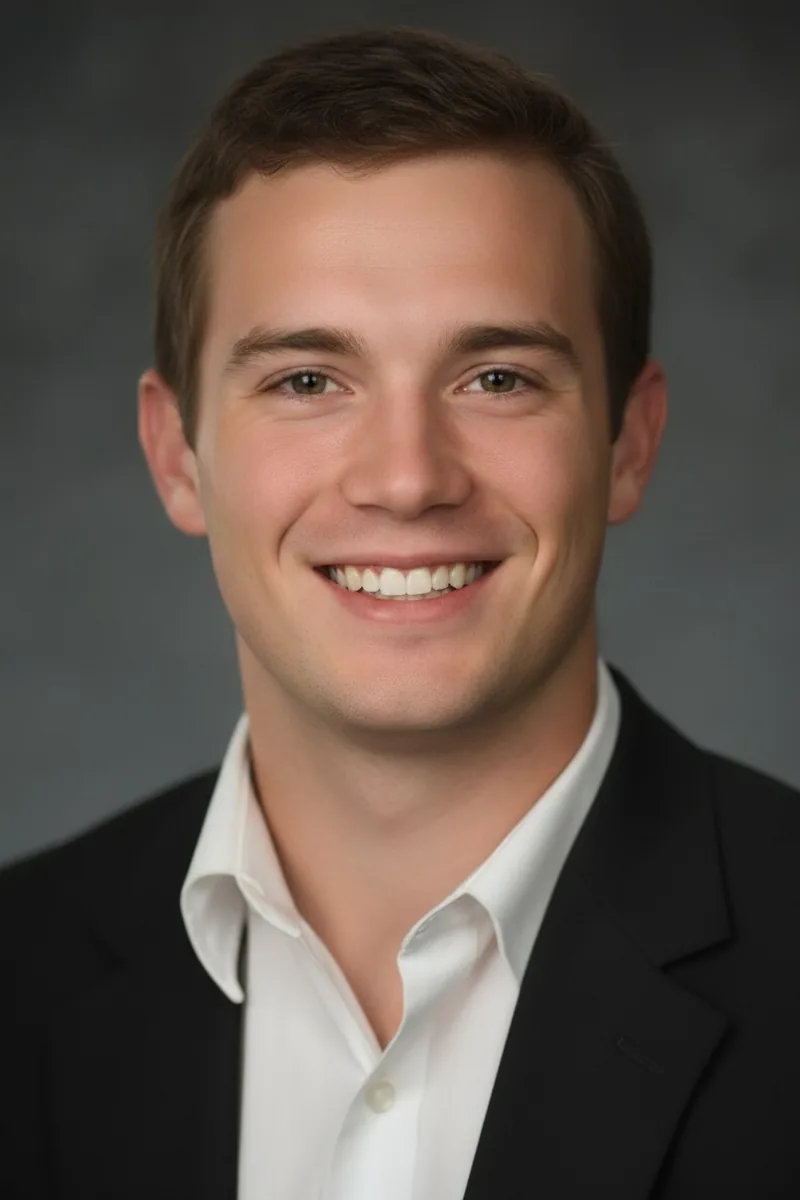
Steve earned his M.S. in Electrical Engineering and now works as a practicing engineer, so he teaches circuit analysis, signal processing, and electromagnetics with the fluency of someone applying these concepts professionally. Whether it's Kirchhoff's laws in a sophomore circuits course or Laplace transforms in a signals class, he connects theory to the practical reasoning that makes it stick.
Prakash earned his MS in Electrical Engineering with a power and energy systems concentration, then moved into industry where he mentored junior engineers through their PE exams. He teaches circuit theory, power systems, and electronics with the kind of practical context that textbooks skip — explaining not just how to solve a Thevenin equivalent, but when and why you'd use one in a real design. His coursework and hands-on industry experience cover everything from signal processing to three-phase power analysis.
Circuit analysis, signal processing, and electromagnetic theory sit at the intersection of physics and engineering — territory Beepul navigates daily as a biomedical engineering student at Duke. He unpacks concepts like Kirchhoff's laws and RC circuit behavior by tying the math to what's physically happening in the circuit, which makes complex problems more approachable.
Currently finishing her Master's in Electrical Engineering at UT Dallas, Alisa is deep in the material that undergraduate EE students are working to understand — circuit analysis, signal processing, and electromagnetics. She explains dense topics like Laplace transforms and transfer functions by tying the math back to physical behavior in the circuit, which makes the theory stick. Her honors-level undergraduate work in the same program means she's navigated every stage of the EE curriculum firsthand.
I am a recent graduate with a master's in electrical engineering from Case Western Reserve University. I won the Bill and Melinda Gates Millennium Scholarship which covers full tuition up to Ph.D. I was on the Dean's List for three consecutive years. Additionally, I won the OZY Media Genius Award in 2015 to work on high-temperature superconductors. I currently work as a Technology Analyst at Accenture. I am also seriously considering whether I should go for a Ph.D. or not.
I am a full time college professor teaching Mathematics and engineering courses.
Circuit analysis, signal processing, electromagnetic theory — Min holds both a BS and MS in Electrical Engineering, so he teaches these topics from direct academic depth rather than secondhand familiarity. He's particularly effective at walking through Kirchhoff's laws, Thevenin equivalents, and AC steady-state analysis in ways that connect textbook formulas to physical intuition about what's happening in a circuit.
Jake earned his B.S. in Electrical Engineering and brings hands-on knowledge of circuit analysis, signal processing, and digital logic design to every session. Whether it's Kirchhoff's laws, op-amp configurations, or AC/DC power systems, he breaks down complex EE concepts into clear, buildable steps. Rated 5.0 by students.
Intensely curious, I am interested in STEM subjects and the liberal arts. I tutor to help you reach your educational goals and because it's immensely gratifying to see my students succeed.
Circuit analysis, Kirchhoff's laws, and signal basics are part of Matthew's daily engineering toolkit — his dual focus in mechanical and robotics engineering at WPI requires constant work with electrical systems, from motor controllers to sensor circuits. He explains concepts like Thevenin equivalents and AC phasor analysis by tying them to physical systems students can visualize. Rated 5.0 by his students.
Akio studied computer engineering at Purdue, where Digital Systems Design was one of the courses he taught as a TA — meaning he's walked dozens of students through circuit analysis, logic gates, and signal processing firsthand. He unpacks concepts like Kirchhoff's laws and AC/DC circuit behavior by tying them to the digital systems where they actually matter.
Circuit analysis, signal processing, semiconductor physics, control systems — electrical engineering covers enormous ground, and Ajay holds a bachelor's degree in the field. He digs into specific trouble spots like Kirchhoff's laws, Thevenin equivalents, or Fourier transforms based on what a student's coursework actually requires. That targeted approach keeps sessions efficient and directly tied to upcoming exams or projects.
Circuit analysis, Kirchhoff's laws, op-amp configurations, digital logic — Jett is immersed in all of it as an electrical and computer engineering major at UT Austin. He explains concepts like Thevenin equivalents and RC transient response by building up from first principles, so students understand the physics behind the math rather than just pattern-matching homework solutions. That approach has earned him a 5.0 student rating.
Pursuing his bachelor's in electrical engineering at Stony Brook, Rohan digs into circuit analysis, signal processing, and electromagnetic theory on a daily basis. He explains concepts like Kirchhoff's laws, RC/RL transient responses, and phasor analysis by building from the underlying physics, so the math behind each circuit element actually makes sense.
Muntaser earned his B.S. in Computer Engineering from Illinois Tech, where circuit analysis, signal processing, and digital logic design were core to his coursework. He tackles EE topics like Kirchhoff's laws, AC/DC circuit behavior, and Boolean algebra by grounding each concept in hands-on problem-solving rather than pure theory.
Currently pursuing his electrical engineering degree at Arizona State, Robert is deep in the coursework — circuit analysis, signal processing, electromagnetics — and remembers exactly which concepts tripped him up and how he overcame them. He walks through Kirchhoff's laws, Thevenin equivalents, and AC steady-state analysis with the perspective of someone actively solving these problems every week.
I'm currently an undergraduate student at Georgia Institute of Technology pursuing a degree in Electrical Engineering. I mostly tutor subjects that reside in the STEM field as those subjects are my strong points. I have been a tutor in the past back in high school. During that time, I realized that helping students understand difficult material can be very awarding. In my free time, when I'm not studying for school or practicing sports, I like to play video games and hangout with friends. Every once in a while I'll pick up my violin and play songs that I've learned in the past; I find it very relaxing.
Experienced Teacher holding a Doctorate Degree in Electrical Engineering with a demonstrated history of working in the education industry. Strong education professional with a Specialist focused in Mathematics -Algebra, Middle School Math, Elementary School Math, Advance Functions, Calculus, Physics, MS Office, Power BI.
Having earned his degree in Electrical Power Engineering, Julian teaches circuit analysis, signal processing, and power systems from direct professional knowledge. He walks through Kirchhoff's laws, AC/DC power calculations, and transformer theory with the specificity that comes from someone who's applied these concepts beyond the classroom. Rated 5.0 by students.
Education PhD in Electrical Engineering Dalhousie University, Canada (2025) MS in Electrical Engineering Information Technology University (ITU), Pakistan (2020) BE in Avionics Engineering National University of Sciences and Technology (NUST), Pakistan (2017) Academic Experience Teaching Assistant Dalhousie University (2022 2025) Instructor University of Management and Technology (UMT), Pakistan (2017 2021)
Circuit analysis, Ohm's law, and AC/DC fundamentals show up constantly in Martin's mechanical engineering program at RIT, where electrical systems intersect with everything from control theory to sensor design. He approaches EE topics the way an engineer uses them — grounded in practical applications like motor control and signal processing, so the theory has a clear purpose.
Tom earned his B.S. in Computer Systems Engineering, which means he spent years deep in circuit analysis, signal processing, and digital logic design. He breaks down concepts like Kirchhoff's laws, AC/DC circuit behavior, and op-amp configurations by tying them back to the systems-level thinking that makes electrical engineering click.
Currently finishing his electrical engineering degree at UConn, Aaron digs into circuit analysis, signal processing, and digital logic with students who are navigating the same coursework he recently completed. He breaks down concepts like Kirchhoff's laws, AC/DC circuit behavior, and op-amp configurations in ways that connect theory to practical lab work. Rated 5.0 by students.
Circuit analysis, signal processing, and electromagnetic theory can feel overwhelming when textbooks pile on math without physical intuition. Annalyn holds a certificate in laser and optical technology alongside her aerospace degree, giving her hands-on experience with the electromagnetic principles, sensor systems, and circuit fundamentals that underpin electrical engineering coursework.
As a passionate educator with over 18 years of teaching experience, I find joy in making complex technical concepts accessible to all students. Holding dual Master's degrees in Information Systems and Business Administration from Johns Hopkins University, I have taught a wide range of subjects, including cybersecurity and electrical engineering, at both the college level and through various tutoring roles. My teaching philosophy centers on understanding each student's unique background and tailoring lessons to their specific needs, often using real-world examples to clarify abstract ideas. Currently, as a full-time Cybersecurity Engineer with multiple active certifications, including CISSP and Security+, I continuously integrate my professional experiences into my teaching, fostering an engaging and practical learning environment. I am motivated by the satisfaction of helping students grasp challenging topics and develop their skills, knowing that as I teach, I also deepen my own understanding.
Testimonials
Because the right Electrical Engineering tutor makes all the difference.
Average Session Rating – Based on 3.4M Learner Ratings
Top 20 Science Subjects



Top 20 Subjects
Frequently Asked Questions
Students often find circuit analysis particularly difficult—especially applying Kirchhoff's voltage and current laws, understanding mesh and nodal analysis, and working with AC circuits and phasors. Electromagnetics concepts like Gauss's law, magnetic fields, and Maxwell's equations are also abstract and hard to visualize without proper guidance. Additionally, many students struggle with the transition from basic DC circuits to more complex topics like transformers, three-phase systems, and signal processing, where small conceptual gaps compound quickly.
Strong math skills—particularly in differential equations, complex numbers, Fourier analysis, and linear algebra—are essential for upper-level EE courses. Many students have gaps in these foundational areas, which makes circuit analysis and electromagnetics feel impossible. A tutor can identify where your math foundation is weak and fill those gaps in context, showing you exactly how calculus or complex numbers apply to real circuits and systems rather than teaching math in isolation.
These concepts are inherently invisible, which is why many students memorize formulas without truly understanding what's happening. Effective tutoring uses multiple approaches: drawing detailed circuit diagrams with current paths clearly marked, using analogies (like water flowing through pipes for current), simulating circuits with tools like SPICE or multisim, and working through real-world examples where you can see how theory applies to actual devices. Building this intuition early prevents confusion later when dealing with complex systems.
Lab work often reveals gaps in theoretical understanding—you might calculate a circuit should work, but measurements don't match. A tutor helps you understand why by walking through the theory behind each experiment, explaining sources of error, and teaching you to troubleshoot systematically using both calculations and measurements. This connection is critical because EE is ultimately about building and testing real systems, not just solving equations on paper.
Effective EE tutors teach systematic approaches: starting by identifying what you know and what you need to find, choosing the right analysis method (nodal vs. mesh, Thevenin equivalent, superposition), checking your answer's reasonableness, and verifying units throughout. They also emphasize breaking complex multi-stage circuits into simpler sections, recognizing circuit patterns (voltage dividers, current dividers, filters), and knowing when to use approximations versus exact solutions. These strategies turn overwhelming problems into manageable steps.
Look for tutors with hands-on experience—ideally someone who has designed, built, or debugged real circuits, not just someone who passed exams. They should be able to explain concepts multiple ways, use simulation software and lab equipment comfortably, and understand common student misconceptions (like thinking current "gets used up" in a circuit). The best tutors can connect abstract theory to practical applications and adjust their explanations based on whether you're a visual, mathematical, or hands-on learner.
At introductory levels, tutors focus on building solid intuition about voltage, current, and basic circuit laws—getting the fundamentals right prevents major struggles later. At intermediate levels, they help you master analysis techniques and transition to AC circuits, which require thinking in complex numbers. At advanced levels, tutors work on specialized topics like control systems, power electronics, or electromagnetics, where the math is more sophisticated and real-world design constraints matter. Each level requires different emphasis.
Yes—tutors can guide you through the design process by helping you understand specifications, choose appropriate components and topologies, work through calculations, and troubleshoot when prototypes don't work as expected. They won't do the design for you, but they can teach you how to approach problems systematically, validate your choices against theory, and learn from failures. This is especially valuable for capstone projects where you need to integrate multiple concepts and make real engineering trade-offs.
Let’s find your perfect tutor
Answer a few quick questions. We’ll recommend the right plan and match you with a top 5% tutor.