Award-Winning Chemical Engineering
Tutors
Chemical Engineering
Tutors
Private 1-on-1 tutoring, weekly live classes for academic support, test prep & enrichment, practice tests and diagnostics, and more to elevate grades and test scores.
Based on 3.4M Learner Ratings
UniversitiesSchools & Universities
DeliveredHours Delivered
ProficiencyGrowth in Proficiency
Who needs tutoring?
No obligation. Takes ~1 minute.
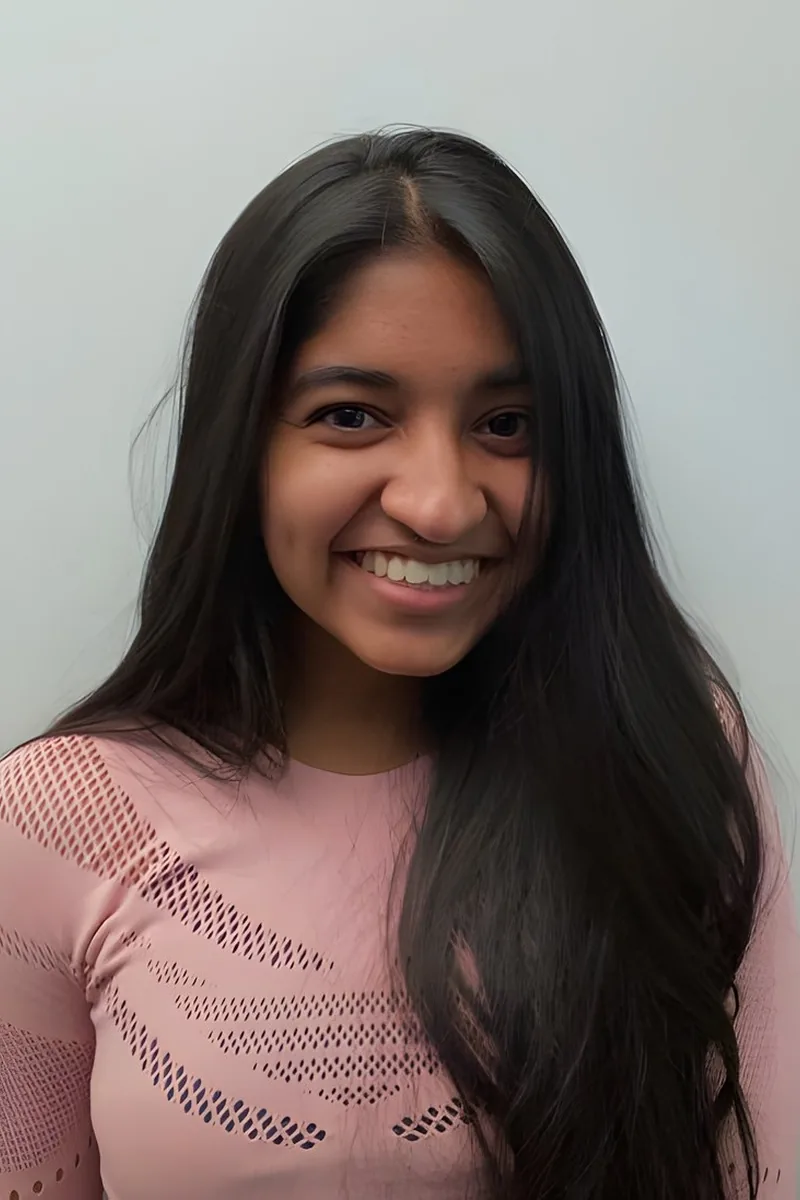
Holding a B.S. in Chemical Engineering, Siva has worked through the full gauntlet: mass and energy balances, reaction kinetics, transport phenomena, and process design. He tackles each topic by tying equations back to the physical system they describe, so students can troubleshoot problems instead of just pattern-matching homework solutions.
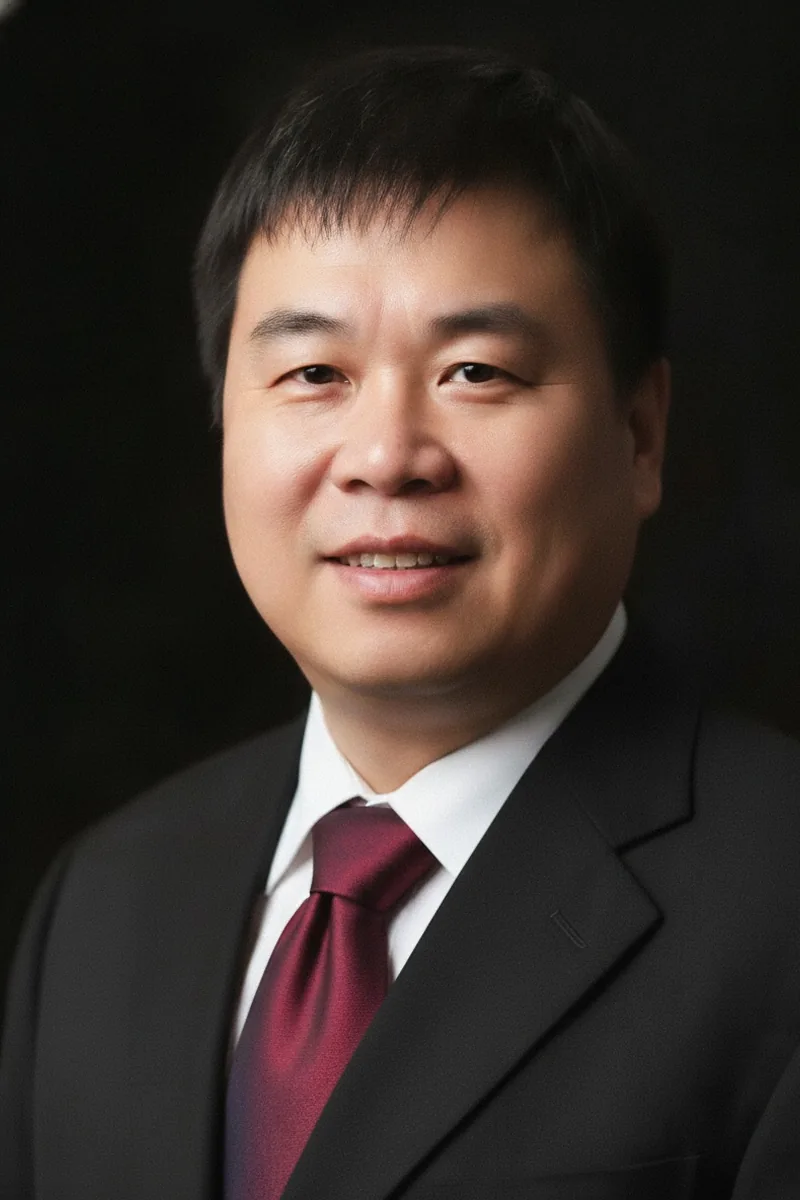
Thermodynamics, reaction kinetics, and transport phenomena form the backbone of chemical engineering coursework, and each one demands both physical intuition and mathematical precision. Zhengdong's PhD in physics combined with his chemical and biomolecular engineering background means he can tackle mass and energy balances, reactor design problems, and fluid mechanics from multiple angles.
Mass and energy balances, reactor design, and transport phenomena are daily vocabulary for Abismael — he holds a bachelor's degree in Chemical Engineering and can break down each topic from multiple angles depending on what makes it stick. Students working through unit operations or thermodynamic cycles get someone who connects textbook theory to practical process thinking.
Steven spent an entire career as a PhD chemical engineer before turning to tutoring, which means topics like mass and energy balances, reaction kinetics, and transport phenomena come from decades of practical application rather than just textbook knowledge. He explains each concept once formally, then reframes it a different way, and finishes with a real-world engineering example — a method that makes dense material stick. Rated 4.9 by students.
Jonathan earned his B.S. in Chemical Engineering, which means he's worked through the full gauntlet: mass and energy balances, reactor design, transport phenomena, and process thermodynamics. He approaches each topic the way an engineer would — start with what you know, identify your unknowns, and systematically close the gap.
Currently pursuing his Ph.D. in Chemical Engineering at NYU Tandon, Michael is deep in the material — mass and energy balances, reaction kinetics, thermodynamics, and transport phenomena. He approaches tutoring the way he approaches his own coursework: breaking intimidating derivations into manageable physical reasoning, so the math serves the engineering rather than obscuring it.
As a graduate student in chemical and biomolecular engineering at Johns Hopkins, Madeline is immersed in the discipline daily — from mass and energy balances to reactor design and transport phenomena. She unpacks complex derivations by tying them back to physical intuition, so students understand not just the math but what's actually happening in the system. Rated 5.0 by her students.
Few tutors in chemical engineering actually hold the degree and have decades of applied science teaching behind them. Jacques graduated with high honors in chemical engineering from Princeton and brings deep fluency in mass and energy balances, transport phenomena, and thermodynamic cycle analysis. He approaches each problem the way a working engineer would — identifying assumptions, checking units, and building toward a solution systematically.
Rona holds a PhD in Materials Science and Engineering alongside a bachelor's in Chemical Engineering, giving her deep command of thermodynamics, transport phenomena, reaction kinetics, and process design. She breaks down complex unit operations and material balances into logical steps, connecting theory to real engineering applications. Rated 4.9 by students.
Currently pursuing a graduate degree in chemical and biomolecular engineering after completing an undergraduate degree in the same field, Alex lives and breathes this discipline daily — from mass and energy balances to reactor design and transport phenomena. That dual-layer perspective means he can break down thermodynamics derivations or unit operations problems with the clarity of someone who recently mastered them and now teaches them at a deeper level. Rated 5.0 by students.
David earned his Rice University ChemE degree with a biotechnology and bioengineering specialization — a track that layers biochemical process thinking on top of the standard curriculum of thermodynamics, kinetics, and transport phenomena. Now a first-year medical student at Baylor College of Medicine, he brings a life-sciences lens to engineering problems that's especially useful for students in bioprocess design or any coursework bridging biology and chemical engineering. Rated 5.0 by students.
Vinod holds a Doctor of Science in Chemical Engineering and has hands-on experience in both lab research and process design. He tackles core topics — thermodynamics, mass and energy balances, reactor kinetics, transport phenomena — by tying each one back to the physical intuition behind the equations. Rated 5.0 by students.
Having earned both his bachelor's and master's degrees in chemical engineering, Zelalem has deep familiarity with the core curriculum — mass and energy balances, reactor design, transport phenomena, and process thermodynamics. He approaches each topic by tying abstract equations back to the physical systems they describe, whether that's modeling a CSTR or sizing a heat exchanger. Students get someone who's lived the entire ChemE sequence and knows where the conceptual traps are.
Benjamin completed both his B.S. and M.S. in Chemical Engineering, giving him two full passes through the core curriculum — from undergraduate fundamentals to graduate-level process optimization and advanced kinetics. That repetition means he knows exactly where students get tripped up in topics like separation processes and experiment-to-model workflows, and he can reframe those sticking points using the MATLAB and computational tools he also teaches. Rated 4.9 by students.
Studying Chemical and Biomolecular Engineering at UIUC while volunteering in research at Loyola University Medical Center, Victoria is immersed in the discipline she teaches. She digs into mass and energy balances, reaction engineering, and transport phenomena with the perspective of someone actively working through these problem sets herself. That proximity to the material makes her especially effective at explaining where students typically get stuck.
Adel's PhD in mechanical engineering means he shares a deep overlap with ChemE in the areas that trip students up most — thermodynamics, fluid mechanics, and heat transfer — while his differential equations and applied math chops carry through reactor modeling and process calculations. He breaks down the governing equations by connecting them to the physical systems they describe, so the math serves the engineering rather than the other way around. Rated 4.8 by students.
Few tutors can teach chemical engineering from both the academic and research side — Alexander holds a PhD in the field and a BS in Biological/Biosystems Engineering. He digs into mass and energy balances, reactor design, and transport phenomena with the kind of depth that comes from years of solving these problems firsthand.
Selected as the outstanding graduate from ASU's Ira A. Fulton Schools of Engineering, Morgan is now pursuing her PhD in Chemical Engineering at UT Austin — one of the top programs in the country. She digs into thermodynamics, transport phenomena, reaction engineering, and process design with the perspective of someone actively doing graduate-level research. Students preparing for exams or working through design projects get a tutor who lives this material every day.
Currently pursuing a graduate degree in chemical and biomolecular engineering, Marlow digs into the subjects students find most daunting — mass and energy balances, fluid mechanics, reactor design, and transport phenomena. That proximity to the material means explanations reflect how problems are actually solved in upper-level courses, not just how they appear in introductory overviews.
Jake holds both a bachelor's and master's degree in chemical engineering from Northeastern University, giving him deep command of topics like thermodynamics, reaction kinetics, transport phenomena, and process design. He breaks down complex material — whether it's deriving energy balances or sizing a heat exchanger — into clear, logical steps that mirror how engineers actually think through problems. Rated 5.0 by students.
I am a student at the Georgia Institute of Technology studying Chemical Engineering. For the past several years, I have worked with students extensively. Through hosting events for younger kids to learn about STEM and for older teens to practice empathetic design, I know the importance of teaching students in ways that engage them rather than frustrate them, which I apply to my teaching. I have tutored high school students in a drop-in resource center in various subjects including math of all levels, chemistry, and English, making me adequately equipped in a variety of topics. I have also tutored several students long-term. Establishing relationships with students and exploring their unique learning styles is my favorite part of tutoring. I prioritize helping students discover HOW to learn in a manner that is the most effective for them, so they can begin to use those skills on their own throughout their education. Learning is a lifelong skill that requires practice for improvement; I strive to help my students gain confidence in their ability to learn.
As a junior in the University of Michigan's chemical engineering program, Alec is immersed in mass and energy balances, thermodynamics, and transport phenomena right now. That means he can walk through problem sets and core ChemE concepts with the perspective of someone who just learned — and mastered — the material recently, not decades ago.
I am listening to and learning about him or her as an individual. I can also discover what motivates the student during this conversation and plan for how to frame future tutoring sessions in terms of what the student already knows and enjoys.
Austin earned his B.S. in Chemical Engineering, so he's been through the gauntlet — mass and energy balances, transport phenomena, reaction engineering, process controls, and thermodynamics. He walks students through derivations and problem sets by tying abstract equations back to physical systems like distillation columns and CSTR reactors. Whether the struggle is unit operations or process design, he knows exactly where the common conceptual breakdowns happen.
I am a law student, but I took an unusual route to get there. I used to attend medical school but had a change of heart in my career path. Part of this was due to my political science major (double major with biology) in college as well as a number of Spanish and other courses that I took. Tutoring is something, I feel, that has come naturally to me, even back to my high school days. My goal is to help you learn as much as you can and reach your true potential. I will work hard to make sure that this happens, as long as you put in the work, too! We will work together to tailor your learning experience to your needs.
As a chemical and biomolecular engineering major at Penn with a minor in energy and sustainability, Michael is deep in the discipline — mass and energy balances, reaction kinetics, transport phenomena, and process design. He connects textbook problems to real applications in renewable energy, which makes abstract engineering principles tangible.
Michael's mechanical engineering degree covers much of the physics and math that underpin ChemE coursework — fluid mechanics, heat transfer, thermodynamics, and differential equations — even if the chemical process side isn't his home turf. He's strongest when students are stuck on the engineering mechanics and quantitative problem-solving that chemical engineering shares with his own discipline. Rated 5.0 by students.
Niki earned her B.S. in Chemical and Biological Engineering from CU Boulder, where she also TA'd fluid mechanics for engineers. She digs into core ChemE topics — mass and energy balances, reactor design, transport phenomena — with the practical intuition of someone who recently worked through these problem sets herself.
I am a doctoral candidate at the University of Calgary, Canada. I received my Master of Science in chemical engineering with focus on modelling complex materials in 2016. During graduate school, I have acted as a teaching assistant (TA) extensively, teaching a very wide variety of courses to students across different age groups. While I tutor a broad range of subjects, I am most passionate about the physical sciences. In my experience TAing university courses, I have learned how to explain a concept from many different points of view, to make it understandable to the most number of students. In my spare time, I enjoy reading, hiking, digital photography and playing chess.
Rishi's BS in Chemical and Biomolecular Engineering from NYU concentrated on process engineering — mass and energy balances, reactor design, transport phenomena, and thermodynamic cycles. He tutored ChemE coursework at NYU's engineering tutoring center and understands how to walk through complex unit operations problems step by step. He's currently working in engineering professionally, so the material stays fresh.
Having earned her Bachelor of Engineering in Chemical Engineering from CUNY City College, Sujana knows this discipline from the inside — mass and energy balances, reactor design, transport phenomena, and process thermodynamics. She unpacks complex topics like distillation column modeling and reaction kinetics by connecting the math to the physical system it describes. Students preparing for courses in unit operations or process control get someone who's recently worked through the same problem sets.
Mass and energy balances are where most chemical engineering students either build real intuition or start falling behind. Dana studied chemical engineering herself and brings firsthand experience with reactor design, thermodynamic cycles, and process flow diagrams to her tutoring sessions. She connects the math-heavy problem sets back to the physical systems they describe, which makes unit operations and transport phenomena far less abstract.
I am a motivated student, working on his PhD in Mechanical Engineering. I truly enjoy working with students who are interested in the "why's". I love talking about the motivations of why we learn these subjects, and how they become useful in real life. I am particularly passionate about tutoring mathematics, chemistry, heat transfer, and fluid mechanics.
As an educator with a Ph.D. in Environmental Engineering and Bachelor's and Master's degrees in Chemical Engineering, I bring more than 14 years of academic, research, and industrial experience to my teaching. I have taught and mentored students at the University of Alberta, Fudan University, and UET, and I also have significant industry experience in process engineering, wastewater treatment, remediation projects, and safety training. This combination allows me to connect classroom concepts with real-world practice, helping students see not only "how" but also "why" science and engineering matter. I tutor a wide range of subjects including AP Chemistry, General Chemistry, Organic Chemistry, Environmental Science, Biology, Physics, Thermodynamics, Heat and Mass Transfer, Fluid Mechanics, Process Control, and Engineering Design. Drawing on my research in biochar, hydrothermal processing, wastewater treatment, PFAS remediation, and oil sands reclamation, I enrich lessons with real examples from cutting-edge projects. My industrial background includes training more than 100 workers in health, safety, and operations, supported by certifications such as NEBOSH International General Certificate, Six Sigma Green Belt, and my designation as a Professional Engineer (P.Eng., APEGA). My teaching philosophy is grounded in student-centered learningI tailor explanations to different learning styles, encourage questions, and use step-by-step strategies to build confidence. I often incorporate case studies from environmental engineering and chemical process industries to make abstract topics more tangible. Witnessing students not only improve academically but also develop curiosity and problem-solving skills is my greatest motivation. Outside of teaching, I stay engaged with innovations in environmental technology and enjoy exploring nature, both of which fuel my passion for inspiring students to see science and engineering as tools for creating a more sustainable and safer future.
Testimonials
Because the right Chemical Engineering tutor makes all the difference.
Average Session Rating – Based on 3.4M Learner Ratings
Top 20 Science Subjects
Top 20 Subjects
Frequently Asked Questions
Students typically find material and energy balance equations challenging—especially when juggling multiple streams and reactive systems simultaneously. Thermodynamics concepts like entropy, enthalpy, and phase equilibria also trip up many learners because they require both mathematical rigor and intuitive understanding of molecular behavior. Unit conversions across different systems (SI, English, molar basis) consistently cause errors, and students often struggle to visualize what's happening at the molecular level during distillation, heat transfer, or reaction kinetics. Transport phenomena is another major pain point because it demands comfort with differential equations applied to real fluid flow and mass transfer scenarios.
A tutor can break down the systematic approach: defining system boundaries clearly, identifying what enters and leaves, accounting for accumulation, and recognizing when reactions or phase changes complicate things. They'll help you build a mental framework for tackling problems methodically rather than guessing which equations to use. Many students benefit from working through increasingly complex examples—starting with simple non-reactive balances, then adding reactions, then incorporating recycle streams—so you develop confidence and pattern recognition. A tutor can also catch common mistakes like forgetting to account for water in combustion problems or mixing mass and molar bases inconsistently.
Rather than treating thermodynamics as a collection of formulas to memorize, a tutor connects abstract concepts to tangible examples—explaining entropy through molecular disorder, showing how enthalpy relates to bond breaking and formation, and demonstrating why certain reactions are spontaneous. They'll help you visualize phase diagrams, understand what happens during throttling or adiabatic expansion, and build intuition for why equilibrium constants behave the way they do. This conceptual foundation makes problem-solving faster and helps you predict outcomes even in unfamiliar scenarios, rather than being stuck when a problem doesn't match a memorized template.
Chemical Engineering requires fluency across multiple unit systems—SI, English, molar vs. mass basis—often within a single problem. A single conversion error cascades through calculations, and it's easy to lose track of whether you're working with kg/s or kmol/h, especially under exam pressure. Tutors help by teaching systematic conversion strategies: identifying your starting and target units explicitly, using dimensional analysis rigorously, and double-checking that your final answer makes physical sense. They also help you recognize when unit mismatches indicate a conceptual error, not just a careless mistake.
Transport phenomena bridges mathematics and physical intuition, which is why many students find it overwhelming. A tutor will help you understand what differential equations actually represent—how they describe momentum, heat, or mass transfer at a point in space and time—before diving into solving them. They'll connect the math to real scenarios: what does a velocity profile actually look like in pipe flow, and why does that shape matter? Building comfort with shell balances and understanding boundary conditions becomes much clearer with guided practice, and tutors can help you develop problem-solving strategies that don't require memorizing every type of solution.
Chemical Engineering labs require translating theory into experimental design—choosing equipment, predicting outcomes, troubleshooting when results don't match theory. A tutor can help you think through why you're measuring specific variables, what assumptions your calculations rely on, and how real-world constraints (equipment limitations, safety, cost) shape design decisions. They can also help you interpret unexpected lab results by walking through the physics and chemistry involved, rather than just accepting a number. This deeper understanding strengthens both your lab reports and your ability to think like an engineer solving open-ended problems.
Reaction kinetics requires understanding rate laws, mechanisms, and how variables like temperature and concentration affect reaction speed—but students often memorize rate expressions without grasping why they have that form. Reactor design then layers on the complexity: you need to apply kinetics inside a specific reactor model (batch, CSTR, PFR) while simultaneously managing heat transfer and material balances. Tutors help by starting with simple rate laws and single reactions, then progressively building to more complex scenarios like consecutive or parallel reactions. They also emphasize the practical purpose of each reactor type—why a CSTR is good for fast reactions and temperature control, for example—so the math connects to engineering reasoning.
Look for someone with strong fundamentals in thermodynamics, material and energy balances, and transport phenomena—the core courses that support everything else. Ideally, they've worked through upper-level courses like reaction engineering, separation processes, or process control, so they understand how concepts connect across the curriculum. Experience with ChemCAD, MATLAB, or other engineering software is a plus, especially if you need help with computational work. Most importantly, seek someone who can explain *why* equations work and how to visualize what's happening physically, not just someone who can solve textbook problems quickly.
Let’s find your perfect tutor
Answer a few quick questions. We’ll recommend the right plan and match you with a top 5% tutor.