Award-Winning 10th Grade Chemistry
Tutors
Award-Winning
10th Grade Chemistry
Tutors
Private 1-on-1 tutoring, weekly live classes for academic support, test prep & enrichment, practice tests and diagnostics, and more to elevate grades and test scores.
Based on 3.4M Learner Ratings
UniversitiesSchools & Universities
DeliveredHours Delivered
ProficiencyGrowth in Proficiency
Who needs tutoring?
No obligation. Takes ~1 minute.

Karista
Tenth-grade chemistry often represents a student's first encounter with thinking at the atomic level — electron configurations, periodic trends, bonding, and the mole concept can feel abstract without...
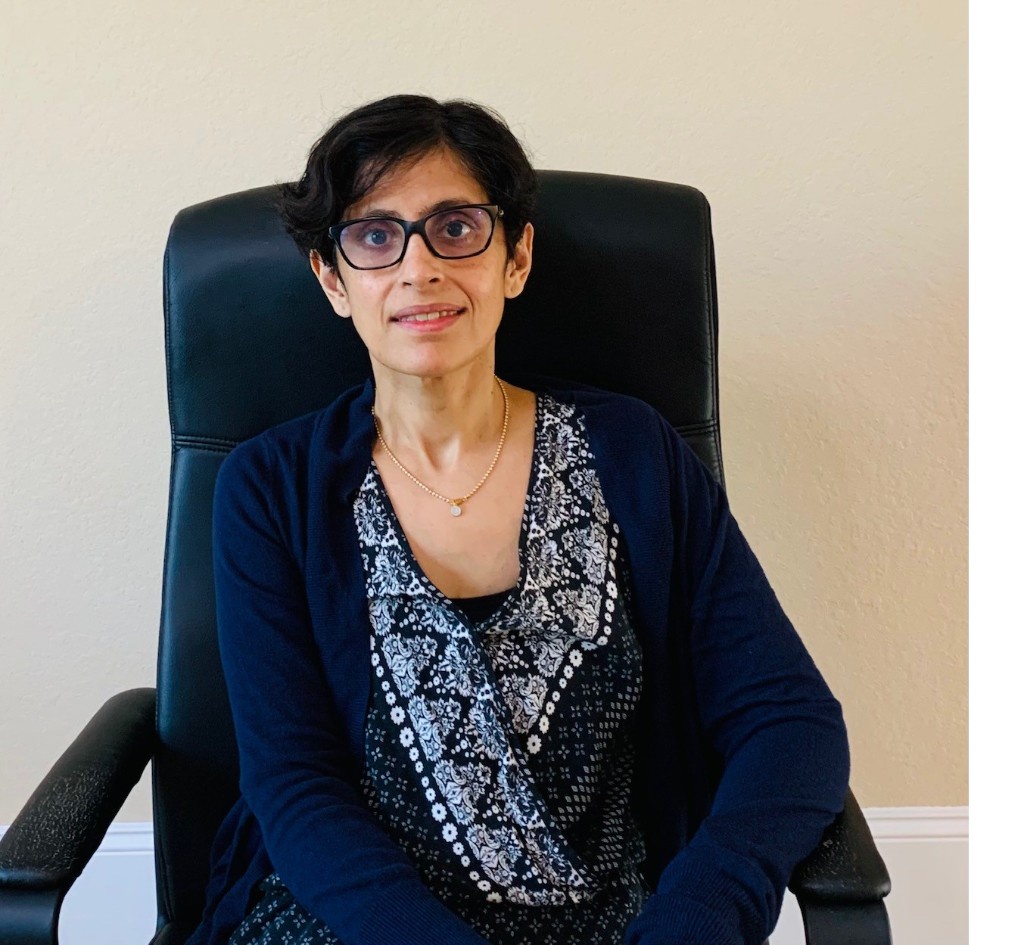
I'm Deepika, a physics and chemistry teacher at a college-level preparatory school, a computer science engineer, and a Master's in Science Education from Johns Hopkins University. I teach both advance...
Malik
As a second-year medical student with a strong foundation in science and a passion for education, I specialize in making tough subjects easier to understand. I excel in math, biology, physics, and oth...
As a passionate tutor with a B.A. in Russian and Political Science from Williams College and a strong science background, I am dedicated to helping students excel in multiple disciplines. I earned per...
Jessica
I am a licensed physician from Florida who is currently changing careers. I graduated from the University of Pennsylvania in 2009 and have extensive tutoring and editing experience. While a student, I...
I'm a recent Stanford graduate (Electrical Engineering and Computer Science), and have been working at a major Management Consulting firm for a few years now. I personally scored a 2360 (out of 2400) ...
Kate
I'm available to tutor biology, chemistry, physics, math from Algebra up through AP Calculus, SAT test prep, and French. I've been tutoring students in science and math for 7 years. I also spent 8 mon...
Jeffrey
I am enrolled in the Mechanical Engineering PhD program at Rice University which will begin Fall 2020, and I am hoping to return to academia as a professor after earning my PhD. In the meantime, I am ...
I am available to tutor middle and high school math, history and test prep. I have tutored math and history in the past and I previously taught a test prep course at a school in Hanoi, Vietnam. I have...
I am a current student at the University of Chicago. I am working towards a Bachelor of Science in Biological Sciences, and I am on the pre-medical track. I am extremely passionate about tutoring, and...
Testimonials
Because the right 10th grade chemistry tutor makes all the difference.
Average Session Rating – Based on 3.4M Learner Ratings
Top 20 Science Subjects



Top 20 Subjects
Frequently Asked Questions
The most common challenges are balancing chemical equations, understanding mole concepts and stoichiometry, and visualizing molecular structure and bonding. Many students also struggle with unit conversions, gas laws, and connecting abstract atomic theory to observable phenomena like why substances react the way they do. A tutor can break these down systematically—for example, showing how balancing equations is really just accounting for atoms, or using molecular models to make bonding patterns visible rather than just memorizing rules.
Tutors help students understand the scientific method in practice—not just the theory. They can walk through how to design a fair experiment, identify variables, interpret data, and troubleshoot when results don't match predictions. Many students struggle to connect lab observations to the chemical principles they're learning in class, so a tutor can bridge that gap by explaining what's actually happening at the molecular level during an experiment and how to write clear lab reports that demonstrate understanding rather than just following steps.
Rather than memorizing, students should learn to see equations as a visual representation of what atoms are doing during a reaction. A tutor teaches the logic: how to count atoms on both sides, why coefficients matter, and how equations connect to real reactions like combustion or acid-base neutralization. Once students understand that balancing is about conservation of mass—atoms don't disappear, they just rearrange—the process becomes problem-solving rather than memorization. This foundation makes stoichiometry problems much more manageable too.
The mole feels abstract because it's a bridge between the invisible atomic scale and the measurable quantities we use in the lab—students can't see 6.02 × 10²³ particles, so it's hard to develop intuition. Tutors make this concrete by connecting moles to everyday analogies (like a dozen), showing how moles relate to grams and volume, and practicing conversions in context of actual reactions. Once students see moles as a translation tool between atomic-scale thinking and lab-scale measurements, stoichiometry and limiting reactant problems become much clearer.
Many 10th graders struggle to picture ionic versus covalent bonds, electron transfer, and 3D molecular geometry. Tutors use molecular models, Lewis dot structures, and VSEPR theory to make bonding patterns visible and logical. They help students understand why certain atoms bond the way they do (electronegativity, valence electrons) rather than just memorizing bond types. This visualization skill is crucial for predicting molecular properties like polarity and reactivity, which then explains why some substances dissolve in water and others don't.
Strong 10th Grade Chemistry tutoring teaches students to think like chemists: asking 'why' before memorizing, predicting outcomes based on principles, and troubleshooting when observations don't match expectations. Tutors help students move from procedural thinking ("follow these steps") to conceptual thinking ("what's happening at the molecular level?"). This includes learning to read and interpret data, design experiments to test hypotheses, and communicate findings clearly—skills that transfer to other sciences and beyond.
Look for tutors with deep chemistry knowledge who can explain concepts multiple ways, not just one method. They should understand common misconceptions students have (like thinking atoms are created or destroyed in reactions) and know how to address them. Experience with lab work, hands-on demonstrations, and molecular visualization tools is valuable. Most importantly, they should be able to connect abstract concepts to real-world applications—explaining why understanding electron configuration matters for predicting reactivity, for example—so chemistry feels relevant rather than just a collection of rules to memorize.
For students building foundational skills, tutors focus on core concepts like atomic structure, bonding, and basic equations before tackling complex problem-solving. For students who understand the basics but struggle with application, tutors work on connecting concepts to multi-step problems and lab scenarios. Advanced students benefit from deeper exploration of reaction mechanisms, thermodynamics, and how chemistry principles predict real-world phenomena. Personalized instruction means each student gets targeted support at their level, whether they need to solidify fundamentals or push into more sophisticated reasoning.
Let’s find your perfect tutor
Answer a few quick questions. We’ll recommend the right plan and match you with a top 5% tutor.