Award-Winning Physical Chemistry Tutors
serving Harrisburg, PA
Physical Chemistry
Tutors in Harrisburg
Private 1-on-1 tutoring, weekly live classes for academic support, test prep & enrichment, practice tests and diagnostics, and more to elevate grades and test scores.
Based on 3.4M Learner Ratings
UniversitiesSchools & Universities
DeliveredHours Delivered
ProficiencyGrowth in Proficiency
Who needs tutoring?
No obligation. Takes ~1 minute.
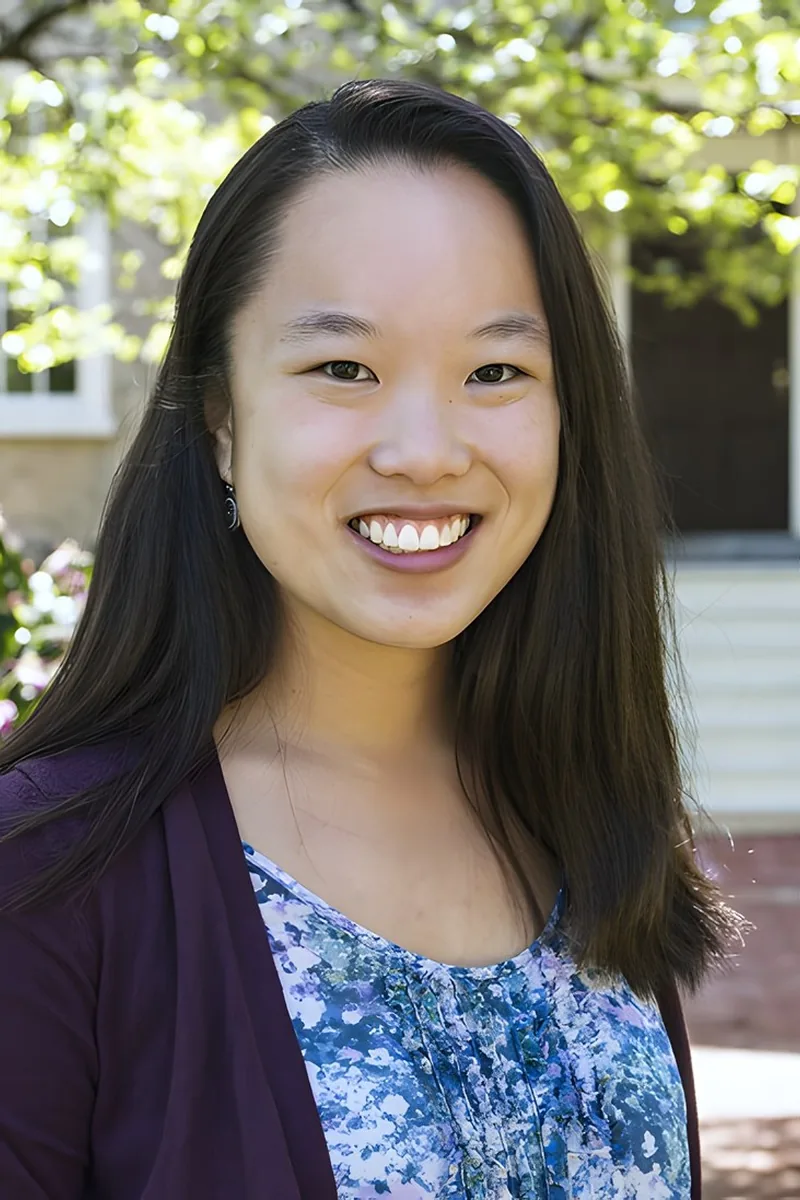
Teaching high school chemistry daily means Kathleen regularly translates thermodynamic concepts like enthalpy, entropy, and equilibrium into language that clicks — a skill that carries directly into the more calculus-heavy treatment those same ideas get in a p-chem course. Her M.S.Ed from Penn and chemistry degree give her both the content depth and the instinct for spotting exactly where a derivation stops making sense to a student. Rated 5.0 by students.

Biology coursework builds a surprising amount of p-chem intuition — enzyme kinetics, membrane energetics, and metabolic thermodynamics all run on the same free energy and rate equations that dominate a physical chemistry sequence. Ade uses that biological grounding to make abstract derivations tangible, turning something like a Boltzmann distribution into a concrete picture of how molecules actually partition energy across states.
I am currently a graduate student in Chemical Engineering at the University of Delaware. I am working on using magnetic and flow fields to create advanced materials by directing the self-assembly process of nanoparticles . I have tutored students in Chemistry, Physics and Math all throughout undergraduate and graduate work. I truly enjoy breaking material down into its core components that allows the students to understand complicated information.
Medical school at Tufts demands fluency in the thermodynamics and kinetics that p-chem students dread — Eric works through Gibbs free energy calculations, entropy-driven processes, and rate equations daily in a clinical science context, which keeps the material grounded rather than purely abstract. His economics background also sharpens the kind of quantitative modeling and equilibrium thinking that translates surprisingly well to topics like chemical potential and phase diagrams.
Kirby's biochemistry degree at Michigan meant grinding through the thermodynamics and kinetics that sit at the heart of p-chem — Gibbs free energy calculations, equilibrium derivations, and the statistical mechanics of molecular systems were baked into her upper-level coursework. She breaks down the calculus-heavy formalism by keeping each variable tied to the chemical reality it represents, so a daunting derivation like a Clausius-Clapeyron equation reads as a description of phase behavior rather than an abstract math exercise. Rated 4.9 by students.
Thermodynamic state functions, quantum mechanical models, and kinetic rate laws all converge in Physical Chemistry, and most students need someone who can bridge the math and the chemistry simultaneously. Abismael's chemical engineering training put him through the full gauntlet — partial differential equations applied to heat transfer, Gibbs free energy calculations for phase equilibria, statistical mechanics. He explains each derivation from multiple angles and tests understanding with problems designed to be harder than what shows up on the exam.
As an MD/PhD student at Northwestern with a chemistry PhD focus and a B.S. in Chemical Science from Michigan, Austin has gone deep on the thermodynamics and quantum mechanics that form p-chem's backbone — and he's still actively working through advanced coursework in these areas. He tackles derivations by building chemical intuition first, so when a student hits a wall at, say, a Legendre transform connecting internal energy to Gibbs free energy, the math follows naturally from understanding what each variable physically represents.
I grew up in the Boston area and now live in Citrus County, Florida. I graduated from MIT in chemical engineering and worked for many years as a chemical process engineer, so I have a strong background in math and science, especially chemistry and thermodynamics. I've also been granted six U.S. patents. When the pandemic hit us, I moved to Florida and did part-time work as a chess tutor, then became a substitute teacher in the middle and high schools in our district. I enjoyed working with the students, many of whom had difficulty learning in big classes with many disruptions. I found that I could best help these students by using real-world examples to teach difficult concepts in a new way. Often, then, the student would come away with a new perspective and a much better understanding of the concept. I was happy to be able to help. These days as a VT tutor, I continue to use, whenever possible, real-world examples in my own material in chemistry and thermodynamics.
An applied mathematics degree plus active graduate math coursework gives Drisana the calculus fluency that p-chem demands — she's comfortable with the differential equations, multivariable integrals, and linear algebra that show up in everything from quantum mechanical wave functions to statistical thermodynamics. Where many chemistry students struggle because the math outpaces them, she tackles derivations from the opposite direction, building physical meaning onto mathematical structures she already knows cold. Rated 5.0 by students.
Eight years as a chemistry professor at Trinity College meant Maria taught p-chem repeatedly — not just lecturing on thermodynamic state functions and quantum mechanical models, but sitting with students in office hours untangling the specific derivation step where they got lost. That Ph.D.-level command of the subject, combined with a 5.0 rating, reflects someone who knows exactly which Maxwell relation or partition function integral is about to cause trouble and can rework it on the spot.
Pursuing a PhD in Analytical Chemistry at UIUC means Whitney spends her days immersed in the quantitative rigor that makes p-chem so demanding — thermodynamic derivations, kinetic modeling, and the statistical mechanics underlying instrumental techniques. She's currently TAing college-level chemistry courses, which keeps her sharp on exactly where students lose the thread in topics like Gibbs free energy, phase diagrams, and partition functions. That combination of active research and daily teaching gives her a practical read on which derivations need more physical intuition and which just need cleaner math.
Thermodynamic potentials, quantum mechanical models, kinetic rate laws — physical chemistry demands comfort with both rigorous math and chemical intuition simultaneously. Mark's chemical engineering degree from Yale required multiple semesters of p-chem coursework, and he tackles the subject by grounding intimidating derivations in the physical phenomena they describe. He's especially strong at walking through the calculus embedded in topics like entropy and partition functions.
Biology research through the American Museum of Natural History and pre-med coursework at Cornell gave Krishna hands-on exposure to the thermodynamic and kinetic principles that p-chem formalizes — energy changes in biological systems, reaction rates, equilibrium behavior. She uses that life-science grounding to make topics like Gibbs free energy and rate laws feel like descriptions of real molecular events rather than pure derivation exercises.
Conservation biology at ASU gave River a working familiarity with the thermodynamic and kinetic principles that p-chem puts under a mathematical microscope — energy flows in ecosystems, reaction energetics in biochemical cycles, and the statistical behavior of molecular populations. That biology-first perspective lets River approach topics like Gibbs free energy and equilibrium constants by starting with the physical intuition before wading into the calculus. Rated 4.8 by students.
Neuroscience at the undergraduate level means Amy has already tangled with the thermodynamics and kinetics that p-chem formalizes — Nernst equation derivations, membrane energetics, and the statistical behavior of ion channels all demand that same calculus-heavy reasoning. She uses those biological touchpoints to make abstract topics like entropy and equilibrium constants feel grounded in systems students can actually picture. Rated 5.0 by students.
Testimonials
Because the right Physical Chemistry tutor makes all the difference.
Average Session Rating – Based on 3.4M Learner Ratings
Other Harrisburg Tutors
Related Science Tutors in Harrisburg
Frequently Asked Questions
Physical Chemistry bridges chemistry and physics by studying the physical properties of molecules and how chemical reactions occur at the atomic level. It's challenging because it requires understanding abstract concepts like thermodynamics, kinetics, and quantum mechanics while also applying mathematical skills—students often struggle with the combination of conceptual thinking, complex equations, and problem-solving all at once.
Students typically find thermodynamics (entropy, enthalpy, Gibbs free energy), equilibrium calculations, kinetics, and quantum mechanics most difficult. Beyond content, many struggle with unit conversions, balancing equations, and translating word problems into mathematical models. Personalized tutoring helps break these topics into manageable pieces and connects the math to the underlying chemistry concepts.
Expert tutors help students see why Physical Chemistry matters by connecting abstract concepts to real applications—like how thermodynamics explains battery chemistry, how kinetics determines reaction rates in industrial processes, or how quantum mechanics underlies molecular spectroscopy. This context makes concepts stick better and helps students understand not just the 'how' but the 'why' behind the chemistry.
Your first session focuses on understanding your current level, identifying specific challenges, and building a personalized learning plan. A tutor will ask about topics that confuse you most, review your recent assignments or exams, and start working through a problem together to see your thought process. This helps establish a baseline and ensures future sessions target exactly what you need.
With an average student-teacher ratio of 15.8:1 across Harrisburg's 11 school districts, personalized 1-on-1 instruction fills a critical gap by giving you dedicated attention that classroom settings can't provide. Tutors work at your pace, clarify confusing concepts immediately, and help you develop problem-solving strategies specific to Physical Chemistry exams and coursework in your school.
Yes. Tutors help students understand the theory behind experiments, interpret lab results, write lab reports, and connect experimental observations to Physical Chemistry principles. Whether you're struggling with data analysis, understanding experimental design, or explaining your findings, personalized instruction helps you develop both technical skills and scientific reasoning.
Understanding concepts is far more important—memorized formulas without understanding will fail you on complex problems and cumulative exams. Expert tutors teach you how to derive and apply formulas from first principles, recognize which equations fit which situations, and develop problem-solving strategies that work across different scenarios. This approach builds lasting knowledge instead of short-term recall.
Varsity Tutors connects you with expert tutors who specialize in Physical Chemistry for students in Harrisburg. Simply share your current challenges, course level, and availability, and you'll be matched with a tutor who fits your needs. Your first session can focus on any topic—whether it's thermodynamics, kinetics, quantum mechanics, or exam prep.
Let’s find your perfect tutor
Answer a few quick questions. We’ll recommend the right plan and match you with a top 5% tutor.