Award-Winning Geometry Tutors
serving Harrisburg, PA
Geometry
Tutors in Harrisburg
Private 1-on-1 tutoring, weekly live classes for academic support, test prep & enrichment, practice tests and diagnostics, and more to elevate grades and test scores.
Based on 3.4M Learner Ratings
UniversitiesSchools & Universities
DeliveredHours Delivered
ProficiencyGrowth in Proficiency
Who needs tutoring?
No obligation. Takes ~1 minute.
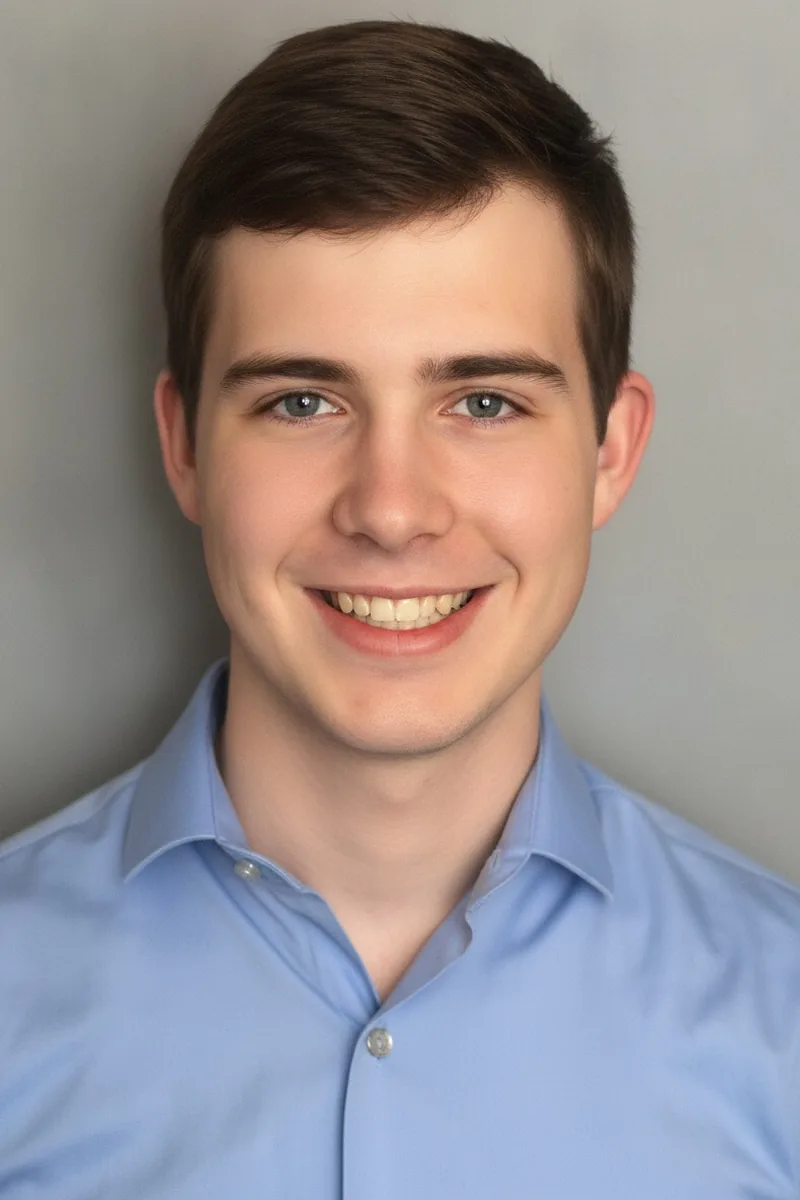
Proofs are usually the first place geometry students feel lost, because suddenly they're being asked to construct arguments instead of compute answers. Ben teaches proof-writing as a logical skill: identifying what's given, what's needed, and which theorems bridge the gap. His approach turns the frustration of "I don't know where to start" into a repeatable process.
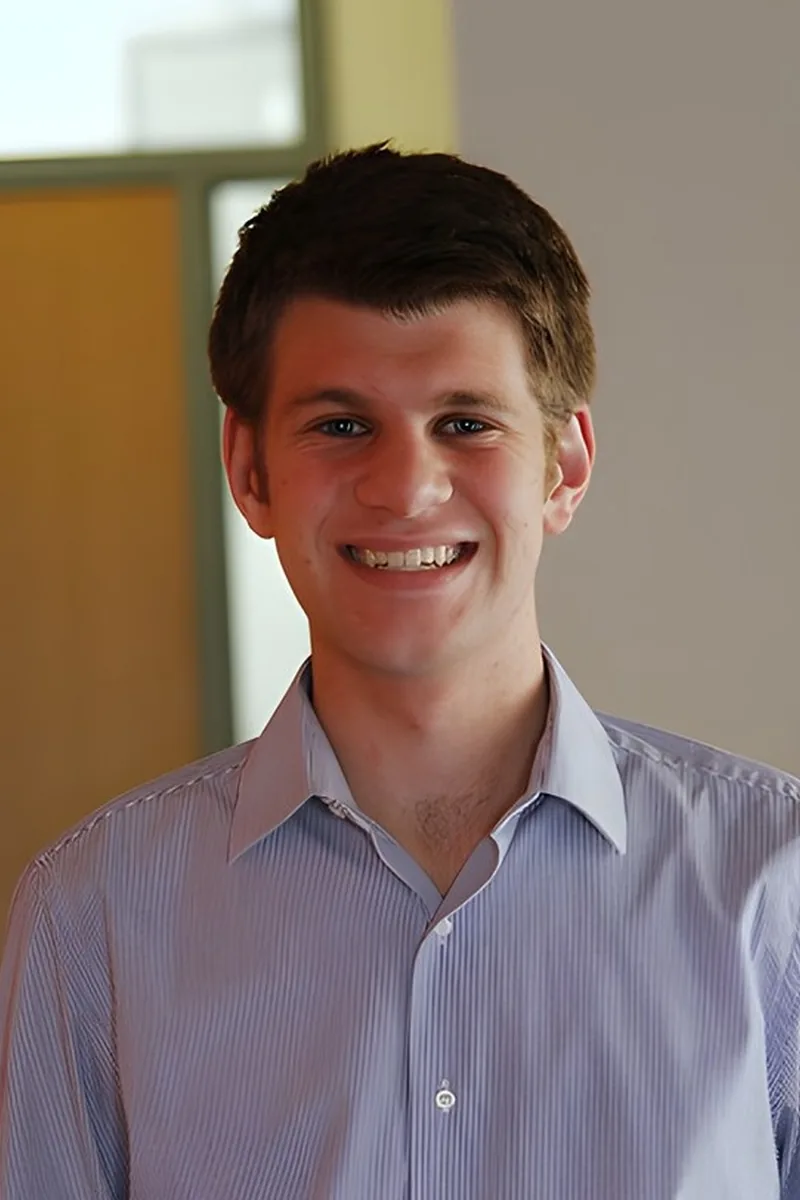
Kevin's Philosophy, Politics, and Economics program at Penn is essentially a training ground in structured argumentation — building claims from premises, identifying logical gaps, defending conclusions — which maps directly onto geometric proof-writing. He teaches students to treat two-column proofs the same way they'd treat a debate: state what you know, justify every step, and never skip a link in the chain. His 34 ACT composite reflects the kind of precise, methodical reasoning that makes geometry's logical demands feel manageable.
An MIT math major doing research in Spectral Graph Theory, Enrico brings a deep comfort with spatial structures and relationships that makes geometry's core ideas — congruence, similarity, transformations — feel like natural extensions of logical thinking rather than a pile of disconnected rules. He emphasizes building intuition around definitions so that when a problem asks students to prove two triangles congruent or reason about angle bisectors, the right approach surfaces on its own. Rated 5.0 by students.
Cornell's biological engineering program threw Mary into years of modeling physical systems — fluid flow through channels, stress on biomaterials, device dimensions — all of which demand precise geometric reasoning about shapes, cross-sections, and spatial relationships. She brings that practical fluency to topics like circle theorems, properties of quadrilaterals, and area-volume calculations, making abstract definitions feel grounded in real measurement. Rated 5.0 by students.
Having taught Geometry at a charter high school, Wamweni knows exactly where students get stuck — whether it's writing two-column proofs, applying triangle congruence theorems, or visualizing transformations on the coordinate plane. She approaches each topic by connecting it to something concrete before moving into formal reasoning. Her 5.0 rating speaks to how well that method lands with students.
Proofs and spatial reasoning make geometry feel like a different species of math compared to algebra, and that shift frustrates a lot of students. Steve tackles it by grounding geometric logic in tangible examples — angle relationships in trusses, symmetry in mechanical parts — drawing on his engineering background to make abstract theorems feel concrete.
Proofs are usually where geometry goes from comfortable to confusing — suddenly students need to justify every step with logic instead of just measuring. Matt approaches geometric reasoning as a structured argument, walking through angle relationships, congruence criteria, and parallel-line theorems in a way that makes each proof feel like solving a puzzle rather than following a script.
Proofs trip up a lot of geometry students because they require a completely different kind of thinking — constructing logical arguments instead of just computing answers. Kirstie's liberal arts background actually strengthens her approach here, since she treats geometric proofs the way she'd treat building a persuasive essay: claim, evidence, reasoning. She also covers the computational side, from triangle congruence to circle theorems.
Materials science is a field where you're constantly thinking about how structures behave — crystal lattices, grain boundaries, stress distributions across shapes — so Jennifer's engineering background gives her a natural fluency with the spatial reasoning geometry demands. She unpacks problems involving angle relationships and properties of polygons by connecting them to the physical intuition she built studying how real materials are structured. Rated 5.0 by students.
Proofs are where most geometry students panic, but they're really exercises in structured argumentation — something Samantha practices daily as a philosophy student at Penn. She teaches students to read diagrams actively, identify congruence and similarity relationships, and build logical chains from given information to conclusion.
Proofs are usually the sticking point in geometry — going from "I can see it's true" to writing a logical argument for why it must be true. Keenan studied philosophy as an undergraduate, which means constructing rigorous arguments from axioms is something he's trained in across multiple disciplines. He brings that logical scaffolding to triangle congruence, circle theorems, and coordinate geometry problems.
Proofs are usually where geometry goes from comfortable to confusing, and Eliza addresses that head-on by teaching students how to build logical arguments step by step. She connects geometric reasoning — congruence, similarity, angle relationships — to the structured thinking she uses daily in economics. Her 5.0 rating speaks to how clearly she communicates ideas that many students find abstract.
Proofs are usually the biggest hurdle in Geometry — not because the logic is hard, but because nobody explains why you're writing them in the first place. Jonathan walks through each proof as a chain of reasoning about angles, congruence, or similarity, drawing on the structured problem-solving approach he developed through his biomedical engineering training at Yale.
Proofs are usually the first time geometry students have to construct a logical argument instead of just computing an answer, and that shift in thinking is where most frustration lives. Sarah pairs her Penn mathematics training with a creative writing minor, which means she's unusually good at teaching students to build a clear, step-by-step case — whether it's a two-column proof about congruent triangles or an argument involving parallel lines and transversals.
Proofs are usually the first time a math student has to build a logical argument instead of just computing an answer, and that shift can be disorienting. Amanda approaches geometry proofs the same way she learned to reason through clinical diagnoses in medical school — by chaining evidence together step by step. She also covers coordinate geometry and triangle congruence with an emphasis on understanding spatial relationships, not just memorizing theorems.
A math degree from Georgetown means Peter didn't just take geometry — he studied the formal logic underneath it, from axiomatic systems to the reasoning that makes two-column proofs actually work. He's especially effective at teaching students how to read a diagram and identify which relationships (supplementary angles, parallel line shortcuts, triangle congruence criteria) unlock a problem before writing a single step. Rated 5.0 by students.
Proof-writing is the skill that separates students who survive Geometry from those who thrive in it. Matthew walks through the logic of congruence and similarity proofs step by step, treating each one as an argument to construct rather than a template to fill in. His training in mathematics at Harvard means formal reasoning is central to how he thinks and teaches.
Proofs are the part of geometry that makes students question everything they thought they knew about math. Ade approaches them as logical arguments rather than rigid formulas, walking through each theorem — from triangle congruence to circle properties — so that writing a two-column proof feels like building a case, not guessing at steps.
Proofs are where most geometry students panic, because suddenly math asks them to build logical arguments instead of just computing answers. Vaughn tackles proofs by teaching the underlying reasoning structure first — identifying given information, choosing postulates, and chaining steps together — before worrying about two-column formatting. His physics degree required exactly this kind of rigorous spatial and logical thinking.
Chemical engineering coursework is full of geometry most students never see — reactor vessel dimensions, pipe cross-sections, flow diagrams that depend on precise spatial reasoning about angles and areas. Olivia brings that applied perspective to topics like circle theorems and properties of polygons, connecting abstract definitions to concrete shapes students can actually picture. Rated 4.9 by students.
Proofs are usually the moment geometry goes from comfortable to confusing, because students suddenly need to justify every step with logical reasoning instead of just calculating. Joyce walks through the structure of two-column and paragraph proofs methodically, while also reinforcing the spatial reasoning behind triangle congruence, circle theorems, and coordinate geometry.
Proofs are usually the sticking point in geometry, and Andrew tackles them by teaching students to read a diagram like a puzzle — identifying congruent triangles, parallel-line angle relationships, and circle theorems before writing a single line of reasoning. His philosophy coursework at Boston College sharpened his formal logic skills, which translates directly into structured geometric arguments.
A chemistry master's degree means Madhura has spent years thinking about molecular geometry — bond angles, tetrahedral structures, spatial symmetry — which gives her an unusually concrete way of teaching geometric concepts like angle relationships and properties of shapes. She connects abstract theorems to physical models students can visualize, then builds from there into formal reasoning and problem-solving. Rated 4.7 by students.
Proofs are usually the make-or-break moment in geometry, and Abhinav tackles them by teaching students to map out their logical chain before writing a single statement. His approach connects angle relationships, congruence criteria, and parallel line theorems into a coherent toolkit rather than a disconnected list of rules.
Proofs are usually the first place geometry students panic, because suddenly math asks them to explain *why* something is true instead of just computing an answer. Conor approaches proofs as logical arguments: he teaches students to identify given information, map out a chain of reasoning, and connect postulates step by step. His math background at Pittsburgh gave him deep experience with formal reasoning that translates directly to high school geometry.
Proofs are where most geometry students stall — moving from "I can see it's true" to "I can logically demonstrate it's true" is a real cognitive shift. Jacob approaches proof-writing the way he approaches music: as a structured argument where every step has to earn its place. His 4.6 rating speaks to how well that translates for students.
Proofs are usually the first time a math student has to explain *why* something is true, not just compute an answer. Felipe walks through each proof as a logical argument — identifying given information, choosing a strategy like SAS or CPCTC, and building the chain of reasoning step by step — so the format stops feeling mysterious.
Proofs are usually the first time students encounter math that asks "why" instead of "what" — and that shift trips up even strong math students. Theresa approaches geometry by teaching logical structure first, showing how postulates and theorems chain together so that writing a two-column proof feels like building an argument rather than guessing at steps.
Anneliza's dual background in civil engineering and landscape architecture makes geometry one of her most natural subjects — she's spent years calculating angles, areas, and spatial relationships for actual built projects. She breaks down proofs and theorems by connecting them to tangible shapes and structures students can visualize, from triangle congruence to circle properties.
I am a PhD student at Carnegie Mellon University in the field of Electrical and Computer Engineering. I recently completed my bachelors also at Carnegie Mellon University in Electrical and Computer Engineering as well as Human Computer Interaction. Over the last several years, I have experience teaching a wide variety of students ranging from elementary school math, introduction to programming for children, as well as college level classes. While I tutor a broad range of subjects, I am most passionate about Math, Physics, and Computer Science. I really enjoy teaching programming, especially in fun and engaging ways. I like to relate what I teach to things my students are passionate about, or teach them through fun activities and games, so that they are easier to understand. I also help students prepare for standardized tests and have several strategies that I can share, especially for the math section of the tests. In my spare time, I enjoy dancing, music, hiking and anything outdoors!
Proofs are usually where geometry gets frustrating — students know a theorem is true but can't articulate why in a logical chain. Daniel, who studied mathematics through the graduate level, teaches students to construct two-column and paragraph proofs by identifying what's given, what's needed, and which postulates bridge the gap.
A PhD in Materials Science means Cathy spent years analyzing crystal structures, grain boundaries, and lattice symmetries — all of which are fundamentally geometric problems about how shapes fit together and why certain angles and proportions recur. She brings that materials-level intuition to teaching geometric proofs, showing students how to trace the logical chain from given information through angle relationships and congruence criteria to a conclusion. Rated 5.0 by students.
Proofs are usually the make-or-break moment in geometry — students who breeze through angle calculations suddenly struggle when asked to construct a logical argument. Jean teaches proof-writing as a skill in structured reasoning, walking through each theorem and postulate until the logic feels natural rather than forced. Her certified teaching background across math and English gives her a unique ability to sharpen both the mathematical and written-communication sides of geometry.
Proofs are usually where geometry stops feeling intuitive and starts feeling impossible. Ian teaches students to read diagrams like arguments — identifying given information, spotting congruence relationships, and building logical chains step by step. He also reinforces the algebraic skills that geometry quietly demands, from solving for unknown angles to working with coordinate-based distance and midpoint formulas.
I am happy when my student completely understands the material. I highly discourage memorization.
Proofs are usually the part of geometry that makes students want to quit — the logic feels backward and the format feels rigid. Merigan breaks proof-writing into a step-by-step reasoning process, treating each theorem about congruence or parallel lines as a puzzle with a clear entry point rather than a wall of formal statements.
Proofs are usually the part of Geometry that makes students want to quit, but they're also the part that teaches logical reasoning better than almost any other high school topic. Danielle walks through each proof step by step, showing how to identify given information, choose the right theorems, and build an argument — a skill that paid off in her own science career at Tufts and Pitt Med.
Proofs are usually the make-or-break moment in Geometry: students who can write a logical chain of reasoning thrive, and those who can't tend to struggle the rest of the year. Tom teaches proof-writing as a structured argument — claim, evidence, justification — a skill he sharpened through scientific writing at Penn. He also covers coordinate geometry and circle theorems with an emphasis on visualization over rote formula use.
Proofs trip up a lot of geometry students because they demand a kind of structured reasoning that feels completely different from arithmetic. Michael's Harvard training in argument-building and logical structure translates surprisingly well here — he teaches students to treat each proof like a persuasive essay with a clear chain of evidence.
Proofs are usually the first place geometry students get stuck, because suddenly math asks them to build logical arguments instead of just computing answers. Kaila approaches proof-writing as a structured thinking exercise — identifying givens, mapping out relationships between angles or segments, and building toward conclusions step by step. Her experience teaching across math levels means she can adjust explanations on the fly when a student needs a different entry point.
Testimonials
Because the right Geometry tutor makes all the difference.
Average Session Rating – Based on 3.4M Learner Ratings
Practice Geometry
Free practice tests, flashcards, and AI tutoring for Geometry
Other Harrisburg Tutors
Related Math Tutors in Harrisburg
Frequently Asked Questions
Many students struggle with the transition from algebra's procedural focus to geometry's emphasis on spatial reasoning and logical proofs. Common pain points include visualizing 3D shapes, understanding why geometric theorems work (not just memorizing them), writing formal proofs, and applying geometry concepts to word problems. Personalized tutoring helps students build conceptual understanding by connecting visual representations to mathematical reasoning, making abstract concepts concrete and manageable.
Proof writing requires understanding both the logical structure and the geometric properties you're working with. Many students improve by learning to identify what's given, what you need to prove, and which theorems or postulates connect them. Tutors can help you develop a systematic approach to proofs, practice recognizing common proof patterns, and build confidence in your reasoning. With guided practice and feedback, students typically move from feeling stuck to seeing the logical flow more clearly.
Yes. Harrisburg's 11 school districts use different textbooks and approaches to teaching geometry, and tutors are experienced working with various curricula including traditional geometry sequences, integrated math programs, and honors-level courses. When you connect with a tutor, you can specify your textbook and curriculum so they can align their instruction with what you're learning in class, making tutoring directly applicable to your coursework and assessments.
Geometry word problems require you to translate real-world scenarios into geometric diagrams and equations—a skill that combines reading comprehension, visualization, and mathematical reasoning. Tutors help by breaking down the problem-solving process: identifying relevant information, sketching accurate diagrams, selecting appropriate theorems, and showing clear work. With practice on different problem types, students develop strategies for tackling unfamiliar scenarios confidently.
The first session focuses on understanding your current level, learning style, and specific goals—whether you're struggling with a particular unit, preparing for a test, or building overall confidence. Your tutor will likely review some recent classwork or assessments to identify where conceptual gaps exist, then start addressing those areas with targeted explanations and practice. This diagnostic approach ensures that tutoring is personalized to your needs from day one.
Math anxiety often stems from feeling rushed or confused in a classroom setting. One-on-one tutoring removes that pressure by giving you time to ask questions, make mistakes safely, and understand concepts at your own pace. Tutors help you see that geometry is logical and learnable by breaking complex ideas into manageable steps and celebrating progress. As you experience small wins and build understanding, confidence naturally follows.
Geometry is built on patterns—similar triangles, angle relationships, symmetry, and properties that repeat across different shapes and theorems. Tutors help you recognize these patterns by asking guiding questions, working through multiple examples, and showing how different concepts relate to each other. When you understand the underlying connections rather than memorizing isolated facts, geometry becomes more intuitive and easier to apply to new problems.
Varsity Tutors connects you with expert tutors who specialize in geometry and understand the specific curriculum used in Harrisburg schools. You'll share your goals, schedule, and learning preferences, and we'll match you with a tutor whose expertise and teaching style fit your needs. The process is straightforward, and you can start personalized instruction quickly to address your geometry challenges.
Let’s find your perfect tutor
Answer a few quick questions. We’ll recommend the right plan and match you with a top 5% tutor.