Award-Winning Biochemistry Tutors
serving Allentown, PA
Biochemistry
Tutors in Allentown
Private 1-on-1 tutoring, weekly live classes for academic support, test prep & enrichment, practice tests and diagnostics, and more to elevate grades and test scores.
Based on 3.4M Learner Ratings
UniversitiesSchools & Universities
DeliveredHours Delivered
ProficiencyGrowth in Proficiency
Who needs tutoring?
No obligation. Takes ~1 minute.

Studying biochemistry at Penn as part of a pre-health track, Shayan lives in the world of enzyme kinetics, metabolic pathways, and protein structure daily. He breaks down dense topics like the citric acid cycle or amino acid chemistry using visual analogies and step-by-step logic that make the connections between reactions stick long after the session ends.
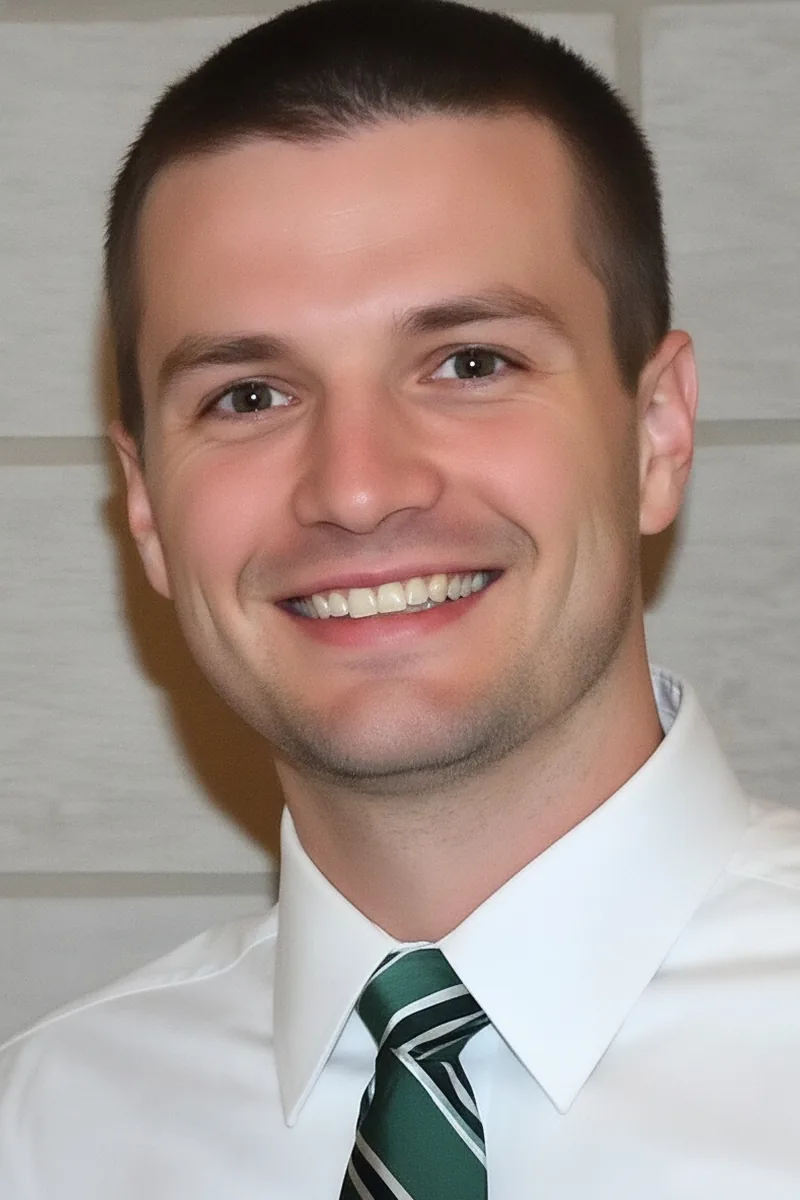
Matt's graduate work in human nutrition required him to trace every major metabolic pathway from the molecular level up — how macronutrients get broken down, shuttled through the citric acid cycle, and ultimately converted to usable energy. That nutritional biochemistry lens means he teaches topics like lipid metabolism and amino acid catabolism with a constant eye on physiological context, making reaction sequences feel purposeful rather than arbitrary. Holds a 5.0 rating.
Enzyme kinetics, metabolic pathways, protein folding — biochemistry sits at the intersection of biology and chemistry, and Zachary holds a degree in exactly that. He digs into the molecular logic behind processes like glycolysis and the citric acid cycle, connecting reaction mechanisms to the bigger physiological picture so the details actually stick.
Four years of medical school gave Amanda a particular edge with the biochemistry that underpins clinical reasoning — she's internalized how disruptions in lipid metabolism or glycogen storage pathways manifest as actual disease states. Her biology degree and public health training add breadth, letting her teach topics like nucleotide biosynthesis or enzyme regulation by zooming out to the physiological stakes behind each reaction. Rated 4.7 by students.
Enzyme kinetics, metabolic pathways, protein structure — biochemistry asks students to think in three dimensions and across multiple reaction steps simultaneously. Kimanthi's biomedical engineering degree and graduate work in biomedical sciences gave her daily exposure to these concepts in both classroom and lab settings. She breaks down mechanisms like glycolysis and oxidative phosphorylation into logical sequences rather than memorization marathons.
Lab research and patient care gave Sophie a dual perspective on biochemistry — she's traced metabolic pathways at the bench and seen what happens clinically when those pathways break down. Her biological and physical sciences degree means she teaches topics like enzyme mechanisms and pathway regulation by pulling in the organic chemistry and thermodynamics that explain *why* each step occurs, not just what comes next. Rated 4.9 by students.
Studying organismal physiology at Drexel meant Steven spent serious time with enzyme kinetics, metabolic pathways, and protein structure-function relationships — the core of any biochemistry course. He unpacks topics like the citric acid cycle and amino acid chemistry by tying each reaction back to its biological purpose, which makes the dense material easier to retain.
Enzyme kinetics, metabolic pathways, protein folding — biochemistry sits at the exact intersection of Meghan's biology degree and her medical training. She unpacks reaction mechanisms and molecular interactions by tying them to clinical contexts, turning dense material like the citric acid cycle or amino acid chemistry into something students can reason through rather than just memorize.
Enzyme kinetics, metabolic pathways, protein folding — biochemistry sits at the intersection of everything Lena studied in her biology and biomedical sciences degrees. She breaks down topics like Michaelis-Menten kinetics and amino acid chemistry by connecting molecular details to the larger physiological picture, which is especially useful for students preparing for medical school.
Enzyme kinetics, metabolic pathways, amino acid chemistry — biochemistry asks you to think like a chemist and a biologist at the same time. As a medical student who majored in biology with a genetics focus at Cornell, Etinosa tackles these topics by anchoring abstract reaction mechanisms to their biological consequences, making pathways like glycolysis and the citric acid cycle feel logical rather than like brute memorization.
Pursuing a Ph.D. in biochemistry at Drexel means Sam lives inside this subject — enzyme kinetics, protein folding, metabolic pathways, and biomolecular interactions aren't exam topics to review but daily research problems to solve. Students struggling with something like the citric acid cycle or Michaelis-Menten kinetics get explanations grounded in real lab experience, not just textbook summaries.
Currently doing post-bac research in immunology at the University of Pennsylvania, Kristina applies biochemistry daily — tracing how immune signaling cascades depend on protein modifications, receptor-ligand interactions, and the metabolic reprogramming that activates different immune cell types. Her biology degree and organic chemistry background let her unpack dense topics like enzyme mechanisms and pathway regulation by building from the underlying chemistry rather than asking students to memorize arrows on a diagram.
I am open to tutoring in a broad range of subjects, including Algebra, Spanish I/II, ESL and Biology (SAT II, AP, and MCAT).
Enzyme kinetics, metabolic regulation, and protein structure-function relationships are the backbone of biochemistry — and they're exactly what Kimberly spent her time at UNC Chapel Hill digging into as a biology major with a biochemistry focus. She tackles problems by walking through the underlying chemistry of each biological process, so students understand why a Lineweaver-Burk plot looks the way it does instead of just memorizing the graph.
Kevin earned his bachelor's in biochemistry and is now in medical school, so metabolic pathways, enzyme kinetics, and protein structure aren't just textbook topics for him — they're concepts he uses constantly. He breaks down complex cycles like glycolysis and the citric acid cycle into logical sequences rather than brute-force memorization lists. Rated 5.0 by students.
I am currently a second year medical student. I was a Physiological Sciences major at UCLA (class of 2015), and pursued research during my gap year between undergrad and medical school.
I am a graduate of Columbia University with a degree in Neuroscience and an informal concentration in Artificial Intelligence. I also have a degree in Medicine from St. George's University. I have pursued biomedical research, and since turned an interest in tutoring that began while I was a student into a professional calling. I have tutored for a private tutoring company, for schools as a student tutor, and privately for individuals. While I am exceptionally well versed in Math and the Sciences, I also excel in Reading Comprehension, Writing, and have successfully tutored those subjects.
Enzyme kinetics, metabolic pathways, amino acid structures — biochemistry asks students to hold an enormous amount of detail in their heads while still thinking mechanistically. Emily's pre-med coursework and global health studies at Cornell gave her a deep familiarity with how biological molecules behave at the chemical level, and she teaches students to see the logic connecting protein structure to function rather than treating each pathway as an isolated list.
Mitchell's neuroscience degree means he learned biochemistry through the brain's lens — tracing how neurotransmitter precursors feed into synthesis pathways, how ATP production keeps neurons firing, and how lipid biochemistry shapes every membrane in the nervous system. That background lets him teach topics like oxidative phosphorylation and amino acid metabolism by connecting each reaction to the cellular machinery that depends on it.
Few tutors can teach biochemistry from the perspective of someone who lived it at the graduate level. Dennis holds a Masters in Chemical and Physical Biology from Vanderbilt and an undergraduate degree in Biochemistry, so topics like enzyme kinetics, metabolic regulation, and protein structure are second nature. He walks through reaction mechanisms and pathway logic in a way that builds real understanding rather than rote memorization.
Two years as an Organic Chemistry Laboratory TA at the college level gave Maha the kind of mechanistic fluency that makes biochemistry's toughest material — reaction cascades in metabolic pathways, enzyme active-site chemistry, the logic behind cofactor requirements — click into place rather than blur together. Now a graduate student at Johns Hopkins Bloomberg School of Public Health with a dual background in chemistry and biology, she connects the organic chemistry driving each biochemical transformation to its broader physiological relevance. Rated 5.0 by students.
Studying neuroscience at Vanderbilt means Avi lives in biochemistry — enzyme kinetics, metabolic pathways, and protein structure are part of his daily coursework. He unpacks topics like the citric acid cycle or amino acid chemistry by tracing the logic of each reaction rather than asking students to memorize arrows on a diagram.
Enzyme kinetics, metabolic pathways, protein structure — biochemistry sits at the intersection of biology and chemistry, and most students struggle because they try to memorize it as one or the other. Michael's biomedical engineering background means he approaches biochemistry as an integrated system, linking molecular structure to biological function. He unpacks topics like Michaelis-Menten kinetics and amino acid chemistry by tying them to the physical principles that drive them.
Recent MCAT preparation gave Eric a sharp, up-to-date command of the biochemistry topics that trip students up most: enzyme kinetics, metabolic pathway regulation, and the interplay between protein structure and function. His graduate work in chemistry provides the molecular-level intuition that makes memorizing pathways feel less like brute force and more like following a logical story.
Enzyme kinetics, metabolic pathways, protein structure — biochemistry sits at the intersection of two subjects David studied formally, with a bachelor's in chemistry and graduate-level exposure to biomolecular engineering. He digs into mechanisms like glycolysis and the citric acid cycle by connecting each step's chemistry to its biological purpose, so students retain the logic instead of just the diagram. That approach has earned him a 4.9 student rating.
Medical school with a focus on infectious diseases means Grant thinks about biochemistry in terms of host-pathogen interactions — how bacteria hijack metabolic machinery, why certain enzyme targets make effective drug sites, and what happens to energy metabolism during sepsis. His biochemistry degree and MD training let him teach topics like amino acid pathways and enzyme inhibition by connecting each mechanism to the microbiology that brings it to life.
Neuroscience majors don't just memorize biochemistry — they depend on it, and Janki's coursework at Kentucky meant tracing every concept from neurotransmitter metabolism to oxidative phosphorylation back to the underlying chemical logic. She teaches topics like enzyme regulation and pathway energetics by building each mechanism piece by piece, so students can predict what happens next in a pathway instead of relying on rote recall. Rated 4.8 by students.
Physical chemistry PhD work at UC Berkeley means Jacob spent years quantifying the thermodynamic and kinetic principles that govern every biochemical process — from enzyme catalysis rates to the free energy changes driving metabolic pathways forward. He teaches biochemistry by unpacking the physical chemistry underneath it, so concepts like Michaelis-Menten kinetics or the energetics of oxidative phosphorylation feel like derivable logic rather than formulas to memorize. Rated 4.9 by students.
Having worked in biochemical laboratories alongside his dual bachelor's degrees — including one in biochemistry — and his architecture studies at Columbia, Andrew brings a rare structural intuition to topics like protein folding and macromolecular assembly. He teaches metabolic pathways by building them up from their organic chemistry foundations, so students see each reaction as a logical next step rather than an isolated arrow on a diagram. Rated 4.9 by students.
Testimonials
Because the right Biochemistry tutor makes all the difference.
Average Session Rating – Based on 3.4M Learner Ratings
Practice Biochemistry
Free practice tests, flashcards, and AI tutoring for Biochemistry
Other Allentown Tutors
Related Science Tutors in Allentown
Frequently Asked Questions
Biochemistry is the study of chemical processes within living organisms—combining chemistry and biology to understand how molecules like proteins, lipids, and carbohydrates function in cells. It's challenging because it requires mastering both abstract chemistry concepts (like thermodynamics and equilibrium) and applying them to biological systems, which can feel disconnected from everyday experience. Many students struggle with visualizing molecular structures and understanding how microscopic reactions drive macroscopic biological processes.
Students typically struggle with enzyme kinetics, metabolic pathways (like glycolysis and the citric acid cycle), protein structure and folding, and bioenergetics. These topics require both memorization and deep conceptual understanding—you need to know the steps of a pathway AND understand why each step matters thermodynamically. Balancing chemical equations, unit conversions, and visualizing three-dimensional molecular structures also trip up many learners.
Personalized 1-on-1 instruction lets tutors focus on your specific misconceptions and learning style, whether that means drawing out molecular structures, working through problem-solving strategies, or connecting abstract concepts to real applications. A tutor can slow down on the topics that confuse you most—whether that's enzyme mechanisms or metabolic regulation—rather than moving at a class pace. They can also help you develop study techniques that emphasize understanding over rote memorization, which is essential for biochemistry success.
Yes. Tutors can help you understand the theory behind lab procedures, prepare for experiments by explaining what you'll be testing and why, and troubleshoot results after the lab. They can also strengthen your scientific reasoning skills—helping you design experiments, interpret data, and draw valid conclusions. This bridges the gap between classroom concepts and hands-on lab work, making both more meaningful.
Your first session typically involves a tutor assessing your current understanding of biochemistry fundamentals, identifying specific topics or problem areas, and learning your learning style and goals. They'll likely work through a practice problem or concept with you to see where you get stuck and how they can best support you. This helps them create a personalized plan for future sessions focused on your needs.
Tutors can help you master high-yield topics, practice problem-solving under timed conditions, and review past exams to identify patterns in what you struggle with. For standardized tests like the MCAT, they understand both the biochemistry content and the specific question formats you'll encounter. They'll also teach you test-taking strategies and help you build confidence in your ability to apply biochemistry knowledge in unfamiliar scenarios.
Varsity Tutors connects you with expert tutors who specialize in biochemistry and understand the curriculum for Allentown-area students. You can specify your goals—whether that's improving your grade, preparing for an exam, or deepening your understanding—and get matched with a tutor whose expertise fits your needs. The process is straightforward: tell us what you need, and we'll handle finding the right fit.
Many tutors use drawing, 3D models, or molecular visualization software to help you see how atoms bond together and how molecular shape affects function. They can break down complex structures step-by-step and show you how to predict structure based on chemistry principles. This visual, hands-on approach transforms abstract concepts into something concrete you can actually see and manipulate, making memorization unnecessary because understanding becomes intuitive.
Let’s find your perfect tutor
Answer a few quick questions. We’ll recommend the right plan and match you with a top 5% tutor.