Award-Winning SAT Writing and Language Tutors
serving St. Louis, MO
Award-Winning
SAT Writing and Language
Tutors in St. Louis
Private 1-on-1 tutoring, weekly live classes for academic support, test prep & enrichment, practice tests and diagnostics, and more to elevate grades and test scores.
Based on 3.4M Learner Ratings
UniversitiesSchools & Universities
DeliveredHours Delivered
ProficiencyGrowth in Proficiency
Who needs tutoring?
No obligation. Takes ~1 minute.
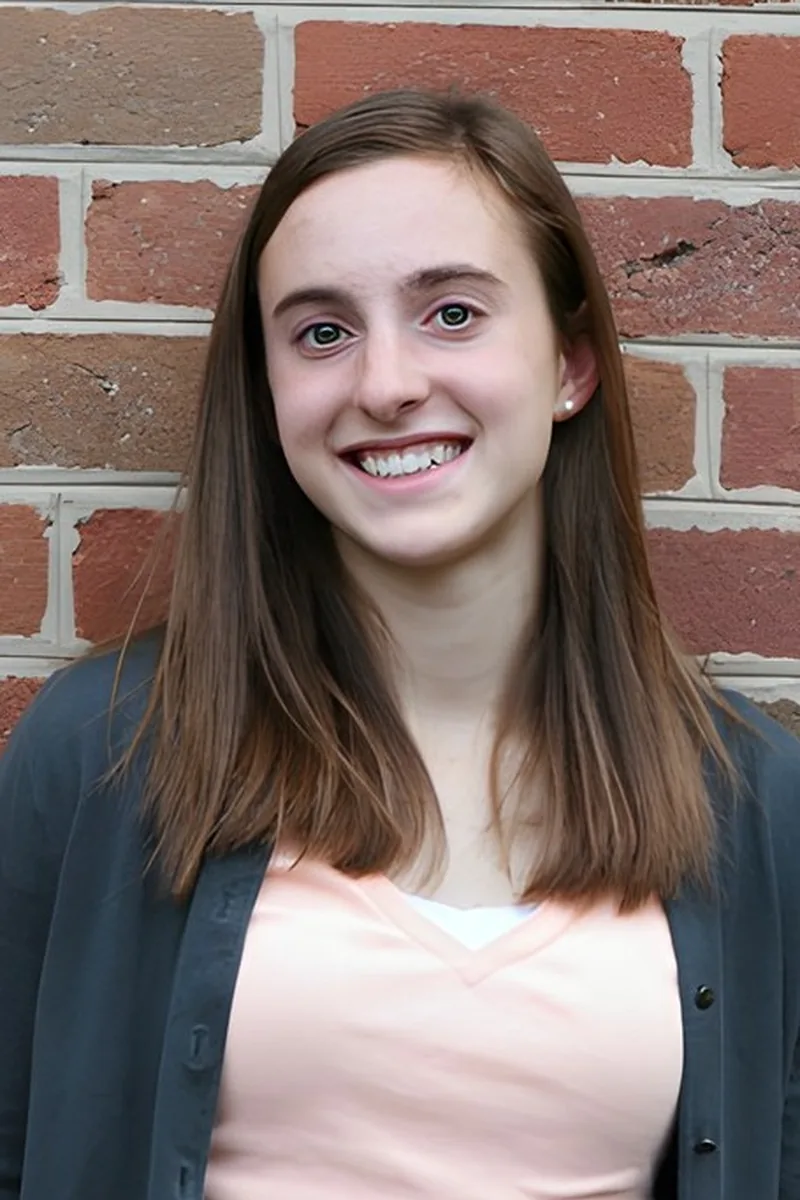
I am an undergraduate at Washington University, and I grew up in Columbus, Ohio. Math has always been one of my favorite subjects. I love Pre-algebra, Calculus, Linear Algebra and everything in between! I have tutored for about four years and have worked with students of all ages. Most students come to me for Math, but I have also worked with students on SAT and ACT test prep, Statistics and Physics. Everyone learns in a slightly different way, and I love figuring out the best way to teach something to people individually and dig down to what questions they really need to have answered to understand the material. In my spare time, I like to go on long bike rides and explore St. Louis's restaurants. I also love baking, playing with dogs and cats, watching movies with my friends and playing soccer.

I am excited to help anyone who might need it!
I am an experienced educator with a strong background in both the sciences and languages. I earned my bachelor's degree from Boston University, double-majoring in Biology (with a focus on ecology and conservation biology) and Hispanic Language and Literatures. I also hold a Master of Arts in Teaching in the Biological Sciences from Miami University. For over a decade, I was an international educator in Guayaquil, Ecuador. I taught English as a second language to students of all ages and led the natural sciences department for a large bilingual elementary school. I now teach middle school science at a private school in the U.S. I tutor a wide range of subjects, and I am passionate about helping students gain confidence in areas where they've struggled. I love seeing students begin to enjoy subjects they once found too difficult or tedious. My goal is to provide patient, personalized support that helps every learner recognize their strengths and build lasting academic skills.
As a current Political Science student at the University of Michigan, I am passionate about empowering students to achieve their academic goals through tailored tutoring in subjects like Public Speaking, Algebra, AP English, and U.S. Government. With over 2 years of tutoring experience, I focus on creating a supportive learning environment that encourages open communication and critical thinking. My approach involves connecting course material to real-world applications, inspiring students to see the relevance of their studies. I find great fulfillment in guiding students through their academic journeys, particularly in preparing for college admissions and standardized tests.
Most SAT Writing and Language mistakes come from students reading each underlined portion in isolation instead of tracking the paragraph's argument. Vijaya teaches a passage-first approach — understanding tone, transitions, and the author's purpose — so that punctuation, word choice, and sentence structure questions feel intuitive rather than random. Her 1550 SAT score reflects how well this strategy actually works on test day.
Two years of teaching seventh-grade reading and writing gave Kristen a sharp eye for the exact grammar and usage errors the SAT Writing and Language section loves to test — misplaced modifiers, comma splices, pronoun-antecedent mismatches — because she corrects them in student drafts every day. She pairs that classroom instinct with her own 1480 SAT score, teaching students to read each passage as a rough draft that needs editing rather than a puzzle that needs solving.
After scoring a 36 ACT composite and earning a BFA with an English concentration, John knows how sentences are built — and more importantly, how they break. He teaches the SAT Writing and Language section through the lens of editing and revision, training students to spot where a passage loses its logic, where punctuation choices obscure meaning, and where the College Board's "best answer" hinges on concision rather than correctness. Rated 4.9 by students.
Comma splices, misplaced modifiers, and subject-verb agreement buried in complex sentences — the SAT Writing and Language section tests grammar rules most students have never been explicitly taught. Michelle scored a 1570 composite and approaches this section by drilling the specific conventions the College Board tests most frequently, so students learn to spot errors almost on instinct.
Most SAT Writing and Language mistakes come down to a handful of grammar rules — subject-verb agreement across long clauses, comma splices, pronoun ambiguity — and Elena drills those patterns until students spot errors almost reflexively. Her 1600 SAT and her legal writing training at UChicago give her a sharp eye for the subtle rhetorical-effectiveness questions that separate a 700 from a 750+.
I am a recent graduate from a masters program in biostatistics at Columbia University. I received my Bachelor of Arts in biological sciences, with a focus in neurobiology at Northwestern University. In August, I will be starting a doctoral program in biostatistics at NYU. I was a teaching assistant at Columbia University in my department and also have tutored graduate students and undergraduates privately as well. My primary areas of tutoring are math and statistics coursework in addition to math sections on standardized tests such as the GRE and GMAT. I am very passionate about helping students feel more confident and excited about math. In my spare time, I enjoy running, playing piano, and spending time with friends and family.
Most SAT Writing and Language mistakes come from the same handful of grammar patterns: subject-verb agreement across long modifying phrases, comma splices disguised by transition words, and misplaced modifiers. Alex's 1590 SAT score reflects deep familiarity with these traps, and he teaches students to diagnose each question type by what it's actually testing before even looking at the answer choices.
I am currently a resident physician at Northwestern Hospital.
Elliot's neuroscience PhD required writing and revising dense, argument-driven prose where every transition had to earn its place and every clause needed grammatical precision — the exact editing instincts the SAT Writing and Language section tests. He teaches students to diagnose each question by type (punctuation boundary, concision trap, rhetorical transition) so they're applying rules rather than guessing by ear. His 1540 SAT and 5.0 rating come from that systematic approach.
I am an interdisciplinary educator with an Ed.M. from the Harvard Graduate School of Education and a B.A. from Dartmouth College. My background is primarily in integrated arts learning and museum education and I specialize in visual arts, history and art history, and object-based learning. In all subjects, I take a creative, inquiry-based and learner-centered approach, designing opportunities for each unique individual to meet their learning goals.
Medical school admissions forced Anna to write and revise under pressure — personal statements, research abstracts, clinical case reports — all genres where every word has to earn its place and sloppy grammar kills credibility. She brings that same editorial ruthlessness to the SAT Writing and Language section, drilling the punctuation conventions and concision traps that repeat test after test. A 1590 SAT and 5.0 rating suggest the approach works.
Scoring 1570 on the SAT gave Austin deep familiarity with the Writing and Language section's recurring traps — misplaced modifiers, comma splices disguised as style choices, and transitions that sound right but break the passage's logic. His Classics and Philosophy training means he can explain the grammatical rules behind each correction, so students internalize patterns instead of guessing.
I am currently attending New York University where I am pursuing a degree in Finance and Statistics. I have previous experience tutoring individuals in math, a subject I have always excelled at academically. My knowledge and interest in mathematics, makes it easy for me to frame and deconstruct seemingly complicated concepts and theories in ways students will be able to understand and remember. Outside of academia I enjoy playing tennis, going to movies, and spending time with friends and family.
I am an incoming medical student at the University of Miami Miller School of Medicine. I graduated from Rice University in 2025 with a Bachelor of Science in Biology with minors in Medical Humanities and Business.
The SAT Writing and Language section is essentially a copyediting test, and Peter approaches it that way — teaching students to spot misplaced modifiers, pronoun-antecedent errors, and transition logic without needing to name every grammar rule. His 1580 SAT and Georgetown writing background mean he can explain both the mechanics and the reasoning behind each correct answer.
Screenwriting at USC's School of Cinematic Arts is essentially a degree in revision — Kiersten rewrites dialogue and scene descriptions until every word earns its place, which is the exact skill the SAT Writing and Language section tests at the sentence and passage level. Her 1550 SAT score confirms she can apply that editorial instinct under timed conditions, and she teaches students to recognize the concision traps, transition mismatches, and punctuation patterns the College Board cycles through most frequently.
Punctuation and transition questions on the SAT Writing and Language section follow a surprisingly small set of rules — semicolon usage, comma splices, paragraph-level cohesion — and Violet teaches students to spot the pattern each question is testing before even looking at the answer choices. With a 1550 SAT composite and a background that spans public school, boarding school at Exeter, and Brown, she's internalized multiple writing conventions and knows which ones the College Board actually cares about.
I'm eager to teach students how to make connections and understand any part of the world they need!
I am a first year medical student at the Sidney Kimmel Medical College at Thomas Jefferson University. I have been a private tutor in the past in subjects such as math, biology, chemistry, and the SATs and every single one of my more than twenty students have shown significant improvement. Most importantly, I have a passion for teaching, and your needs and preferences as the learner will always be paramount. I hope to help every one of my students reach every bit of their potential, and along the way, to utterly shatter any self-induced limitations that have been placed upon what they can accomplish.
I am a graduate of Columbia University with a degree in Drama and Theatre Arts. I taught math and essay writing to my peers in high school and college, and have tutored a close friend in her mathematics courses since junior year of high school. I am most comfortable and passionate about tutoring SAT prep, particularly the Math section and subject tests. I believe in supporting and encouraging my students and making material as accessible as possible, breaking down what may be difficult subject matter into terms and concepts that they already understand. I firmly believe in the potential of every student to grasp material that they may think is out of reach, and aim to reduce the stress factor of studying as much as possible. Outside of tutoring, I am a professional actor and playwright, and in my free time (a rare, mystical thing these days) I enjoy playing guitar and mandolin, practicing yoga, and my PS4.
I am a graduate of the University of Chicago, with a bachelor's degree in psychology and linguistics. Currently, I am pursuing a master's degree in speech-language pathology at Teachers College, Columbia University. In the past, I have worked as a teacher's aide in a public school classroom, a mentor to middle school girls, an instructor and tutor at the literacy education organization 826, and a summer camp counselor. I tutor a diverse range of subjects, and I find that I especially enjoy tutoring language arts, reading, and writing at all levels, from elementary school all the way up to college/grad school test prep. As a tutor, I am committed to helping students reach their full potential as learners. Throughout my years as an educator, I have seen firsthand the remarkable academic growth that can occur when tutors provide students with the individualized support that they need. In my spare time, I enjoy reading, journaling, and learning about other languages and cultures.
Eric's 1570 SAT means he's already proven he can ace the Writing and Language section under real testing conditions — and his business writing background gives him a practical eye for the concision and clarity the College Board rewards. He teaches students to attack each passage by identifying the question type first (punctuation rule, transition logic, or add/delete decision) and then applying the specific principle instead of relying on what "sounds right."
Scoring 1560 on the SAT means Miranda knows exactly how the Writing and Language section tries to trip students up — from misplaced modifiers to subtle pronoun-antecedent errors buried in long passages. Her background writing and peer-editing research papers at Pomona sharpened her instinct for spotting the rhetorical and grammatical choices the test rewards. Rated 5.0 by students.
I am a Yale graduate with over 8 years experience tutoring students from a variety of backgrounds. I recently graduated from the Yale School of Public Health with a MPH concentrating in Epidemiology and Global Health. I also received my B.S. from Yale with a double major in Molecular, Cellular, and Developmental Biology and French. I have experience both leading group classes and working with students one on one. I will respond to a student's strengths, weaknesses, and learning style in order to help them succeed and make the most of our time together. I earned a perfect score of 36 on the ACT, 2280 on the SAT, and qualified as a National Merit Scholar on the PSAT. I look forward to working with you!
I'm a rising junior at Brown University studying biomedical engineering. I have lots of experience in middle school through college level instruction in STEM and SAT/ACT prep. My goal is to provide a fun and productive learning environment by only teaching subjects that I am passionate about.
Chemical engineering coursework demands precise technical writing — every lab report Edward drafts at Michigan gets scrutinized for clarity, concision, and logical flow, which are the same instincts the SAT Writing and Language section tests. His 1520 SAT means he's already proven he can navigate the punctuation conventions, transition logic, and sentence-tightening decisions the College Board builds that section around. Rated 4.8 by students.
I am in the process of selecting a masters program in education that will begin this summer. I have 2 years experience doing 1 on 1 tutoring and it is very effective compared to classroom teaching because there is only one student to focus on. I look forward to working with you and helping you or your child get better. Always remember, even the best of us need help and support from others to be successful.
A dual biology and economics major heading to Stanford med school, Maggie learned to write across disciplines — lab reports demanding precision and policy papers demanding persuasion — which sharpened her eye for exactly the sentence-level editing the SAT Writing and Language section tests. She teaches students to attack rhetoric questions by reading for the passage's argument first, then checking whether each transition and added detail actually serves it. Her 1600 SAT and 5.0 rating come from that kind of structural clarity.
Scoring a 1560 on the SAT required Conor to master the Writing and Language section's particular blend of grammar rules and rhetorical strategy questions. He teaches students to distinguish between conciseness edits, transition logic, and subject-verb agreement traps — the three categories that account for most missed points. His systematic approach turns a section many students rush through into a reliable score anchor.
I am 22 years old and just graduated from the University of Kentucky with a double degree in French and Biochemistry. I have been a tutor for over a year now at UK's tutoring center. I believe that anyone can learn anything with enough practice and encouragement, and I love helping students overcome challenges and gain more self-confidence!
Most SAT Writing and Language mistakes come down to four or five grammar patterns — subject-verb agreement across long modifying phrases, comma splices, pronoun ambiguity, and parallel structure. Won teaches students to spot these structural cues quickly rather than relying on what "sounds right," an approach that helped him earn a 1560 composite. He also walks through the rhetoric questions, where students need to decide which sentence best supports a paragraph's central claim.
I am currently pursuing a Bachelors of Science in Aerospace Engineering at the Georgia Institute of Technology. I am also a graduate of the high school International Baccalaureate Program. I have informal experience tutoring high school physics, but am most passionate about tutoring students for the ACT standardized test, having had extensive experience preparing for standardized tests throughout high school. I am eager to aid students in boosting their scores before their upcoming college applications, an important milestone in many students' lives. In my free time, I also enjoy playing tennis.
I am a student at Cornell University pursuing a double major in Biological Sciences, concentrating in computational biology, and Computer Science. I have tutored math, biology, physics, and French to middle school and high school students. I have also facilitated group discussion sessions for English language learners. I love learning new things and helping others understand these concepts as well.
I am a junior at Purdue University studying Aerospace Engineering and am part of the Air Force ROTC program. I have 6 years of tutoring experience at places including Kumon, Mathnasium, and Purdue University. I have worked with kids of all ages from kindergarten to sophomores in college, each with their own set of unique strengths, and tutored a variety of subjects, including calculus, trigonometry, geometry, thermodynamics, chemistry, and physics. Like many of my previous students, I struggled to understand concepts that I was being taught and was a terrible test taker. However, I found ways to overcome my obstacles and develop an better intuition for what I was learning. I believe that it is only this intuition and understanding that helps overcome these obstacles. My least favorite thing to see people be discouraged, so with a little bit of guidance and reassurance, I want to show people that they are capable of anything they put their mind to.
Ezra treats SAT Writing and Language as an exercise in precision: every question tests whether a student can distinguish between what sounds right and what is grammatically or rhetorically right. His philosophy training sharpened his ear for logical coherence in written arguments, and his 1600 SAT score confirms he applies that skill under timed pressure.
I'm Dennis. I study physics, math, and computer science. I have done research about cosmic ray acceleration at supernova shock fronts in the Princeton University Department of Astrophysics, simulating how the turbulent plasmas push protons and ions. I have also worked at the Norfolk State University Department of Engineering, designing, simulating, optimizing, and building light filters for wavelength-division optical-electronic multiplexers. Another field I study is the mathematics of quasicrystals and aperiodic tilings, such as the Penrose tiling of rhombuses.
Testimonials
Because the right SAT Writing and Language tutor makes all the difference.
Average Session Rating – Based on 3.4M Learner Ratings
Practice SAT Writing and Language
Free practice tests, flashcards, and AI tutoring for SAT Writing and Language
Nearby SAT Writing and Language Tutors
Other St. Louis Tutors
Related Test Prep Tutors in St. Louis
Frequently Asked Questions
Score improvement depends on your starting point and effort level, but students typically see gains of 50-100+ points over 8-12 weeks of focused preparation. The Writing and Language section rewards precision and pattern recognition, which respond well to targeted practice. A tutor can help you identify your specific weak areas—whether that's grammar rules, rhetorical skills, or pacing—and create a study plan that addresses them directly.
The Writing and Language section (44 minutes, 52 questions) tests your ability to identify and correct grammar, punctuation, and style errors in passages, plus answer questions about word choice, sentence structure, and rhetorical effectiveness. You'll work through 4 passages with 11-14 questions per passage, so strong reading comprehension combined with grammar knowledge is essential. Many students find this section challenging because it requires both speed and accuracy—you need to understand context while catching technical errors.
The biggest challenges are pacing (running out of time on later passages), misidentifying question types (grammar vs. rhetorical), and missing subtle errors like pronoun-antecedent agreement or comma splices. Many students also struggle with word choice and expression questions because they require understanding the author's intent, not just grammar rules. A tutor can teach you to recognize question patterns quickly and develop a systematic approach to each passage type.
Start by taking full-length, timed practice tests to understand your baseline and pacing challenges, then review every single question—correct and incorrect—to identify patterns in your mistakes. Once you know your weak areas, do targeted drills on specific grammar rules or question types rather than random practice. A tutor can help you analyze your practice test results strategically, showing you which concepts to review and how to adjust your timing strategy before test day.
Most students spend too much time on early passages and rush through later ones, which hurts their score. The key is setting a consistent time budget per passage (about 8-9 minutes) and sticking to it, even if you're unsure about a question—you can always come back if time allows. Tutors can teach you to scan passages quickly for errors, recognize high-probability question types, and skip strategically, so you're spending your time on questions you can actually answer correctly.
You don't need to memorize every grammar rule, but you do need to master the 15-20 most commonly tested concepts: subject-verb agreement, pronoun agreement, comma usage, sentence fragments, modifier placement, and a few others. The SAT tests the same rules repeatedly, so focused study on these high-frequency concepts will have the biggest payoff. A tutor can prioritize which rules to study based on your practice test performance, rather than wasting time on obscure grammar that rarely appears.
Your first session will typically include a diagnostic assessment—either a timed practice section or review of your recent practice test results—to identify your specific strengths and weaknesses. From there, a tutor will create a personalized study plan targeting your weak areas, whether that's grammar fundamentals, passage comprehension, or test-taking strategy. You'll leave with clear next steps and a realistic timeline for improvement based on how much time you can dedicate to preparation.
Varsity Tutors connects you with expert tutors in the St. Louis area who specialize in SAT Writing and Language prep and understand the specific challenges students face on this section. You can get matched with a tutor who fits your schedule, learning style, and goals—whether you need intensive prep before an upcoming test date or longer-term skill building. Simply tell us your timeline and what you're hoping to improve, and we'll connect you with the right fit.
Let’s find your perfect tutor
Answer a few quick questions. We’ll recommend the right plan and match you with a top 5% tutor.