Award-Winning SAT Math Tutors
serving Kansas City, MO
SAT Math
Tutors in Kansas City
Private 1-on-1 tutoring, weekly live classes for academic support, test prep & enrichment, practice tests and diagnostics, and more to elevate grades and test scores.
Based on 3.4M Learner Ratings
UniversitiesSchools & Universities
DeliveredHours Delivered
ProficiencyGrowth in Proficiency
Who will be getting tutoring?
No obligation. Takes ~1 minute.
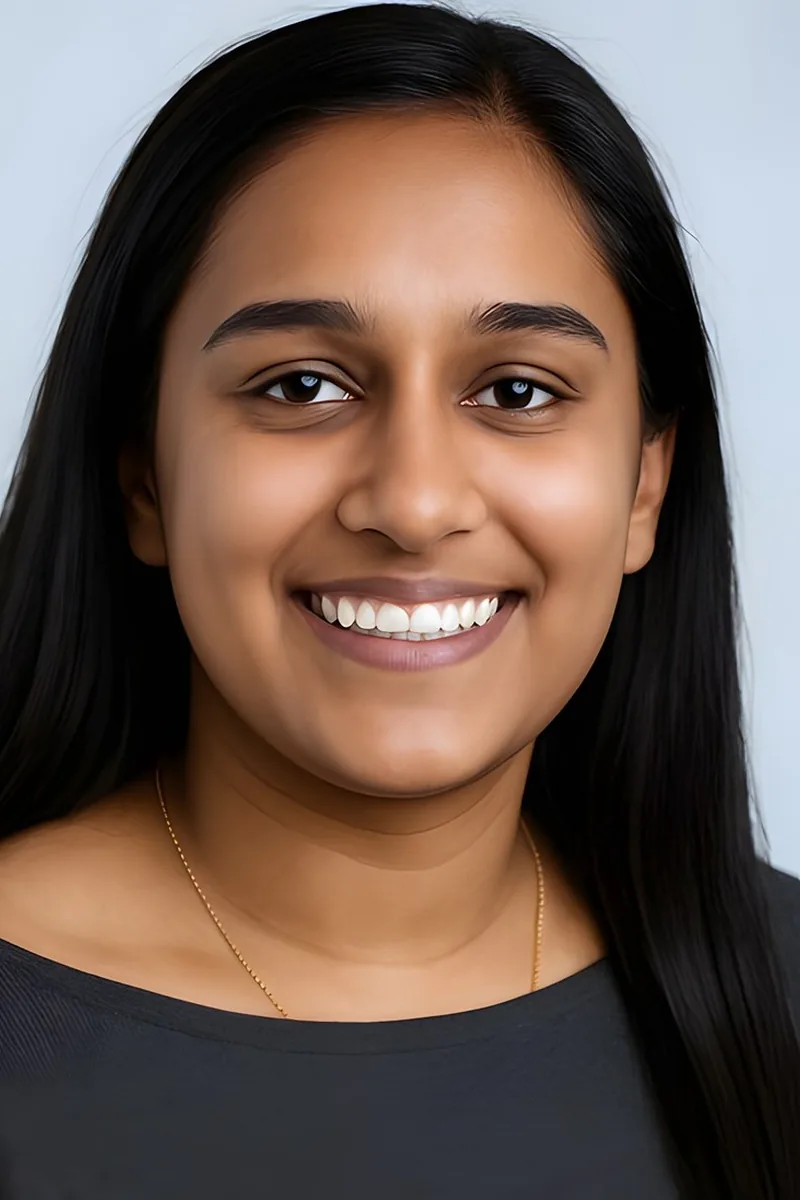
Students in a six-year medical program don't get to be shaky on math — and Vijaya's 1550 SAT confirms that fluency carries over to standardized testing. She zeroes in on the geometry and trigonometry questions that many students under-practice, teaching quick sketch-and-solve techniques that turn abstract angle and circle problems into straightforward calculations. Rated 5.0 by students.
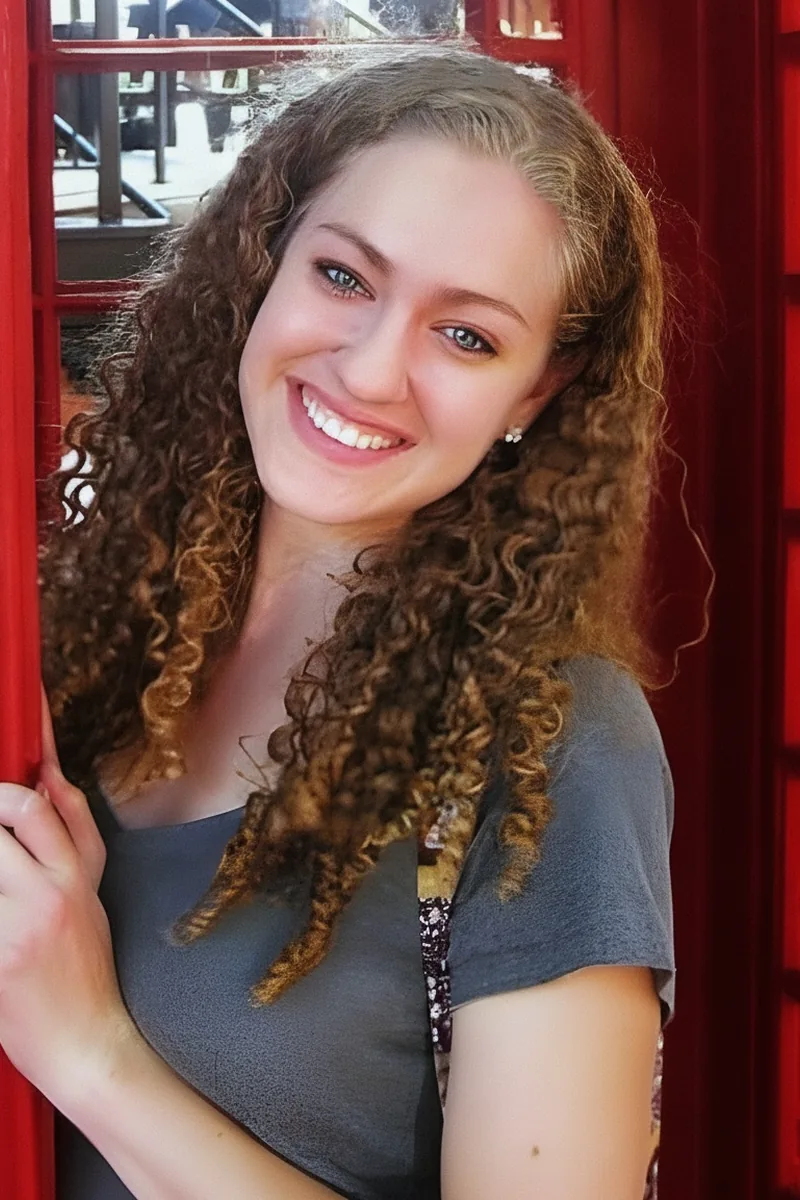
I am a graduate of Rockhurst University where I received my Bachelor of Arts in Elementary Education with a minor in English Literature. Upon graduating, I became certified to teach both elementary education (grades 1-6) and English Language Arts (grades 5-9) in the state of Missouri. I have spent the past two years teaching seventh grade reading and writing, and I have loved every minute of it! Not only do I love helping my students understand new concepts in my subject areas, but I also really enjoy sharing literature, both classics and new fiction, with them in hopes it will foster a love of reading. I believe in the power of literature to spark critical thinking and help students make meaningful connections to their lives and the lives of others. It may come as no surprise that one of my chief hobbies is reading; I try to read fifty new novels every year, many of which I can then recommend to my students! I tutor a broad range of subjects, most notably English, Literature, and ACT/SAT Test Preparations, but regardless of what I am tutoring, my teaching philosophy and style stems from building relationships with my students. While I have a great innate desire to help the next generation learn and succeed, I realize that the first step to doing so is getting to know my students and their individual needs. Only then can I create truly meaningful, relevant, and applicable lessons and tutoring sessions that will help them learn and grow. My passion is to help students realize their potential as life-long learners and help them succeed as they navigate their educational paths.
I am excited to help anyone who might need it!
I am an undergraduate at Washington University, and I grew up in Columbus, Ohio. Math has always been one of my favorite subjects. I love Pre-algebra, Calculus, Linear Algebra and everything in between! I have tutored for about four years and have worked with students of all ages. Most students come to me for Math, but I have also worked with students on SAT and ACT test prep, Statistics and Physics. Everyone learns in a slightly different way, and I love figuring out the best way to teach something to people individually and dig down to what questions they really need to have answered to understand the material. In my spare time, I like to go on long bike rides and explore St. Louis's restaurants. I also love baking, playing with dogs and cats, watching movies with my friends and playing soccer.
Hola! Mucho gusto! I am a Spanish and Biology tutor with more than three years of tutoring experience currently living in Panama City, Panama. I teach beginner and intermediate Spanish, focusing on developing conversational and grammatical skills in a variety of real-life contexts. I enjoy developing personalized lessons to match each student's needs. My goal is for my students to be able to face any Spanish-related challenge with confidence, so I teach a wide variety of topics to help my students gain practical experience speaking Spanish. I graduated from Harding University with my degree in Biochemistry in May of 2026. I love biology and have experience tutoring a variety of high school and college biology classes. My research focus is on the role of microglial cells in neurodegenerative diseases. On a personal note, I spend much of my free time making art, traveling, and spending time with my family.
A decade of teaching math and science bilingually in Ecuador gave Joy an unusually clear sense of how students misread SAT Math prompts — she treats each word problem as a translation exercise, training students to convert cluttered language into the clean algebraic setup hiding underneath. Her double major in biology and Hispanic literatures at Boston University meant constant toggling between quantitative and verbal reasoning, a combination that pays off on the SAT's data-interpretation and modeling questions where reading comprehension is half the battle.
Political science at Michigan means Mahika spends her weeks buried in polling data, statistical models, and policy cost-benefit analyses — quantitative reasoning that overlaps heavily with the SAT Math section's percentage, table-reading, and real-world modeling questions. She zeroes in on the algebra-to-application gap, teaching students to convert the test's deliberately wordy setups into straightforward equations before solving, a skill she sharpened through two-plus years of tutoring math alongside test prep.
Philosophy trains you to spot logical structure hiding inside messy language — which is exactly what the SAT Math section demands when it buries a straightforward quadratic or system of equations inside a paragraph of real-world context. Ezra scored a perfect 1600 and approaches every problem by teaching students to strip the question down to its formal skeleton before solving. Rated 4.8 by students.
Scoring a 1590 SAT means Anna has already dissected every question type the Math section throws at students — from no-calculator algebra and systems of equations to data analysis and passport-to-advanced-math problems involving polynomials and exponentials. She teaches efficient strategies for avoiding trap answers and managing pacing across both calculator and no-calculator modules.
I am an interdisciplinary educator with an Ed.M. from the Harvard Graduate School of Education and a B.A. from Dartmouth College. My background is primarily in integrated arts learning and museum education and I specialize in visual arts, history and art history, and object-based learning. In all subjects, I take a creative, inquiry-based and learner-centered approach, designing opportunities for each unique individual to meet their learning goals.
I'm not tutoring or buried in my textbooks, you will either find me rock climbing at the Triangle Rock Club, playing Ultimate Frisbee, working on my car, or enjoying the great outdoors (beaches, mountains, forests--you name it, I love it). On rainy weekends I enjoy tinkering with computers and old electronics, playing Pokemon, or picking at my guitar.
A math degree from Georgetown plus a 1580 SAT means Peter doesn't just know the content — he knows which algebraic shortcuts and graph-reading strategies actually save time under pressure. He breaks the SAT Math section into pattern categories so students recognize problem types within seconds and spend their energy solving, not deciphering. Rated 5.0 by students.
Engineering coursework gave Conor a comfort with math that most SAT tutors simply don't have — he sees the underlying concept a question is testing before he finishes reading it. With a 1560 SAT composite, he knows exactly where the test writers hide difficulty, especially in the no-calculator section's algebra and data analysis problems. He drills students on recognizing problem types quickly so they spend time solving, not deciphering.
Scoring 1530 on the SAT gave Asta firsthand insight into how the Math section layers algebra, data analysis, and advanced concepts like passport-to-advanced-math quadratics into increasingly tricky contexts. She zeroes in on the specific question types a student struggles with — whether that's systems of equations, percent-change word problems, or interpreting scatterplot data — and builds targeted practice around those gaps.
Scoring 1570 on the SAT means Eric knows exactly where the test tries to trip students up — especially on the math side, where questions about quadratics, systems of equations, and data interpretation are designed to punish rushing. He breaks each problem type into a decision tree so students recognize what's being asked before they start calculating. That pattern-recognition skill is what separates a good math score from a great one.
Psychology and linguistics both demand rigorous data interpretation — Sherry's UChicago coursework in experimental design and statistical analysis maps directly onto the SAT Math section's tables, scatterplots, and percentage questions. Her perfect 1600 SAT means she's mastered every corner of the test, but she zeroes in on the geometry and advanced math problems where students most often misread what's being asked, using her linguist's instinct to untangle the SAT's deliberately tricky phrasing. Rated 5.0 by students.
I'm a graduate of Columbia University with a B.A. in History. I'm passionate about history and English, but I'm a competent math tutor as well. I have received outstanding scores on my SAT and AP tests, and am confident in my ability to pass on these skills to the next generation.
Classics and philosophy trained Austin to think in precise logical structures — the same skill that untangles the SAT Math section's deliberately tricky word problems, where understanding what's being asked matters as much as knowing the math. His 1570 SAT means he's already cracked the test at a near-perfect level, and he teaches students to convert convoluted phrasing into straightforward algebraic setups before solving anything.
After earning a 1590 on the SAT, Daniel built a clear playbook for the math section that separates "concept" problems from "strategy" problems — because a student who knows the algebra can still lose points to time pressure or misread graphs. He walks through data-interpretation and word-problem translation techniques that turn careless errors into reliable points.
Testimonials
Because the right SAT Math tutor makes all the difference.
Average Session Rating – Based on 3.4M Learner Ratings
Practice SAT Math
Free practice tests, flashcards, and AI tutoring for SAT Math
Nearby SAT Math Tutors
Other Kansas City Tutors
Related Test Prep Tutors in Kansas City
Frequently Asked Questions
Score improvement depends on your starting point and how consistently you work with a tutor, but most students see meaningful gains within 8-12 weeks of focused preparation. Students who start in the 500-600 range often improve by 50-100 points, while those already scoring 650+ typically gain 30-80 points. The key is identifying your specific weak areas—whether that's algebra, geometry, or test-taking pacing—and addressing them systematically.
The biggest obstacles are pacing (running out of time on harder questions), misunderstanding what a question is asking, and gaps in foundational algebra and geometry concepts. Many students also struggle with the transition from calculator to no-calculator sections, or with multi-step word problems that require careful reading. A tutor can help you develop strategies for each challenge, like knowing when to skip and come back, or breaking complex problems into manageable steps.
Most students benefit from 8-16 weeks of consistent tutoring before test day, meeting 1-2 times per week. If you're starting further out (6+ months), you can space sessions more gradually. The timeline really depends on your target score and current skill level—students aiming for 700+ typically need more intensive preparation than those targeting 600. Your tutor can create a personalized study plan that fits your timeline and goals.
Practice tests are essential—they help you get comfortable with the format, identify weak areas, and build stamina for the full exam. You should take at least 4-6 full practice tests during your preparation, spacing them out over several weeks so you have time to address mistakes between attempts. After each test, review every problem you missed or guessed on, not just the ones you got wrong—this retrieval practice is what actually builds your skills.
Look for tutors who have strong mathematics backgrounds and specific experience with SAT test prep—they should understand both the content and the test's unique format and timing constraints. It helps if they've worked with students at your current score level and can show a track record of score improvements. Most importantly, find someone who can explain concepts clearly and adapt their teaching style to how you learn best.
Confidence comes from preparation and familiarity. When you work through problems repeatedly, practice test-taking strategies, and see yourself improving, anxiety naturally decreases. Tutors can also teach you specific techniques like pacing strategies, stress-management tips for the test day, and how to approach difficult problems without panicking. Knowing you've practiced thoroughly is one of the best antidotes to test anxiety.
Your first session typically includes a diagnostic assessment to understand your current skills, identify gaps, and learn about your target score and timeline. The tutor will ask about your strengths and challenges, review past test results if you have them, and discuss your learning style. From there, they'll create a personalized study plan that focuses on your specific weak areas and test-taking strategies you need to master.
Kansas City students have access to expert tutors who understand the local academic landscape and can provide personalized instruction tailored to your needs. Whether you attend school in one of Kansas City's 24 school districts or are preparing independently, Varsity Tutors connects you with tutors who can work around your schedule and help you reach your SAT Math goals. Personalized 1-on-1 instruction is proven to be one of the most effective ways to improve standardized test performance.
Let’s find your perfect tutor
Answer a few quick questions. We’ll recommend the right plan and match you with a top 5% tutor.