Award-Winning Geometry Tutors
serving Kansas City, MO
Geometry
Tutors in Kansas City
Private 1-on-1 tutoring, weekly live classes for academic support, test prep & enrichment, practice tests and diagnostics, and more to elevate grades and test scores.
Based on 3.4M Learner Ratings
UniversitiesSchools & Universities
DeliveredHours Delivered
ProficiencyGrowth in Proficiency
Who needs tutoring?
No obligation. Takes ~1 minute.
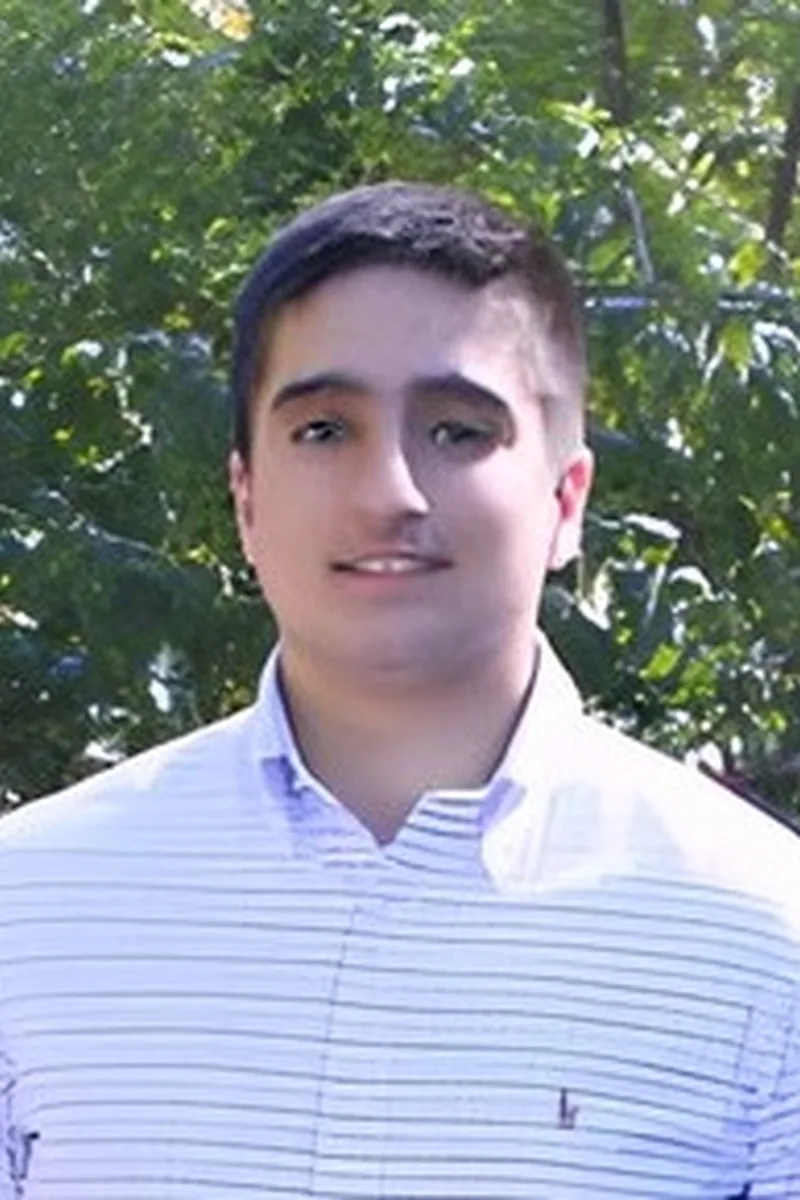
A chemistry major at WashU, Mubariz is used to thinking about molecular geometry — bond angles, spatial arrangements, symmetry — which gives him a natural entry point into the kind of shape-and-angle reasoning that drives high school geometry. He teaches the 'why' behind each theorem rather than just the procedure, breaking down problems involving triangle relationships and angle properties so students can reconstruct the logic on their own instead of memorizing steps.
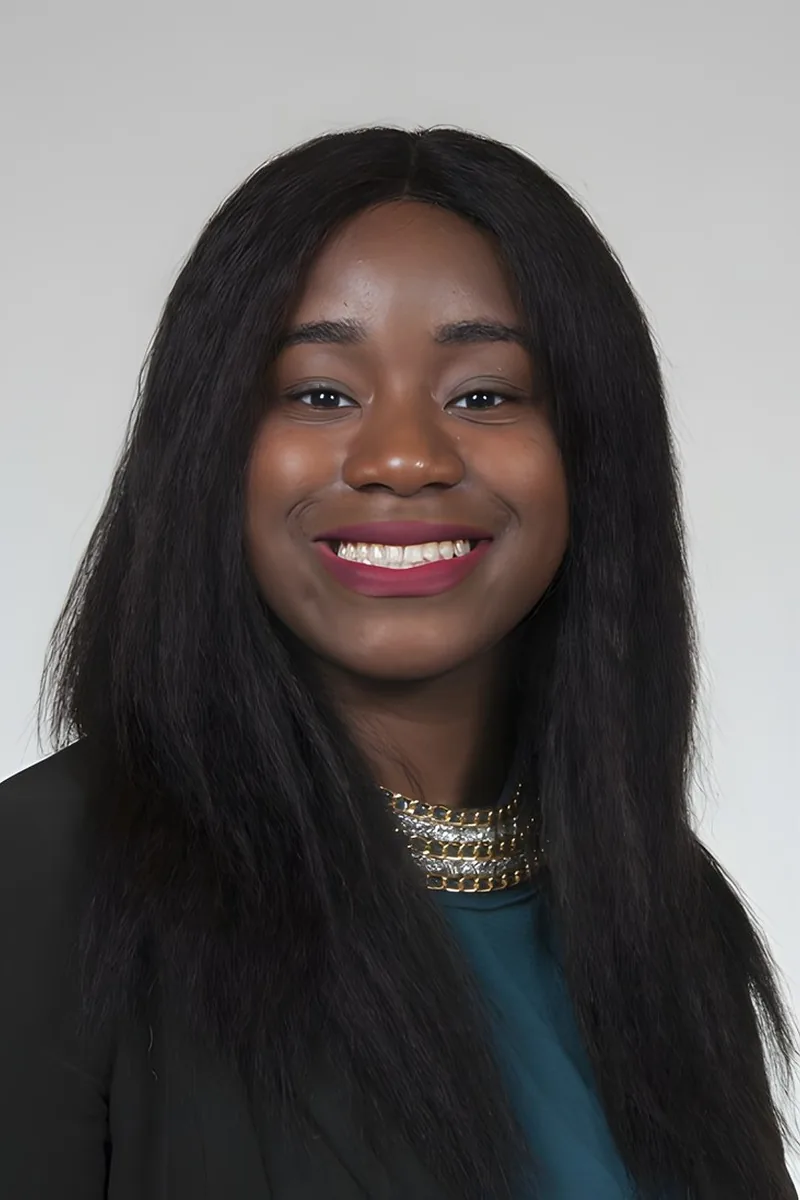
Proofs are usually the first place geometry students panic, and Jessica has a knack for demystifying them by teaching the logical structure behind each step before asking anyone to write one. She covers everything from triangle congruence and similarity to circle theorems and coordinate geometry. Her medical school training in systematic reasoning translates surprisingly well to the deductive thinking geometry demands.
Chemical engineering is full of geometry most students never see — reactor vessel dimensions, pipe cross-sections, flow through oddly shaped channels — so Austin thinks about shapes and measurements as practical tools, not abstract exercises. He unpacks problems involving area, volume, and right-triangle relationships by tying them back to physical intuition about why the formulas work the way they do.
Proofs are usually the first place geometry students get stuck — going from "I can see it's true" to writing a logical argument feels like a completely different subject. Jordan approaches proof-writing as an engineering problem: identify what you know, figure out what connects to what, and build the argument one justified step at a time. He also covers coordinate geometry and triangle relationships with the same structured thinking.
Proofs are usually the part of geometry that trips students up, because suddenly math requires written arguments instead of calculations. Matt teaches students to map out each logical step — from identifying congruent triangles to applying parallel-line theorems — the same way he'd sketch out an engineering design before building it.
A math major at Washington University with a 35 ACT, Kathleen has the kind of fluency across algebra, trigonometry, and spatial reasoning that lets her spot exactly which prerequisite skill is tripping a geometry student up — whether it's solving equations inside angle relationships or applying trig ratios to right triangles. She teaches the "why" behind each theorem so students can reconstruct steps on their own instead of memorizing proof templates.
Proofs are usually where geometry students panic — the logic feels unfamiliar and the format is rigid. Rachel teaches proof-writing as organized storytelling, showing students how to chain together postulates and theorems into an argument that flows. Her emphasis on diagramming and marking up figures gives students a concrete anchor before they ever write a single statement.
Proofs are usually the moment geometry stops feeling easy, so Jacob spends real time on the logic behind congruence and similarity rather than rushing to the next theorem. His scientific training at Missouri State sharpened his ability to build step-by-step arguments — exactly the skill students need when tackling two-column proofs, angle relationships, and coordinate geometry problems.
The jump from arithmetic to geometry is the first time many students have to argue *why* something is true instead of just computing an answer — and that shift trips up more kids than any specific theorem. John's math degree means he can teach the reasoning behind congruence and angle relationships from the ground up, connecting each proof step to intuition rather than leaving students to memorize statement-reason pairs. His 35 ACT reflects the kind of precise, methodical thinking he brings to even the trickiest multi-step diagram problems.
I am excited to help anyone who might need it!
A decade of teaching science in bilingual classrooms in Ecuador gave Joy a knack for making abstract ideas concrete — a skill that pays off in geometry when students need to visualize why a proof works or how a transformation changes a figure. Her biology background, where diagramming structures and reasoning about spatial relationships is routine, translates naturally to topics like symmetry, properties of polygons, and geometric constructions.
Proofs are usually the first time a math student has to construct a logical argument rather than just compute an answer, and that shift trips up a lot of Geometry students. Samantha's doctoral training in computer science was built on formal logic and proof construction, so she teaches students to approach two-column and paragraph proofs as structured reasoning exercises rather than mysterious rituals.
Theater training builds a surprising skill for geometry: Amber's background in staging and set design means she's used to thinking about space, angles, and spatial relationships in practical, visual terms — which translates directly to topics like transformations, reflections, and symmetry. She teaches students to sketch and annotate diagrams before jumping into calculations, turning abstract problems into something they can actually see and reason through. Rated 5.0 by students.
Proofs are usually where geometry stops feeling like math and starts feeling like a foreign language. JF breaks down the logic behind two-column and paragraph proofs so students see them as structured arguments, not mysterious rituals. A 5.0 client rating speaks to an approach that makes even angle-chasing problems feel manageable.
Neurobiology at Harvard meant Emma spent years interpreting complex diagrams of neural pathways and brain structures — skills that translate directly to reading the dense, multi-layered figures in geometry where you have to pull out the right angle relationship or identify similar triangles buried inside a larger shape. She tackles the subject from the logic side, treating each proof like a scientific hypothesis that needs step-by-step evidence. Rated 5.0 by students.
Having taught Geometry at a charter high school, Wamweni knows exactly where students get stuck — whether it's writing two-column proofs, applying triangle congruence theorems, or visualizing transformations on the coordinate plane. She approaches each topic by connecting it to something concrete before moving into formal reasoning. Her 5.0 rating speaks to how well that method lands with students.
Proofs are usually the first place geometry students get stuck, because suddenly math requires structured argumentation instead of computation. Sami approaches geometric reasoning the way he learned to build logical arguments in computer science at Duke — step by step, with each claim justified before moving to the next. He covers everything from triangle congruence to circle theorems with that same emphasis on clear, connected thinking.
Proofs are usually the first place geometry students feel lost, because suddenly they're being asked to construct arguments instead of compute answers. Ben teaches proof-writing as a logical skill: identifying what's given, what's needed, and which theorems bridge the gap. His approach turns the frustration of "I don't know where to start" into a repeatable process.
Proofs are usually the sticking point in geometry — students can calculate angles and areas but freeze when asked to construct a logical argument from postulates. Kevin tackles this by teaching proof strategy as a skill: identifying what's given, what's needed, and which theorems connect the two. His background in computational geometry and algorithmic thinking at Stanford gives him a structured approach that clicks for students who think logically.
Most geometry struggles aren't about the shapes — they're about constructing logical arguments. Writing a two-column proof or reasoning through circle theorems requires a style of thinking that Justin, trained in mathematical proof at both the undergraduate and doctoral level, breaks down into concrete steps. He treats each theorem as a claim that needs defending, which builds reasoning skills students carry into every future math class.
An MIT math major doing research in Spectral Graph Theory, Enrico brings a deep comfort with spatial structures and relationships that makes geometry's core ideas — congruence, similarity, transformations — feel like natural extensions of logical thinking rather than a pile of disconnected rules. He emphasizes building intuition around definitions so that when a problem asks students to prove two triangles congruent or reason about angle bisectors, the right approach surfaces on its own. Rated 5.0 by students.
Proofs are where most geometry students stall — the jump from calculating angles to constructing logical arguments feels like a completely different subject. Caroline's engineering training at WashU required rigorous spatial reasoning and formal proof techniques, so she teaches geometry as a system of logic rather than a collection of shape formulas. She unpacks each theorem step by step until the reasoning becomes second nature.
Proofs are usually where geometry stops feeling intuitive and starts feeling arbitrary. Anthony approaches them as logical arguments rather than rote templates, drawing on his background in math and philosophy to teach students how to construct reasoning step by step. His 5.0 rating speaks to how well that approach clicks.
Proofs trip up a lot of Geometry students because they require a completely different kind of thinking — constructing logical arguments instead of just computing answers. Michelle approaches proofs and spatial reasoning the way she approaches scientific problems: systematically, breaking each claim into smaller pieces until the conclusion becomes obvious.
Testimonials
Because the right Geometry tutor makes all the difference.
Average Session Rating – Based on 3.4M Learner Ratings
Practice Geometry
Free practice tests, flashcards, and AI tutoring for Geometry
Nearby Geometry Tutors
Other Kansas City Tutors
Related Math Tutors in Kansas City
Frequently Asked Questions
Many students struggle with the transition from algebra's procedural focus to geometry's emphasis on visual reasoning and logical proof. Common pain points include understanding why geometric theorems work (not just memorizing them), tackling multi-step proofs, interpreting word problems that require spatial visualization, and connecting abstract concepts like congruence and similarity to real-world applications. Personalized tutoring helps students build conceptual understanding rather than relying on memorization alone.
Proofs require students to think logically and justify each step—skills that benefit greatly from one-on-one guidance. A tutor can break down the proof-writing process, help students identify which theorems and properties apply to specific problems, and develop strategies for organizing their reasoning clearly. With personalized instruction, students learn to see the logical flow of proofs rather than viewing them as mysterious exercises.
Geometry word problems require students to translate written descriptions into visual representations, then solve using geometric reasoning—a multi-step cognitive process. Many students struggle because they can't visualize the scenario or don't know which geometric concepts apply. Personalized tutoring helps students develop strategies for sketching problems, identifying key information, and selecting the right theorems or formulas to use.
Yes. Kansas City's 24 school districts use various geometry programs, and tutors connected through Varsity Tutors understand how different curricula approach topics—whether your student's course emphasizes coordinate geometry, transformations, or traditional Euclidean methods. Tutors can align their instruction with your student's specific textbook and course structure, ensuring consistency with what's being taught in class.
Geometry can feel intimidating when students don't understand the 'why' behind concepts, but personalized instruction builds confidence through understanding. A tutor creates a judgment-free space to ask questions, work through problems step-by-step, and see patterns emerge. As students experience success and develop stronger conceptual understanding, math anxiety naturally decreases and they approach geometry with more confidence.
The first session focuses on understanding your student's current level, learning style, and specific geometry challenges. The tutor will assess which concepts are solid and where gaps exist, then work on one or two problems to identify the best teaching approach. This foundation helps the tutor create a personalized plan that targets your student's needs, whether that's building conceptual understanding, improving proof-writing, or tackling word problems.
One-on-one instruction allows tutors to highlight how different geometric concepts relate to each other—like how transformations connect to congruence, or how coordinate geometry relates to traditional proofs. Rather than treating each topic as isolated, a tutor helps students build a connected understanding of geometry as a logical system. This deeper comprehension makes it easier to solve new problems and apply concepts in unfamiliar situations.
Varsity Tutors connects you with expert tutors who specialize in geometry and understand the specific needs of students in Kansas City. Simply share your student's current geometry challenges and learning goals, and we'll match them with a tutor who fits their style. You can start with a single session to see if it's a good fit, then build a consistent tutoring plan based on what works best.
Let’s find your perfect tutor
Answer a few quick questions. We’ll recommend the right plan and match you with a top 5% tutor.