Award-Winning Grade 10 Math
Tutors
Grade 10 Math
Tutors
Private 1-on-1 tutoring, weekly live classes for academic support, test prep & enrichment, practice tests and diagnostics, and more to elevate grades and test scores.
Based on 3.4M Learner Ratings
UniversitiesSchools & Universities
DeliveredHours Delivered
ProficiencyGrowth in Proficiency
Who needs tutoring?
No obligation. Takes ~1 minute.

Quadratic equations, analytic geometry, and trigonometry fundamentals all converge in Grade 10, and each one builds directly on the next year's material. Ravnoor's approach is to decompose a tough problem — say, solving a system involving a line and a circle — into smaller steps a student can handle independently. Rated 5.0, he keeps sessions focused on active problem-solving rather than passive note-taking.
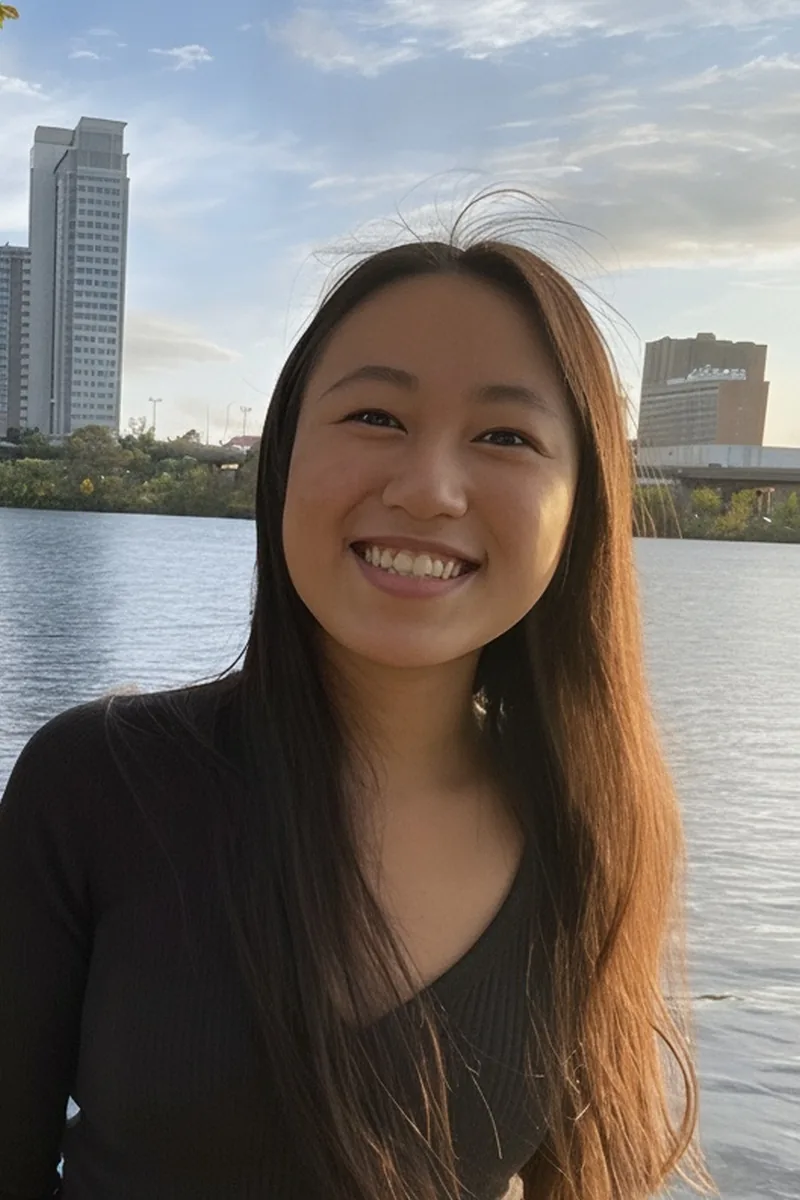
Four years teaching elementary and middle school math in Boston gave Yan a sharp eye for the specific foundational gaps — integer operations, proportional reasoning, fraction fluency — that quietly sabotage students when quadratics and coordinate geometry arrive in 10th grade. She diagnoses those gaps fast and patches them while teaching the current material, so students aren't trying to learn function transformations on a shaky base. Her 1500 SAT and master's in curriculum design inform how she sequences and scaffolds each lesson.
Tenth-grade math typically lands somewhere between advanced algebra and early trigonometry, which means students are juggling quadratic applications, function composition, and right-triangle trig all at once. Mandy identifies which of these threads is causing the most friction and builds confidence there first, creating momentum that carries into the rest of the curriculum.
A Ph.D. in Computer Science might seem unrelated to 10th-grade math, but Firas's research in machine learning at Princeton is built entirely on the algebra, functions, and geometric reasoning that define sophomore curricula — he uses quadratic optimization and coordinate geometry daily. That real-world fluency lets him show students exactly where concepts like systems of equations or parabola transformations lead, making abstract material feel purposeful. Rated 5.0 by students.
Sophomore math is where abstraction ramps up: quadratic functions, exponential growth, and coordinate geometry all demand a shift in thinking from arithmetic to analysis. Brian's economics training gives him a knack for making graphs and functions feel intuitive, since he learned to read and interpret them as tools for understanding real-world data.
Nupur's physics degree means she learned quadratic functions, trigonometry, and coordinate geometry not as abstract exercises but as tools for solving real problems — calculating trajectories, modeling wave behavior, analyzing forces. That science-first perspective gives her a concrete way to explain why completing the square matters or how right-triangle trig connects to the unit circle. Rated 5.0 by students.
Grade 10 is where math shifts from computation to reasoning — quadratic functions, analytic geometry, and trigonometric ratios all demand a new level of abstraction. Oluwatosin tackles this transition by anchoring each new concept in something concrete, like using coordinate geometry to model real spatial problems. His 4.8 rating speaks to how well that approach lands with students at this critical stage.
Sophomore math usually means geometry or algebra 2, and both demand a different kind of thinking than the algebra students are used to. Rinky digs into the specific sticking points — whether that's writing geometric proofs or graphing rational functions — and adapts her explanations to each student's learning style. She's been tutoring math at this level for years and holds a 5.0 rating.
Sophomore math typically means geometry proofs and the transition into Algebra 2, two areas where students either build real confidence or start falling behind. Austin began tutoring middle and high schoolers while still in high school himself, so he knows exactly where tenth graders tend to get stuck — especially on logical reasoning in proofs and manipulating polynomial expressions. His approach starts by understanding how a student already thinks about a problem before redirecting their strategy.
Sophomore math is where algebra meets geometry and trigonometry starts entering the picture, and the abstraction level jumps noticeably. Jeff walks students through topics like quadratic functions, right-triangle trig, and coordinate geometry by grounding each one in a concrete problem first, then building toward the general rule — an approach rooted in his engineering training.
When I was in school, I loved math, but there were some topics I struggled to grasp. I had some really great teachers and tutors help me work through these challenges. My favorite feeling was mastering a topic that I'd worked hard on, and seeing how it went from impossible and scary to second-nature. That type of mastery is what I'd like to help you achieve! I've been intimidated by my fair share of math problems (all the way through an engineering master's degree), but I've learned that you can figure out anything with a little help!
Unlock your academic potential with a tutor who bridges the gap between elite performance and foundational mastery. As a National AP Scholar with advanced coursework in Multivariable Calculus and Data Structures, I bring high-level expertise to your studies. Whether you are tackling complex algorithms or advanced math, I provide the precise guidance you need to excel. My experience at Kumon and Mathnasium taught me that even the most complex goals start with strong basics. I believe in both individual learning as well learning through guided practice, so whatever your way to learn I can accomodate to help you do the very best.
Tenth-grade math typically brings quadratic functions, right-triangle trigonometry, and coordinate geometry proofs together in ways that reward flexible thinking over rote memorization. Elsa digs into the reasoning behind each method — why completing the square works, how the distance formula connects to the Pythagorean theorem — so students can adapt when problems don't match the textbook example. Her math degrees give her the depth to answer the inevitable "but why?" questions.
Tenth-grade math usually means geometry or Algebra 2, and both require a shift from memorizing procedures to understanding why methods work. Snipta breaks down topics like quadratic modeling and coordinate geometry by connecting each concept to a logical framework, drawing on the structured problem-solving he honed through computer science at UT Dallas.
Tenth-grade math is where quadratic functions, trigonometric ratios, and analytic geometry start demanding real algebraic fluency. Raha approaches each of these topics by connecting them back to ideas students already know — showing, for instance, how the quadratic formula is just completing the square in disguise. Her engineering background gives her a deep well of practical applications that make abstract formulas feel purposeful.
Sophomore math usually means geometry or the start of Algebra 2, and both demand a shift in thinking — proofs require logical argument, while Algebra 2 introduces function families that feel abstract for the first time. Thomas is especially good at slowing down on these transition points and making sure the reasoning is solid before moving on to the next chapter.
Tenth-grade math typically means geometry proofs, deeper work with quadratics, or the start of trigonometry — all areas where a student can fall behind quickly if one building block is shaky. Akshadha pinpoints those weak spots early and addresses them directly, drawing on her analytical training in biology to make logical reasoning feel natural rather than intimidating.
Hello! My name is Yucheng, and I am a mathematics and ACT tutor with bachelor's and master's degrees in Mechanical Engineering. I have extensive experience helping students with Algebra , Algebra 2, Precalculus, AP Precalculus, and AP Calculus. I focus on breaking down complex math concepts, strengthening problem-solving skills, and adapting my teaching methods to each student's individual needs. Having personally taken the ACT and achieved a 35, I have developed a thorough understanding of the exam's structure, patterns, and developed effective strategies for English, Math, Reading, and Science. I emphasize time management, accuracy, and help students develop pattern recognition for challenging questions. My goal is to help students build confidence and develop the skills needed for long-term academic success. I look forward to working with you!
Sophomore math typically means geometry or Algebra 2, and both demand a different kind of thinking than Algebra 1 did. Emma is especially strong at unpacking logarithmic and exponential relationships, showing students how to read a problem's structure before jumping to a formula. Her 5.0 client rating speaks to how well that approach lands.
Holding a BA in Mathematics (with departmental honors) from Northwestern University, armed with experience in mathematics research and graduate-level math courses, and having achieved a 5 on the AP Calculus exam and a 1500 on the SAT, my students can count on me to be a knowledgeable and capable mentor in mathematics. I am a new and rising math tutor from southern Indiana with a sympathetic tutoring ethos: Math is hard, so I work not only to effectively teach what is in a course's curriculum, but also to instill my students with the confidence needed to be proficient problem-solvers. I handcraft exercises and examples tailored to a particular students needs. Oftentimes, a well-placed example is the key to understanding. Whether you or your student is falling behind in class, trying to nail the next big test, or seeking a challenge, my services will be an invaluable aid to your learning.
Sophomore math is where geometry proofs, right-triangle trigonometry, and more complex algebraic reasoning start demanding real precision. Esther teaches students to organize their thinking — setting up clear diagrams, labeling knowns and unknowns, and writing solutions that follow a logical chain. That structured approach keeps students from getting lost in multi-step problems.
Tenth grade math typically means geometry proofs one semester and a deep dive into quadratics or trigonometry the next, and the constant shifting can leave students unsure of what they actually know. Sheena maps out exactly where the confusion starts — whether it's applying the Pythagorean theorem in three dimensions or graphing transformations — and rebuilds understanding from that point forward.
Sophomore math is where abstraction ramps up: quadratic functions, polynomial behavior, and the logic of proofs can feel disconnected from anything real. Jennifer tackles that disconnect by showing students how these concepts power the science and research she does professionally, turning 'why do I need this?' into a question with an actual answer.
Tenth-grade math is where algebra and geometry start merging — systems of equations show up inside coordinate geometry problems, and quadratic functions suddenly require both algebraic manipulation and graphical reasoning. Sid's engineering coursework at Cleveland State means he uses these exact concepts daily, and he breaks down multi-step problems into clear, logical sequences. Rated 5.0 by students.
Sophomore math typically lands somewhere between geometry proofs and the start of Algebra 2, and students often struggle with the shift from visual reasoning to more symbolic manipulation. Isabel zeroes in on that transition, making sure concepts like function notation and systems of equations actually make sense before moving forward.
I'm a graduate student in Applied Statistics with experience in general math and computer programming to boot. I currently have a PhD in Applied Statistics with experience in data analytics. I've had the opportunity to do some math and statistics work for hospitals and research facilities, and I enjoy getting to share my passion for math with others to assist them in their education.
Dedicated to helping students succeed, I am passionate about fostering curiosity and critical thinking in STEM subjects. With a background in civil and environmental engineering, I have extensive experience working with undergraduate students as a teaching assistant, guiding them through complex concepts in science and engineering. I hold a MBA and am currently pursuing a PhD in Canada, specializing in climate adaptive urban development. I tutor all science-related subjects, with a particular passion for mathematics, geography, biology, chemistry environmental science and sustainability as they have real-world applications in solving global challenges. My teaching philosophy focuses on an interactive, student-centered approach, adapting to different learning styles while encouraging problem-solving and analytical thinking. Outside of academia, I enjoy exploring nature, reading about global sustainability initiatives, and engaging in community-driven environmental projects.
I have helped many students achieve excellent grades in math by focusing on what really matters: building confidence and a clear understanding of concepts. My teaching style is simple I make sure students fully understand the basics, then guide them step by step to solve problems on their own. I encourage lots of practice and always take time to clear doubts, so that no student feels left behind. Math doesn't have to be scary with the right approach, it becomes logical and even enjoyable! My aim is to make every student feel confident, independent, and capable of solving problems successfully.
Sophomore math is typically where quadratics, radical expressions, and more complex systems of equations land all at once. Kathryn zeroes in on the reasoning behind each method — why completing the square works, what the discriminant actually tells you — so students build real fluency instead of relying on memorized steps.
I have been an academic student who has always focused on excelling at whatever I do and giving my 100%. Teaching is my true passion and seeing my students learn and succeed gives me immense joy. Having helped several students over the past 5+ years, I am able to adapt my teaching style to my students' learning styles and methods. I look forward to helping many more students through the Varsity platform. While I tutor a variety of subjects, my passion is in teaching Math, Accounting, and Finance. My education: MBA in Strategic Management + Bachelor's degree in Business (Accounting and Finance).
Quadratic equations are usually the turning point in Grade 10 math — the moment when algebra stops being straightforward and starts requiring real problem-solving strategy. Sonali tackles this by walking students through factoring, completing the square, and the quadratic formula as connected tools rather than isolated procedures. Her science training at Boston University means she can also show where these ideas appear in real applications.
Hi, there my name is Yocheved. I love learning and teaching Math and Physics. I have experience working at the Mathnasium math tutoring center. I have also taught a GED Math course for refugees. I work for a company that works with schools to provide teachers online. I work for them teaching math online to high school students. I also worked at a high school semester abroad program teaching science as well as multiple math courses. My philosophy when working one on one with a student is to find an individualized approach for each student. I also stop and reassess the teaching methods in real-time if the student is struggling with a given approach. I work with a student to achieve their preset academic goals. I love working to help students master material they previously found to be a challenge.
I am a Junior at Rutgers University studying computer science. During my sophomore and junior years of high school, I authored the first Java programming class in the public library. I taught children aged 9 through 13 the basics of computer programming and writing applications in Java. In addition to computer science, I am passionate about teaching math and am a firm believer that teaching should be fun and interactive to be effective. I am well-versed in all math subjects through Calculus 2.
Hello! My name is Sam Bicking. I am an alumni and student at The University of Pennsylvania studying Pre-health sciences before entering medical school. I have been tutoring for several years with students with disabilities (and amazing students without disabilities).
I strongly believe that the purpose of education is not to bombard students with information but to equip them with the skills they need to start thinking independently. Having been a teacher for the past 5 years, I have focused on helping my students develop core concepts by explaining and following up with practice questions. In the past I have taught Mathematics, Statistics, Calculus, Pre-Calculus, Physics, Chemistry and Biology.
Geometry proofs and coordinate geometry trip up a lot of sophomores because the reasoning feels completely different from algebra. Gabriel approaches proofs as logical arguments — each step needs evidence, just like writing a persuasive essay — which makes the structure click for students who think verbally. His computer science background reinforces that same step-by-step logical thinking.
Hello, I am a math and science assistant teacher for middle school special education students. I am a graduate student at George Mason University in the process of attaining my teaching license. I became a tutor because I believe it is important for students to build a strong foundation at a young age and for some students, that is done best outside of a traditional classroom. Prior to working for Varsity Tutors, I worked as an instructor at Mathnasium, and as a freelance tutor for a few years. I have experience working with students from elementary through high school, and primarily focus on math. My goal as a tutor is to give the student the understanding and confidence to be able to solve problems without assistance so I try to allow them to think through solutions on their own and provide assistance when necessary rather than simply giving answers.
As a Computer Science graduate with a minor in Mathematics from Dalhousie University, I am passionate about teaching and dedicated to fostering a deep understanding of complex concepts in my students. With over 2 years of tutoring experience, I specialize in a wide array of subjects, including AP Calculus AB, AP Calculus BC, Linear Algebra, ACT, SAT and various College-level Calculus and Computer Science courses. My teaching philosophy centres on creating a supportive learning environment where students feel encouraged to ask questions and explore their curiosity. I believe in tailoring my approach to meet the unique needs of each student, ensuring they grasp the material and build confidence in their abilities. My goal is to inspire a love for learning and help students achieve their academic aspirations.
Tenth-grade math typically lands somewhere between geometry proofs and the early stages of Algebra 2 — a stretch where students need both procedural fluency and logical reasoning. Dolmecia tackles this by connecting each new concept back to skills students already have, making the jump to quadratic functions or trigonometric ratios feel less like starting over.
I am a career Mathematics teacher, specializing in IB AA and AI, both at the SL and HL levels. If I have to sum up my professional life, I would say the following about my experience: Examiner with the International Baccalaureate Organization (IBO) for Higher Level (AA) Mathematics. Massachusetts State Teaching Certification: Licensed to teach Mathematics (6-12). Massachusetts State Teaching Certification: Licensed to teach Physics. Training: IB (Physics), IT (Industry). MBA in Finance. BS in Pure and Applied Mathematics. Diverse Classroom Experience spanning over 30 years teaching in USA, China, UAE, Qatar, Syria and Egypt within the IB (Analysis and Approaches as well as Applications and Interpretations), IGCSE and US HS (including AP) Diploma curricula. Multilingual capability with fluency in English and Urdu, and in Hindi. Familiarity with various world cultures and their values; well- traveled in Far East, South Asia, Middle East, North Africa, Europe and North America. I will be most happy to expand on any of the above as needed.
Testimonials
Because the right Grade 10 Math tutor makes all the difference.
Average Session Rating – Based on 3.4M Learner Ratings
Top 20 Math Subjects

Top 20 Subjects
Frequently Asked Questions
Grade 10 students often find quadratic equations and their multiple solution methods (factoring, completing the square, quadratic formula) particularly challenging, especially when deciding which approach fits the problem best. Word problems involving systems of equations trip up many students because they require translating real-world scenarios into mathematical language, then solving two equations simultaneously. Graphing and understanding how transformations affect parabolas and other functions—shifts, stretches, reflections—is another common sticking point, as is recognizing patterns between an equation's form and its graph. Geometry proofs also challenge students who haven't yet internalized the logical reasoning required to justify each step.
Grade 10 is where math shifts from "follow the steps" to "understand the reasoning," and tutors help bridge that gap by asking students to explain their thinking rather than just checking if the final answer is correct. For example, when solving a quadratic equation, a tutor might ask "Why does factoring work here but not there?" or "What does the discriminant actually tell us about the solutions?" This approach helps students see that algebra isn't arbitrary rules—it's a logical system where each operation has a purpose. Personalized tutoring also reveals gaps in foundational skills (like fraction manipulation or exponent rules) that are blocking conceptual understanding, so tutors can address root causes rather than surface-level mistakes.
Word problems require students to translate English into equations, which is a skill many Grade 10 students haven't explicitly practiced. Tutors teach a structured approach: identify what you're solving for, define variables clearly, extract the mathematical relationships from the text, and then solve. For instance, in a problem about two trains leaving a station at different speeds, a tutor helps students recognize it's a distance-rate-time scenario and set up equations like distance = rate × time for each train. Breaking the problem into smaller chunks and asking "What does this sentence tell us mathematically?" makes the process less overwhelming. Over time, students start recognizing problem types and patterns, building confidence and independence.
Showing work isn't just about partial credit—it helps teachers (and tutors) see where thinking breaks down and it trains students to organize their reasoning logically, which becomes essential for proofs and higher math. A tutor models clear, step-by-step solutions and explains why each step matters, then gradually expects students to do the same. This builds habits like defining variables before using them, writing out the quadratic formula before substituting values, or stating which property justifies each step in an equation. When students practice articulating their reasoning out loud or on paper, they catch their own errors and develop the mathematical communication skills that are increasingly important as courses get harder.
Many Grade 10 students memorize that y = (x – 3)² shifts right 3 units but don't understand why, which makes them helpless when faced with unfamiliar functions or combined transformations. A tutor builds understanding by starting with concrete examples: pick a few points on y = x², then substitute (x – 3) and plot the new points to see the shift visually. Once students see that the transformation happens because the input is delayed, they grasp why y = 2(x + 1)² – 5 involves a left shift, vertical stretch, and downward shift. Graphing technology can reinforce this by letting students experiment with coefficients and see changes in real time, turning abstract rules into observable patterns.
Geometry proofs feel abstract and rigid to many Grade 10 students because they haven't yet internalized that a proof is just a logical argument, not a mysterious ritual. Tutors start by having students explain why something is true in everyday language—"Why is this angle equal to that one?"—then gradually formalize the reasoning using definitions and theorems. Beginning with simple, highly guided proofs (like "Prove these triangles are congruent using SSS") builds confidence before tackling multi-step proofs. A tutor also emphasizes that being stuck is normal and teaches problem-solving strategies like working backward from what you want to prove or drawing auxiliary lines to reveal hidden relationships. This reframes proofs as puzzles to solve rather than hoops to jump through.
Math anxiety often stems from past struggles, gaps in foundational skills, or the pressure of increasingly abstract concepts, and personalized tutoring addresses all three by working at the student's pace without judgment. A tutor identifies exactly where confidence breaks down—maybe it's negative numbers, factoring, or the transition to abstract variables—and rebuilds skills step by step with immediate, encouraging feedback. The 1-on-1 setting also removes the pressure of classroom pace and peer comparison, giving students space to ask "dumb questions" and make mistakes safely. As students experience success on progressively harder problems, they realize they're capable, which shifts their mindset from "I can't do math" to "I haven't learned this yet."
An effective Grade 10 Math tutor needs strong command of the full curriculum—quadratics, systems, functions, geometry, and trigonometry—but equally important is the ability to diagnose why a student is stuck and explain concepts multiple ways. Look for tutors who ask questions to understand student thinking rather than just correcting answers, who can connect Grade 10 topics to both foundational skills (like exponent rules) and future courses (like precalculus), and who are patient with the frustration that comes with this transition year. Experience working with students at different levels—from those catching up to advanced learners—is valuable because Grade 10 Math varies widely in rigor and pacing depending on the school and program.
Let’s find your perfect tutor
Answer a few quick questions. We’ll recommend the right plan and match you with a top 5% tutor.