Award-Winning Common Core Math
Tutors
Common Core Math
Tutors
Private 1-on-1 tutoring, weekly live classes for academic support, test prep & enrichment, practice tests and diagnostics, and more to elevate grades and test scores.
Based on 3.4M Learner Ratings
UniversitiesSchools & Universities
DeliveredHours Delivered
ProficiencyGrowth in Proficiency
Who needs tutoring?
No obligation. Takes ~1 minute.
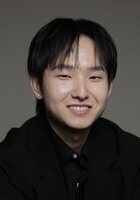
I'm a tutor with over 7 years of experience helping students gain confidence and improve in math, SAT/test prep, statistics, and computer programming. I've worked with a wide range of learners, from students who need to strengthen fundamentals and overcome test anxiety to high-achieving students pursuing top scores and ambitious academic goals. My teaching style is patient, structured, and highly personalized. I break challenging concepts into simple, manageable steps, adapt each lesson to the student's pace and learning style, and use clear explanations, targeted practice, and real-world examples to make learning more approachable and engaging. I also believe great tutoring is not just about getting the right answer, but about helping students understand why it works, think independently, and build lasting confidence they can carry into future classes and exams.
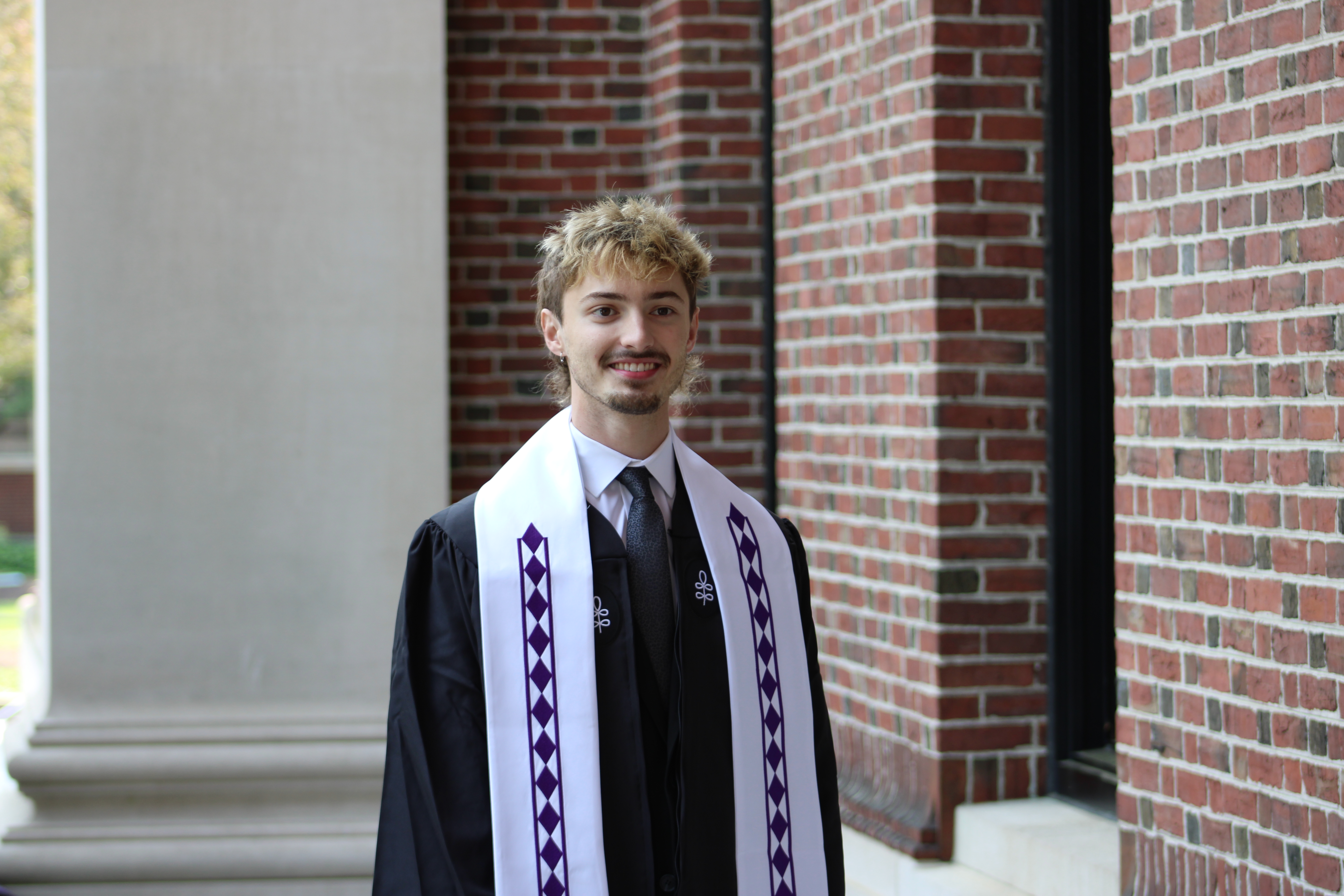
I am a graduate of Harvard college. I received my degree in neuroscience while I also enjoyed having a minor in energy/environmental studies. Following my graduation, I have predominantly spent my time working with students, whether it be college prep, ACT tutoring, or even general academic assistance. When I am teaching, my favorite subjects are those that are STEM or STEM-adjacent. I find that subjects such as math or science aren't always taught best in large settings, so being able to sit down with a student who is struggling in those regards and help them understand the material fully is a really rewarding thing. I am a firm believer in the value of education and think that one-on-one instruction is one of the best modalities there is in terms of learning potential.
I am an Arizona native. Upon graduating from Desert Mountain High School, I attended Rice University and I received my Bachelor of Arts in Kinesiology with a business focus. At Rice I was a student/athlete representing the Division I Owls in track and field. After several years experience voluntarily tutoring friends and family members I became a professional private tutor my junior year of college. My senior year, I took advantage of the opportunity to reach more students, creating a small private tutoring company in Houston in which I served as lead tutor and conducted all business operations. After graduating from college, I moved back to Arizona and am excited to have the opportunity to continue my passion of helping young men and women achieve academic excellence through tutoring. I have experience tutoring elementary through college-aged students in all academic disciplines. My primary areas of focus include: math, English, and standardized test prep. In my spare time I enjoy exercising, following sports, and spending time with friends and family.
I am a current medical student at Columbia University, and an alumna of the University of Chicago, where I graduated with a Bachelor of Science in Biological Sciences and Bachelor of Arts in Romance Languages & Literatures. I am extremely passionate about tutoring, and I have several years of experience tutoring students in my high school's learning center, tutoring private clients in Standardized Test preparation, and tutoring through my medical school. While I have a wide range of interests and am able to tutor various subjects, I am most passionate about tutoring in Standardized Test preparation, Biology, Chemistry, Math, English, and Spanish. I truly believe that students should have the opportunity to learn in the way that works best for them, and I love being able to help them succeed by creating a comfortable tutoring environment in which we can best assess their particular needs and use strategies specific to them.
I graduated from Carleton College in Northfield, Minnesota, with a Bachelor of Arts degree, having majored in mathematics. Since then, I've worked for a number of health technology companies as a business analyst, usually helping to bridge the communications gap between programming staff and end users with clear documentation and presentations. I was also a theater nerd in high school and college, and (with my wife) developed and co-taught an elementary/middle school theater program for our neighborhood school. I've been a private tutor in mathematics for a number of years, working with local families on a handful of subjects, mostly pre-calculus and calculus. My favorite part of tutoring is helping my students to see that one little insight that can unlock the whole of the subject or lesson, and helping them pick the right tool or method to get a good answer.
I graduated from Northwestern University with a Bachelor's of Arts in Neuroscience and have a Post-baccalaureate Certificate in Biomedical Sciences and Health Equity. As a tutor I focus on problem solving and analytical skills. I am able to break down problems and difficult concepts in a way that every student can understand. I have numerous years of experience helping students excel in coursework, prepare for standardized tests, and compose comprehensive academic applications. I truly believe every student is capable of high levels of academic achievement and given the right framework students will propel themselves to new heights. I am proficient in many subjects but have a true passion for math, science and language arts.
Hi, I'm Marissa! I scored a 36 on the ACT (100th percentile) and a 521 on the MCAT (98th percentile), and I love helping students achieve their academic goals. I break complex concepts into clear, manageable steps while creating a supportive, encouraging environment where questions are always welcome. My goal is to help you build confidence, strengthen your understanding, and succeed. I look forward to working with you!
As a passionate educator with a Doctorate in Curriculum and Instruction from Liberty University, Dr. Barnett brings 20 years of tutoring and classroom experience to his role. His specialties in Elementary School English, Math, Reading, Science, and Social Studies enable him to create engaging, interactive lessons tailored to each student's unique needs. Dr. Barnett believes in fostering a supportive learning environment that empowers students to build confidence and achieve academic achievement. Through personalized tutoring plans, he offers effective online tutoring for grades 1-8, guiding students through their educational journeys. Dr. Barnett finds great joy in celebrating students' successes and inspiring a lifelong love for learning. Currently certified to teach in Maryland, he is dedicated to making a positive impact in students' lives.
Teaching has been a lifelong passion of mine. What drives me is sharing knowledge while genuinely connecting with others. I discovered my love for tutoring in high school and have been dedicated to it ever since. At Stanford University, I earned a BS in Human Biology and Chemistry while continuing to tutor throughout, advancing to Lead Tutor. After graduation, I spent a year as a Teaching Associate, designing and delivering course content which significantly broadening my pedagogical approach. What sets me apart is my versatility. Having served as both tutor and instructor, I can adapt my teaching style to each student's unique needs, whether that be building up foundational skills or pursuing advanced mastery. I'm now pursuing graduate studies at The Johns Hopkins School of Medicine, staying engaged with cutting-edge science while maintaining my commitment to education. I look forward to helping you achieve your academic goals!
I am a graduate of Rice University with a Bachelor of Science in Physics, a Bachelors of Arts in Philosophy, and a minor in Neuroscience. My previous tutoring experiences have primarily focused on college level physics, math, and chemistry; AP Calculus, AP Physics, and AP Chemistry; the ACT and SAT college entrance exams; general mathematics at the high school level; and middle school level math and english for state standardized testing. Additionally, I have experience working with students with learning differences including dyslexia, ADHD, and ASD. As someone who loves learning, I am a firm believer in making our meetings enjoyable as well as educational. STEM subjects in particular have the reputation for being boring and complicated, but I love that as a tutor I can help students make sense of the topics and find the fun!
I am a driven, positive, affirming tutor who is happy to help students in any way he can. I graduated magna cum laude from Dartmouth College in 2020, and I obtained my Master's in Political Science from the University of Toronto in 2022. In 2016, I received an SAT score of 1550. That year, I also received a 5 on my AP exams in Calculus AB, English Language, U.S. History, and U.S. Government. I am happy to tutor students in mathematics, English, and social sciences (e.g., history, government). I especially enjoy tutoring pre-algebra and algebra. I believe in a practice-based approach in which I take students step-by-step through the concepts at hand. After practicing together with my guidance, the student will soon be able to apply what they have learned on their own.
I am an alumna of the Florida Agricultural and Mechanical University and of Rice University. I completed my doctorate in Mechanical Engineering focusing on the applications of vibrations for mental health. I received my Bachelors of Science in Mechanical Engineering with a specification in dynamics from the FAMU-FSU College of Engineering. I have tutored and taught all ranges of age groups, from Kindergarten to Graduate School students, and have primarily focused on test prep and STEM subjects. My focus is to ensure that students have the confidence to continue to strive for knowledge even when the subject may be difficult for them. In my spare time, I enjoy visual arts such as drawing and painting, as well as socializing with friends.
I am a graduate of the University of Texas at Dallas who is passionate about helping students. I am currently on my gap year before starting medical school this summer and am taking this time to tutor and teach! I have several years of tutoring experience working with K-12 students and adult learners.
Knowledge is powerful tool that can change your life and the lives of others. As a tutor my goal is to teach my students how to wield knowledge through embracing their mistakes and teaching them how to learn. I expect my students to approach sessions with an open mind and a willingness to learn. In return, I hope to create an open, positive, and personalized learning space for them and provide them the educational and moral support required to succeed.
I'm a current PhD student in the history department at Georgetown University who is also an experienced instructor with Varsity Tutors. As a recipient of several degrees, the most recent being a BA in history from Hillsdale College and a MA in Russian, East European, and Eurasian Studies from Stanford University, I have long sought to make teaching my profession. Meanwhile, as a volunteer grade school teacher and a tutor with this company, I have many years' experience helping students reach their full potential. I am capable of teaching students in many subjects, including reading, mathematics, test prep, Latin, and especially writing, history, and literature. In practice, I am comfortable adapting to different learning styles and specific student preferences. Outside of my academic and career endeavors, I enjoy cooking, reading, and listening to and making music.
I am an entrepreneurial travel-loving media professional living in New Orleans. I have a Master in Business Administration from Tulane University and I love teaching all sorts of subjects, especially math. In terms of hobbies, you can find me long-distance running, studying data science, exploring new restaurants and traveling the world.
My teaching philosophy is focused on a single objective - that students learn. I have a Ph.D. in Criminology from the University of Pennsylvania and a J.D. from Temple Law School. My GRE score was a 326, and my LSAT score was a 173. I've tutored over 60 students through Varsity Tutors. I'm committed to helping students reach their full potentials.
I recently graduated from Northwestern University with a BA in Communications and a minor in Business. Since 2020, I have had the privilege of tutoring students of all ages, forming meaningful connections that I deeply cherish. While I tutor a diverse array of subjects, my passions lie in Math, English, and Writing. I also love helping students with college admissions! I firmly believe that learning should be an enjoyable and enriching experience for everyone, so I strive to make each tutoring session unique and engaging.
I am a graduate from the University of Pennsylvania where I received my Bachelor's of Arts in Health & Societies with minors in Hispanic Studies and Chemistry while on the premed track. My tutoring experience begins junior year of high school where I tutored middle schoolers in pre-Algebra and Algebra and high school students in biology. I expanded my services in college to include mentoring as well as tutoring in gastroenterology program as part of a service project in collaboration with the Perelman School of Medicine targeted to Philadelphian high school students. Since graduation, I have continued in this role as a 4-8th grade math tutor. Math is a difficult subject but with sufficient time and attention, I believe every student is capable of excelling. I make it a point to curate my lesson plans to the specific needs of my students and emphasize open communication that allows for deeper understanding.
I've been working with students for over seven years, from middle school all the way through college, across subjects like math, calculus, statistics, linear algebra, chemistry, and physics, with a lot of SAT and ACT prep mixed in. My background is perhaps a little unconventional. I have two bachelor's degrees, one in Engineering and one in Communication Studies, plus a Master's in Design. That combination means I can guide you through challenging technical material and communicate it in a way that is easy to grasp. What I care most about is helping students get to a place where they don't need me anymore. I know that sounds like a strange thing for a tutor to say, but I think it's the right goal. I'm not here to walk you through steps to copy down. I want you to understand why something works, because that's what holds up under pressure, on a test you haven't seen before. If you're ready to ace that test or prove that theorem that's been bugging you, reach out and let's work together
I am a graduate of the University of Pennsylvania with a Masters degree in Education and have been an Elementary and Middle School educator for over thirty years. I have worked with students in the inner city, suburbs, Appalachia, and Deep South. I love teaching and children, and have discovered my passion in tutoring students who are struggling in Reading and Math. I have taught children with learning disabilities to read, and coached students with dyscalculia in math and reading. I worked as a principal for the past eight years, so was working with students from Pre-K to 8th grade, coaching teachers, analyzing data, and tutoring individual students in math and reading. I have worked as a national park ranger in the past, so social studies and history are areas of strength. Students that I teach respond well to my teaching style and enjoy working with me. I believe that education is extremely important for children's futures and do everything that I can to help them be successful.
I love helping students build confidence in math, STEM, and the standardized testing process! I'm looking forward to working together to find the learning method that best suits you. Breaking down complex ideas to understand them bit by bit can help you love these subjects as much as I do!
I am an experienced tutor with a background in economics, math, writing, and standardized test preparation. I studied Economics and Data Science at Stanford University, and I enjoy helping students break down difficult material into clear, manageable steps. My tutoring style is patient, structured, and personalized. I believe in pairing targeted test preparation with content lessons. I focus on understanding where a student is getting stuck, then explaining concepts in a way that matches how they think. The goal of our lessons is to be comfortable with the test/assignment you have in front of you and have a full grasp on the content you need to know. Whether I am helping with SAT grammar, math problems, economics, or writing, my goal is to build both understanding and confidence. My goal is to help each student make measurable progress, strengthen their academic skills, and become more confident and prepared for whateve academic challenge they are facing.
As experienced and passionated educator with a Bachelor's degree in Computer Science from Rice University, I am passionate about empowering students to achieve their academic goals. With over 3 years of tutoring experience in subjects such as AP Computer Science A, Machine Learning, and SAT Math, I adapt to different learning styles and create a supportive learning environment. My teaching philosophy centers on personalized instruction, where I connect with each student to understand their unique learning styles and challenges. I take pride in guiding students through the complexities of computer science and college application essays, equipping them with the skills they need for future success. Outside of tutoring, I enjoy exploring new technologies and engaging in coding projects to improve my teaching approach.
I am attending the University of Pennsylvania where I am majoring in Bioengineering on the premed track, with my goal after graduation to become an orthopedic surgeon. My passion for tutoring stems from a genuine love for helping people discover their strengths and succeed in their learning journey, much like guiding a friend through a challenging but rewarding adventure. My teaching philosophy centers on adaptability and personalized instruction, tailoring each session to meet the unique needs of my students. As a tutor, I find immense joy in helping students navigate the field of STEM, while also sharing my enthusiasm for French and Arabic languages. Beyond academia, I am an avid explorer of the world, and I relish the beauty of cultural diversity. In my free time, I enjoy immersing myself in outdoor adventures, savoring diverse cuisines, and partaking in various athletic activities.
**"BYE TO AI" DISCLAIMER: In an environment where tutors use AI to research, plan lessons, and even give students feedback, I have a zero tolerance policy for AI tools and materials, and I commit to NOT using them in our work together whatsoever.** ABOUT ME: Award-winning writer and classical soprano. Bachelor's degree from Vanderbilt University in history; second major in voice; minor in Italian; concentration in musicology. Master's degree from the University of Rochester. Professional editor (both journalistic and creative prose) experienced in the Chicago Manual of Style and AP Style Guide. Areas of specialty include classical music (bel canto vocal instruction, musicology, and music theory), 18th and 19th century American and European history and literature, research skills, creative writing, test prep, and college admissions. My instruction in college essay writing has enabled over 30 students to gain admissions to top schools.
I am a current undergraduate student at Cornell University. I began tutoring in 2022 because I am passionate about helping students become confident in their academic skills and reach their academic goals. Each session with a student consists of consistent, guided instruction that fosters independence and confidence in their skills. While I can instruct in many subjects, I love to tutor in math and English.
Hi! I'm a Cornell-educated tutor who enjoys helping students succeed in biology, genetics, and other science subjects. I know that science courses can sometimes feel overwhelming, so I focus on making difficult topics easier to understand through clear explanations, real-world examples, and step-by-step problem solving. I work with students at their individual pace and encourage them to ask questions freely. Whether you need help preparing for a test, completing assignments, reviewing difficult concepts, or building confidence in the subject, I'm committed to helping you reach your goals. My aim is to make learning less stressful and more enjoyable while helping students develop the skills they need to succeed both inside and outside the classroom.
I love literature and reading and writing -- they've been central to my life since early childhood -- and I hope as a tutor not only to help students improve their skills in these areas but to instill in them a similar kind of lifelong affection for these pursuits. I believe that reading and writing are key not only to enjoying a broadly fulfilling and exciting life but also to performing effectively in virtually any kind of serious job. As a kid, my dream was to become a writer of fiction -- novels and stories -- and I majored in English and creative writing in college. But then it was literature that led my life to take a different, unexpected path. At Princeton, I had to write a senior thesis, and the topic I chose was native American prose literature -- novels, poems and other writings that hugely enhanced the love of nature and wilderness that I had already acquired through hiking and camping trips with my father. Instead of wanting to write fiction, I became an environmental advocate, and wanted to write about wilderness and environmental issues. So, I moved from the East Coast to Montana for graduate school, where I studied wilderness and wildlife management issues and earned a Master's degree in natural resource conservation. For decades ever since I have made my living primarily as a communicator, through writing as well as public speaking. Every job I've had depended on my ability to write well, from working as an editor of technical research papers for the US Forest Service; as communications director for an environmental protection group; as a press secretary in a Presidential campaign; as an international publicist for a PR firm in New York City; as an aide in the Montana Governor's Office; and as a self-employed lobbyist and campaign manager for numerous large corporations and small nonprofit groups. I also taught public and media relations at Carroll College in Montana and have done a fair amount of freelance writing along the way, with essays published in diverse outlets including Western Wildlands, the Journal of Soil & Water Conservation, Range magazine and Playboy. My love of reading and literature has never ceased. I am always reading at least one good book at a time, and I still write almost daily. On the side, I recently have edited two books for publication and have written several grant proposals. I look forward to sharing my passion for learning with students through the Varsity Tutors program.
I have a Bachelor's degree from College of the Holy Cross in French and Psychology, and a Master's of Public Health from Columbia University. I work in global health, primarily supporting women and children's health programs in Francophone West and Central Africa. I have experience tutoring students from elementary age up through high school, both tutoring French students in English while I was studying abroad in Strasbourg, France, for a year in college, and tutoring American students in French. I have worked as a freelance French interpreter and translator and for UNICEF and the United Nations Foundation and would be happy to share with students how French can open doors professionally. In addition to keeping up my French, I have studied a number of languages as an adult (Arabic, Spanish, German, Bambara), and so I have ideas about what works and doesn't work in terms of teaching foreign languages to both school-aged students as well as adults. I have my own teaching materials and am happy to incorporate students' materials and interests into the lesson plan. I have strategies for keeping the material interesting and dynamic, and I offer a supportive environment for them to practice their skills. I look forward to discussing how I can best tailor my lessons to meet your needs!
Hello, I hold two soon-to-be three Ivy League degrees, an undergrad and graduate degree from the University of Pennslyvania and I am currently getting a second Masters from Harvard in Education Leadership. I know what it takes to write an essay or application to get into your dream school and specialize in college application support. I guarantee if your student has a complete essay draft we can polish it in a single two-hour session. Additionally, I am a licensed elementary school teacher with a Master's in elementary education I have educational experience as a kindergarten teacher, second-grade reading tutor, and college readiness tutor. I am skilled in reading and math help in the lower grades K-2 for children who need support in those subjects.
I am a Yale University Berkeley College graduate of the Yale Class of 2012 with an Intensive B.S. in Molecular, Cellular, and Developmental Biology. Eager for tutoring opportunities, I welcome any of you who wishes to undergo SAT/PSAT or ACT Test Preparation that will get you the scores you need for admission to the college of your choice. As for my experience, I have tutoring experience in both one-to-one settings, going as far back as high school, and group/classroom settings, especially from my 4 years of tutoring with Yale MATHCOUNTS. As a likely future graduate student myself, it is my general goal in life to continue the tradition of passing forth knowledge. Not surprisingly, I have always considered tutoring and education among the most noble of professions where both parties, student and teacher, benefit and learn. What makes me an excellent tutor? Over the course of my life I have had the good fortune of cultivating a variety and number of skill sets, some of which are academic and social in nature. While I certainly consider academic prowess important for the success of any instructor, I would say the most important skill set I have developed is that of adaptability. If a tutor can adapt him/herself to the mode and manner of thinking of another, the tutor, as well as the tutor's audience, will have especially effective and enriching transactions.
I am a sophomore at Cornell University studying Biological Sciences and Spanish. I do molecular bio/genetics research with fruit flies, dance, and sing in the CU chorus. I was the student director of my high school's Academic Resource Center, tutoring in math, science, Spanish, and SAT/ACT for 3+ years. I have worked with Varsity Tutors for about 2 years.
My tutoring sessions are interactive, patient, and highly personalized. I don't believe in a one-size-fits-all methodeach student learns differently, so I adapt my approach to match their individual pace, goals, and learning style. I focus on helping students truly understand the why behind each concept, not just memorize formulas or shortcuts. Together, we work step-by-step through problems, discussing reasoning, strategy, and underlying principles until everything clicks. My goal is to build lasting confidence and clarity. Whether a student is catching up, aiming to excel, or just trying to feel more comfortable with the material, I create a supportive environment where they can ask questions freely, think critically, and stay engaged. I also believe in strong communicationkeeping parents informed and helping students take ownership of their learning. Above all, I want my students to leave each session feeling capable, confident, and genuinely connected to what they're learning.
I love to help students to do well on the SAT and ACT Verbal, Reading, and English sections. I have tutored these areas of standardized tests for more than 3 years. My approach is not "standardized" because I enjoy working one-on-one with clients to tailor learning experiences that address each person's unique needs. As a former professor of communication, I also have the skills to help professionals and graduate students with their research and writing. I am currently helping a doctoral student with her dissertation.
Hi! My name is Alexandra, and I am a Princeton University Neuroscience major with 5+ years of tutoring experience. I specialize in SAT/ACT/PSAT prep and have successfully taught topics ranging from computer science and basic sciences to elementary reading and writing and college essay writing. In high school, I scored a perfect 36 on the ACT on my first attempt, a perfect 1520 on the PSAT/NMSQT, won "finalist" status in the National Merit Scholarship competition, and was a medalist in the New York Science Olympiad. As an undergraduate at the top-ranked university, I focus specifically on standardized test preparation, including the SAT, ACT, and PSAT. I have an understanding of the structure and timing of the exams and the strategic approaches that are required to achieve top scores. I have successfully supported students in improving their performance through individualized study plans because I understand that not all students can use the same approaches to succeed. My approach emphasizes effective time management and a mastery of recurring question types. Outside of college test preparation, I have tutored students ages 5 to 17 in a variety of topics. A common teaching approach I use is to introduce new concepts with example problems that we work through together. I then explain each strategy and help the student through another problem, encouraging them to explain their thinking step by step. Finally, I let the student tackle a problem independently. Once a student can articulate why a method works, they are truly ready to apply it on their own. While this method suits many students, I understand that everyone learns differently and pride myself on being adaptable within and outside of lessons.
I specialize in ESL instruction and graduate application support for international and multilingual students. I help learners strengthen their spoken and written English while developing clear, authentic application materials that communicate their academic background, professional experience, and future goals. My approach is supportive, structured, and tailored to each student's level and objectives.
I am a rising junior at Carnegie Mellon University studying Mechanical Engineering and Robotics, and I am passionate about helping students build confidence in STEM subjects, standardized testing, and college admissions. My teaching philosophy focuses on understanding concepts rather than memorizing formulas. I believe every student learns differently, so I adapt my teaching style to fit each student's needs and create an environment where questions feel encouraged. Through my experience tutoring, teaching robotics, and coaching students academically, I have learned how to break difficult topics into simple, manageable steps. What makes me a strong tutor is not only my technical background, but also my patience, communication skills, and genuine investment in student success. My goal is always to help students become more confident, independent learners who feel capable of overcoming academic challenges.
I love helping students in topics related to math, to finance (public and private equity) and to engineering. I believe that if I can't explain concept, then I don't understand it. By that same token, if a student can't explain a concept back to me, then they don't understand it even if they say they do. I believe in getting to know all students, as their background is intricately connected with how they learn.
When I was young, I used to hate swimming at the beach. The idea of sharks moving around under the waves where I could not see them made me scared to go into the water. As I grew up, however, and began to learn about the different sharks that lived off the shores of my home in Massachusetts, USA, I became less and less scared and more and more fascinated with how and why sharks move around in this underwater world. I began to ask questions like, what do sharks do under the water when we cannot see them? and, where do sharks like to go and why? As a marine scientist now I try to answer these questions. Because sharks live and breathe under the water and can swim long distances and go deep into the ocean, further and deeper than I could follow by myself, to study how these animals move and behave underwater I have to use lots of different types of technology. Sometimes I use underwater robots that can follow the sharks down deeper than humans can go, and that can carry things like cameras so I can directly see what the sharks are doing. In my work now, I use special tags that send out signals every few seconds with a unique name that identifies individual sharks. When the shark swims close enough to receivers placed out in the ocean, these receivers are able to hear and record the tag name, telling where and when individual sharks are present in different areas of the ocean. One thing I love about being a shark scientist is that I can follow sharks all over the world. First, I followed the movement of sharks all the way over in the Atlantic Ocean off the east coast of the USA. Then I moved to Tasmania, Australia, and I followed young sharks as they move around off the coast of New South Wales. Now I am back home in Massachusetts and working on publishing my research.
Testimonials
Because the right Common Core Math tutor makes all the difference.
Average Session Rating – Based on 3.4M Learner Ratings
Top 20 Math Subjects

Top 20 Subjects
Frequently Asked Questions
Common Core Math prioritizes conceptual understanding over rote memorization because it builds deeper mathematical thinking. Instead of just learning "the steps" to solve a problem, students learn the underlying logic—like understanding that 24 ÷ 4 connects to "how many groups of 4 are in 24?" rather than just following a division algorithm. This approach helps students apply math flexibly to new situations and recognize patterns across different topics. A tutor can bridge this gap by helping students see the connections between concrete models (like area arrays or number lines) and abstract procedures, making the "why" click.
Common Core emphasizes multiple solution strategies and clear communication of thinking, which is different from traditional "show your work" formats. A tutor can help students articulate their reasoning using models like tape diagrams, area models, number lines, and equations—tools that are central to Common Core instruction. For example, a student solving a multi-step word problem can learn to draw a tape diagram to visualize the relationships, then explain each step using that visual. This bridges the gap between getting an answer and demonstrating mathematical reasoning in ways that align with how their classroom teaches.
Common Core word problems require students to identify the mathematical structure within a real-world scenario—deciding whether to add, subtract, multiply, or divide—rather than just following keywords. Many students struggle because they're used to pattern-matching ("if it says 'altogether,' add") rather than understanding the actual relationships. A tutor can teach students to break down word problems systematically: identify what's known, what's unknown, and what operation makes sense. Using visual strategies like drawing pictures, making tape diagrams, or acting out the problem helps students see the math embedded in the story, building confidence and accuracy.
In Common Core, solving equations like 3x + 5 = 20 isn't just about memorizing "move it to the other side and change the sign." Instead, students learn to think about equations as balanced statements—whatever you do to one side, you must do to the other. A tutor can help students visualize this balance using concrete models or diagrams, then connect those visuals to the abstract algebraic steps. This conceptual foundation makes it easier for students to understand why the steps work, solve unfamiliar equation types, and catch their own errors rather than just following a procedure blindly.
Common Core emphasizes that equations, tables, and graphs are different representations of the same mathematical relationship—a key insight that many students miss. A tutor can help students move fluidly between these representations: starting with a real-world context, creating a table of values, writing an equation, and sketching a graph. By explicitly connecting these forms, students develop a deeper understanding of functions and linear relationships. For example, recognizing that the slope in an equation (like y = 2x + 3) appears as the rate of change in a table and the steepness of the line on a graph helps students see math as interconnected rather than isolated procedures.
Math anxiety often stems from feeling lost when the "why" isn't clear, which is common when students transition to Common Core's conceptual approach. A tutor works at a student's pace, breaking concepts into smaller chunks and using multiple representations (visuals, manipulatives, real-world examples) until the concept truly clicks. This personalized approach reduces frustration because students aren't rushed and can ask questions without self-consciousness. As students experience success understanding concepts deeply rather than just memorizing steps, their confidence grows—and they often discover that math makes more sense than they thought.
Different textbooks and curricula emphasize different models and strategies within the Common Core framework—one might rely heavily on tape diagrams while another uses area models or number lines. A tutor can help students adapt by teaching the underlying mathematical concepts that transcend any single curriculum. They can also help students learn the specific models and language their new school uses, bridging gaps between what they learned before and what's expected now. This flexibility ensures students understand the core math rather than just memorizing a particular textbook's approach.
Common Core Math is built on recognizing patterns and making connections—like seeing that multiplication is repeated addition, or that the distributive property appears in area models and equations. A tutor helps students notice these patterns by asking guiding questions and encouraging exploration: "What do you notice? What's the same? What's different?" Rather than telling students the rule, tutors guide them to discover patterns themselves. This develops mathematical thinking skills that transfer across topics, helping students solve unfamiliar problems by recognizing similar structures they've seen before.
Let’s find your perfect tutor
Answer a few quick questions. We’ll recommend the right plan and match you with a top 5% tutor.