Award-Winning Physical Chemistry Tutors
serving Worcester, MA
Physical Chemistry
Tutors in Worcester
Private 1-on-1 tutoring, weekly live classes for academic support, test prep & enrichment, practice tests and diagnostics, and more to elevate grades and test scores.
Based on 3.4M Learner Ratings
UniversitiesSchools & Universities
DeliveredHours Delivered
ProficiencyGrowth in Proficiency
Who needs tutoring?
No obligation. Takes ~1 minute.

Thermodynamics, quantum mechanics, kinetics — physical chemistry is where math and chemistry collide, and most students need a tutor comfortable in both languages. Natasha's chemical engineering degree gave her deep fluency with partition functions, phase diagrams, and rate laws, and her MIT graduate work keeps those concepts sharp. She approaches p-chem by deriving key equations alongside students so the physics behind each formula becomes visible.
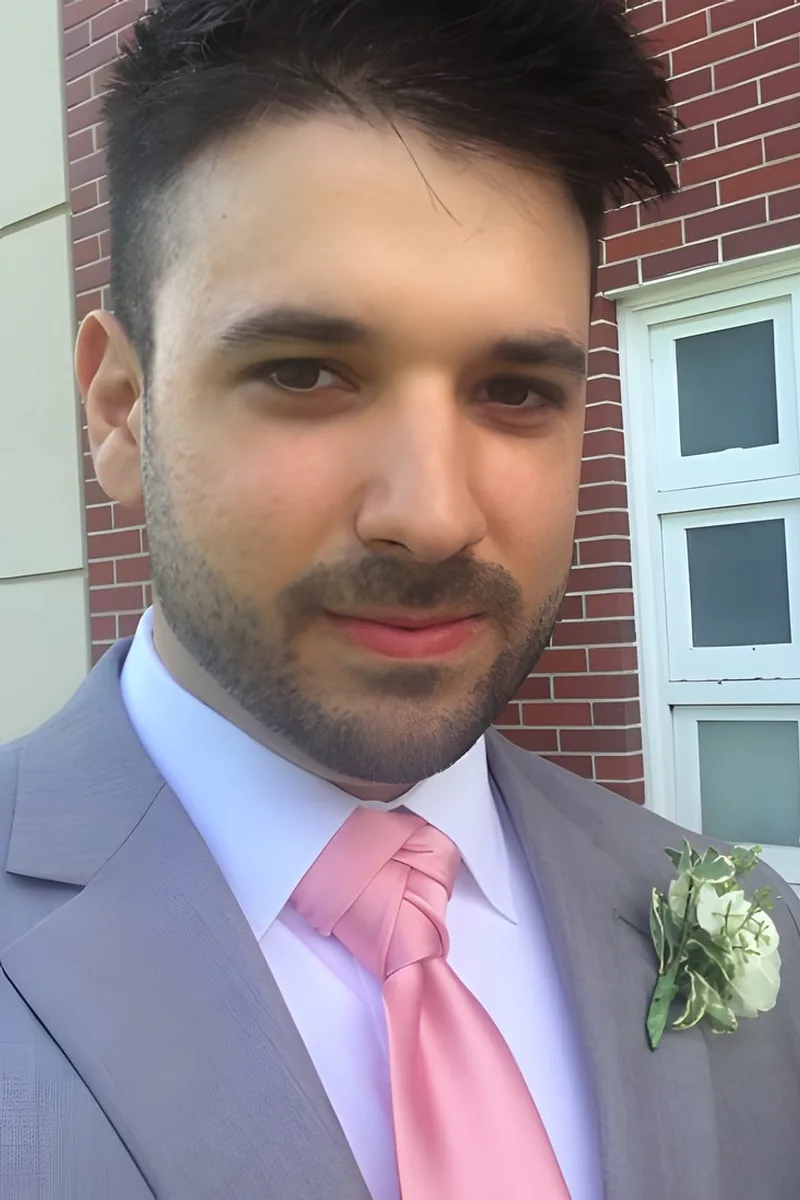
Biomedical engineering at BU and Tufts meant Anthony lived in the math that makes p-chem intimidating — differential equations, thermodynamic modeling, and the kinetics of biological systems — long before applying it to physical chemistry specifically. His research background studying neurodegenerative disease therapies keeps him fluent in the quantitative reasoning behind concepts like Gibbs free energy, phase equilibria, and reaction rate theory. Rated 4.9 by students, he connects each derivation to the physical system it describes so the notation carries real meaning.
Medical school at Tufts demands fluency in the thermodynamics and kinetics that p-chem students dread — Eric works through Gibbs free energy calculations, entropy-driven processes, and rate equations daily in a clinical science context, which keeps the material grounded rather than purely abstract. His economics background also sharpens the kind of quantitative modeling and equilibrium thinking that translates surprisingly well to topics like chemical potential and phase diagrams.
Garrett's biology degree means he already thinks in terms of systems — enzyme kinetics, membrane potentials, metabolic energy flow — which gives him a concrete anchor for the abstract math that makes p-chem so intimidating. He teaches thermodynamic and kinetic concepts by connecting derivations to the biological and chemical phenomena they describe, so something like a Gibbs free energy calculation feels like a tool rather than an exercise in symbol-pushing.
Katherine's broad math and science background — spanning calculus, thermodynamics, and physics — means she's comfortable with the multivariable calculus and differential equations that make p-chem derivations so dense. She takes apart concepts like Maxwell relations and chemical potential by slowing down at the exact algebraic step where the physical intuition tends to disappear. Rated 5.0 by students.
Rice's chemistry curriculum put Asad through the full p-chem gauntlet — thermodynamics, quantum mechanics, kinetics — and his path to medical school at UT Houston means he's had to internalize concepts like enthalpy, entropy, and equilibrium well enough to apply them in biological and clinical contexts. That dual pressure of rigorous chemistry coursework and MCAT preparation sharpened his ability to explain why a derivation works, not just how to grind through the math.
Enric holds a PhD in Chemistry, which means p-chem wasn't just a course requirement — it was the foundation his entire research career was built on, from quantum mechanical modeling to thermodynamic analysis at the graduate level. He teaches the subject by slowing down at the exact calculus step where a derivation goes from followable to opaque, rebuilding the physical reasoning behind each manipulation before moving forward. Rated 5.0 by students.
A physics degree means Eitan spent years inside the quantum mechanics, statistical mechanics, and thermodynamics that p-chem courses formalize on the chemistry side — Schrödinger's equation, Boltzmann statistics, and state functions are native territory rather than new abstractions. He teaches the derivations by clarifying the physical picture each equation encodes, so a student wrestling with a partition function or a Carnot cycle can see the molecular behavior driving every calculus step. Holds a 5.0 rating.
Earning a B.S. in Chemistry means Uttam has worked through the thermodynamics, kinetics, and quantum mechanics sequence firsthand — he knows exactly where a derivation like the Clausius-Clapeyron equation starts losing students and how to rebuild the logic step by step. His broad teaching range across calculus, algebra, and multiple chemistry levels keeps him sharp at bridging the math-chemistry gap that makes p-chem uniquely difficult.
A physics degree gives Cory something many p-chem tutors lack — native comfort with the quantum mechanics and statistical mechanics that chemistry students often encounter for the first time in this course. He treats topics like wave functions, partition functions, and thermodynamic state variables as extensions of the physics he already thinks in, then builds the chemical context around them. Rated 4.9 by students.
I am most passionate about biology and chemistry. I am a firm proponent of education, believing it to be absolutely necessary for an improved quality of life, and I try to impart this appreciation to all of my students.
Scoring in the 98th percentile on the MCAT required Nishant to internalize the thermodynamic and kinetic reasoning that p-chem makes rigorous — enthalpy diagrams, equilibrium constants, and rate law derivations all showed up under intense time pressure before he encountered them in their full mathematical form as a medical student at Case Western. He teaches a physics TA's instinct for applied problem-solving to the calculus-dense material, breaking a topic like a Maxwell relation or a phase diagram into the physical question it's actually answering.
Teaching high school chemistry daily means Kathleen regularly translates thermodynamic concepts like enthalpy, entropy, and equilibrium into language that clicks — a skill that carries directly into the more calculus-heavy treatment those same ideas get in a p-chem course. Her M.S.Ed from Penn and chemistry degree give her both the content depth and the instinct for spotting exactly where a derivation stops making sense to a student. Rated 5.0 by students.
Kirby's biochemistry degree at Michigan meant grinding through the thermodynamics and kinetics that sit at the heart of p-chem — Gibbs free energy calculations, equilibrium derivations, and the statistical mechanics of molecular systems were baked into her upper-level coursework. She breaks down the calculus-heavy formalism by keeping each variable tied to the chemical reality it represents, so a daunting derivation like a Clausius-Clapeyron equation reads as a description of phase behavior rather than an abstract math exercise. Rated 4.9 by students.
Cornell's chemical engineering curriculum puts you through p-chem at an intense pace — Rahul graduated magna cum laude, which means he didn't just survive thermodynamics, quantum mechanics, and kinetics but internalized the reasoning behind each derivation. He pushes past rote symbol manipulation to make sure students can articulate why a particular state function applies or what a phase boundary physically represents. Rated 4.9 by students.
Testimonials
Because the right Physical Chemistry tutor makes all the difference.
Average Session Rating – Based on 3.4M Learner Ratings
Nearby Physical Chemistry Tutors
Other Worcester Tutors
Related Science Tutors in Worcester
Frequently Asked Questions
Physical chemistry bridges chemistry and physics by studying the properties of molecules and how chemical reactions occur at the atomic level. It's challenging because it requires understanding abstract concepts like thermodynamics, quantum mechanics, and kinetics—then applying them through calculations and lab work. Many students struggle with visualizing molecular behavior and connecting equations to real-world phenomena, which is where personalized instruction makes a significant difference.
Varsity Tutors connects you with expert tutors who tailor instruction to your specific needs—whether you're working on thermodynamics, equilibrium, kinetics, or lab report writing. Tutors help you move beyond memorizing formulas to truly understanding the underlying principles, using problem-solving strategies and real-world examples. Your first session focuses on identifying your strengths and challenges so the tutoring plan addresses exactly what you need to succeed.
Students often find balancing redox equations, unit conversions, and thermodynamic calculations frustrating—especially when they're unsure which formula to apply. Visualizing molecular-level processes (like how entropy increases or how catalysts work) is another frequent challenge. Personalized tutoring breaks these concepts into manageable pieces, uses diagrams and models to build intuition, and provides targeted practice so you develop confidence with both the theory and the math.
Yes. Tutors help you understand the scientific method behind your experiments, interpret data, and write clear lab reports that explain your findings. Whether you're struggling with experimental design, data analysis, or connecting your results to theoretical concepts, personalized instruction ensures you grasp both the hands-on and analytical sides of lab work. This support strengthens your scientific reasoning skills, which are essential for success in physical chemistry.
Your first session is a conversation—the tutor will ask about your current course, specific topics that confuse you, and your learning goals. You might work through a problem together to identify where you're getting stuck, whether it's conceptual understanding or problem-solving strategy. This session gives both you and the tutor a clear picture of how to structure future sessions for maximum impact.
Tutors focus on building your conceptual foundation by explaining the 'why' behind equations and principles, not just the 'how' to use them. Through guided problem-solving, visual explanations, and real-world connections, you develop deeper understanding that transfers to new problems and exam questions. This approach takes more effort upfront but saves time long-term because you're learning to think like a chemist, not just recall formulas.
While physical chemistry fundamentals are universal, different schools and teachers emphasize different topics and use different textbooks. Varsity Tutors connects you with tutors who can adapt to your specific curriculum, whether you're taking AP Chemistry, honors physical chemistry, or a college-level course. This personalized approach means your tutoring directly supports what you're learning in class.
Many students notice clearer understanding of specific topics within 2-3 sessions, especially when tutoring targets their biggest pain points. Improvement on exams or assignments typically follows within a few weeks as concepts solidify and problem-solving skills strengthen. The timeline depends on your starting point and how frequently you meet, but consistent personalized instruction accelerates progress significantly compared to studying alone.
Let’s find your perfect tutor
Answer a few quick questions. We’ll recommend the right plan and match you with a top 5% tutor.