Award-Winning Korean
Tutors
Korean
Tutors
Private 1-on-1 tutoring, weekly live classes for academic support, test prep & enrichment, practice tests and diagnostics, and more to elevate grades and test scores.
Based on 3.4M Learner Ratings
UniversitiesSchools & Universities
DeliveredHours Delivered
ProficiencyGrowth in Proficiency
Who needs tutoring?
No obligation. Takes ~1 minute.
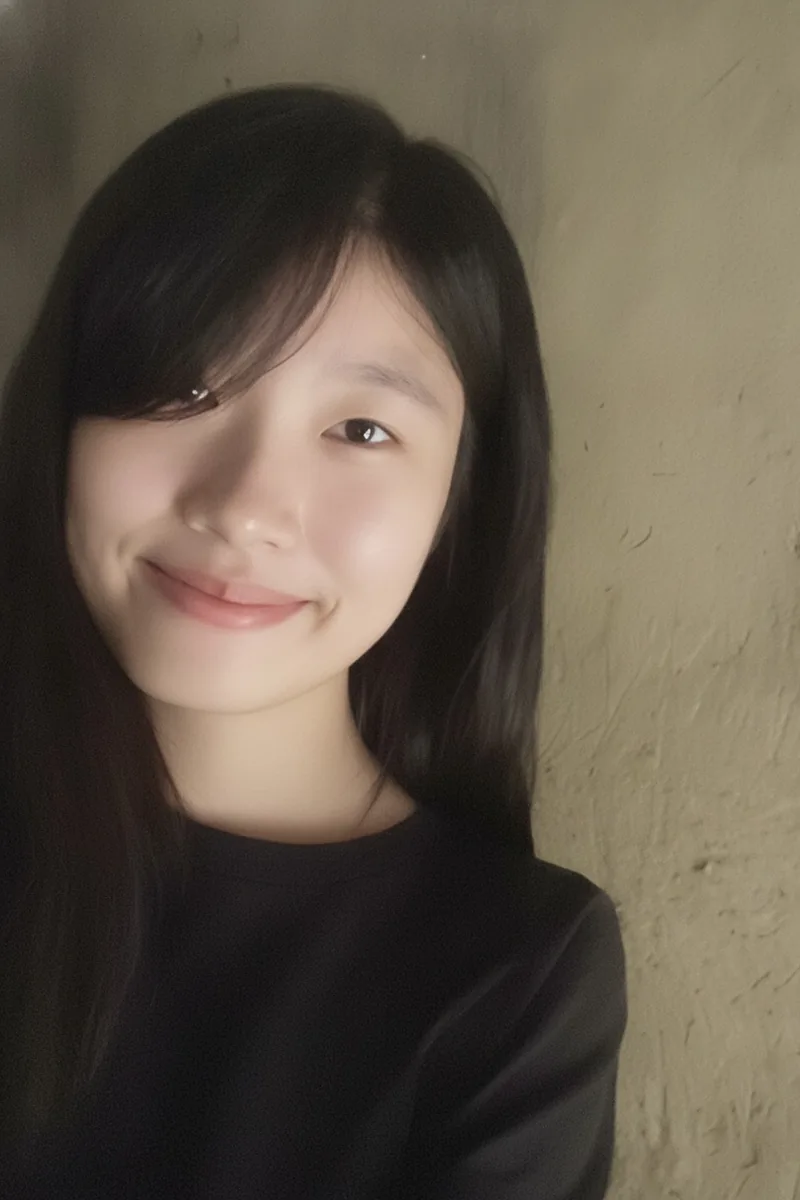
As a native-level Korean speaker who also scored a strong ACT composite, Youngbin bridges the gap between Korean and English in ways that clarify both languages. He tackles everything from hangul fundamentals and particle usage to honorific speech levels and nuanced vocabulary for advanced learners. Students preparing for the SAT Korean Subject Test or simply building conversational fluency get structured, practical instruction.
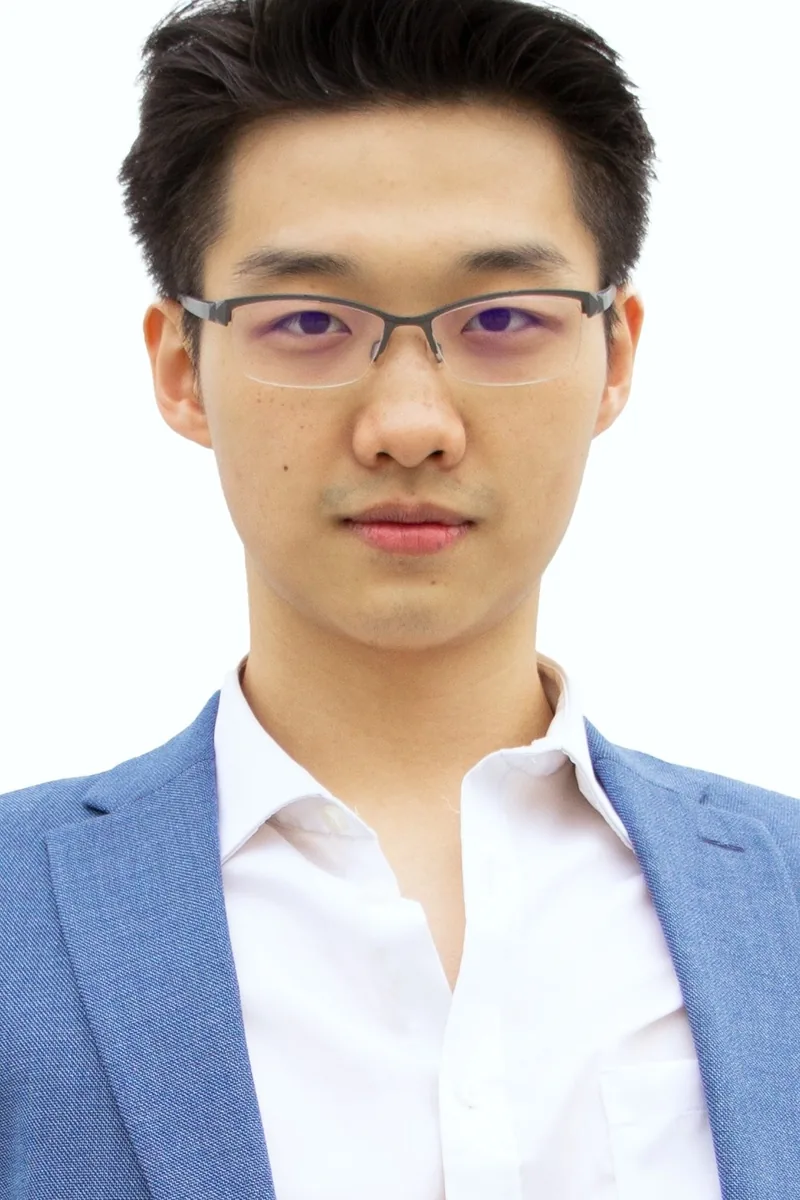
As a passionate educator with a Bachelor's in History from Princeton University and a Master's in Music from Yale University, I have over 2 years of tutoring experience in subjects, with particular specialization in history, academic writing, and politics. My teaching philosophy centers on breaking down difficult concepts into more accessible and digestible forms of knowledge. I believe in tailoring my approach to meet each student's unique needs, utilizing creative methods to enhance understanding and retention. My dedication to helping students succeed is reflected in their improved confidence and performance. Outside of tutoring, I enjoy exploring different cultures through music and language, which enriches my teaching and connects me with my students on a personal level.
Grace scored high enough on the SAT Subject Test in Korean with Listening to tutor the language at multiple levels, from hangul basics and sentence structure to more nuanced reading and conversational fluency. She approaches Korean with the same structured methodology she uses in her UChicago teaching program — breaking grammar patterns into manageable pieces and building from there.
As a member of a Korean hip-hop dance group at Cornell, Andrew engages with Korean language and culture well beyond the classroom. He tackles tricky concepts like honorific levels, particle usage, and Hangul reading fluency by grounding them in real conversational contexts — music, media, and everyday dialogue — so students build practical skills alongside formal grammar.
As a multilingual speaker who has studied Korean extensively — including preparing for the SAT Subject Test in Korean with Listening — Ehigbor breaks down hangul, sentence structure, and honorific levels in ways that make the language accessible to beginners and intermediate learners alike. Reading and writing practice is woven into every session so students build real fluency, not just vocabulary lists.
I graduated from Mechatronics Engineering in University of Waterloo located in Canada, and am currently enrolled in Masters program, researching stochastic systems and computational neuroscience in University of Toronto. Currently, I am qualifed to teach computer programming, with a focus on Python language, but am able to transfer my skills to other languages. As someone that started programming later compared to my peers in university, I constantly remind myself on how difficult the initial learning curve was in programming, and aim to use this as an advantage to guide my future students into the world of programming in an interesting way, where they can enjoy the learning process and challenges, instead of being frustrated. Whether you want to learn for school, or just personal reasons, I believe that I can offer a tailored experience for teaching computer programming. I am also hoping to get qualified to teach mathematics, especially linear algebra. As an added bonus, I am also willing to share my knowledge in Machine Learning and Artificial Intelligence as it is the field that I have a lot of experience in. Teaching is not just a trasfer of knowledge, but aiding the students in making a concept their own, so that they have freedom to use it for different applications. I will try my absolute best to make what seems like a difficult topics, your own!
I am a graduate from UCLA and currently working as a CPA; however, I have been enjoying time to teach the Korean language and culture when I have extra time.
Learning Korean means wrestling with an entirely different sentence structure — subject-object-verb order, honorific levels that change verb endings, and a writing system that looks intimidating but is actually remarkably logical. Suha teaches hangul as a phonetic puzzle students can crack in a few sessions, then builds from there into grammar patterns and everyday vocabulary. As a Korean speaker and trained educator, she bridges the gap between textbook Korean and how the language actually works.
As a Korean speaker, Eunice teaches the language with an emphasis on hangul structure, sentence-building patterns, and the honorific system that trips up so many beginners. She's especially effective at bridging the gap between textbook Korean and how the language is actually spoken, making conversational practice feel natural from early lessons.
I was working as medical doctor and professor for more than 20 years. In the meantime, I have conducted education for medical students, doctors, and patients. I was also involved in developing educational programs. In particular, due to the corona pandemic, he was also involved in conducting online education. In the latter period, programs were developed for the public and patient education, and web cartoons were also developed. Moving to the US in 2023, I am looking for another job for second chapter of my life. Therefore, I think that my experience will be useful.
As a teaching assistant for Elementary Korean at Georgia Tech's School of Modern Languages, Brian taught everything from Hangul character recognition to basic verb conjugation and particle usage. He breaks down Korean sentence structure — subject-object-verb order, honorific levels, topic vs. subject markers — in ways that make the grammar intuitive for English speakers. Rated 5.0 by students.
I am a undergraduate freshman of the University of Michigan, studying business at the Ross School of Business. Working together with students and having a good time while seeing steady improvements has proven to provide me great joy. I believe that communication and relationship building is crucial for students to open up about their struggles and also for me to identify problems they don't realize they can improve on, so this is a key aspect of all of my lessons. During my free time, I enjoy playing sports or snacking on desserts while binge-watching Friends!
Dawoon's master's in Teaching Korean to Speakers of Other Languages (TKSOL) means she's trained specifically in diagnosing where non-native learners break down — and she's put that training to work preparing students for the Korean Proficiency Test and the Defense Language Proficiency Test, where she's moved learners from Level 2 to Level 3 on the DLPT. She weaves cultural context into every lesson, explaining why native speakers choose particular expressions and speech levels so that grammar rules stick to something meaningful rather than floating in the abstract.
As a Korean speaker and language tutor, Eugene teaches everything from Hangul fundamentals and particle usage to the honorific system that trips up so many learners. His psychology background gives him a sharp sense of how language acquisition actually works, so he structures lessons around how the brain retains new vocabulary and grammar patterns.
Sean's mathematics and MBA background might seem unrelated to Korean, but his analytical mindset lends itself well to breaking down the language's logical grammar system — particularly how particles and verb conjugations follow consistent, rule-based patterns. He approaches Korean the way he'd approach a math problem: identify the structure, learn the rules, then apply them in increasingly complex contexts.
As a native-level Korean speaker with a philosophy background, Moon breaks down the language's hierarchical speech levels and grammatical particles in a way that actually makes structural sense to English speakers. Whether a student is tackling 존댓말 for the first time or working through reading comprehension of longer passages, the explanations stick because they're grounded in logic, not rote repetition.
Seong is a heritage Korean speaker who also prepared for the SAT Subject Test in Korean with Listening, giving her both native fluency and an understanding of how Korean grammar is formally tested. She digs into the particles, honorific levels, and sentence-ending structures that trip up learners at every stage. Whether a student is building conversational skills or preparing for a standardized exam, she can adjust the pace and complexity accordingly.
Sophia's pharmacy doctorate required years of dense scientific reading and precise technical communication — skills she now channels into teaching Korean at the beginner level, where careful attention to hangul syllable blocks and basic sentence patterns makes all the difference early on. She keeps lessons relaxed and conversational, building vocabulary and grammar fundamentals at a pace that doesn't overwhelm new learners.
Studying neuroscience at Brown doesn't obviously connect to Korean — but James's experience learning the language alongside rigorous coursework means he understands how to fit consistent practice with hangul, vocabulary, and grammar into a demanding schedule. He takes a structured, patient approach to building reading and speaking skills, rated 4.9 by his students.
Teresa's double major in Biology and Hispanic Studies at Boston College means she's no stranger to learning languages with discipline and structure — Korean is one she speaks and loves teaching most. She zeroes in on the rhythm of natural conversation, helping learners internalize speech patterns and vocabulary through context rather than isolated drills. Rated 4.8 by her students.
Peace teaches Korean with attention to the specific hurdles English speakers face — from mastering Hangul's syllable blocks to internalizing subject-object-verb word order and the honorific speech levels that shape everyday conversation. Her approach connects grammar patterns to real usage so vocabulary and sentence structure stick beyond flashcard drills.
Addison is a Korean speaker who has prepared for the SAT Subject Test in Korean with Listening, giving her familiarity with formal grammar patterns, honorific levels, and vocabulary that trips up heritage speakers and new learners alike. She explains conjugation rules and sentence structure with the same precision she brings to her science coursework at Rice.
Michelle grew up bilingual in Korean and English, which gives her an intuitive sense of where English speakers get tripped up — especially with verb conjugation patterns and the cultural context behind choosing the right speech level in conversation. Her International Relations degree from Tufts deepened that cross-cultural awareness, making her particularly effective at explaining not just how Korean works grammatically, but why certain expressions carry the weight they do.
As a heritage speaker who also studied Korean formally, Sunwoo bridges the gap between conversational fluency and the grammatical precision students need for reading, writing, and standardized listening exams. He unpacks tricky honorific levels, particle usage, and sentence-ending forms that textbooks often gloss over.
Jake prepared for the SAT Subject Test in Korean with Listening, which means he's studied the language with the kind of disciplined, test-oriented rigor that sharpens grammar accuracy and listening comprehension alike. His engineering mindset shows up in how he teaches — verb conjugation patterns and particle rules get treated like systems to decode, not lists to memorize. Rated 5.0 by students.
Thirteen years living in Korea and speaking Korean at home give Raina a native-level fluency that extends well beyond textbook phrases. She teaches everything from Hangul fundamentals and particle usage for beginners to honorific registers and natural conversational flow for intermediate learners. Her five years of classroom teaching at a Korean school mean she knows exactly where English speakers tend to get tripped up.
Hi! I'm Joyce. I graduated from Washington University in St. Louis with a degree in Global Health and Environment and a minor in Korean, following the pre-med track. I have over five years of tutoring experience working with students of all ages, from elementary and middle schoolers to high school and college students. I specialize in ACT tutoring, particularly in english, reading, science, and writing. I've helped students strengthen their foundational skills, boost their test scores, and approach the ACT with confidence. I know how to pair content mastery with proven test-taking strategies. In addition, I support students with college application essays, drawing on my own experience of gaining admission to top schools like WashU and Boston College. I've also guided students in refining their essays and helped them gain admission to schools such as Purdue. Alongside ACT prep, I tutor Korean, where I've worked with students to build strong language foundations and conversational skills. In addition to private tutoring, I've served as a teaching assistant for college-level Korean courses and have tutored older students looking to strengthen their language skills. I'm passionate about creating a supportive, encouraging space where students feel comfortable asking questions and empowered in their learning. My tutoring style is goal-oriented and engaging, I use active learning strategies and provide clear, constructive feedback to help students retain information and make meaningful progress. Whether you're looking for long-term academic support or targeted help with test prep or essays, I'm happy to work with you. Feel free to reach out with any questions!
Hello! Having spent decades in the heart of Seoul, I believe that language is far more than just grammar - it is a living culture. Without that cultural context, a language can feel "dead." My goal is to bring Korean to life for you. As a published author of two books on daily and corporate philosophy and a former CEO and COO in the entertainment industry, I bring a unique, multifaceted perspective to our lessons. Whether you are a fellow professional or a dedicated student, I tailor my approach to your specific pace and goals. My current students value my patience and my deep knowledge of both standard Korean and its vital cultural nuances. My MBA from Northwestern University and my career at global firms like Samsung, GE, and Time Warner taught me the value of clear, impactful communication - the same clarity I provide to every student. Let's start your journey. Choose me today for a Korean lesson that goes far beyond the textbook.
June is a fluent Korean speaker with experience teaching the language to elementary and middle school students, so she understands how to introduce hangul, sentence structure, and honorific levels in a way that doesn't overwhelm beginners. She adjusts her approach depending on whether a student is learning Korean for heritage reasons, K-culture interest, or academic credit — because each motivation calls for a different starting point.
Learning Korean means tackling Hangul, honorific speech levels, and a sentence structure that puts the verb at the end — all of which can feel disorienting for English speakers. Kevin walks students through these building blocks systematically, connecting grammar patterns to real conversational contexts so the language starts to feel logical rather than foreign.
I graduated from Saint Louis University with a Bachelor of Science Degree in Biology. Since then, I took the DAT exam and received a very high score, which allowed me to secure interviews from multiple Dental Schools across the country. I'm ready and willing to share the studying skills I acquired during my academic career to make my students' lives easier and achieve success. I was a biology and chemistry tutor at St. Louis Community College, where I led both group study sessions and 1-on-1 tutoring sessions. Every student on this campus had different learning styles and academic backgrounds. Therefore, I adapted my teaching styles to suit each student and make the sessions as efficient as possible. I also have experience tutoring children, including those with learning disabilities. I enjoy tutoring science the most. I love seeing the twinkle in the eye when my students have an "Aha" moment after understanding a new concept, which is which I love my job as a tutor. During my free time, I go to community services, watch soccer, and play guitar.
Esther's Korean proficiency is strong enough to have prepared for the SAT Subject Test in Korean with Listening, which means she's comfortable with formal grammar structures, reading comprehension, and conversational nuance. She teaches vocabulary acquisition and sentence patterns in a way that builds toward real fluency rather than rote phrase memorization. Whether a student is connecting with heritage language or starting fresh, she adjusts her approach accordingly.
Lucy Je is a native-level Korean instructor with a TKSOL certification and over fifteen years of teaching the language. Whether a student is mastering Hangul for the first time or working through honorific speech levels and complex verb conjugations, she tailors each session to the learner's current proficiency and goals. Her academic degree in Korean adds depth to lessons on grammar, vocabulary, and cultural context.
Learning Korean means tackling Hangul, sentence-ending particles, and an honorific system that changes verb forms depending on who you're speaking to. AJ teaches the logic behind these structures so that grammar rules feel like a system to navigate rather than a list to memorize.
Hi, I'm Sojung, and I enjoy helping students learn in a clear, supportive, and encouraging way. I have teaching experience at the graduate level, and I always try to make lessons easy to understand and comfortable to follow. I like to tailor each lesson to a student's goals, interests, and learning style so that learning feels more meaningful and effective. Whether you want help with Korean for conversation, school, work, or personal interest, I'd be happy to support your progress.
I am a graduate of Emory University in Atlanta, GA, where I received my Bachelor of Sciences in Anthropology and Human Biology with a minor in Predictive Health. After I graduated, I worked as a laboratory assistant at a cardiology lab at Emory University School of Medicine. While I am interested in chemistry, math among others in STEM, I am very passionate about biotechnology and general biology including genetics, physiology, and cell biology. As an aspiring dentist, I am currently working towards getting a dental degree. During my undergraduate career, I had several experiences of helping other students with learning materials and quiz/exam preparation. I am excited to have another opportunity to help other students again through Varsity Tutors because I truly believe that education is absolutely imperative to a better quality of life and that everyone is fully capable of learning and making potentials to reality. As for tutoring, I put much emphasis on active participation and positive reinforcement. A learning environment should stay interactive, fun, but challenging. By encountering challenges, I believe a student's potential could rise. Besides my life in academia, I enjoy traveling, photography, and physical activities including hiking, running, and skiing during winter.
Hi, I'm Soo Young Lee, your Korean teacher. I have been teaching Korean for over five years, and I currently teach Korean to children in the United States. I also teach Korean in English online to students from various countries. I believe it is very important to help students learn Korean in a way that is easy, enjoyable, and practical. That is why I use a variety of learning tools, such as Quizlet and mobile quizzes, to make learning more effective and engaging. See you in class!
Learning Korean means tackling Hangul, sentence-ending particles, and an honorific system that changes depending on who you're talking to. Andrew's linguistics degree gives him a structural understanding of how Korean grammar works at a deep level, making it easier to explain why particles like 은/는 and 이/가 behave differently even though both can mark a subject.
I am currently a first-year Master's student at the Yale School of Public Health. I received my Bachelor's in biology at UCLA. As a Californian, I enjoy sunny weather and eating avocados.
I am a graduate of New York University. I received my Bachelor of Science in Childhood (G 1-6) Education and Childhood (G1-6) Special Education. I have gotten my teacher certification in the state of New York, right after graduating. After graduating from NYU, I taught English to students in Elementary School in Korea (G1-6) and I have taught all different levels. I am now pursuing a master's of Education in English Language Learner program at Vanderbilt University. I am passionate about elementary education and teaching English as a foreign language. In my experience of learning and teaching elementary school, I always try to make the activity more engaging and fun. In my spare time, I like to listen to music, watch tv, and hang out with friends.
Testimonials
Because the right Korean tutor makes all the difference.
Average Session Rating – Based on 3.4M Learner Ratings
Top 20 Languages Subjects

Top 20 Subjects
Frequently Asked Questions
Korean verb conjugation is notoriously difficult because verbs change based on tense, politeness level, and whether the action is completed or ongoing—often with irregular patterns that don't follow predictable rules. A tutor can break down conjugation systematically, starting with regular patterns before tackling irregular verbs, and provide targeted practice with verbs you'll actually use in conversation. Rather than memorizing conjugation tables, personalized 1-on-1 instruction focuses on understanding the logic behind changes and building muscle memory through repeated, contextual usage.
In a typical Korean classroom, students get limited speaking time—maybe a few minutes per class. With personalized tutoring, you have a full session dedicated entirely to conversation, allowing you to practice natural dialogue, receive immediate correction on pronunciation and grammar, and build confidence speaking without the pressure of peers. Tutors can also tailor conversations to your interests and proficiency level, gradually moving from scripted exchanges to spontaneous discussion, which accelerates your path to conversational fluency far more effectively than group settings allow.
English speakers often struggle with Korean's double consonants (쌍자음), the distinction between similar sounds like ㄷ and ㄹ, and the proper pitch and rhythm of Korean speech. A tutor can demonstrate correct mouth and tongue positioning, have you practice minimal pairs to distinguish similar sounds, and provide real-time feedback on your accent during conversation. Regular one-on-one practice with native or near-native speakers helps train your ear and mouth to produce authentic Korean sounds, which is nearly impossible to achieve through self-study or large classroom settings.
Simply memorizing word lists is ineffective—Korean vocabulary sticks best when learned in context and used repeatedly in conversation. A tutor can introduce new vocabulary through topics relevant to your interests, use spaced repetition strategies during sessions, and weave those words naturally into dialogue so you practice retrieving them under realistic conditions. This approach—combining contextual learning with active speaking practice—leads to deeper retention than traditional flashcard methods and helps you internalize vocabulary in ways that transfer to real conversations.
Korean's three writing systems—Hangul (alphabet), Hanja (Chinese characters), and mixed text—require dedicated practice beyond just conversation. A strong tutor balances all four skills by having you read authentic materials at your level, write short responses or journal entries, and connect reading/writing to your speaking goals. For example, you might read a Korean news article, discuss it conversationally, then write a summary—reinforcing vocabulary and grammar across multiple modalities in ways that accelerate overall proficiency.
Korean grammar and vocabulary are deeply tied to cultural concepts—like the complex system of honorifics (존댓말 vs 반말) that reflect social relationships, or expressions rooted in Korean traditions that don't translate directly to English. A tutor who understands Korean culture can explain why certain phrases are used in specific contexts, help you navigate social norms in conversation, and make learning feel connected to real Korean life rather than abstract rules. This cultural grounding makes the language more meaningful and helps you communicate authentically, not just grammatically.
Beginners need foundational work on Hangul, basic grammar patterns, and essential survival vocabulary, with tutors focusing on building confidence and establishing correct pronunciation habits early. Advanced learners benefit from tutors who can challenge them with nuanced grammar (like subjunctive and conditional forms), help them understand native-level media, and refine accent to near-native levels. A tutor's ability to diagnose your specific level and gaps—whether you're just starting or preparing for TOPIK exams—and customize instruction accordingly is what makes personalized tutoring so effective across the proficiency spectrum.
Yes—a skilled tutor can simulate immersion by conducting sessions entirely in Korean (adjusted to your level), using authentic Korean media and materials, discussing Korean current events and culture, and creating scenarios that mimic real-world interactions. This targeted immersion approach, combined with your own consumption of Korean content outside tutoring sessions, can accelerate learning significantly. While travel offers unique cultural exposure, consistent one-on-one immersion-style tutoring with a native speaker often produces faster and more measurable progress than sporadic classroom study, especially for developing conversational fluency.
Let’s find your perfect tutor
Answer a few quick questions. We’ll recommend the right plan and match you with a top 5% tutor.