Award-Winning American Sign Language
Tutors
American Sign Language
Tutors
Private 1-on-1 tutoring, weekly live classes for academic support, test prep & enrichment, practice tests and diagnostics, and more to elevate grades and test scores.
Based on 3.4M Learner Ratings
UniversitiesSchools & Universities
DeliveredHours Delivered
ProficiencyGrowth in Proficiency
Who needs tutoring?
No obligation. Takes ~1 minute.

Nicholas studied Deaf Studies at Penn alongside his linguistics degree, giving him both cultural depth and structural understanding of ASL as a complete visual-spatial language. He teaches classifiers, non-manual markers, and ASL syntax — which follows its own grammar entirely distinct from English — with the kind of respect for Deaf culture that makes learning meaningful.
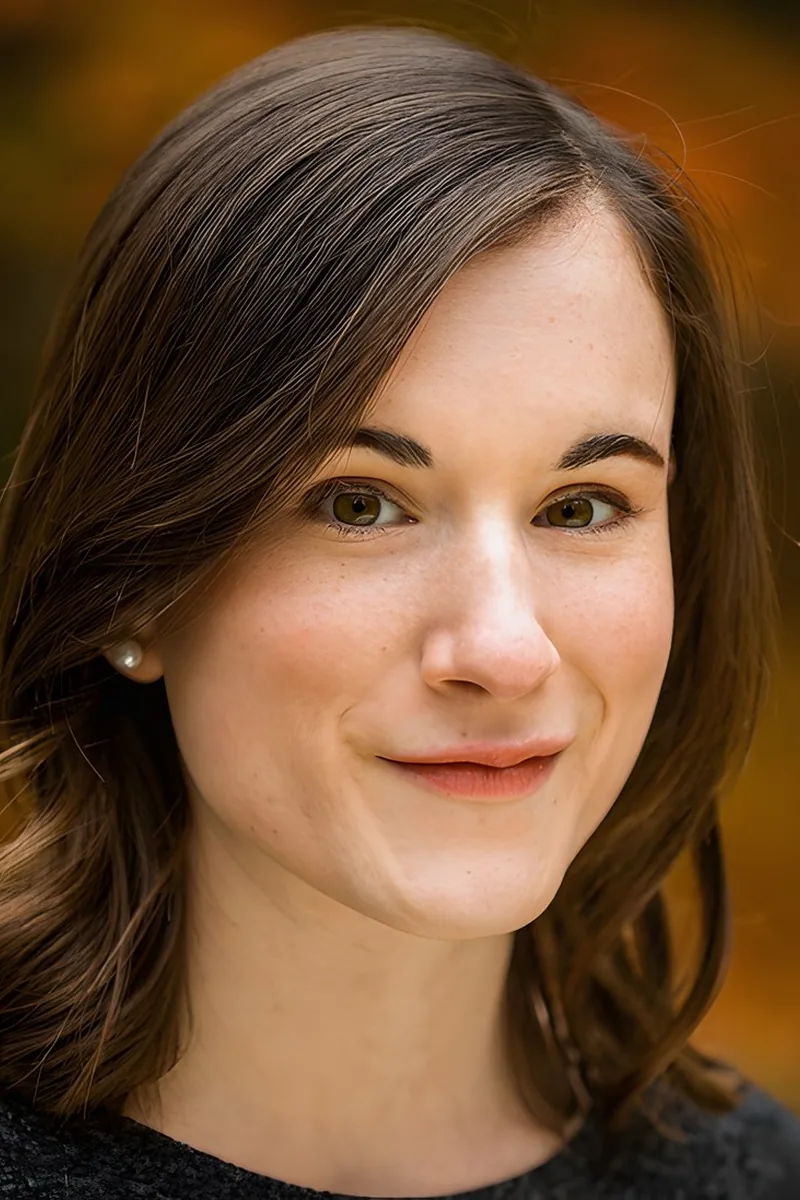
Studying Politics, Philosophy, and Economics at Penn means Esther spends most of her time analyzing arguments and writing essays, not signing — but her involvement in student theatre gives her a natural comfort with expressive physicality and nonverbal communication that translates well to ASL's visual-spatial demands. She approaches vocabulary and basic sentence construction with the same structured patience her 5.0 rating suggests she brings to her core academic subjects.
Meagen studies American Sign Language alongside her English and Computer Science coursework at Carleton College. She tackles ASL's unique grammar — topic-comment structure, non-manual markers, spatial referencing — as its own linguistic system rather than treating it as a translation exercise from English.
Libby's ASL skills were built through direct experience working with Deaf children in both behavioral therapy and academic settings, so she teaches more than just vocabulary and handshapes — she emphasizes facial grammar, spatial referencing, and the cultural context that makes signing feel natural. That real-world immersion gives her a fluency with conversational ASL that textbook-only learners rarely develop. Rated 5.0 by students.
ASL relies on spatial grammar, facial markers, and classifiers that have no direct equivalent in English, which means learning it requires a completely different mindset than studying a spoken language. Arianna's analytical approach — honed through her triple-major science background at Dartmouth — translates well to breaking down ASL syntax and helping students internalize handshape parameters and directional verbs through structured repetition.
While ASL isn't Jordan's primary language specialty, her experience learning multiple languages — she's fluent in English and Spanish and conversational in Polish — gives her a sharp understanding of how visual and structural grammar systems differ from spoken ones. She approaches ASL vocabulary and sentence structure with the same discipline she applies to any language: repetition, context, and real-world practice scenarios.
Leticia lists ASL among her tutoring subjects alongside a heavy STEM course load in biomedical engineering, which means she approaches it with the same structured, methodical learning style she applies to technical material. She breaks down handshapes, fingerspelling drills, and basic sentence construction into repeatable practice sequences that stick. Rated 5.0 by students.
Erika's background as a kinesthetic learner herself shapes how she approaches ASL — a language where physical memory and visual-spatial awareness matter as much as vocabulary knowledge. She emphasizes hands-on repetition of fingerspelling and sign production, adapting drills to match each student's learning style so the movements become second nature. Rated 5.0 by students.
Hannah's special education training at Purdue included coursework specifically on adapting instruction for diverse learners, and ASL is one of the subjects she's genuinely enthusiastic about — not just a line on a list. She teaches fingerspelling, basic vocabulary, and conversational building blocks with the kind of patient, individualized pacing that comes naturally from her work with special needs students. Rated 5.0 by students.
Transform Your Study Game with a Tutor Who Knows the Way: Expert Insight, On-Demand! I'm passionate about helping students because I love seeing that "aha!" moment when they finally understand something new. It's incredibly fulfilling to guide them through their learning journey and celebrate their successes. Over the years, I've worked with a variety of students, from those struggling with tough subjects to those aiming for excellence. Each experience has taught me how to adapt my approach to fit different learning styles, making sure every student gets the support they need. My teaching style is all about making learning fun and effective. I believe in personalizing my approach to fit each student's needs, using creative methods to make challenging concepts easier to grasp.
Aria teaches American Sign Language with an emphasis on building conversational fluency — receptive comprehension, fingerspelling speed, and the spatial grammar that makes ASL structurally distinct from English. Her approach leans on visual and interactive practice rather than rote vocabulary lists, which keeps the language feeling alive.
Chris minored in American Sign Language at NYU, building vocabulary across everyday, academic, and cultural contexts. He breaks down handshape families, non-manual markers, and ASL grammar — which follows its own syntax entirely distinct from English — in a way that makes the visual-spatial logic click.
Learning ASL involves much more than memorizing individual signs — facial expressions, spatial grammar, and sentence structure all work differently than in English. Allison introduces vocabulary in context and emphasizes the grammatical logic behind sign order, so students build real conversational ability instead of just a word list.
Learning ASL means thinking visually — grammar lives in facial expressions, spatial relationships, and the direction of movement, not in word order. Jack teaches sign vocabulary alongside these structural elements so students can hold real conversations instead of just translating English word-for-word into signs.
Testimonials
Because the right American Sign Language tutor makes all the difference.
Average Session Rating – Based on 3.4M Learner Ratings
Top 20 Languages Subjects



Top 20 Subjects
Frequently Asked Questions
Classifier predicates are one of the most challenging aspects of ASL because they require simultaneous use of hand shape, movement, and spatial positioning to convey meaning—something that can't be fully grasped through textbooks alone. A tutor can model these complex constructions in real time, show you how to position objects in signing space, and provide immediate feedback on your hand shapes and movements. With personalized 1-on-1 instruction, you'll practice producing classifiers yourself and learn how native signers adjust them based on context, which is essential for achieving fluency.
In a typical classroom, students spend most time learning grammar rules and vocabulary, with limited time for actual signed conversations. A tutor provides one-on-one dialogue practice where you're signing continuously, making mistakes in a low-pressure environment, and receiving real-time corrections on your signing speed, facial expressions, and non-manual markers. This kind of extended conversation practice is how you develop the fluency to understand natural signing and respond spontaneously—skills that are nearly impossible to build in a group setting.
Many ASL learners struggle with fingerspelling because it requires rapid visual processing and motor memory that develops through repeated exposure and practice. A tutor can fingerspell at various speeds, starting slowly and gradually increasing pace, while teaching you strategies like recognizing letter patterns and anticipating words from context. They can also identify specific letters or combinations you're struggling with and drill those patterns until they become automatic—something that's difficult to practice effectively on your own.
ASL grammar and Deaf culture are deeply intertwined—understanding why signers use certain facial expressions, body shifts, or spatial references requires knowledge of cultural values and communication styles that aren't always obvious from grammar lessons alone. A tutor can explain the cultural context behind linguistic choices, teach you appropriate eye contact and turn-taking norms, and help you understand how Deaf signers use humor, storytelling, and visual communication in ways that differ from spoken English. This cultural competency is essential for authentic communication and respect within the Deaf community.
Non-manual markers—facial expressions, head movements, shoulder raises, and body shifts—are grammatical elements in ASL that convey meaning just as important as hand signs. Many students focus so hard on hand shapes and positions that they neglect these markers, resulting in signing that looks incomplete or unclear to native signers. A tutor can mirror your signing, point out which non-manuals you're missing or overusing, and help you integrate them naturally with your hand signs so your overall communication is grammatically correct and fluent.
Receptive skills—understanding fast, natural signing—require exposure to varied signers, signing speeds, and regional variations that most learners don't encounter outside of Deaf community settings. A tutor can sign at different speeds and styles, repeat or slow down challenging passages, and help you develop strategies for understanding context clues and predicting meaning. Over time, this exposure builds your visual processing speed and helps you recognize common patterns, making it easier to follow conversations with native signers in real-world settings.
ASL vocabulary retention is challenging because signs are three-dimensional and must be remembered with precise hand shapes, positions, movements, and orientations—not just as written words. A tutor can teach vocabulary in thematic groups, use spaced repetition across multiple sessions, and have you produce signs in sentences and conversations rather than isolated lists, which strengthens memory through context. They can also help you understand sign etymology and regional variations, which deepens your understanding and makes vocabulary stick longer.
Beginner tutoring focuses on foundational hand shapes, positions, and basic sentence structure, with lots of repetition and modeling to build muscle memory and confidence. Advanced learners benefit from tutoring that emphasizes nuanced cultural communication, complex narrative signing, specialized vocabulary (like interpreting or technical fields), and exposure to regional and generational variations in signing. A tutor can tailor instruction to your current level, gradually increasing complexity and moving from controlled practice to natural, spontaneous conversation as your skills develop.
Let’s find your perfect tutor
Answer a few quick questions. We’ll recommend the right plan and match you with a top 5% tutor.