Award-Winning College Chemistry Tutors
serving Chicago, IL
College Chemistry
Tutors in Chicago
Private 1-on-1 tutoring, weekly live classes for academic support, test prep & enrichment, practice tests and diagnostics, and more to elevate grades and test scores.
Based on 3.4M Learner Ratings
UniversitiesSchools & Universities
DeliveredHours Delivered
ProficiencyGrowth in Proficiency
Who needs tutoring?
No obligation. Takes ~1 minute.
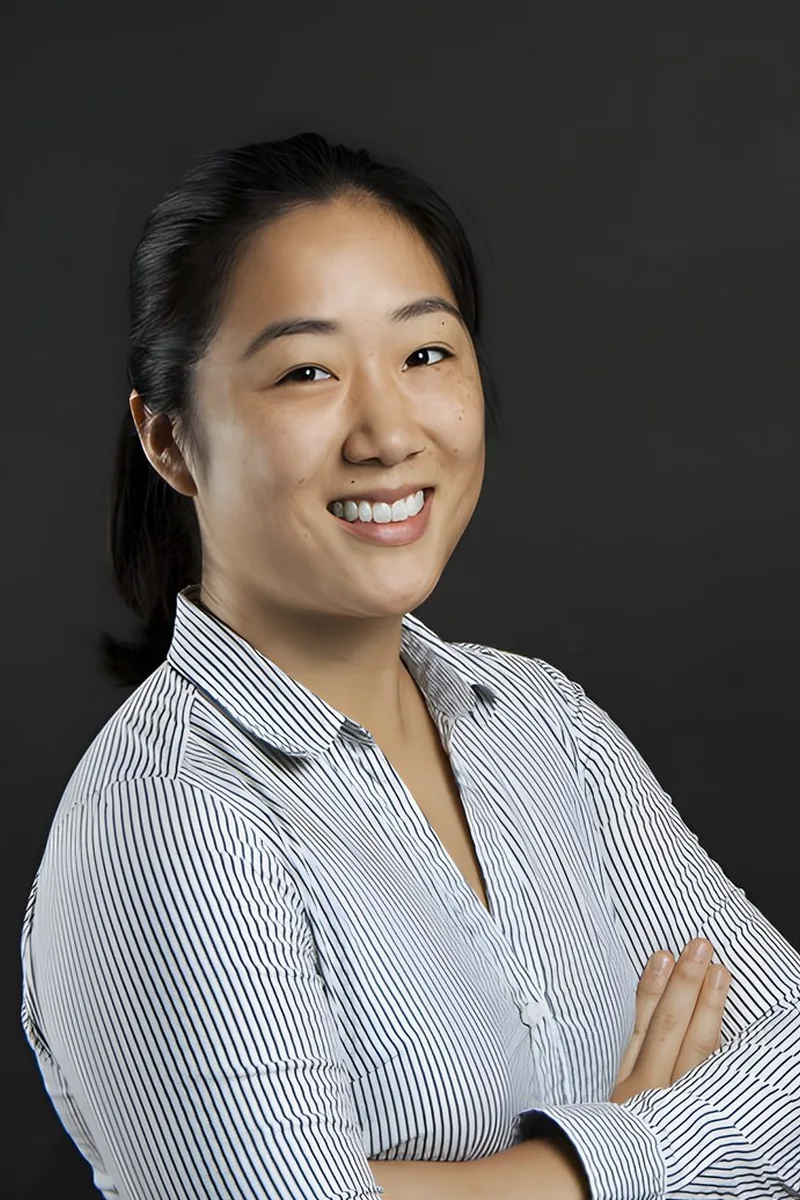
Though political science was her major at the University of Chicago, Asta's tutoring work across both chemistry and quantitative subjects means she's spent real time breaking down the conceptual hurdles in gen chem — balancing equations, working through mole conversions, and making sense of reaction types. Her 5.0 rating speaks to an approach that's honest about meeting the material on its own terms rather than pretending expertise she doesn't have, which students in a tough prerequisite course tend to trust more, not less.

I've been working with students for over seven years, from middle school all the way through college, across subjects like math, calculus, statistics, linear algebra, chemistry, and physics, with a lot of SAT and ACT prep mixed in. My background is perhaps a little unconventional. I have two bachelor's degrees, one in Engineering and one in Communication Studies, plus a Master's in Design. That combination means I can guide you through challenging technical material and communicate it in a way that is easy to grasp. What I care most about is helping students get to a place where they don't need me anymore. I know that sounds like a strange thing for a tutor to say, but I think it's the right goal. I'm not here to walk you through steps to copy down. I want you to understand why something works, because that's what holds up under pressure, on a test you haven't seen before. If you're ready to ace that test or prove that theorem that's been bugging you, reach out and let's work together
General chemistry at the college level demands more than balancing equations — it requires thinking in terms of energy, equilibrium, and molecular behavior. Jhonatan approaches topics like thermodynamics, acid-base chemistry, and kinetics by grounding abstract formulas in physical intuition, drawing on the quantitative rigor he developed through his biological sciences degree. His 5.0 rating speaks to how well that approach lands with students.
Biomedical engineering — both the bachelor's and master's — meant Lee couldn't just pass gen chem; he had to actually wield concepts like reaction thermodynamics, solution chemistry, and molecular interactions in materials science and biomechanics coursework where getting the chemistry wrong derailed the engineering. That applied pressure gives him a sharp sense of which gen chem topics students need to truly internalize versus which ones they can reference, and he teaches accordingly. Rated 4.9 by students.
Having earned both a bachelor's and a master's in chemistry, Klaas has taught the subject at every level — and college chemistry is where that depth pays off most, because he can trace a confusing topic like chemical kinetics or molecular orbital theory back to the foundational idea a student actually missed. He tackles the material with an emphasis on real-world applications, connecting abstract concepts to tangible chemical behavior so the theory doesn't feel detached from what's happening in the flask. Rated 5.0 by students.
Taryn earned her PhD in Chemistry, which means she's taught and worked through every level of college chemistry — from balancing redox equations in Gen Chem to tackling thermodynamics and molecular orbital theory in Physical Chemistry. She breaks down abstract concepts like equilibrium and kinetics into intuitive, step-by-step reasoning so students actually understand what's happening at the molecular level.
Studying at the University of Chicago while holding a 34 ACT, Masooma tackles college chemistry with the analytical rigor of someone trained to dissect complex arguments — her political science background means she's unusually good at teaching students how to reason through multi-step problems like equilibrium and stoichiometry rather than just memorize procedures. She zeroes in on the logical structure behind each problem, breaking down where the conceptual reasoning ends and the number-crunching begins. Rated 4.9 by students.
Pre-med coursework gave Hannah firsthand experience with the college chemistry gauntlet — the leap from memorizing periodic trends to actually applying concepts like stoichiometry and solution chemistry under exam pressure. She's particularly good at reading where a student's confusion really lives, whether it's the conceptual logic or the math mechanics, and adjusting her explanations on the fly. Rated 5.0 by students.
Thermodynamics, equilibrium, electrochemistry — college chemistry throws a lot of abstract concepts at students in rapid succession. Grant's biochemistry degree and medical school training mean he's worked through these principles repeatedly in increasingly complex contexts, so he can unpack the reasoning behind equations like Nernst or Henderson-Hasselbalch instead of just presenting them as formulas to memorize.
A PhD in Materials Science from Northwestern built on a chemistry degree from Canisius means Adam has taken every gen chem concept — bonding, thermodynamics, phase behavior, reaction kinetics — and stress-tested it in graduate-level research where getting the fundamentals wrong has real consequences. He teaches college chemistry by grounding abstract ideas like electron configuration or enthalpy in the tangible material properties they actually explain, which makes the content stick instead of evaporating after the exam. Rated 5.0 by students.
Hi! I am Vivek Pisharodi and I work in operations for a software company called Gamma Technologies. I graduated with a bachelor's degree in Chemical and Biomolecular Engineering from Georgia Tech and a master's degree in Material Science and Engineering from the University of Washington, focusing on electrochemical battery synthesis and analysis. My tutoring journey began as a way to stay engaged during a gap year between undergraduate and graduate school, but it quickly became a passion. I found immense fulfillment in helping students build confidence in math and science, guiding them toward academic success. While at the University of Washington, I continued tutoring student-athletes, supporting them in balancing rigorous coursework with their athletic commitments.
I am a Molecular Engineering major at the University of Chicago, I am currently taking time off to focus on other aspects of my career but I don't want to stop tutoring outside college campus!. I am a child of immigrants and have spent my life tutoring my siblings and younger students, and I loved working with them! See y'all in class!
Having a master's in chemical engineering from IIT means Daniel has taken gen chem concepts like reaction kinetics, thermodynamics, and phase equilibria and applied them under the rigorous quantitative demands of engineering coursework — so he knows exactly which gaps in foundational chemistry cause the most trouble later. He also writes extensively outside of STEM, which gives him an unusual ability to explain dense quantitative material in clear, structured language rather than just walking through equations.
Organic mechanisms, thermodynamics, kinetics — college chemistry ramps up fast, and Sareen knows the terrain from both sides, having minored in chemistry as an undergrad and now applying that knowledge daily in medical school at Northwestern. She digs into reaction logic and problem-solving strategies rather than encouraging rote memorization of equations.
Oberlin's biology curriculum forced Ellen through the full gen chem gauntlet — electron configurations, solution stoichiometry, thermochemistry — with a chemistry minor that kept her in the department long enough to see how introductory topics like VSEPR theory and intermolecular forces actually pay off in upper-level coursework. She digs into the "why" behind each concept so that formulas like Gibbs free energy or equilibrium constants carry meaning instead of just being things to memorize for an exam. Holds a 5.0 rating.
Preparing for a PhD in Chemistry while holding a BS in Physics gives Edward a cross-disciplinary lens that's especially useful in college-level coursework — thermodynamics, quantum chemistry, and molecular orbital theory all sit at the intersection of both fields. He unpacks these topics by connecting mathematical rigor to chemical intuition, so equations like the Schrödinger approximation or Gibbs free energy actually make sense rather than appearing out of nowhere.
Civil engineering coursework forced Kyle to internalize gen chem concepts like thermodynamics, material properties, and bonding behavior long before applying them to concrete mix design and environmental systems — so he teaches college chemistry with an engineer's emphasis on getting the quantitative reasoning right the first time. He's especially sharp on calculation-heavy topics like stoichiometry and gas laws, where sloppy unit tracking is usually the real culprit behind wrong answers. Rated 4.9 by students.
Surviving organic chemistry mechanisms and thermochemistry calculations in a physician assistant program gave Kurt a practical grip on college-level chemistry that goes well beyond flashcard memorization. He unpacks topics like equilibrium constants, acid-base titrations, and molecular orbital theory by tying them to the bigger picture of how molecules actually behave. Students consistently rate him 5.0.
Graduate of St. Louis University with a Degree in Chemical Biology and Pharmacology I know from experience how difficult chemistry and biology can be. These were not topics that just came naturally for me, and during college I had to spend a lot of time sitting down with these topics and trying to work them out in my head. Because of this, I have a lot of empathy to students struggling in their courses, and I enjoy working as a tutor who can help students who may feel overwhelmed. About lessons: Lessons with me are very flexible. I am willing to: - Create a guided lesson for you reviewing what you covered in class and break down difficult terminology in text-books and slideshows - Create student-specific study materials and study guides if you feel the resources available to you in class are not sufficient -Help guide you through your homework and practice exams If your goals for a course change over time, I will adapt to your needs as a student!
Engineering coursework at Harvard means Christopher regularly uses chemistry concepts like thermodynamics, equilibrium, and reaction kinetics in applied settings. He teaches college chemistry by connecting abstract ideas — say, Gibbs free energy or electrochemical cells — to tangible problems, making the material easier to internalize before exams.
Neuroscience coursework at UIC's Honors College means Rohan tackles college chemistry from the molecular level up — thermodynamics, reaction kinetics, and acid-base equilibria are concepts he uses daily in his own studies. He breaks down problem sets by connecting abstract formulas to the biological and physical systems they describe, which makes the logic behind each reaction click. Rated 4.8 by students.
I am currently an adjunct professor of chemistry at a small liberal arts college in the Chicago area. Previously, I worked in the chemical industry for several years as a researcher, but I've found that the most satisfying moments have come when I am able to share my expertise with someone else. Similarly, I very much enjoyed the four semesters in the graduate school when I was a teaching assistant. It gave me the opportunity to work with students and help them develop an understanding for the subject. These are the primary reasons that I have decided to go into teaching.
Between a classics undergrad and a biomedical sciences master's, Stephen has sat through college chemistry from the life-sciences side — wrestling with reaction stoichiometry, solution concentration math, and acid-base equilibria as prerequisites that actually mattered for later coursework. He teaches the quantitative pieces by slowing down at the exact step where the chemistry logic and the algebra intersect, which is where most students quietly lose the thread.
A research chemist at Northwestern with a Ph.D. in Physical Chemistry from UC Berkeley, Jacob has taught introductory college chemistry both as a TA and as head instructor. That classroom experience means he knows exactly where students stumble — whether it's electron configurations, equilibrium calculations, or connecting thermodynamic principles to reaction spontaneity. Rated 4.9 by students.
I am passionate about the importance of math and science, I enjoy making them more relatable to a student by explaining their real world applications whenever possible.
Three semesters on UIUC's Teachers Ranked as Excellent list didn't come from lecturing — Angelina earned that recognition by breaking down topics like electron configurations, reaction stoichiometry, and chemical bonding in ways that stuck with students under real exam pressure. Her cellular and molecular biology degree means she's applied gen chem concepts through upper-level coursework where shaky fundamentals would have been exposed immediately. Rated 5.0 by students.
AP Chemistry coursework at Washington University in St. Louis — a program that doesn't let students coast past topics like electrochemistry, kinetic molecular theory, or solution equilibria — gives Miriam a recent, firsthand understanding of exactly where college chemistry gets dense and where students start losing the thread. She tackles problem sets by sorting out which piece is tripping a student up (the conceptual model, the math, or just the notation) before working through the solution step by step.
Analytical chemistry was Hannahlore's specialty within her chemistry degree, which means she spent significant time on the quantitative techniques — titrations, spectroscopic methods, error analysis — that college chemistry students often encounter without fully understanding the principles behind them. She digs into the reasoning connecting each calculation to the chemical behavior it measures, so a Beer's Law problem or a dilution series becomes logical rather than formulaic. Holds a 5.0 rating.
Thermodynamics, equilibrium constants, and molecular orbital theory all demand a level of abstraction that textbooks rarely make intuitive. Mateusz spent his University of Illinois coursework applying these exact concepts in biochemistry and cell biology contexts, so he explains them with concrete examples rather than purely theoretical frameworks. His 4.9 rating speaks to how well that approach clicks with college students.
Rudy's master's in biology and bachelor's in behavioral biology mean he understands chemistry not as an isolated subject but as the engine driving biological systems — from enzyme kinetics to acid-base equilibria in physiological buffers. He breaks down tough topics like thermodynamics and molecular orbital theory by connecting them to real processes students can visualize. Rated 5.0 by students.
Clinical laboratory science demands real fluency in chemistry, not just passing a test — Darby spent her degree work applying thermodynamics, equilibrium, and analytical techniques in lab settings where precision mattered. She unpacks tough college-level topics like electrochemistry and reaction kinetics by tying them to tangible applications rather than leaving them as abstract equations. Her 5.0 rating speaks to how well that approach translates for students.
A Master of Science in Physical Chemistry means Luis has gone far deeper into the quantitative backbone of chemistry — quantum mechanics, statistical thermodynamics, kinetics modeling — than a standard gen chem sequence ever demands, which gives him unusual clarity when explaining why equations like the Arrhenius expression or the Nernst equation work the way they do. He tackles college chemistry problems by grounding the math in physical intuition, so students aren't just memorizing formulas but understanding the energy and molecular behavior driving each reaction. Rated 4.9 by students.
I am a junior at the University of Wisconsin--Madison, working toward Bachelor of Science degrees in Biology and Spanish, as well as a Certificate in Leadership. I have volunteered as a tutor of high school students through Centro Hispano and junior high students through Mentoring Positives in Madison, Wisconsin. While I tutor a broad range of subjects, I am most passionate about biology, chemistry, and math, as well as the MCAT exam. I place a high emphasis on content comprehension in preparation for standardized tests, as well as in other coursework. I also enjoy teaching Spanish, in which I am proficient. I lived in Seville, Spain during the fall of 2014, and I believe that repeated conversation practice is one of the best ways to learn a language. I also enjoy watching and playing a variety of sports, especially football and basketball, and when given the opportunity, I love to travel.
Tackling college chemistry means moving past memorized rules into real mechanistic thinking — understanding why equilibrium shifts, how thermodynamic quantities connect, or what drives electrochemical cell potentials. Whitney teaches these concepts as a current PhD student and TA at the University of Illinois Urbana-Champaign, where she walks students through the same material she encounters in her own graduate coursework every day.
Having earned his chemistry degree, Kevin has worked through every corner of the gen chem curriculum — not just survey-level exposure, but the deeper understanding that comes from building on it through upper-division coursework. He's particularly sharp at breaking down the quantitative side of things like equilibrium expressions and stoichiometric conversions, where his strong math background (33 ACT, and he tutors everything from algebra to GRE quant) keeps the calculations from becoming a second obstacle on top of the chemistry. Holds a 5.0 rating.
Pre-med students often hit college chemistry expecting it to be straightforward biology support — then get blindsided by the quantitative rigor of thermochemistry, equilibrium constants, and electrochemical cell calculations. Alec's biology degree from DePaul and his own path toward medical school mean he's recently fought through that exact transition, and he teaches gen chem by making the conceptual logic click before the math piles on.
Two and a half years tutoring both organic and inorganic chemistry at Notre Dame gave Jing a sharp sense of where college students get stuck — whether it's orbital hybridization that doesn't click visually, or equilibrium problems where students set up ICE tables mechanically without understanding what's shifting and why. Her pre-med coursework means she's also carried these gen chem concepts forward into biology and biochemistry, so she teaches each topic knowing exactly how it'll resurface later. Rated 5.0 by students.
Having studied environmental sciences, Catherine knows college chemistry from the applied side — she's used concepts like solution equilibria, reaction stoichiometry, and thermodynamics in ecological and analytical contexts where getting the chemistry wrong means getting the fieldwork wrong. She teaches gen chem by grounding abstract topics in tangible systems, making ideas like molarity and enthalpy feel less like textbook exercises and more like tools with real consequences. Rated 5.0 by students.
I'm Steven! I'm a Chemistry student and part of the Honors program at the University of Illinois Urbana-Champaign with multiple years of teaching experience from middle school level math and science all the way to the AP level. My tutoring philosophy is that understanding the student perspective always comes first. This allows for me to tailor the approach for learning to best suit the student, which helps in grasping material later. Lastly, I love tutoring because I love seeing people succeed!
A bio-organic chemistry degree means Alex has lived through the full gen chem sequence and then pushed those concepts further — into reaction mechanisms, molecular orbital theory, and the quantitative problem-solving that upper-level chemistry demands. That depth shows up when tackling topics like chemical kinetics or periodic trends, where he can explain not just how to solve a problem but why the underlying chemistry behaves the way it does.
Testimonials
Because the right College Chemistry tutor makes all the difference.
Average Session Rating – Based on 3.4M Learner Ratings
Nearby College Chemistry Tutors
Other Chicago Tutors
Related Science Tutors in Chicago
Frequently Asked Questions
College Chemistry requires mastering both conceptual understanding and problem-solving skills—many students struggle with balancing equations, unit conversions, and connecting abstract molecular concepts to real-world applications. Additionally, the pace of college coursework is significantly faster than high school, and labs demand careful attention to the scientific method and data interpretation. Personalized tutoring helps you build a strong foundation in these areas before they compound into larger gaps.
Your first session is about understanding your specific challenges—whether that's equilibrium, thermodynamics, organic chemistry mechanisms, or exam preparation. A tutor will assess your current level, identify knowledge gaps, and discuss your course goals and timeline. From there, you'll develop a personalized plan that targets your weaknesses while reinforcing concepts you're already grasping.
Yes. Tutors can help you understand lab procedures, interpret experimental data, write lab reports, and grasp the scientific reasoning behind experiments. They can also help you visualize what's happening at the molecular level during reactions and connect lab observations to the theoretical concepts you're learning in lecture. This bridges the gap between hands-on work and conceptual understanding.
No—memorization is a small part of the picture. College Chemistry is fundamentally about understanding *why* reactions occur, how to predict outcomes, and applying principles to new problems. Tutors focus on building deep conceptual understanding so you can tackle unfamiliar problems on exams and in real-world contexts, rather than relying on rote memorization.
Varsity Tutors connects you with tutors who have strong backgrounds in Chemistry—many hold degrees in Chemistry, Chemical Engineering, or related sciences, and have experience teaching or tutoring at the college level. Tutors are vetted for subject expertise and teaching ability, ensuring they can explain complex concepts clearly and help you develop problem-solving skills.
Tutors help you identify weak areas, practice problem-solving under timed conditions, review exam formats, and develop test-taking strategies. They can also help you master common question types—whether that's stoichiometry problems, mechanism predictions, or conceptual reasoning questions. Regular practice and feedback leading up to exams significantly improves performance and confidence.
Many students notice improved understanding and confidence within 2-3 weeks of consistent tutoring, especially if they're working on specific problem areas like balancing equations or unit conversions. Significant grade improvements typically follow within 4-6 weeks as concepts solidify and exam performance reflects deeper mastery. The timeline depends on your starting point, course pace, and tutoring frequency.
Yes. Varsity Tutors connects Chicago students with expert Chemistry tutors who understand college-level coursework and can provide personalized instruction tailored to your course, professor, and learning style. Whether you're at a Chicago university or taking chemistry online, you can get matched with a tutor who fits your schedule and academic goals.
Let’s find your perfect tutor
Answer a few quick questions. We’ll recommend the right plan and match you with a top 5% tutor.