Award-Winning AP Physics C: Mechanics Tutors
serving Chicago, IL
AP Physics C: Mechanics
Tutors in Chicago
Private 1-on-1 tutoring, weekly live classes for academic support, test prep & enrichment, practice tests and diagnostics, and more to elevate grades and test scores.
Based on 3.4M Learner Ratings
UniversitiesSchools & Universities
DeliveredHours Delivered
ProficiencyGrowth in Proficiency
Who needs tutoring?
No obligation. Takes ~1 minute.
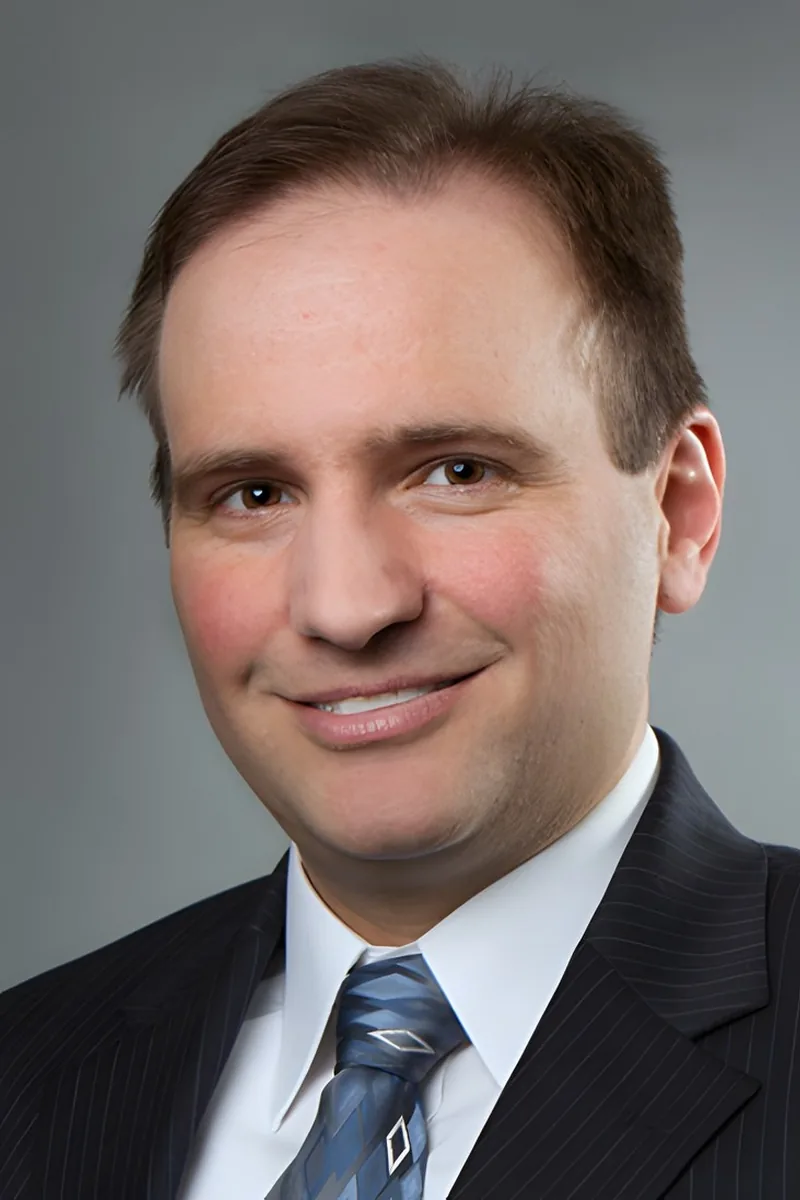
Jonathan earned his PhD in physics, which means the calculus-based mechanics in AP Physics C — from deriving equations of motion for coupled oscillators to setting up torque integrals for non-uniform rigid bodies — is territory he's navigated at a research level. His teaching fellowship during graduate school had him running students through exactly these problems, building intuition for when to apply Newton's second law in differential form versus jumping straight to energy methods. Rated 5.0 by students.
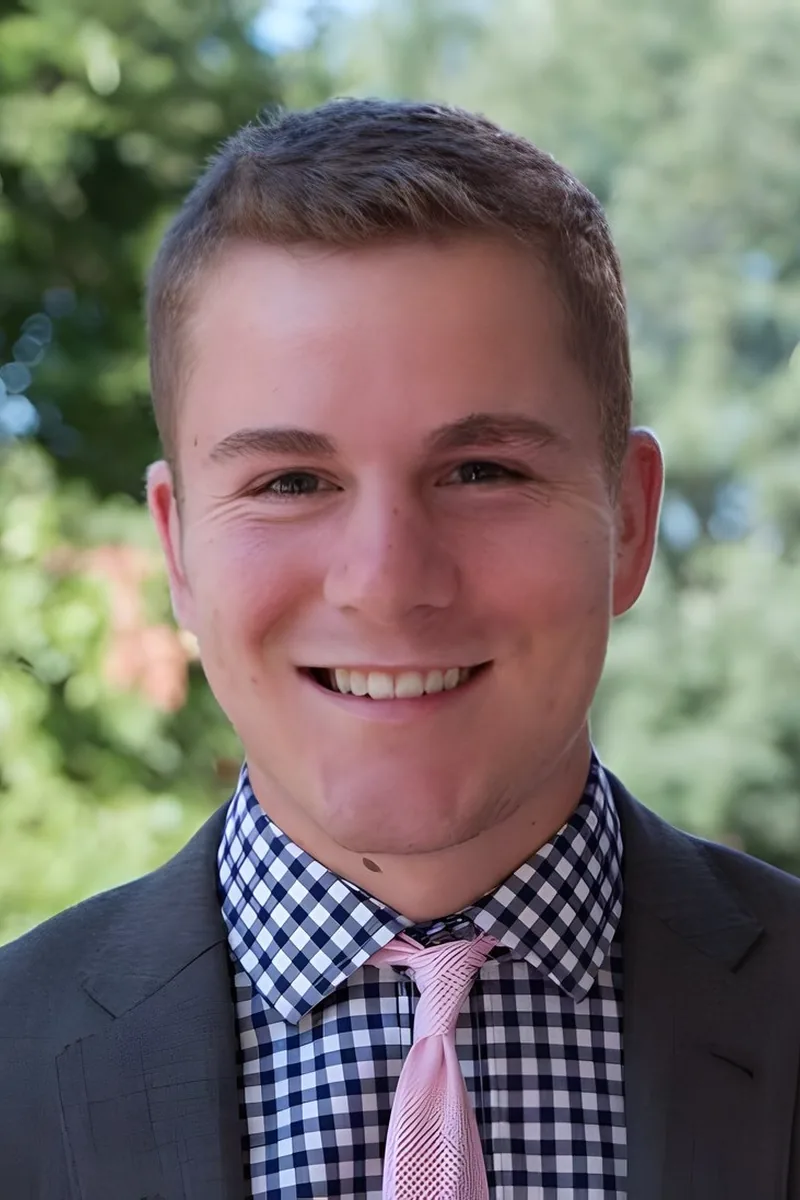
I am a graduate of Cornell University's College of Arts and Sciences. I received my Bachelor of Arts in Chemistry with Distinction in 2015. Since graduation, I was a physics/chemistry teacher and soccer coach at a private school in Virginia for a year, where I led the soccer team to an undefeated season. Before teaching and coaching professionally, I was a Teaching Assistant for the Cornell Math and Physics Departments, where I taught many subjects including calculus, mechanics, electromagnetism. Throughout my time at Cornell and as a teacher, I tutored subjects ranging from the SAT to AP Physics and Algebra II, which is where my true talents lie: in small group or one-on-one settings where I can give students the full attention they deserve and tailor my approach specifically to their learning styles. This is why I am now pursuing tutoring as a part-time occupation at Varsity Tutors. I embrace teaching all math and science subjects, especially physics and calculus, at both the college and high school level and will go above and beyond to make sure all of my students succeed, according to their definition of success. In my spare time, I enjoy playing league soccer, basketball, tennis and guitar, and also like to travel and see as much of the world as I can.
Brian's mechanical engineering master's and physics bachelor's mean he's solved thousands of problems involving variable-force integrals, rotational kinematics, and Lagrangian mechanics — the exact material AP Physics C: Mechanics throws at students. He teaches the course by building each problem from a physical scenario to a mathematical model, so students learn to derive rather than memorize. Rated 5.0 by students, he's especially sharp on energy methods and oscillatory systems.
I am a Northwestern University graduate and received my Bachelor of Science in Mechanical Engineering with a concentration in Robotics. I have an extensive background tutoring middle and high school students in Standardized Tests as well as helping incoming freshmen acclimate to the college environment as a Peer Advisor. Due to my concentration in STEM, I am well-adept in teaching Math and Physics, though am open to tutoring outside those subjects. I believe that working on one's education outside of regular school hours shows a strong initiative to learn, and I want to encourage this drive for learning in my students.
Hi! I'm Palmer Blackstock, a passionate tutor with a Bachelor's degree in Physics from the University of Chicago and over two years of experience in tutoring high school and college students. My primary focus is on Physics at both introductory and advanced levels, with an additional focus in math subjects like Algebra, Pre-Calculus, and AP Calculus. In my past tutoring I've helped students grasp complex concepts in mechanics, waves, and electromagnetism, as well as math concepts in trigonometry and calculus. I believe in a collaborative, student-centered approach, where I'll ask the student what they know, what they don't know, and what they want to get out of our tutoring sessions. I always tailor my lessons to meet a student's individual needs. I'm dedicated not only to enhancing a student's understanding of math and science concepts but also fostering a love of science by providing engaging content and real-world examples. In addition to my passion for education, I also love writing and journalism, especially finding engaging methods for science communication. I enjoy reading books and listening to science podcasts. But I'm also an avid video game and board game player.
Currently studying mechanical engineering, Grant is solving the same calculus-based kinematics, force analysis, and energy problems that AP Physics C: Mechanics tests — except his coursework in statics, dynamics, and engineering applications pushes them further than the exam ever will. His 1490 SAT confirms the quantitative chops, and his daily immersion in these concepts means he can quickly spot whether a student's free-response struggle is a physics misread or a calculus execution error.
Engineering coursework at Michigan means Zain is solving calculus-based mechanics problems — variable-force kinematics, work-energy integrals, Newton's laws in differential form — as part of his actual degree, not just for an exam. He pairs that with tutoring experience across AP Calculus BC and AP Physics 1, so when a student's stuck on a free-response problem, he can tell whether the breakdown is in the physics setup or the calculus execution and address the right one.
A PhD in Physics from Notre Dame means Nathan has taught and researched mechanics at a level where the calculus isn't a tool bolted onto the physics — it *is* the physics, from Lagrangian formulations down to the force integrals that show up on the AP exam. He's especially sharp at diagnosing whether a student's free-response mistake is a conceptual misread of the physical system or a calculus execution error, then targeting exactly that gap. Over five years of tutoring across middle school through college levels gives him an unusual read on which foundational holes cause the biggest problems in a calculus-based course.
Sanjana's applied math studies at Harvard and her role as a Course Assistant for introductory calculus mean she's fluent in the exact differential and integral techniques that AP Physics C: Mechanics layers onto every force, torque, and energy problem. She's especially effective at bridging the gap when students grasp the physics intuitively but struggle to translate a scenario — say, a block on a spring with friction — into the correct differential equation and solve it cleanly. Rated 5.0 by students.
Rice's physics program throws Will into calculus-based mechanics every day — working through Lagrangian setups, variable-force integrations, and the rotational dynamics problems that make AP Physics C's free-response section so demanding. His approach starts with the underlying physical principle, then builds the math around it piece by piece, so students internalize the reasoning instead of pattern-matching to memorized solutions.
Designing control systems for Northwestern's solar car means Michael applies Newtonian mechanics, rotational dynamics, and energy conservation principles daily — the exact topics AP Physics C: Mechanics tests. He teaches students to translate word problems into free-body diagrams and then into the calculus-based equations that earn full marks on free-response questions.
Darren is midway through his physics degree at Northwestern, which means he's actively taking the upper-division mechanics courses that build directly on everything AP Physics C tests — and he still remembers exactly where the conceptual jumps from kinematics to rotational dynamics tripped him up the first time. He zeroes in on free-body diagrams and getting the calculus setup right before students ever touch a number, treating each problem as a reasoning exercise rather than a formula hunt. Rated 5.0 by students.
A physics degree means Eitan has spent years inside the calculus-based mechanics framework — not just applying Newton's laws but deriving them from first principles, working through Lagrangian setups, and building physical intuition for when a problem calls for energy methods versus force analysis. He's particularly sharp on free-body diagrams that involve variable forces, where students often know the physics but stumble on setting up the correct integral bounds. Rated 5.0 by students.
Unlock your academic potential with a tutor who bridges the gap between elite performance and foundational mastery. As a National AP Scholar with advanced coursework in Multivariable Calculus and Data Structures, I bring high-level expertise to your studies. Whether you are tackling complex algorithms or advanced math, I provide the precise guidance you need to excel. My experience at Kumon and Mathnasium taught me that even the most complex goals start with strong basics. I believe in both individual learning as well learning through guided practice, so whatever your way to learn I can accomodate to help you do the very best.
Computer engineering at UIUC means Ash is building circuits and writing code on top of the same calculus-based mechanics — free-body diagrams, work-energy integrals, Newton's laws in differential form — that AP Physics C tests every May. That engineering context gives him a practical read on problems involving pulleys, inclined planes, and variable forces, since he's already applying those principles to real systems in his coursework. Rated 4.8 by students.
A mechanical engineering degree means Amol didn't just study AP Physics C: Mechanics topics — he applied them, running free-body diagrams through actual design constraints where getting the torque or moment of inertia wrong has real consequences. His 35 ACT confirms the quantitative chops, and he's especially effective at teaching students to read a mechanics scenario and decide whether to reach for Newton's laws, energy conservation, or momentum before writing a single equation.
Nick's industrial engineering coursework puts him through the same calculus-based mechanics — force analysis, energy methods, kinematics — that AP Physics C tests, and his 1580 SAT and 35 ACT suggest the quantitative fluency to handle the exam's trickiest multi-step problems. He also tutors AP Calculus BC and AP Physics 1, so he's used to diagnosing whether a student's stuck on the derivative or the physics behind it. Rated 5.0 by students.
Bettina didn't just study mechanics in a textbook — she earned a PhD in mechanical engineering, meaning she's derived equations of motion for real systems where assumptions about friction, constraints, and rigid-body approximations actually matter. That depth shows up when she teaches AP Physics C: Mechanics topics like rotational dynamics and gravitational potential energy, because she can explain not just how to set up the integral but why that particular model fits the physical situation.
Most pre-med students avoid the calculus-heavy physics — Manideep leans into it, tackling AP Physics C: Mechanics alongside his biological sciences coursework at Northwestern, where he also TAs in the sciences. He breaks down conservation of energy and momentum problems by starting with the physical scenario and building the integral from there, so students learn a repeatable process instead of hunting for the right formula. Rated 5.0 by students.
Having scored a 1580 SAT and studied computer science, Rishik brings a programmer's discipline to AP Physics C: Mechanics — treating each problem like an algorithm where you define your variables (forces, constraints, coordinate system) before executing the calculus. He also tutors both AP Physics C exams alongside AP Calculus BC, so he's comfortable moving between the electricity side and the mechanics side while keeping the underlying math sharp. Rated 4.6 by students.
Simulating cosmic ray acceleration through turbulent plasmas requires exactly the kind of calculus-based mechanics reasoning that AP Physics C tests — Newton's laws applied to complex systems, rotational dynamics, and energy methods. Dennis walks students through the hardest problems on the exam by teaching them to set up the physics first and let the calculus follow naturally. Rated 4.7 by students.
Free-body diagrams, rotational inertia, and conservation of energy problems all require calculus-based reasoning that trips students up when they try to rely on formulas alone. Emily completed the full pre-med physics sequence at Cornell and spent her senior year tutoring calculus — two skills that converge directly in AP Physics C: Mechanics. She breaks multi-step problems into the underlying math so students see why the setup matters as much as the answer.
An applied physics degree means Karen didn't just study mechanics for an exam — she built her entire undergraduate education around the Newtonian framework, calculus-based problem-solving, and laboratory work that AP Physics C condenses into a single course. She's especially sharp at connecting real-world scenarios (a spinning figure skater, a car banking a curve) to the free-body diagrams and integrals students need to produce under timed conditions. Rated 5.0 by students.
Mechanics is where Cory is most at home. He treats AP Physics C: Mechanics as a student's first real encounter with calculus-based reasoning about the physical world — deriving kinematic equations from integrals, connecting Newton's laws to differential equations in rotational dynamics, and building intuition for conservation laws that goes beyond plugging into formulas. His physics degree means the vector calculus never gets hand-waved away.
Dylan's physics major at Vanderbilt means he's working through the same calculus-based Newtonian mechanics — torque integrals, rotational kinematics, differential equations for oscillating systems — that AP Physics C: Mechanics demands, and his 36 ACT reflects the quantitative precision that carries over to exam performance. He leans on graphical and physical intuition to make abstract quantities like angular momentum feel tangible before translating them into the calculus setup the free-response section scores on.
Biomedical engineering throws you into calculus-based mechanics from day one — Spencer's coursework has him modeling forces on biological systems using the same Newtonian framework and integral setups that AP Physics C tests on free-response problems. His 35 ACT and parallel teaching across both AP Calculus BC and AP Physics C mean he can diagnose whether a student's stuck on the physics concept or the calculus execution, and address the right one.
Leading Carmel High School's Science Olympiad team to back-to-back Nationals appearances meant Satvik was coaching peers through mechanics problems — projectile motion, rotational inertia, energy conservation — long before he started his aerospace engineering degree at Georgia Tech. Now, as an undergraduate TA in computing who scored a perfect 36 ACT and earned a 5 on both AP Physics C exams, he brings a rare combination: recent memory of exactly where the exam's calculus-based free-response questions trip students up, plus the engineering rigor to show how each derivative or integral connects to the physical system. Rated 5.0 by students.
Hello, my name is Yosef and I would be happy to serve as a math tutor. I place strong emphasis on a good balance between knowledge of mathematical content and proficiency in problem-solving, reasoning, and conveying mathematical ideas in writing. There are times when a student needs to be informed of a solution, times when he or she also needs to hear the explanation of why the solution works, and times when he or she should be guided to finding the solution on his or her own. It is important for the tutor to recognize which approach is appropriate. Frequently, when students struggle, it is because they do not understand the notation or terminology in use. In such cases, it is important to reassure the student, reminding him or her that he or she is only struggling with understanding a single word, not the entire mathematical concept. As a rule, people perform better and are better motivated when they have self-confidence, not when the task ahead seems frighteningly daunting. It is also important to recognize that different students learn best through different means. As an example, some students are visual learners and can understand the material best through pictures and gestures. Other students learn best through hearing the procedures vocalized, while still others learn best through writing out the steps of the solution procedure. I know to adapt my teaching style to the individual student. with these considerations in mind, I promise to provide the best assistance that I can, taking your individual needs into consideration.
UCLA's engineering curriculum has David solving the same calculus-based mechanics — work-energy integrals, variable-force problems, rotational inertia derivations — that the AP Physics C exam tests, and his computer science training adds a systematic, algorithmic approach to setting up multi-step free-response problems. He's especially sharp at teaching students to diagram a physical system, identify which conservation law applies, and then write the correct integral or derivative before calculating anything. Rated 4.8 by students.
Testimonials
Because the right AP Physics C: Mechanics tutor makes all the difference.
Average Session Rating – Based on 3.4M Learner Ratings
Practice AP Physics C: Mechanics
Free practice tests, flashcards, and AI tutoring for AP Physics C: Mechanics
Nearby AP Physics C: Mechanics Tutors
Other Chicago Tutors
Related Science Tutors in Chicago
Frequently Asked Questions
AP Physics C: Mechanics focuses on kinematics, dynamics, energy, momentum, circular motion, and oscillations. The course emphasizes calculus-based problem solving, requiring students to understand derivatives and integrals as they apply to motion and forces. Most Chicago high schools teach this course over a full academic year, though some students benefit from targeted tutoring to master the more challenging topics like rotational motion and simple harmonic motion.
AP Physics C: Mechanics requires both strong conceptual understanding and calculus skills, which many students find challenging to integrate. Common trouble spots include applying Newton's laws to complex systems, understanding energy conservation in different contexts, and working through multi-step problems under time pressure. Personalized 1-on-1 instruction helps identify which specific concepts are causing confusion and builds problem-solving confidence before the AP exam.
The AP Physics C: Mechanics exam consists of two sections: a 45-minute multiple-choice section (35 questions) and a 45-minute free-response section (3 problems). Success requires both quick pattern recognition for multiple choice and the ability to clearly show your work and reasoning on free-response questions. Many students benefit from practice with actual AP exam questions and timed practice sessions to build pacing skills and reduce test anxiety.
Score improvement depends on your starting point and how consistently you engage with tutoring. Students who work with a tutor for 2-3 months before the exam typically see meaningful gains, especially if they focus on their weakest topics and complete regular practice problems. Many students move from a 2 or 3 to a 4 or 5 by identifying conceptual gaps early and practicing strategic problem-solving approaches that work within the exam's time constraints.
Ideally, students benefit from starting tutoring in the fall or early winter to build a strong foundation before the May AP exam. However, even targeted tutoring in the final 6-8 weeks can help if you focus on practice tests, identifying weak areas, and refining test-taking strategies. Starting early gives you time to revisit challenging topics like rotational dynamics or energy problems without feeling rushed.
Practice tests are essential—they help you understand the exam's pacing, question formats, and your specific weak areas. Taking full-length, timed practice tests every 2-3 weeks gives you realistic feedback on where you need to focus your study time. A tutor can review your practice test results with you, explain where your reasoning went wrong, and teach you strategies to avoid similar mistakes on the actual exam.
Varsity Tutors connects Chicago students with expert tutors who specialize in AP Physics C: Mechanics and understand the specific challenges of the curriculum. When you get matched with a tutor, you can discuss your current level, timeline before the exam, and which topics need the most work. Personalized 1-on-1 instruction allows tutors to adjust their teaching style to how you learn best, whether that's through conceptual explanations, worked examples, or guided problem-solving.
Students often struggle with sign conventions in kinematics, misapplying energy conservation when non-conservative forces are present, and confusing when to use linear versus rotational equations. Time management is another frequent issue—students either spend too long on one problem or rush through free-response questions without showing adequate work. Working through past AP exams with a tutor helps you recognize these patterns in your own problem-solving and develop strategies to catch mistakes before submitting your answers.
Let’s find your perfect tutor
Answer a few quick questions. We’ll recommend the right plan and match you with a top 5% tutor.