Award-Winning AP Statistics Tutors
serving Bridgeport, CT
AP Statistics
Tutors in Bridgeport
Private 1-on-1 tutoring, weekly live classes for academic support, test prep & enrichment, practice tests and diagnostics, and more to elevate grades and test scores.
Based on 3.4M Learner Ratings
UniversitiesSchools & Universities
DeliveredHours Delivered
ProficiencyGrowth in Proficiency
Who needs tutoring?
No obligation. Takes ~1 minute.

A PhD in economics at Yale means Anthony lives in regression output, probability models, and econometric inference daily — and his undergraduate physics and math training is where he first learned to think rigorously about uncertainty and distributions. He's especially sharp on the chi-square and inference units where students need to move past calculator mechanics and articulate the reasoning behind their procedure choice, which is exactly what the free-response rubric scores hardest. Rated 5.0 by students.
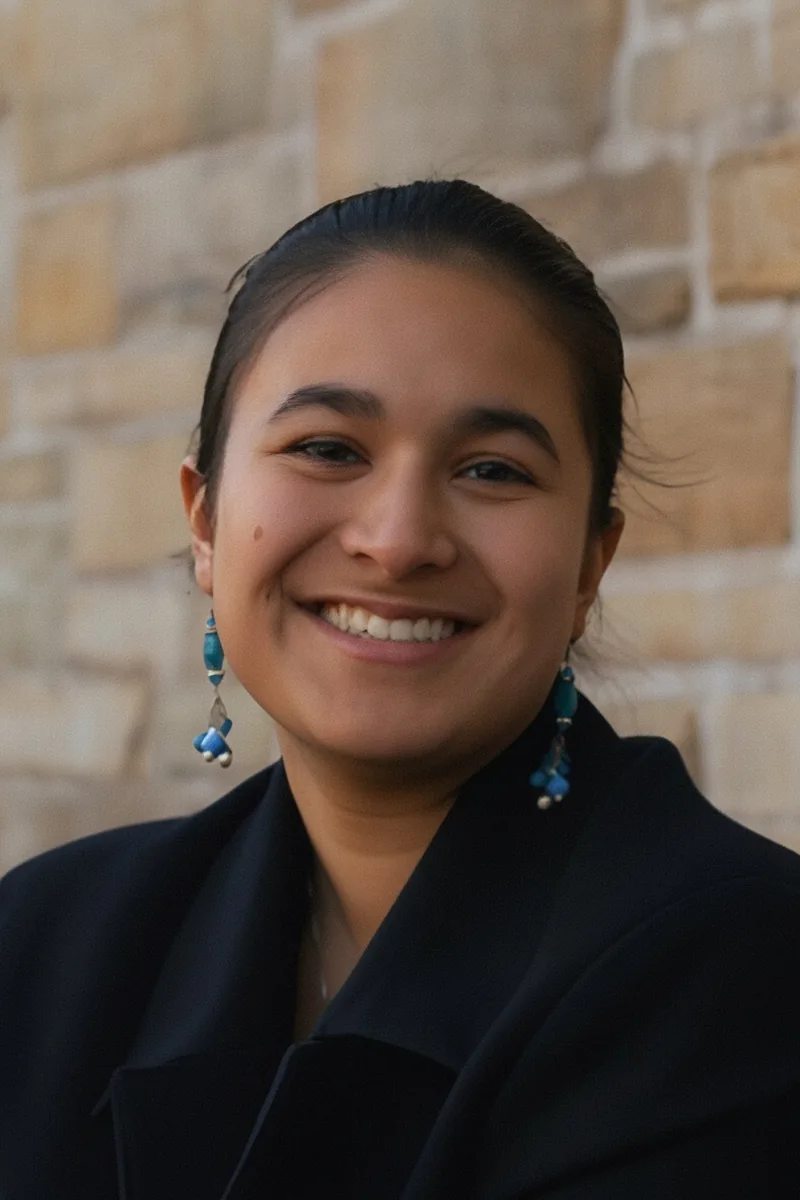
Most AP Stats students come in expecting another formula-driven math class, then hit a wall when the exam asks them to explain *why* a normal model applies or *what* a 95% confidence level actually means in context. Tessa's math major at Yale gives her the theoretical grounding to unpack those conceptual questions, while her history training — building arguments from evidence, weighing competing interpretations — maps surprisingly well onto the kind of structured, language-precise reasoning the free-response section rewards. Rated 4.9 by students.
Scoring a 36 ACT means Ethan knows how to break down standardized testing — and AP Statistics is really a standardized test in statistical thinking, where the free-response grading hinges on precise language about inference and experimental design. His environmental science and public policy background at the undergraduate level required constant engagement with data analysis, from interpreting regression models in climate studies to evaluating sampling methods in policy research. Rated 5.0 by students, he zeroes in on the communication side of stats that most math-oriented tutors overlook.
Most AP Stats students come in expecting another algebra class and get blindsided when the exam asks them to explain *why* a normal model applies or *what* a 95% confidence level actually means in context. Kenneth's applied math background gives him the conceptual fluency to teach that interpretive shift — connecting the formal probability theory underneath to the plain-language reasoning the free-response rubric demands. Rated 4.7 by students.
Hello, my name is Yosef and I would be happy to serve as a math tutor. I place strong emphasis on a good balance between knowledge of mathematical content and proficiency in problem-solving, reasoning, and conveying mathematical ideas in writing. There are times when a student needs to be informed of a solution, times when he or she also needs to hear the explanation of why the solution works, and times when he or she should be guided to finding the solution on his or her own. It is important for the tutor to recognize which approach is appropriate. Frequently, when students struggle, it is because they do not understand the notation or terminology in use. In such cases, it is important to reassure the student, reminding him or her that he or she is only struggling with understanding a single word, not the entire mathematical concept. As a rule, people perform better and are better motivated when they have self-confidence, not when the task ahead seems frighteningly daunting. It is also important to recognize that different students learn best through different means. As an example, some students are visual learners and can understand the material best through pictures and gestures. Other students learn best through hearing the procedures vocalized, while still others learn best through writing out the steps of the solution procedure. I know to adapt my teaching style to the individual student. with these considerations in mind, I promise to provide the best assistance that I can, taking your individual needs into consideration.
Probability distributions, inference tests, and experimental design all show up differently when you actually use them — and Bradley applies statistical methods daily as a business student at Babson College. He breaks down tricky AP Stats concepts like chi-square tests and confidence intervals by connecting them to real data scenarios rather than abstract formulas. His business statistics background means he can explain not just how to run a test, but why you'd choose it.
Studying statistics as an actual major at UVA — not just taking a service course — means Benjamin has gone well beyond the AP curriculum into multivariate methods, probability theory, and statistical computing, giving him a deep bench to draw from when explaining why, say, a sampling distribution behaves the way it does or when a normal model applies. He's particularly sharp on the inference units, where students need to move from calculator output to writing conclusions that use the specific contextual language the free-response rubric demands. Rated 4.7 by students.
Most AP Stats students already know how to crunch numbers — what trips them up is the interpretive writing, like explaining in precise language what a confidence interval captures or why a study's design supports (or undermines) a causal claim. Talia scored a 36 ACT and brings sharp reading comprehension and argumentative writing skills from her political science background, which turns out to be exactly what the free-response section rewards: constructing clear, evidence-based reasoning under time pressure. Rated 5.0 by students.
Pure math training at the University of Chicago might seem like an odd fit for AP Stats, but Carson's coursework in probability theory and combinatorics gives him the formal backbone behind concepts like sampling distributions and expected value that most students only encounter as calculator procedures. He's especially sharp at demystifying the normal distribution and z-score logic, connecting them back to the mathematical reasoning that makes the formulas make sense rather than just appear on a formula sheet.
Biomedical engineering at UIC meant Apoorva was designing experiments, collecting noisy biological data, and running statistical tests to figure out whether a device prototype actually performed better than chance — which is the same inferential reasoning AP Stats builds its curriculum around. She's especially sharp on the probability and simulation units, where her engineering instinct for modeling uncertainty makes abstract concepts like sampling variability feel concrete and grounded. Holds a 4.6 rating.
Hello! My name is Gabe, and I currently work as a Biostatistician in New York. I hold a Master's degree in Epidemiology from Johns Hopkins and a Bachelor's degree from NYU. Statistics isn't for everyone, but I hope to help students expand their knowledge or gain confidence in using it for a class. I am skilled in R studio for statistical and epidemiological analysis. My goal is to help students perform their best by becoming comfortable with the concepts.
Kyle's statistics degree means he didn't just learn AP Stats concepts — he kept going, building the theoretical framework underneath topics like sampling distributions, expected value, and the normal model that the course only scratches the surface of. That deeper fluency makes him especially effective at explaining why a particular inference procedure applies in a given scenario, not just how to execute it on a calculator. Rated 4.9 by students.
When I was young, I used to hate swimming at the beach. The idea of sharks moving around under the waves where I could not see them made me scared to go into the water. As I grew up, however, and began to learn about the different sharks that lived off the shores of my home in Massachusetts, USA, I became less and less scared and more and more fascinated with how and why sharks move around in this underwater world. I began to ask questions like, what do sharks do under the water when we cannot see them? and, where do sharks like to go and why? As a marine scientist now I try to answer these questions. Because sharks live and breathe under the water and can swim long distances and go deep into the ocean, further and deeper than I could follow by myself, to study how these animals move and behave underwater I have to use lots of different types of technology. Sometimes I use underwater robots that can follow the sharks down deeper than humans can go, and that can carry things like cameras so I can directly see what the sharks are doing. In my work now, I use special tags that send out signals every few seconds with a unique name that identifies individual sharks. When the shark swims close enough to receivers placed out in the ocean, these receivers are able to hear and record the tag name, telling where and when individual sharks are present in different areas of the ocean. One thing I love about being a shark scientist is that I can follow sharks all over the world. First, I followed the movement of sharks all the way over in the Atlantic Ocean off the east coast of the USA. Then I moved to Tasmania, Australia, and I followed young sharks as they move around off the coast of New South Wales. Now I am back home in Massachusetts and working on publishing my research.
Neuroscience research at Vanderbilt means Blake regularly encounters experimental design, data interpretation, and statistical inference in contexts like brain imaging studies and behavioral experiments — the same reasoning AP Stats tests on every free-response question. He's especially strong on the conceptual side, walking through why a particular test applies and how to communicate conclusions about p-values and confidence intervals with the precision the rubric demands. Rated 5.0 by students.
Philosophy, Politics, and Economics at Penn is a surprisingly stats-adjacent combination — Kevin's coursework requires interpreting polling data, evaluating economic models, and dissecting whether a study's methodology actually supports its conclusions. That training in rigorous argument transfers well to the AP Stats free-response section, where earning full credit depends on explaining *why* a particular inference procedure applies, not just executing calculator steps. His 34 ACT speaks to the kind of precise, test-ready thinking that keeps answers tight under exam pressure.
Victor's master's in applied mathematics means he's worked through probability theory at a level well beyond what AP Stats requires — and that depth lets him explain *why* the normal model underlies so many inference procedures, not just how to punch z-scores into a calculator. He zeros in on the conditional reasoning behind hypothesis tests and the precise language needed to interpret p-values and confidence intervals, which is where most points are won or lost on the free-response section. Rated 5.0 by students.
As a statistics major at Carleton College, Aya doesn't just teach AP Stats formulas — she uses them daily in her own coursework. She breaks down tricky concepts like inference for regression slopes, chi-square tests, and experimental design by connecting each one to real data scenarios that make the logic behind the math click.
Studying neuroscience at Cornell with a math minor, Aneri encounters statistics constantly — analyzing behavioral data, interpreting research findings, and evaluating whether experimental results actually mean something. She digs into the normal distribution and sampling logic that underpin most AP Stats inference questions, connecting the abstract formulas to the kind of real study designs her psychology coursework requires her to critique every week.
Testimonials
Because the right AP Statistics tutor makes all the difference.
Average Session Rating – Based on 3.4M Learner Ratings
Practice AP Statistics
Free practice tests, flashcards, and AI tutoring for AP Statistics
Nearby AP Statistics Tutors
Other Bridgeport Tutors
Related Math Tutors in Bridgeport
Frequently Asked Questions
AP Statistics focuses on four main units: exploring data through distributions and relationships, sampling and experimentation, probability and random variables, and inference. The course emphasizes understanding statistical thinking, designing studies, analyzing data, and drawing conclusions—skills tested across multiple-choice and free-response questions on the May exam. Students learn to interpret real-world data and communicate statistical findings clearly.
Many students struggle with distinguishing between different experimental designs (observational studies vs. controlled experiments), understanding probability concepts, and interpreting confidence intervals and hypothesis tests. Another frequent challenge is translating word problems into the correct statistical method—students often know the formulas but struggle to identify when to use them. Pacing can also be difficult since the course builds conceptually, so gaps early on compound later.
Personalized 1-on-1 instruction is particularly effective for AP Statistics because tutors can identify exactly where your understanding breaks down—whether it's in probability, inference, or experimental design—and target those gaps. Students who work with tutors typically see improvement by clarifying misconceptions, practicing problem-solving strategies, and building confidence in interpreting results. The amount of improvement depends on your starting point and how consistently you practice between sessions.
Practice tests are essential for AP Statistics because they help you get comfortable with the exam format, time management, and the types of scenarios you'll encounter. Taking full-length practice tests under timed conditions reveals which topics need more work and helps you develop a pacing strategy—the exam gives you 3 hours for 40 multiple-choice questions and 6 free-response questions. Tutors can review your practice test results with you to identify patterns in mistakes and adjust your study approach accordingly.
Your first session typically involves an assessment of your current understanding—a tutor might review your recent classwork, quiz scores, or have you work through a sample problem to identify strengths and gaps. From there, you'll discuss your goals (improving overall understanding, targeting specific units, or preparing for the exam) and create a personalized plan. This foundation helps tutors tailor future sessions to address your unique challenges rather than generic review.
The AP Statistics exam allocates 90 minutes for 40 multiple-choice questions (about 2 minutes per question) and 90 minutes for 6 free-response questions. A smart strategy is to work through multiple-choice at a steady pace, skipping difficult questions to return to later, then spend the second half on free-response where you can show your reasoning even if calculations aren't perfect. Tutors can help you practice this pacing strategy and develop techniques for efficiently organizing your work on the free-response section.
Varsity Tutors connects you with expert tutors who specialize in AP Statistics for students in Bridgeport. You can specify your needs—whether you want to focus on probability, inference, or exam prep—and get matched with a tutor whose expertise aligns with your goals. Tutors work flexibly with your schedule to provide personalized instruction tailored to your learning style.
Inference—confidence intervals and hypothesis testing—is abstract because it requires understanding probability distributions, sampling variability, and what p-values actually mean. Many students memorize the steps without grasping the underlying logic, leading to confusion when questions ask them to interpret results or identify errors in reasoning. Tutors help by building conceptual understanding first, using simulations and real examples to show why these methods work before diving into calculations.
Let’s find your perfect tutor
Answer a few quick questions. We’ll recommend the right plan and match you with a top 5% tutor.