Award-Winning High School Chemistry Tutors
serving Bridgeport, CT
High School Chemistry
Tutors in Bridgeport
Private 1-on-1 tutoring, weekly live classes for academic support, test prep & enrichment, practice tests and diagnostics, and more to elevate grades and test scores.
Based on 3.4M Learner Ratings
UniversitiesSchools & Universities
DeliveredHours Delivered
ProficiencyGrowth in Proficiency
Who needs tutoring?
No obligation. Takes ~1 minute.
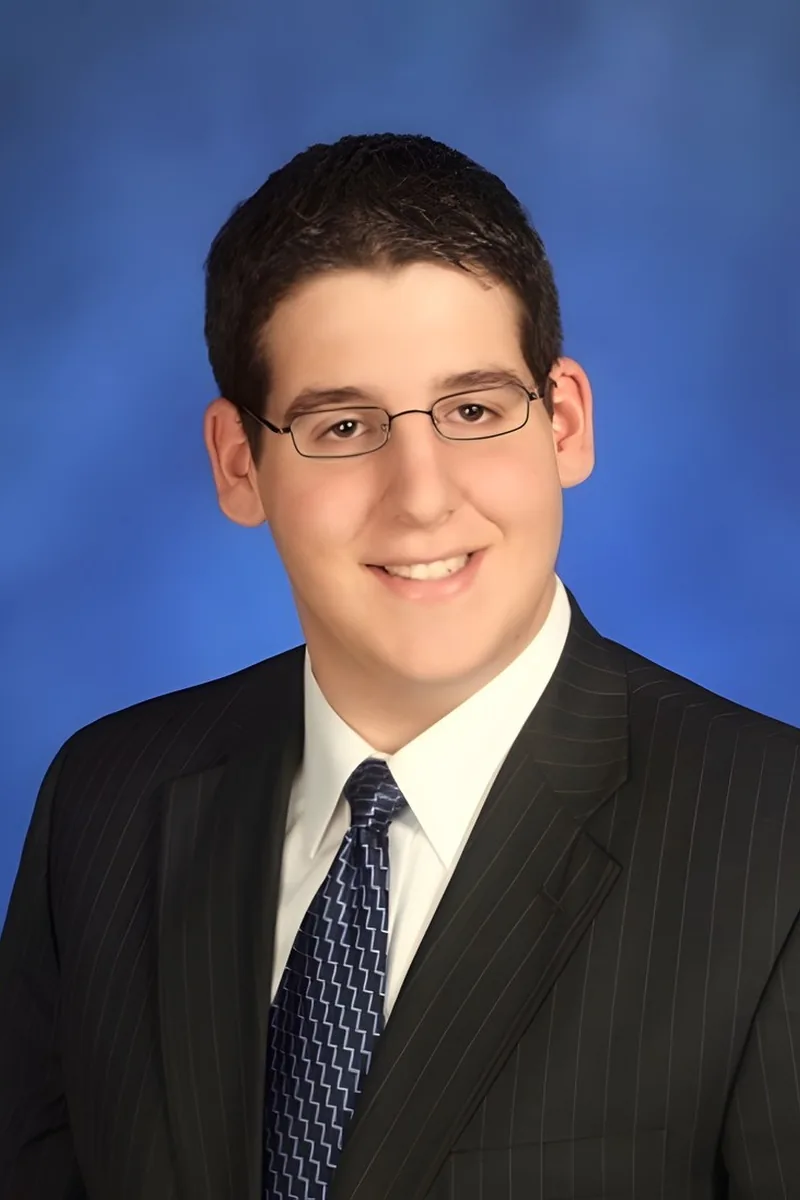
The mole concept trips up more high school chemistry students than almost anything else, and Ethan has a knack for demystifying it with concrete analogies before layering on the math. He also brings strong quantitative skills — a 36 ACT and coursework in calculus and statistics — which means dimensional analysis and unit conversions get taught precisely, not hand-waved.

Chemistry clicks when students understand the "why" behind the rules — why electronegativity drives bond polarity, or why certain reactions are spontaneous while others aren't. Tessa, a Yale math and history double major, brings that same explanatory instinct to stoichiometry, equilibrium, and thermochemistry, connecting each concept to the underlying logic rather than asking students to memorize formulas in isolation.
Balancing equations and stoichiometry problems come down to tracking atoms and units — something Max breaks into repeatable steps so the logic clicks before the math even starts. As a Yale economics student with a 5.0 tutoring rating, he brings the same quantitative rigor to mole conversions and equilibrium calculations that he applies to his own coursework.
I am a PhD student in Inorganic Chemistry at Yale University. I've been spreading my love of chemistry for the past several years as a TA for general chemistry, and I'm excited to share my passion with you! Prior to Yale, I got my B.S. in chemistry from Caltech, where I also served as a TA for both general chemistry lab and advanced inorganic chemistry. Outside of teaching and research, I enjoy fencing, reading, and playing piano.
I am a senior at the University of New Haven working on a B.S. in Forensic Science-Biology with a Pre-Medical designation who hopes to go to medical school in the future. I am most passionate about biology and chemistry but have a strong personal interest in history, especially topics overlooked in the past study of history. To me, learning is a life long process and leads to the development of a well-rounded individual. Seeing understanding of a difficult topic and creating enthusiasm for learning is what draws me to tutoring.
Coaching his school's Chemistry Olympiad team gave Richard a feel for where students get tripped up on competition-level problems — and that same instinct applies when he's walking someone through nomenclature, electron configurations, or balancing redox reactions at the high school level. His economics studies at the University of Chicago might seem unrelated, but the quantitative rigor carries over, and his hundreds of hours teaching chemistry to students ranging from elementary schoolers to Olympiad competitors means the fundamentals are deeply ingrained.
Balancing equations, predicting reaction types, working through stoichiometry — high school chemistry clicks once students see the logic connecting these pieces. Chantel's molecular biology degree means she understands chemical principles at a deeper level and can explain concepts like mole ratios or electron configurations in ways that actually make sense. She's patient enough to walk through the same problem three different ways until the right approach lands.
That first encounter with mole conversions or balancing redox reactions can feel like learning a new language, and Lily approaches it that way — teaching students the grammar of chemistry so they can solve problems they haven't seen before. Her own science training means she can connect high school topics like periodic trends and bonding to real applications that make the material stick.
Ten years of tutoring science while progressing through medical school and now a surgical residency application means Patrick has never stopped using chemistry — from pharmacokinetics to anesthesia gas behavior, concepts like equilibrium, gas laws, and acid-base chemistry show up in his clinical work constantly. He teaches high school students to think about what's happening at the particle level first, then translate that picture into the math, which makes topics like stoichiometry and reaction predictions feel less like arbitrary procedures.
Sabine earned her B.S. in Chemistry, which means she doesn't just know the formulas — she understands the molecular-level logic behind gas laws, thermochemistry, and chemical bonding well enough to explain it multiple ways until it clicks. Her approach zeroes in on connecting the periodic table's patterns to what students actually see in problems, so predicting products or working through enthalpy calculations starts to feel intuitive. Rated 5.0 by her students.
A chemistry major at Harvard who's heading to Columbia Medical School, James teaches high school chemistry with the kind of depth that makes concepts like stoichiometry and electron configurations click on a conceptual level — not just as formulas to memorize. He connects classroom topics to real-world applications in medicine and materials science, which tends to turn chemistry skeptics into students who actually enjoy the subject.
Between his UCLA biology coursework and medical school, Abrahim has taken chemistry from multiple angles — stoichiometry, equilibrium, acid-base reactions, thermodynamics. He's direct about pinpointing where a student's understanding breaks down, whether that's balancing redox equations or interpreting periodic trends. His 5.0 rating speaks to how well that targeted approach works.
The jump from memorizing the periodic table to actually using it — predicting reactivity, drawing Lewis structures, calculating molar masses — is where high school chemistry gets real. Jessica's pre-med coursework at Brown covers general and organic chemistry, and she applies that depth when teaching topics like acid-base equilibria and gas laws. Her 5.0 rating speaks to how well that approach lands with students.
Balancing equations, stoichiometry, and periodic trends all click faster when a student understands the 'why' behind each rule. Erica's science background at Harvard — plus her pre-dental coursework in general and organic chemistry — means she can connect high school chemistry concepts to real-world applications like how acids interact with tooth enamel. Rated 4.9 by students.
Neuroscience at Yale meant David didn't just take chemistry — he needed it to work, especially when tracing how ion channels, neurotransmitters, and cellular signaling depend on concepts like electronegativity, polarity, and equilibrium. That gives him a concrete answer when students ask why any of this matters, and it shapes how he teaches topics like chemical bonding and reaction energetics: rooted in what molecules actually do, not just what shows up on a worksheet.
Working daily with CRISPR-Cas9 and other biochemical tools in a Yale research lab, Matthew sees chemistry in action — the thermodynamics of enzyme reactions, the pH sensitivity of buffer systems, the molecular interactions that make or break an experiment. That hands-on context sharpens how he teaches high school topics like equilibrium, gas laws, and nomenclature, because he can point to exactly where each concept shows up beyond the textbook.
Balancing equations, mole conversions, and electron configurations all follow patterns that become obvious once someone lays them out clearly. Tim's experience teaching chemistry at a STEM camp means he's practiced at breaking these topics down for students encountering them for the first time. His quantitative training at MIT keeps him sharp on the math-heavy units — gas laws, enthalpy, and solution chemistry — where many high schoolers hit a wall.
Chemistry clicks when students see the logic underneath the formulas — why electron configurations predict reactivity, or how stoichiometry is really just bookkeeping for atoms. Dennis earned his Masters in Chemical and Physical Biology at Vanderbilt, so he teaches concepts like equilibrium, thermodynamics, and bonding from a place of deep daily familiarity rather than rote textbook review. Rated 5.0 by students.
Premed neuroscience coursework at Rice put Aditi through rigorous chemistry sequences where concepts like equilibrium, stoichiometry, and thermodynamics weren't electives — they were prerequisites for everything that followed. She zeroes in on the periodic table as a predictive tool, teaching students to use trends in electronegativity and atomic radius to reason through bonding and reactivity questions rather than memorize isolated facts. Rated 4.8 by students.
Running a middle school science department in Philadelphia meant John taught chemistry fundamentals daily — building up from atomic structure and the periodic table to chemical reactions and basic stoichiometry — and his role as curriculum chair forced him to think carefully about the sequence in which those ideas need to land. That classroom experience shows when he explains topics like balancing equations or classifying reaction types, because he's already mapped out where students typically get lost. Rated 5.0 by students.
Balancing equations, understanding molarity, and predicting reaction products are all things Lisa does routinely in her marine biogeochemistry lab at Stony Brook. She approaches high school chemistry by grounding each new topic in a concrete example so students see the logic behind the math, especially in tricky areas like equilibrium and acid-base chemistry.
Balancing equations, understanding molarity, and predicting reaction products all click faster when a student sees the logic underneath the formulas. Li's medical and science background means she can explain why a precipitation reaction happens at the molecular level, then walk through the math step by step.
Testimonials
Because the right High School Chemistry tutor makes all the difference.
Average Session Rating – Based on 3.4M Learner Ratings
Nearby High School Chemistry Tutors
Other Bridgeport Tutors
Related Science Tutors in Bridgeport
Frequently Asked Questions
Many students struggle with balancing chemical equations, understanding mole concepts, and visualizing molecular structures—abstract ideas that don't always click from lectures alone. Unit conversions and stoichiometry also trip up students who haven't mastered foundational math skills. Personalized tutoring helps bridge these gaps by breaking down complex concepts into digestible pieces and connecting theory to tangible examples.
Tutors help you understand the "why" behind lab procedures, not just the steps—so you can predict outcomes, troubleshoot when things go wrong, and apply the scientific method thoughtfully. This deeper understanding transforms labs from confusing cookbook exercises into meaningful learning experiences where you're thinking like a scientist rather than just following instructions.
Understanding is far more valuable than memorization in chemistry. When you grasp why reactions happen and how atoms bond, you can solve new problems you've never seen before—which is what exams actually test. Personalized tutoring focuses on building conceptual understanding so you retain information longer and can apply it flexibly across different scenarios.
Tutors use multiple strategies—molecular models, diagrams, animations, and real-world analogies—to make invisible atoms and bonds tangible. For example, comparing ionic bonding to a magnet's attraction or using physical models to show electron configurations helps your brain "see" what's happening at the atomic level, making abstract concepts concrete and memorable.
Your first session focuses on understanding your specific challenges—whether it's balancing equations, grasping equilibrium, or building confidence overall. Tutors assess your current level, identify knowledge gaps, and create a personalized plan tailored to your learning style and goals, so every session after that is targeted and efficient.
Varsity Tutors connects you with experienced chemistry tutors who understand high school curriculum and know how to explain challenging concepts clearly. When you reach out, we match you with a tutor whose expertise and teaching style fit your needs, so you get personalized instruction designed specifically for your success.
Many students see noticeable improvement within 3-4 weeks of consistent tutoring, especially when they're tackling specific problem areas like stoichiometry or equilibrium. However, the timeline depends on your starting point and how frequently you meet—regular sessions compound learning and help concepts stick faster than sporadic help.
Absolutely. Tutors help you master content, practice problem-solving under time pressure, and develop test-taking strategies specific to chemistry—like how to approach multi-step equilibrium problems or titration calculations. This combination of deep understanding plus strategic practice builds the confidence and skills you need to perform well on unit exams and AP Chemistry.
Let’s find your perfect tutor
Answer a few quick questions. We’ll recommend the right plan and match you with a top 5% tutor.