Award-Winning AP Calculus BC Tutors
serving Denver, CO
AP Calculus BC
Tutors in Denver
Private 1-on-1 tutoring, weekly live classes for academic support, test prep & enrichment, practice tests and diagnostics, and more to elevate grades and test scores.
Based on 3.4M Learner Ratings
UniversitiesSchools & Universities
DeliveredHours Delivered
ProficiencyGrowth in Proficiency
Who needs tutoring?
No obligation. Takes ~1 minute.

Biochemistry and MCD Biology at CU Boulder meant Oliver spent years relying on calculus to model enzyme kinetics, reaction rates, and molecular behavior — the kind of applied math that makes BC topics like integration techniques and series approximations feel like something you'd actually use, not just survive on an exam. He's especially good at walking through the logic of convergence tests step by step, connecting each one back to the limit reasoning students built in AB. Rated 5.0 by students.
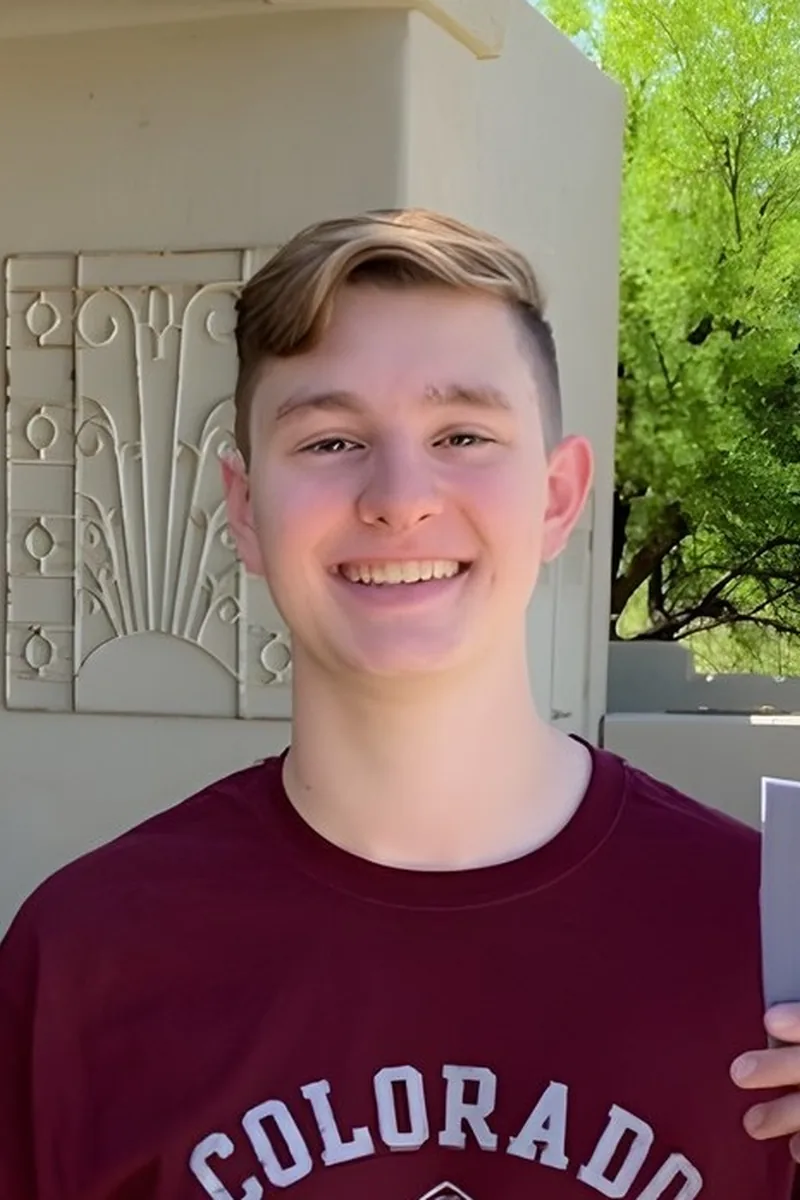
BC Calculus piles on convergence tests, parametric equations, and polar curves right when students think they've mastered AB material. Jude is pursuing a double major in Applied Mathematics and Engineering Physics at Colorado School of Mines, so series expansions and vector-valued functions are tools he uses in his own coursework — not abstract ideas he's recalling from years ago. His conversational teaching style turns intimidating topics like Taylor series error bounds into something students can reason through on their own.
I am a student at the Georgia Institute of Technology studying Chemical Engineering. For the past several years, I have worked with students extensively. Through hosting events for younger kids to learn about STEM and for older teens to practice empathetic design, I know the importance of teaching students in ways that engage them rather than frustrate them, which I apply to my teaching. I have tutored high school students in a drop-in resource center in various subjects including math of all levels, chemistry, and English, making me adequately equipped in a variety of topics. I have also tutored several students long-term. Establishing relationships with students and exploring their unique learning styles is my favorite part of tutoring. I prioritize helping students discover HOW to learn in a manner that is the most effective for them, so they can begin to use those skills on their own throughout their education. Learning is a lifelong skill that requires practice for improvement; I strive to help my students gain confidence in their ability to learn.
Most BC students can follow a convergence test procedure but freeze when they have to choose which test to apply — Evan, with a physics degree and a 5.0 rating, teaches the underlying logic that makes that decision intuitive, connecting each test back to the behavior of the series itself. His physics background means he's used Taylor expansions and parametric equations as working tools, not just exam content, so he can explain what a series is actually doing when it converges or diverges.
BC Calculus layers convergence tests, parametric equations, and polar curves on top of an already demanding AB foundation, and the pacing leaves little room to fall behind. Vinson earned a 36 ACT and National AP Scholar distinction while building the kind of deep mathematical fluency that makes series analysis and integration techniques click. He breaks each new BC topic into the AB concept it extends, so the jump never feels arbitrary.
Molecular biology might seem distant from BC Calculus, but Agustin's 1560 SAT and deep comfort with competition math mean he's built the kind of rigorous problem-solving instincts that make topics like convergence tests and parametric derivatives tractable rather than terrifying. He breaks down the logic behind each technique — why the ratio test actually tells you something, how polar area integrals connect back to Riemann sums — so the BC extension from AB feels like a natural next step. Rated 4.5 by students.
Series convergence, parametric equations, and polar curves make BC the course where strong calculus students finally have to slow down and think carefully. Anthony earned his BS in physics and math from Yale, where these concepts weren't just exercises — they were the language of electromagnetism and classical mechanics. He teaches BC topics by connecting each technique to why it exists and when it matters.
Running a peer-tutoring program in high school meant Ryan spent years diagnosing exactly where classmates got stuck on calculus problems — a skill he's sharpened further through his civil engineering coursework at Cornell, where series expansions and integration techniques show up constantly in structural analysis and fluid mechanics. He breaks down the BC-specific leap into convergence tests and Taylor polynomials by grounding each new idea in the derivative and integral logic students built in AB. His 35 ACT and 4.7 rating speak to the precision he brings to every session.
Biomedical engineering at Yale means Jonathan lives in the calculus that comes after most students stop — modeling biological systems with differential equations, approximating nonlinear tissue behavior with series expansions, running convergence analysis on numerical simulations. That daily exposure makes him especially effective at teaching the logic behind the ratio and integral tests, because he's seen firsthand what happens when you pick the wrong one. Holds a 5.0 rating.
Managing an immunology research lab at Columbia means Matthew lives in the quantitative deep end — modeling biological systems, analyzing experimental data — and his physics degree built the calculus fluency that makes that possible. He's especially sharp on the BC topics that trip students up after AB: constructing Taylor series from scratch, navigating convergence tests systematically, and connecting parametric or polar problems back to the derivative logic underneath them.
Sanjana doesn't just know AP Calculus BC — she teaches it, serving as a Course Assistant for Harvard's introductory calculus sequence. That means she's seen exactly where students stumble on Taylor series, parametric equations, and convergence tests, and she knows how to untangle those concepts in real time. Rated 5.0 by students.
Mackenzie scored a 35 on the ACT and tutors math at every level from elementary through AP, which means she knows exactly which algebra and AB gaps trip students up once BC introduces new integration techniques and series. She walks through problems like setting up improper integrals or applying ratio tests by tracing each step back to the reasoning behind it, so students build intuition they can rely on during the exam.
BC Calculus piles on series convergence, parametric equations, and polar coordinates on top of an already demanding AB curriculum. Julie's Princeton training in statistics and machine learning means she regularly uses advanced calculus as a tool, giving her an intuitive sense for which techniques apply where. She tackles integration strategies and Taylor series by connecting each method back to the core idea it extends.
Having worked as a teaching assistant for multiple engineering courses at Washington University in St. Louis, Ava spent hours breaking down the calculus that trips students up most — and BC's jump into series convergence, parametric derivatives, and advanced integration techniques is exactly the material she kept revisiting with struggling engineers. Her dual degree in mechanical and energy engineering means she's applied Taylor expansions and improper integrals to real thermodynamic and fluid systems, giving her a concrete vocabulary for explaining why these tools matter beyond the AP exam.
Studying applied physics at Cornell, Ritesh encounters BC-level calculus constantly — parametric motion in mechanics, series approximations in wave theory, integration techniques in electromagnetism — so he teaches these topics as interconnected tools rather than isolated chapters. He's especially sharp at walking through the logic of convergence tests, where students often memorize steps without understanding which test to reach for and why. His 1440 SAT and 4.6 rating speak to that clarity.
Scoring a 36 on the ACT while studying economics at Vanderbilt means Kerr lives comfortably in the quantitative reasoning that BC Calculus demands — and his computer science focus sharpens the algorithmic thinking behind recursive sequences and series convergence. He teaches BC's trickiest leaps, like moving from basic integration to constructing Taylor polynomials, by grounding each new idea in the conceptual logic rather than just the procedural steps. Rated 4.9 by students.
Testimonials
Because the right AP Calculus BC tutor makes all the difference.
Average Session Rating – Based on 3.4M Learner Ratings
Practice AP Calculus BC
Free practice tests, flashcards, and AI tutoring for AP Calculus BC
Nearby AP Calculus BC Tutors
Other Denver Tutors
Related Math Tutors in Denver
Frequently Asked Questions
AP Calculus BC builds on AB concepts and covers limits, derivatives, integrals, differential equations, and sequences/series. The BC curriculum includes all AB material plus additional topics like parametric equations, polar coordinates, and vector-valued functions. For students in Denver, understanding this broader scope helps you decide whether BC or AB is the right fit for your goals and timeline.
Score improvement depends on your starting point and consistency with practice. Students who work with tutors typically see gains of 1-2 score points (on the 1-5 scale) when they combine personalized instruction with regular practice tests and problem sets. The key is identifying your specific weak areas—whether that's integration techniques, series convergence, or applying calculus concepts to real-world scenarios—and targeting those gaps systematically.
Students in Denver often struggle most with series and convergence tests, parametric and polar equations, and applications of integration like volumes of revolution. These topics require both conceptual understanding and procedural fluency. A tutor can break down the logic behind convergence tests or help you visualize polar curves, making abstract concepts concrete and easier to retain.
A strong study plan includes regular practice with full-length exams, targeted review of weak topics, and timed problem-solving to build pacing confidence. Start with diagnostic practice tests 2-3 months before the exam to identify gaps, then dedicate 4-6 weeks to focused review and another 2-3 weeks to timed practice. Tutors can help you create a personalized schedule based on your current level and target score.
Test anxiety often stems from uncertainty about question formats or time management. Working through timed practice tests with a tutor helps you build confidence in your pacing strategy and develop a routine for tackling different problem types. Tutors can also teach you which questions to attempt first, how to recognize when to skip and return to a problem, and breathing techniques to stay calm under pressure.
Look for tutors with strong mathematics backgrounds, AP exam experience, and a track record helping students improve their scores. Ideally, they've taught or tutored AP Calculus BC specifically and understand both the content and the exam's unique question formats. Varsity Tutors connects you with expert tutors in Denver who have proven experience with AP Calculus BC and can tailor instruction to your learning style.
Your first session focuses on understanding where you are and where you want to go. A tutor will assess your current knowledge, discuss your target score, and identify your biggest challenges—whether that's derivatives, integrals, or series. From there, you'll create a personalized study plan and dive into your first topic, so you start making progress immediately.
BC is a faster-paced course that covers all AB material plus additional topics like series and parametric equations. Choose BC if you're strong in precalculus, comfortable with abstract thinking, and want credit for more advanced material. Choose AB if you prefer a slower pace or need more time to master foundational concepts. A tutor can help you assess your readiness and make the best choice for your academic goals.
Let’s find your perfect tutor
Answer a few quick questions. We’ll recommend the right plan and match you with a top 5% tutor.