Award-Winning AP Statistics Tutors
serving Denver, CO
AP Statistics
Tutors in Denver
Private 1-on-1 tutoring, weekly live classes for academic support, test prep & enrichment, practice tests and diagnostics, and more to elevate grades and test scores.
Based on 3.4M Learner Ratings
UniversitiesSchools & Universities
DeliveredHours Delivered
ProficiencyGrowth in Proficiency
Who needs tutoring?
No obligation. Takes ~1 minute.
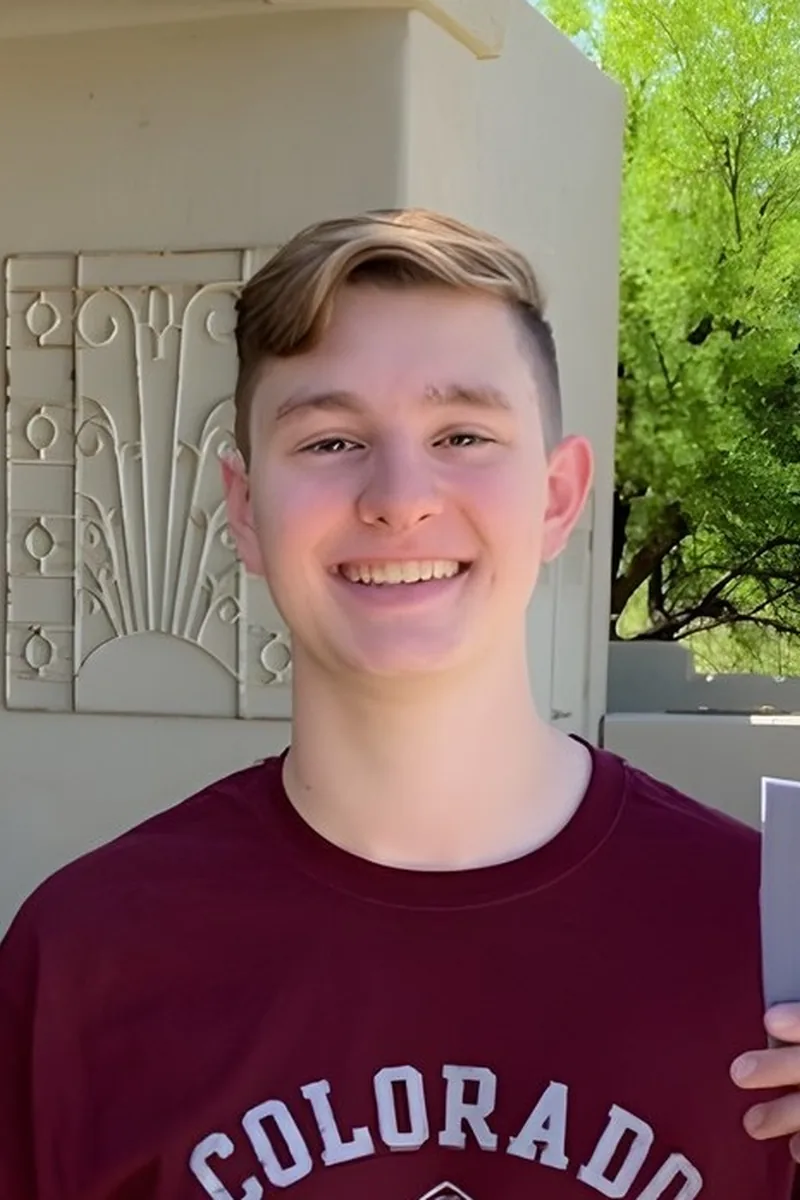
Most AP Stats students come in expecting another math class and get blindsided when the exam asks them to write paragraphs justifying why their inference procedure fits the scenario. Jude's applied physics training at Colorado School of Mines — where every lab involves quantifying uncertainty, choosing appropriate models, and defending whether results are statistically meaningful — maps directly onto that interpretive challenge. Rated 4.9 by students.
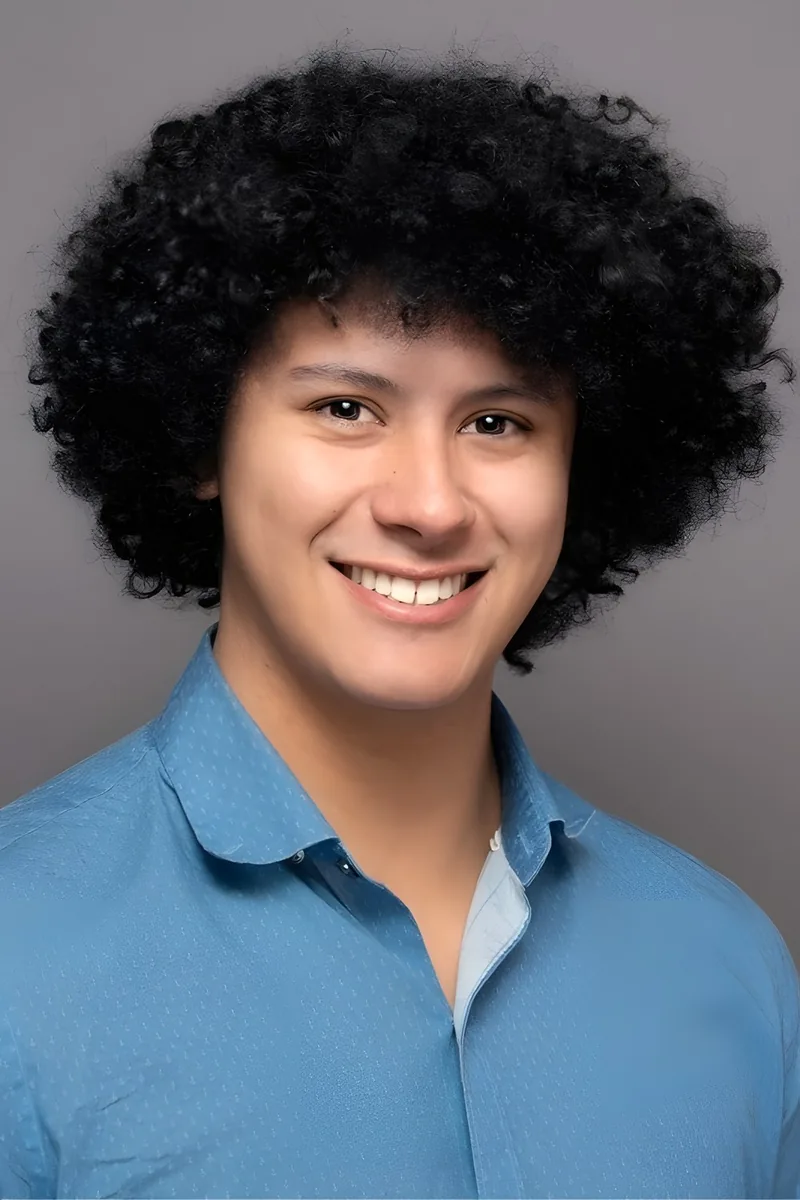
Hello! My name is Gabe, and I currently work as a Biostatistician in New York. I hold a Master's degree in Epidemiology from Johns Hopkins and a Bachelor's degree from NYU. Statistics isn't for everyone, but I hope to help students expand their knowledge or gain confidence in using it for a class. I am skilled in R studio for statistical and epidemiological analysis. My goal is to help students perform their best by becoming comfortable with the concepts.
Psychology research is fundamentally a statistics course in disguise — Martha's work at Michigan examining how culture shapes self-related psychological processes means she's constantly designing studies, choosing between t-tests and ANOVAs, and defending whether her sample sizes and methods actually support her conclusions. That firsthand experience with the full research cycle translates directly to the AP Stats units on experimental design and inference, where she can explain why you'd stratify a sample or what a Type II error looks like in a real study rather than a textbook prompt. Rated 5.0 by students.
Twenty-five years teaching science in Massachusetts public schools means Jacques has walked hundreds of students through the messy reality of collecting lab data, spotting outliers, and deciding whether results actually mean something — which is the interpretive core of AP Statistics. His Princeton chemical engineering training leaned heavily on statistical modeling and differential equations, giving him a quantitative backbone that makes concepts like normal distributions and expected value click in context rather than in isolation. Rated 4.8 by students.
Crony's dual degrees in Neuroscience and Economics from Brown meant constant exposure to both experimental design and data modeling — two threads that converge neatly in the AP Stats curriculum. He breaks down the normal distribution and z-score reasoning that underpins so much of the course by connecting it to real research contexts, like determining whether a drug trial's results are meaningful or just random variation. Rated 4.6 by students.
Teaching statistics at the university level at Washington State University Vancouver, Moayad knows exactly where AP Statistics students stumble — inference logic, interpreting p-values, and distinguishing between experimental designs. He breaks down hypothesis testing and confidence intervals using the same framework he uses with his college students, scaled to the AP curriculum.
Philosophy, Politics, and Economics at Penn is a surprisingly stats-adjacent combination — Kevin's coursework requires interpreting polling data, evaluating economic models, and dissecting whether a study's methodology actually supports its conclusions. That training in rigorous argument transfers well to the AP Stats free-response section, where earning full credit depends on explaining *why* a particular inference procedure applies, not just executing calculator steps. His 34 ACT speaks to the kind of precise, test-ready thinking that keeps answers tight under exam pressure.
Pure math training at the University of Chicago might seem like an odd fit for AP Stats, but Carson's coursework in probability theory and combinatorics gives him the formal backbone behind concepts like sampling distributions and expected value that most students only encounter as calculator procedures. He's especially sharp at demystifying the normal distribution and z-score logic, connecting them back to the mathematical reasoning that makes the formulas make sense rather than just appear on a formula sheet.
I am a graduate of Cornell University's College of Arts and Sciences. I received my Bachelor of Arts in Chemistry with Distinction in 2015. Since graduation, I was a physics/chemistry teacher and soccer coach at a private school in Virginia for a year, where I led the soccer team to an undefeated season. Before teaching and coaching professionally, I was a Teaching Assistant for the Cornell Math and Physics Departments, where I taught many subjects including calculus, mechanics, electromagnetism. Throughout my time at Cornell and as a teacher, I tutored subjects ranging from the SAT to AP Physics and Algebra II, which is where my true talents lie: in small group or one-on-one settings where I can give students the full attention they deserve and tailor my approach specifically to their learning styles. This is why I am now pursuing tutoring as a part-time occupation at Varsity Tutors. I embrace teaching all math and science subjects, especially physics and calculus, at both the college and high school level and will go above and beyond to make sure all of my students succeed, according to their definition of success. In my spare time, I enjoy playing league soccer, basketball, tennis and guitar, and also like to travel and see as much of the world as I can.
Behavioral science research runs on SPSS and Stata — Hidefusa has used both extensively to analyze experimental data, build regression models, and run the exact hypothesis tests that AP Stats students need to master for the exam's free-response section. His clinical psychology training at Harvard meant designing studies with proper sampling methods and defending statistical conclusions in front of faculty, which sharpened his ability to teach the interpretive reasoning the AP rubric rewards most heavily. Rated 4.9 by students.
Victor's master's in applied mathematics means he's worked through probability theory at a level well beyond what AP Stats requires — and that depth lets him explain *why* the normal model underlies so many inference procedures, not just how to punch z-scores into a calculator. He zeros in on the conditional reasoning behind hypothesis tests and the precise language needed to interpret p-values and confidence intervals, which is where most points are won or lost on the free-response section. Rated 5.0 by students.
Running simulations of cosmic ray acceleration at Princeton's astrophysics department meant Dennis lived in probability distributions, hypothesis testing, and regression analysis daily. He brings that applied statistics fluency to AP Stats, breaking down concepts like chi-square tests and confidence intervals through real data scenarios rather than rote formulas. Rated 4.7 by students.
Most AP Stats students come in expecting another formula-driven math class, then hit a wall when the exam asks them to explain *why* a normal model applies or *what* a 95% confidence level actually means in context. JF's math and CS background at Stanford means he thinks in both precise computation and logical argumentation — exactly the combination the free-response section rewards. Rated 5.0 by students.
Testimonials
Because the right AP Statistics tutor makes all the difference.
Average Session Rating – Based on 3.4M Learner Ratings
Practice AP Statistics
Free practice tests, flashcards, and AI tutoring for AP Statistics
Nearby AP Statistics Tutors
Other Denver Tutors
Related Math Tutors in Denver
Frequently Asked Questions
AP Statistics covers four main units: exploring data through visualization and summary statistics, sampling and experimentation, probability and random variables, and inference procedures. The course emphasizes statistical thinking and interpretation rather than heavy computation, so you'll learn to design studies, analyze data, and communicate findings using real-world scenarios. Understanding these interconnected concepts is key to success on the exam.
Many students struggle with distinguishing between different types of studies (experiments vs. observational studies) and choosing appropriate inference procedures for different scenarios. Another frequent challenge is interpreting probability concepts and understanding when to apply specific distributions or tests. Additionally, students often find the free-response section intimidating because it requires clear communication of statistical reasoning, not just calculations.
Score improvement depends on your starting point and consistency with practice. Students who work with a tutor to identify conceptual gaps, practice interpreting questions carefully, and complete multiple practice tests typically see meaningful gains—often 1-2 score levels by exam day. The key is focusing on understanding why answers are correct, not just memorizing formulas, since AP Statistics rewards conceptual mastery and communication skills.
The AP Statistics exam is 3 hours long and divided into two sections: a 90-minute multiple-choice section (40 questions) and a 90-minute free-response section (6 questions, including one investigative task). Time management is critical—you'll need to work efficiently through multiple-choice while leaving adequate time for the free-response questions, which require detailed explanations of your statistical reasoning. Many students benefit from practicing with full-length exams to build stamina and refine their pacing strategy.
Building confidence through repeated practice with real AP exam questions is one of the most effective anxiety-reduction strategies. When you work through practice tests and understand your weak areas before exam day, you approach the real test with greater assurance. A tutor can also help you develop a test-day strategy—like which questions to tackle first, when to skip and return to difficult problems, and how to structure your free-response answers for clarity—so you feel prepared and in control during the exam.
Ideally, students benefit from tutoring support starting in the fall or early winter before the May exam, allowing time to build foundational understanding and complete multiple practice cycles. However, even starting in spring can be valuable if you focus on targeted review of weak topics and intensive practice testing. The timeline depends on your current comfort level—if you're already keeping up in class, periodic tutoring sessions for specific concepts may be enough; if you're struggling, more frequent sessions earlier in the year help build a stronger foundation.
Free-response questions reward clear communication of your statistical reasoning, so start by identifying what the question is asking and what procedure or concept applies. Show your work step-by-step, explain your reasoning, and connect your calculations back to the context of the problem—graders want to see that you understand the statistics, not just that you can compute. Practicing with sample free-response questions and getting feedback on your explanations is crucial, since many students lose points for incomplete reasoning even when their calculations are correct.
Varsity Tutors connects you with expert tutors who specialize in AP Statistics and understand the specific challenges of the exam. You can get matched with a tutor who fits your schedule, learning style, and goals—whether you need ongoing support throughout the year or focused prep in the weeks before the exam. Tutors work with you to identify weak areas, practice exam strategies, and build the confidence you need to perform well on test day.
Let’s find your perfect tutor
Answer a few quick questions. We’ll recommend the right plan and match you with a top 5% tutor.