Award-Winning AP Calculus BC Tutors
serving Colorado Springs, CO
AP Calculus BC
Tutors in Colorado Springs
Private 1-on-1 tutoring, weekly live classes for academic support, test prep & enrichment, practice tests and diagnostics, and more to elevate grades and test scores.
Based on 3.4M Learner Ratings
UniversitiesSchools & Universities
DeliveredHours Delivered
ProficiencyGrowth in Proficiency
Who needs tutoring?
No obligation. Takes ~1 minute.

Biochemistry and MCD Biology at CU Boulder meant Oliver spent years relying on calculus to model enzyme kinetics, reaction rates, and molecular behavior — the kind of applied math that makes BC topics like integration techniques and series approximations feel like something you'd actually use, not just survive on an exam. He's especially good at walking through the logic of convergence tests step by step, connecting each one back to the limit reasoning students built in AB. Rated 5.0 by students.
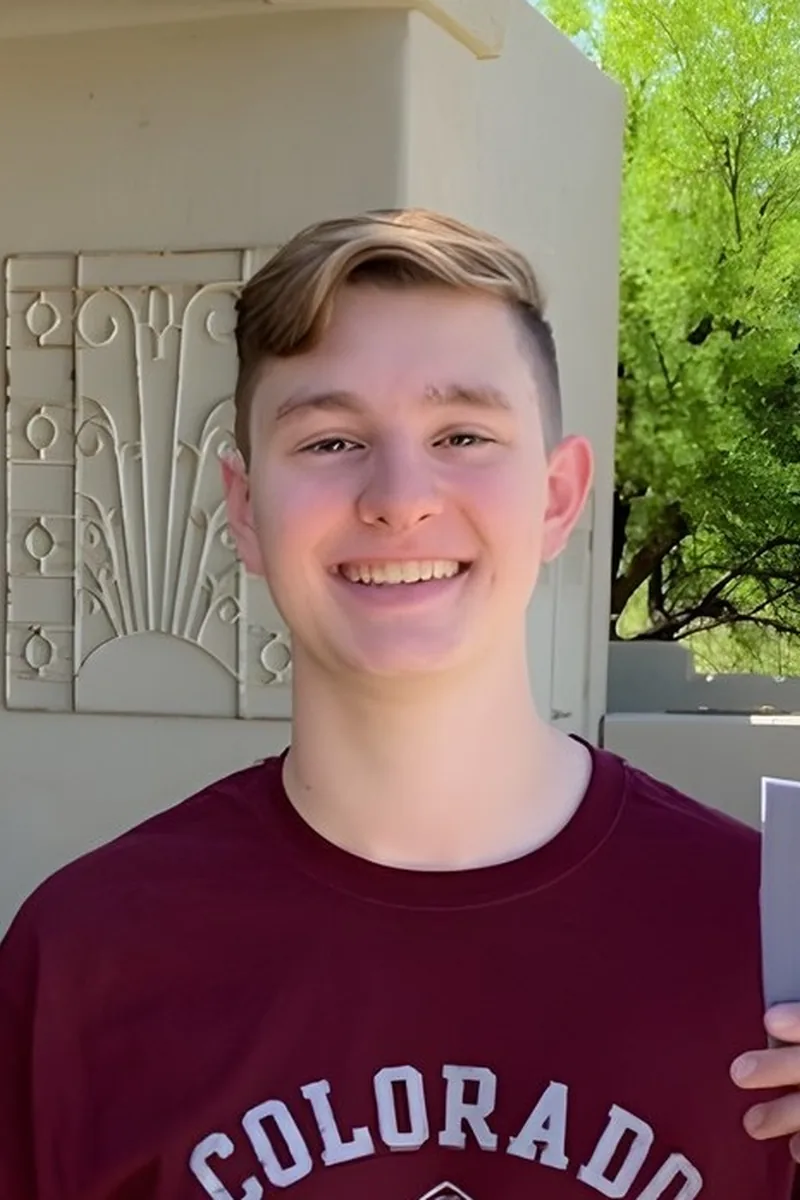
BC Calculus piles on convergence tests, parametric equations, and polar curves right when students think they've mastered AB material. Jude is pursuing a double major in Applied Mathematics and Engineering Physics at Colorado School of Mines, so series expansions and vector-valued functions are tools he uses in his own coursework — not abstract ideas he's recalling from years ago. His conversational teaching style turns intimidating topics like Taylor series error bounds into something students can reason through on their own.
I am a student at the Georgia Institute of Technology studying Chemical Engineering. For the past several years, I have worked with students extensively. Through hosting events for younger kids to learn about STEM and for older teens to practice empathetic design, I know the importance of teaching students in ways that engage them rather than frustrate them, which I apply to my teaching. I have tutored high school students in a drop-in resource center in various subjects including math of all levels, chemistry, and English, making me adequately equipped in a variety of topics. I have also tutored several students long-term. Establishing relationships with students and exploring their unique learning styles is my favorite part of tutoring. I prioritize helping students discover HOW to learn in a manner that is the most effective for them, so they can begin to use those skills on their own throughout their education. Learning is a lifelong skill that requires practice for improvement; I strive to help my students gain confidence in their ability to learn.
Most BC students can follow a convergence test procedure but freeze when they have to choose which test to apply — Evan, with a physics degree and a 5.0 rating, teaches the underlying logic that makes that decision intuitive, connecting each test back to the behavior of the series itself. His physics background means he's used Taylor expansions and parametric equations as working tools, not just exam content, so he can explain what a series is actually doing when it converges or diverges.
BC Calculus piles on topics like Taylor series, parametric equations, and convergence tests at a pace that leaves little room for falling behind. As a Penn math major who also tutors multivariable calculus and linear algebra, Ben understands these concepts at a depth that lets him explain not just the how but the why behind each technique. That deeper perspective makes integration methods and series analysis click faster.
Derek scored a 5 on the AP Calculus BC exam and now studies applied mathematics at Harvard, which means series convergence tests, parametric equations, and polar area problems are still part of his daily toolkit. He breaks down intimidating topics like Taylor series error bounds and integration by parts into repeatable strategies that click on exam day. Rated 4.9 by students.
Scoring a 36 on the ACT while studying economics at Vanderbilt means Kerr lives comfortably in the quantitative reasoning that BC Calculus demands — and his computer science focus sharpens the algorithmic thinking behind recursive sequences and series convergence. He teaches BC's trickiest leaps, like moving from basic integration to constructing Taylor polynomials, by grounding each new idea in the conceptual logic rather than just the procedural steps. Rated 4.9 by students.
As a multivariable calculus teaching assistant at Harvard's Math Department, Kristi spent semesters watching exactly where students' BC foundations cracked under pressure — shaky series intuition, mechanical convergence testing, parametric reasoning that never quite solidified. Her astrophysics training means she learned these tools by necessity, using Taylor expansions to model orbital mechanics and integration techniques to analyze planetary data, so she teaches the logic driving each method rather than just the steps. Rated 5.0 by students.
BC Calculus layers convergence tests, parametric equations, and polar curves on top of an already demanding AB foundation, and the pacing leaves little room to fall behind. Vinson earned a 36 ACT and National AP Scholar distinction while building the kind of deep mathematical fluency that makes series analysis and integration techniques click. He breaks each new BC topic into the AB concept it extends, so the jump never feels arbitrary.
Mackenzie scored a 35 on the ACT and tutors math at every level from elementary through AP, which means she knows exactly which algebra and AB gaps trip students up once BC introduces new integration techniques and series. She walks through problems like setting up improper integrals or applying ratio tests by tracing each step back to the reasoning behind it, so students build intuition they can rely on during the exam.
Convergence tests, parametric equations, and Taylor series expansions are where BC separates from AB — and where many students start to feel lost. Rithi breaks these topics into intuitive steps, connecting new concepts back to the foundational calculus reasoning students already have. Her 1550 SAT and deep STEM background reflect the kind of mathematical fluency that makes those connections clear.
BC Calculus piles on series convergence, parametric equations, and polar coordinates on top of an already demanding AB curriculum. Julie's Princeton training in statistics and machine learning means she regularly uses advanced calculus as a tool, giving her an intuitive sense for which techniques apply where. She tackles integration strategies and Taylor series by connecting each method back to the core idea it extends.
Biochemistry lab work at Columbia demands comfort with the calculus that models reaction kinetics and molecular behavior — Andrew has spent years using integration techniques and series approximations in that context, which gives his BC teaching a practical edge when students ask "why does this matter?" He's especially effective at breaking down the transition from AB to BC, tracing topics like Taylor polynomial construction and convergence criteria back to the derivative and integral logic students already trust. Rated 4.9 by students.
Teaching discrete math at Penn while finishing a CS master's means Keenan lives in the world of rigorous mathematical argument — the same mindset that separates students who survive BC from those who actually understand it, especially when series convergence proofs and error bound reasoning demand more than mechanical computation. His philosophy undergraduate training adds an unusual edge: he treats each BC concept like a logical claim that needs justification, which makes topics like the Lagrange remainder or comparison tests feel structured rather than arbitrary. Rated 5.0 by students.
Princeton's electrical engineering program leans hard on series expansions and differential equations from day one — Sabrina uses them to analyze circuits and model signal behavior in her applied physics coursework, which means BC topics like Taylor polynomials and convergence tests aren't abstract exercises for her but tools she reaches for weekly. She's especially clear at breaking down the logic behind each convergence test so students can choose the right one on their own instead of guessing. Rated 5.0 by students.
Scoring a 36 on the ACT while majoring in chemistry at MIT means Nicholas lives in the overlap where rigorous math meets scientific application — and BC Calculus sits right at that intersection. He's especially good at breaking down series convergence and integration techniques by grounding them in the kind of approximation problems he encounters in physical chemistry coursework, so the logic behind a ratio test or a Taylor expansion feels earned rather than arbitrary. Rated 5.0 by students.
Testimonials
Because the right AP Calculus BC tutor makes all the difference.
Average Session Rating – Based on 3.4M Learner Ratings
Practice AP Calculus BC
Free practice tests, flashcards, and AI tutoring for AP Calculus BC
Nearby AP Calculus BC Tutors
Other Colorado Springs Tutors
Related Math Tutors in Colorado Springs
Frequently Asked Questions
AP Calculus BC builds on Calculus AB concepts and includes limits, derivatives, integrals, differential equations, and sequences/series. The course also covers parametric equations, polar coordinates, and vector-valued functions—topics that distinguish BC from AB. For students in Colorado Springs preparing for the May exam, understanding this expanded scope helps you plan your study timeline and identify which areas need the most focus.
AP Calculus AB covers the first semester of college calculus, while BC covers the full year, including everything in AB plus additional topics like series, parametric equations, and polar functions. BC students take the same AB exam as part of their test, so mastering AB content is essential. If you're deciding between the two, BC is ideal if you're comfortable with algebra and precalculus and plan to major in STEM.
Score improvement depends on your starting point and consistency with practice. Students who work with tutors typically see gains of 1-2 points on the 1-5 scale, though improvement varies based on your baseline and how much you practice between sessions. The key is identifying your specific weak areas—whether that's integration techniques, series convergence, or free-response problem structure—and targeting those systematically.
Students in Colorado Springs often struggle most with series and convergence tests, parametric and polar calculus, and connecting multiple concepts in free-response questions. Integration techniques and l'Hôpital's rule also trip up many students. A tutor can help you build conceptual understanding rather than just memorizing procedures, which is critical for the exam's free-response section.
The AP Calculus BC exam has two sections: 45 minutes for 30 multiple-choice questions and 90 minutes for 6 free-response questions. On multiple-choice, aim to spend about 1.5 minutes per question, flagging harder ones to revisit. For free-response, allocate 15 minutes per question and show all work—partial credit is valuable. Tutors can help you practice under timed conditions to build speed without sacrificing accuracy.
Start taking full-length practice tests 6-8 weeks before the exam, aiming for one every 1-2 weeks. This gives you time to identify patterns in your mistakes and adjust your study plan. Between full tests, do targeted practice on specific topics and question types. A tutor can review your practice test results with you to spot trends—like whether you're rushing through multiple-choice or struggling with particular free-response formats.
Test anxiety often stems from feeling unprepared or unfamiliar with question formats. Regular practice tests, especially under timed conditions, build confidence by normalizing the exam experience. Tutors can also help you develop problem-solving strategies and teach you how to skip difficult questions strategically and return to them—reducing panic when you hit a tough problem. Knowing you have a solid foundation in the material is the best antidote to anxiety.
Varsity Tutors connects you with expert tutors who specialize in AP Calculus BC and understand the specific pacing and rigor of the exam. When you get matched with a tutor, you can discuss your current level, target score, and timeline so they can tailor instruction to your needs. Many tutors in the Colorado Springs area have experience helping students at the 18 school districts here succeed on the BC exam.
Let’s find your perfect tutor
Answer a few quick questions. We’ll recommend the right plan and match you with a top 5% tutor.