Award-Winning AP Physics C: Mechanics Tutors
serving Colorado Springs, CO
AP Physics C: Mechanics
Tutors in Colorado Springs
Private 1-on-1 tutoring, weekly live classes for academic support, test prep & enrichment, practice tests and diagnostics, and more to elevate grades and test scores.
Based on 3.4M Learner Ratings
UniversitiesSchools & Universities
DeliveredHours Delivered
ProficiencyGrowth in Proficiency
Who needs tutoring?
No obligation. Takes ~1 minute.

An astrophysics and chemistry double major at CU Boulder with a 4.0 GPA, Graham is actively working through the calculus-based mechanics that AP Physics C tests — from setting up force integrals for variable-mass systems to deriving rotational inertia from first principles. His 33 ACT and deep comfort with both the physics and the underlying calculus mean he can spot whether a student's free-response mistake is conceptual or computational and address the right one. Rated 5.0 by students.
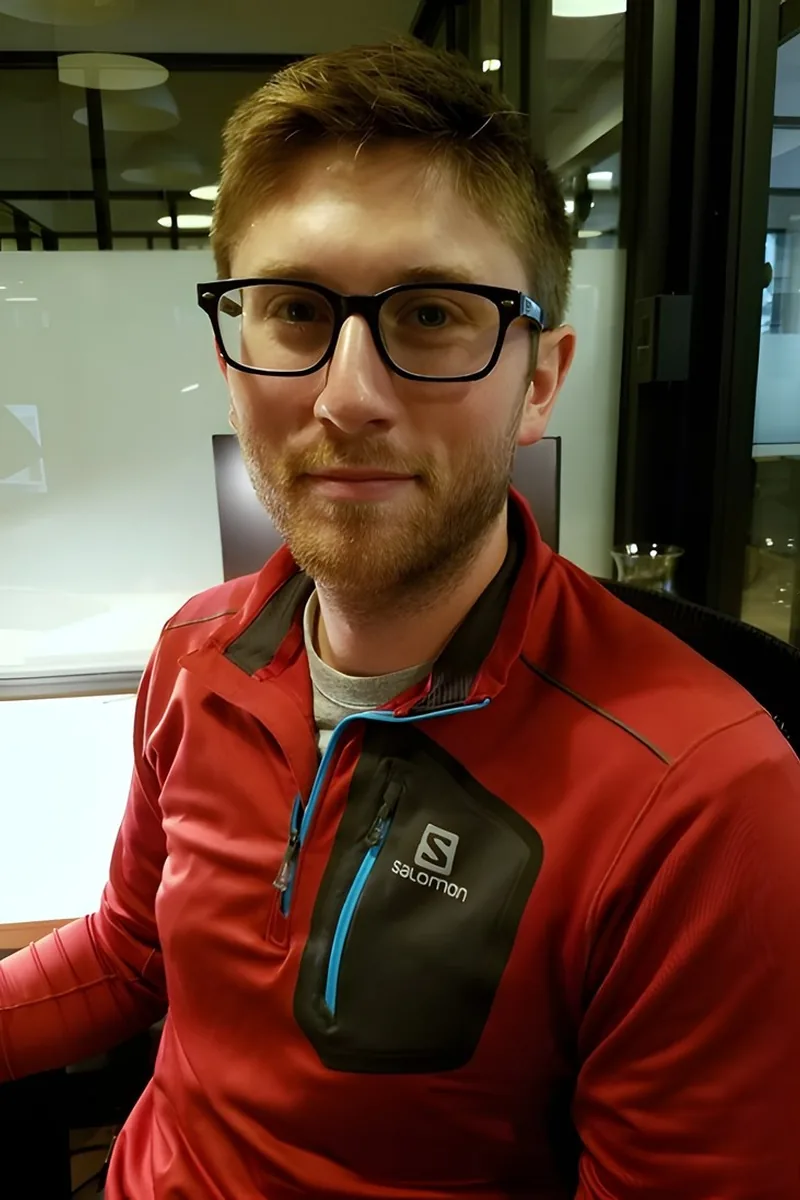
Evan's physics degree means he's built the calculus-based mechanics toolkit from the ground up — not just applying F=ma but deriving equations of motion, setting up energy integrals, and working through the vector analysis that the AP Physics C free-response section actually tests. Where he really shines is shifting a student's mindset from 'this is impossible' to 'this is hard but I have a method,' which keeps momentum going through the toughest rotational dynamics and variable-force problems. Rated 5.0 by students.
Free-body diagrams, rotational inertia, and conservation of energy problems all require calculus-based reasoning that trips students up when they try to rely on formulas alone. Emily completed the full pre-med physics sequence at Cornell and spent her senior year tutoring calculus — two skills that converge directly in AP Physics C: Mechanics. She breaks multi-step problems into the underlying math so students see why the setup matters as much as the answer.
Holding dual degrees in mathematics and physics, Maxwell brings the rare ability to see both sides of every AP Physics C: Mechanics problem simultaneously — the physical intuition and the calculus machinery. Where many students stumble is in translating a free-body diagram into the correct line integral or second-order differential equation; Maxwell treats that translation step as the core skill to master, not an afterthought. Rated 5.0 by students, with a 1520 SAT backing up the quantitative chops.
Studying mathematics and physics at Harvard, Matthew is building the calculus and mechanics toolkit simultaneously — which means he sees the connection between a differential equation and a physical system as one idea, not two separate steps. His 34 ACT and deep comfort with multivariable calculus let him dig into the trickier AP Physics C territory, like work done by position-dependent forces or setting up moment-of-inertia integrals for composite objects, with real mathematical fluency. Rated 4.9 by students.
Darren is midway through his physics degree at Northwestern, which means he's actively taking the upper-division mechanics courses that build directly on everything AP Physics C tests — and he still remembers exactly where the conceptual jumps from kinematics to rotational dynamics tripped him up the first time. He zeroes in on free-body diagrams and getting the calculus setup right before students ever touch a number, treating each problem as a reasoning exercise rather than a formula hunt. Rated 5.0 by students.
I'm pursuing a double major in Mathematics and English at Vanderbilt University. I have been tutoring math since High School and have native proficiency in Mandarin Chinese. I am dedicated to helping students explore the study methods that will fit their individual needs.
Rachel's business economics major might not scream physics, but her 35 ACT and deep math background — she tutors through AP Calculus BC — mean she's comfortable with the calculus-based problem-solving that Mechanics demands. She approaches kinematics and force problems the way an economics student would: set up the model carefully, define your variables, then let the math do the work.
Computer engineering at Michigan means Jie solves mechanics problems where the physics and the math have to work together — modeling forces on robotic actuators, computing torques in electromechanical systems — so the calculus-based dynamics on the AP Physics C exam map directly to what he already builds and debugs. His 34 ACT confirms the quantitative sharpness, and he's especially effective at teaching students how to read a free-body diagram and translate it into the right differential equation rather than reaching for a memorized formula.
Simulating cosmic ray acceleration through turbulent plasmas requires exactly the kind of calculus-based mechanics reasoning that AP Physics C tests — Newton's laws applied to complex systems, rotational dynamics, and energy methods. Dennis walks students through the hardest problems on the exam by teaching them to set up the physics first and let the calculus follow naturally. Rated 4.7 by students.
An applied physics degree means Karen didn't just study mechanics for an exam — she built her entire undergraduate education around the Newtonian framework, calculus-based problem-solving, and laboratory work that AP Physics C condenses into a single course. She's especially sharp at connecting real-world scenarios (a spinning figure skater, a car banking a curve) to the free-body diagrams and integrals students need to produce under timed conditions. Rated 5.0 by students.
Biology majors at Cornell don't usually seek out calculus-based physics — but Drishti's 1500 SAT and her comfort across both AP Calculus BC and AP Physics C suggest she genuinely clicks with the quantitative side of science, not just the biological. She's especially useful for students who need someone to slow down on the free-body-diagram-to-integral pipeline, translating the physical setup into the calculus without assuming steps are obvious. Rated 5.0 by students.
Double-majoring in physics and computer science at Stony Brook, Kiran lives in the calculus-based mechanics world daily — setting up work-energy integrals, deriving equations of motion, solving the same kinds of problems AP Physics C puts on the free-response section. His 34 ACT and physics coursework give him both the mathematical fluency and the physical intuition to explain why a particular integral applies to a given force scenario, not just how to evaluate it.
Pharmacy school trains you to think in systems — how one variable cascades through an entire mechanism — and Lillian applies that same reasoning to mechanics problems where forces, constraints, and calculus all interact at once. Her prepharmacy science background covers the physics and math rigor AP Physics C demands, and her 34 ACT confirms the quantitative chops to back it up. She's especially effective at teaching students to identify which physical principle governs a problem before touching any equations, rated 4.9 by students.
Testimonials
Because the right AP Physics C: Mechanics tutor makes all the difference.
Average Session Rating – Based on 3.4M Learner Ratings
Practice AP Physics C: Mechanics
Free practice tests, flashcards, and AI tutoring for AP Physics C: Mechanics
Nearby AP Physics C: Mechanics Tutors
Other Colorado Springs Tutors
Related Science Tutors in Colorado Springs
Frequently Asked Questions
AP Physics C: Mechanics focuses on classical mechanics and covers kinematics, Newton's laws, work and energy, momentum, circular motion, oscillations, and gravitation. The course emphasizes calculus-based problem solving, requiring students to use derivatives and integrals to analyze motion and forces. Understanding these foundational concepts is essential for success on the AP exam, which tests both conceptual understanding and quantitative reasoning across these domains.
Many students struggle with translating word problems into mathematical models, particularly when applying calculus to physics concepts like acceleration and force. Pacing is another major challenge—the course moves quickly through abstract concepts, and falling behind early makes catching up difficult. Additionally, students often find the free-response section intimidating because it requires showing detailed work and justifying answers, not just selecting the correct option. Working with a tutor can help you develop problem-solving strategies and build confidence with these challenging areas.
Most students benefit from consistent, focused preparation starting several months before the May exam. A typical study schedule includes regular coursework attendance, weekly problem sets, and dedicated review sessions—ideally 5-8 hours per week during the school year, increasing to 10-12 hours weekly in the final 6-8 weeks. Spacing your studying over time (rather than cramming) helps you retain concepts and identify weak areas early. Personalized tutoring can help you create an efficient study plan tailored to your learning pace and specific gaps.
Score improvement depends on your starting point and effort level, but students typically see gains of 1-2 points on the 1-5 AP scale when they work consistently with a tutor over several months. Students who begin tutoring early and actively engage with practice problems often show the most significant improvements. The key is identifying your specific weak areas—whether that's conceptual understanding, problem-solving technique, or exam strategy—and addressing them systematically through targeted practice and feedback.
Practice tests are crucial for AP Physics C: Mechanics because they help you understand the exam format, manage your time effectively, and identify which topics need more review. Taking full-length practice exams under timed conditions reveals your pacing challenges and helps you develop test-taking strategies. After each practice test, reviewing your mistakes—especially understanding why you chose wrong answers—is more valuable than the score itself. A tutor can help you analyze your practice test results and create targeted study plans based on patterns in your errors.
The free-response section rewards clear reasoning and detailed work, not just correct final answers. Practice writing out your solution process step-by-step, showing how you set up equations and justify your approach. Many students lose points by skipping steps or not explaining their reasoning, even when their final answer is correct. Working with a tutor on free-response problems helps you develop the habit of showing complete work, organizing your solutions logically, and communicating your physics reasoning effectively to earn maximum points.
Your first session focuses on understanding your current level, learning goals, and specific challenges. The tutor will likely assess your comfort with calculus, discuss which topics feel most confusing, and review any recent exams or problem sets to identify patterns in your mistakes. Together, you'll create a personalized study plan that addresses your priorities—whether that's building conceptual understanding, improving problem-solving speed, or mastering exam strategy. This foundation helps ensure your tutoring sessions are targeted and effective from day one.
Varsity Tutors connects you with expert tutors for students in Colorado Springs who specialize in AP Physics C: Mechanics and understand the unique challenges of the course. You can get matched with a tutor who fits your schedule, learning style, and specific goals—whether you need help with one difficult topic or comprehensive exam preparation. The matching process considers your preferences and ensures you work with someone qualified to help you succeed on the AP exam.
Let’s find your perfect tutor
Answer a few quick questions. We’ll recommend the right plan and match you with a top 5% tutor.