Award-Winning Pre-Calculus Tutors
serving Colorado Springs, CO
Pre-Calculus
Tutors in Colorado Springs
Private 1-on-1 tutoring, weekly live classes for academic support, test prep & enrichment, practice tests and diagnostics, and more to elevate grades and test scores.
Based on 3.4M Learner Ratings
UniversitiesSchools & Universities
DeliveredHours Delivered
ProficiencyGrowth in Proficiency
Who needs tutoring?
No obligation. Takes ~1 minute.
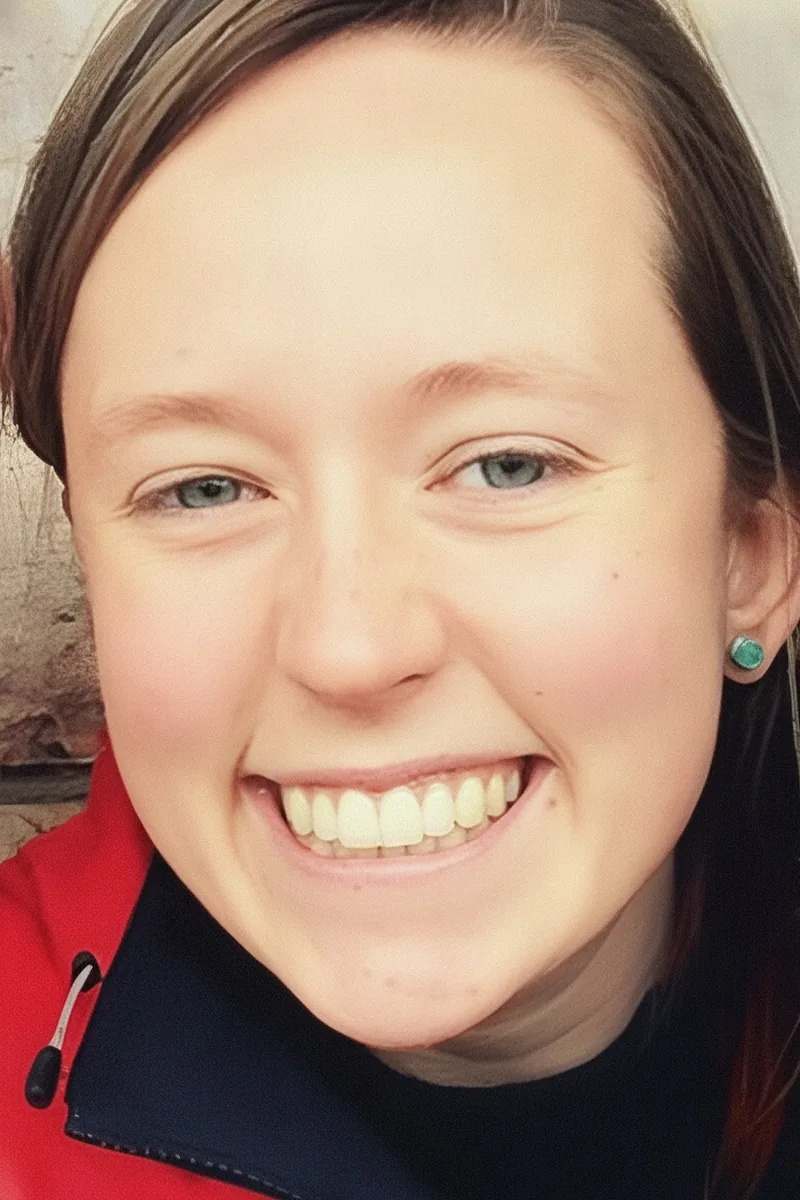
Pre-calc is where math pivots from computation to conceptual thinking — suddenly students need to analyze function behavior, understand transformations, and reason about limits informally. Zofia's approach zeroes in on building that analytical shift, especially around trigonometric functions and their graphs, so that calculus feels like a natural continuation rather than a cliff.
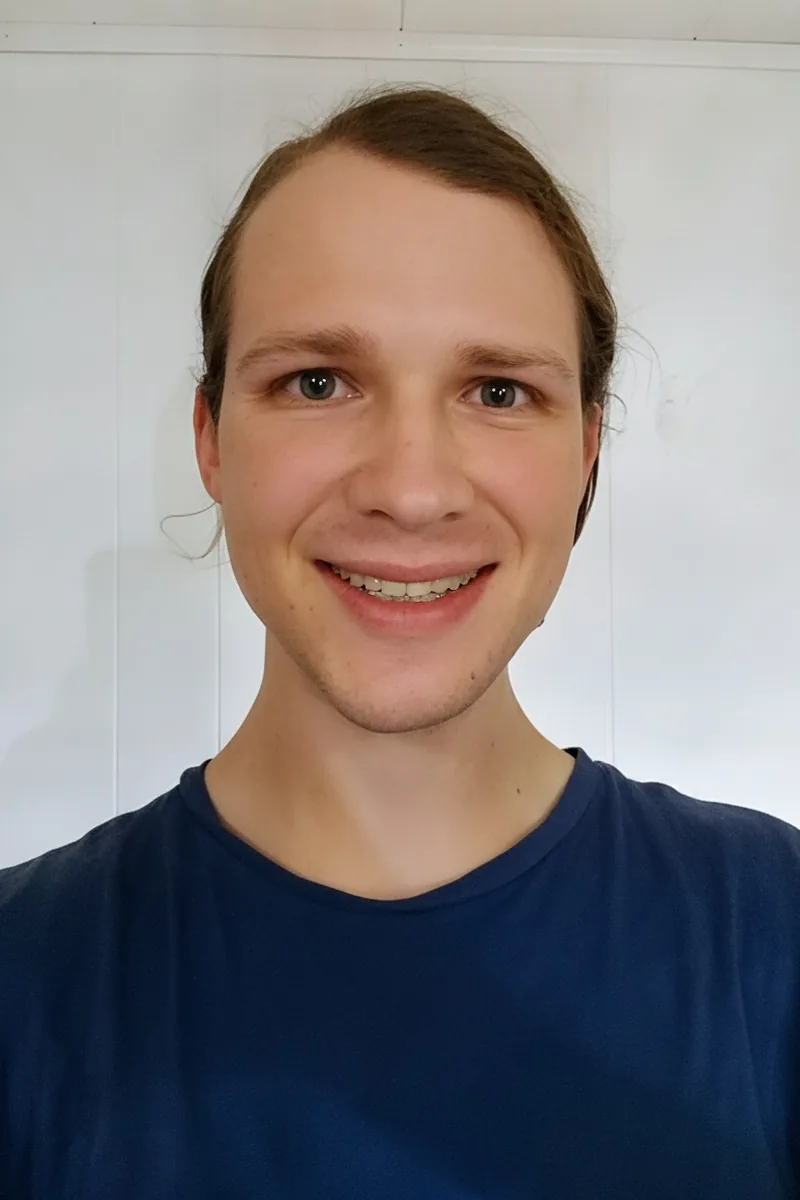
The jump from algebra to pre-calculus often trips students up at a specific point — when equations stop being things you solve and start being objects you transform, compose, and invert. Paul's deep math background across the full algebra-to-calculus pipeline means he can pinpoint exactly where that conceptual shift is breaking down and rebuild the reasoning behind it. His 1570 SAT confirms the quantitative sharpness he brings to topics like rational functions and sequence behavior.
The jump into pre-calculus can feel overwhelming when trigonometric identities, polar coordinates, and limits all land at once. As a mechanical engineering student, Christian uses these tools constantly in his coursework and can show exactly how each concept feeds into the bigger mathematical picture. He's particularly effective at demystifying function transformations and the unit circle.
Engineering physics at Colorado School of Mines means Jude encounters pre-calculus concepts like parametric equations, polar coordinates, and composite functions not as textbook abstractions but as the working language of wave mechanics and circuit analysis. He teaches through rapid back-and-forth questioning — almost Socratic — so students discover the structure inside a problem before being handed a formula. His 36 ACT and 4.9 rating reflect a tutor who's still deep in the material himself.
Biomedical engineering at UVA meant Colton spent four years where pre-calculus material — trigonometric modeling, exponential decay, function composition — wasn't a standalone course but the daily language of signal processing and biomechanics problems. He teaches the course as a bridge-builder, connecting each new concept back to the algebra students already own and forward to the calculus they're about to encounter. His 32 ACT and 4.7 rating reflect a practical, engineering-minded approach to the subject.
An engineering physics degree from Colorado School of Mines means Cody didn't just pass through pre-calculus — he pressure-tested every concept in it across semesters of wave mechanics, circuit analysis, and multivariable problem sets. He's especially sharp on the topics that trip students up at the bridge between algebra and calculus: trigonometric identities, function transformations, and the intuition behind logarithmic and exponential behavior. His 1440 SAT and teaching range from pre-algebra through calculus 3 reflect someone who genuinely understands the full arc these concepts fit into.
I am a student at the Georgia Institute of Technology studying Chemical Engineering. For the past several years, I have worked with students extensively. Through hosting events for younger kids to learn about STEM and for older teens to practice empathetic design, I know the importance of teaching students in ways that engage them rather than frustrate them, which I apply to my teaching. I have tutored high school students in a drop-in resource center in various subjects including math of all levels, chemistry, and English, making me adequately equipped in a variety of topics. I have also tutored several students long-term. Establishing relationships with students and exploring their unique learning styles is my favorite part of tutoring. I prioritize helping students discover HOW to learn in a manner that is the most effective for them, so they can begin to use those skills on their own throughout their education. Learning is a lifelong skill that requires practice for improvement; I strive to help my students gain confidence in their ability to learn.
Four years running Drake University's Math Lab meant Brenna spent every day translating pre-calculus stumbling blocks — rational functions, trig identities, sequences — into language that clicked for students across dozens of different majors. Her actuarial science degree trained her to think in terms of models and risk curves, so she teaches topics like exponential and logarithmic functions by showing how they actually behave rather than just how to manipulate them on paper. That modeling instinct carries through to graphing transformations, where she gets students reading function behavior instead of memorizing shift rules.
Environmental biology trained Rosemary to think in functions — population models that grow exponentially, nutrient cycles that behave logarithmically, seasonal patterns described by sinusoidal curves. She brings that applied mindset to pre-calculus, connecting graph transformations and function families to the real-world systems they were built to describe. Her 32 ACT confirms solid quantitative instincts across the board.
An English degree might seem like an unlikely path into pre-calculus tutoring, but Carson's broad math teaching range — from pre-algebra through calculus — means he's walked students through every stage of the algebraic-to-functional thinking progression and knows exactly where the stumbling blocks hide. He's especially sharp at demystifying the shift from manipulating equations to interpreting how entire function families behave, the conceptual leap that trips up most students between algebra and calculus.
Everything in Pre-Calculus — trigonometric identities, polar coordinates, rational functions — exists to set up the ideas students will need in calculus and beyond. Evan studied physics in college, which means he spent years relying on exactly these tools and can explain why each one matters instead of presenting them as disconnected topics. He's especially sharp at demystifying trig graphs and unit circle reasoning.
Tutoring calculus students at Penn's Tutoring Center taught Brittany exactly which pre-calculus skills matter most — she saw firsthand where gaps in trigonometric reasoning or shaky function manipulation derailed students in Gen Chem and Physics. Her psychology training also gives her a sharp read on how students get stuck, letting her adjust explanations of topics like polynomial end behavior or composite functions on the fly. She's been teaching math since her Mu Alpha Theta days in high school and hasn't stopped since.
Mechanical and aerospace engineering at Princeton means Matthew is constantly applying the trigonometric relationships, parametric equations, and function transformations that pre-calculus introduces — they're the building blocks of orbital mechanics and fluid dynamics problems he tackles in coursework. His teaching style is deliberately hands-on: he walks through a concept step by step, then puts students in the driver's seat with progressively harder problems, catching misunderstandings in real time. A 34 ACT confirms the quantitative instincts behind that approach.
The jump to pre-calculus is where many students first encounter trigonometric identities, polar coordinates, and limits — concepts that feel disconnected from anything they've done before. Eileen bridges that gap by tying each new idea back to familiar algebra and geometry, giving students a clear roadmap into calculus.
Neuroscience at Vanderbilt meant Benjamin spent semesters immersed in the mathematical models that pre-calculus introduces — exponential decay in synaptic signaling, logarithmic dose-response curves, sinusoidal patterns in EEG data. He teaches these function families by connecting them to the biological phenomena that made them intuitive for him, turning abstract transformations and compositions into something students can visualize. His 34 ACT confirms the quantitative grounding behind that approach.
Second-year medical school at Baylor means Michelle is neck-deep in the quantitative reasoning that pre-calculus builds — rate-of-change intuition for physiology, logarithmic models for acid-base chemistry, and exponential functions for everything from bacterial growth to drug clearance. Her biochemistry degree from Rice cemented the algebraic and trigonometric groundwork she now draws on daily, so she teaches these topics as someone who genuinely needed them to stick. A 1570 SAT confirms the mathematical precision behind her approach.
The jump into Pre-Calculus often feels like juggling — trigonometric identities, limits intuition, and function transformations all land at once. Eliza approaches each topic by connecting it back to the algebra and geometry students already know, so new material builds logically instead of feeling random. Rated 5.0 by students, she keeps sessions structured without making them feel rigid.
The jump into pre-calculus — trigonometric identities, limits, and complex functions — trips up even strong math students who breezed through earlier courses. Julia breaks these topics into logical building blocks, connecting each new idea back to the algebra and geometry students already know. Her Stanford coursework in economics and quantitative methods keeps her sharp on exactly the kind of function analysis pre-calc demands.
The jump to pre-calculus is really a jump in abstraction — suddenly students need to think about function behavior, limits of trigonometric identities, and how polynomial end behavior connects to graphing. Manolya studied mathematics and computer science at MIT, so she approaches these topics with both theoretical depth and a knack for making complex relationships visual and concrete.
Studying molecular biology at Yale means Maxwell constantly encounters the mathematical scaffolding that pre-calculus builds — exponential models for gene expression kinetics, logarithmic scales for concentration data, and trigonometric functions underlying structural biology. He zeros in on how these function families actually behave and transform, connecting the symbolic manipulation back to intuition so students aren't just memorizing identities in isolation. His 33 ACT and 5.0 rating back that up.
William's computer science coursework at Rice means he regularly implements the functions, transformations, and trigonometric relationships that pre-calculus students are still learning to read on paper — he's coded them, graphed them, and debugged them. That hands-on fluency lets him explain topics like composite functions or logarithmic behavior by tracing the logic step by step, so the algebra feels like it's going somewhere. His 1540 SAT confirms the mathematical precision behind his approach.
What separates students who survive pre-calculus from those who actually understand it is whether they've internalized the *why* behind each technique — and Daniel, as an applied mathematics major, learned every concept the hard way, by sitting down and working through the logic piece by piece. That deliberate approach makes him especially effective at breaking down topics like rational functions and graph transformations, since he teaches the reasoning he had to build for himself rather than skipping steps that feel obvious. Rated 4.7 by students.
The University of Chicago's core curriculum put Valerie through rigorous math coursework alongside her Classics and Theatre studies, giving her a working command of the function families, transformations, and trigonometric reasoning that define pre-calculus. She's particularly sharp at demystifying sequences and series — breaking the pattern logic down step by step until the formulas feel inevitable rather than arbitrary. Her 1540 SAT confirms the quantitative skill behind her approach.
Testimonials
Because the right Pre-Calculus tutor makes all the difference.
Average Session Rating – Based on 3.4M Learner Ratings
Practice Pre-Calculus
Free practice tests, flashcards, and AI tutoring for Pre-Calculus
Nearby Pre-Calculus Tutors
Other Colorado Springs Tutors
Related Math Tutors in Colorado Springs
Frequently Asked Questions
Pre-Calculus shifts from solving equations to understanding functions deeply—you'll move from "What's x?" to "How does this function behave?" This requires more conceptual thinking about graphs, transformations, and relationships between variables. Many students find this transition challenging because it demands both procedural fluency and the ability to visualize and interpret mathematical patterns. Personalized tutoring helps bridge this gap by connecting concrete skills to the bigger picture.
Word problems require translating real-world situations into mathematical models—a skill that's central to Pre-Calculus but often feels overwhelming. Expert tutors teach you to identify key information, choose the right function or approach, and work through multi-step solutions systematically. With personalized instruction, you'll practice breaking problems into manageable pieces and build confidence in your problem-solving strategy, not just memorizing formulas.
Graphing requires understanding how changes to equations affect the shape and position of curves—a visual-conceptual skill that's hard to master from lectures alone. Students often memorize transformation rules without truly seeing why they work, leading to careless mistakes. Tutors help you develop intuition by connecting algebraic changes to visual shifts, so you understand not just how to graph, but why each step matters.
Yes. Colorado Springs schools across its 18 districts use different textbooks and pacing guides—some emphasize graphing calculators, others focus on analytical methods. When you connect with a tutor through Varsity Tutors, you can discuss your specific curriculum, textbook, and teacher's approach so instruction aligns perfectly with what you're learning in class. This alignment makes tutoring sessions more efficient and directly supports your coursework.
Math anxiety often stems from feeling lost or embarrassed to ask questions in a classroom setting. One-on-one instruction creates a judgment-free space where you can ask "why" as many times as needed and work at your own pace. Tutors help you recognize that mistakes are learning opportunities, not failures, and build confidence by celebrating progress on specific skills—this mindset shift is powerful for tackling challenging Pre-Calculus concepts.
Your tutor will assess your current understanding of foundational concepts, identify specific pain points (whether that's trigonometry, logarithms, or function transformations), and learn about your learning style and goals. Together, you'll create a personalized plan focused on the topics where you need the most support. This diagnostic approach ensures every session builds on your strengths and targets real gaps.
Many students see meaningful progress—better understanding of concepts and improved grades—within 3-4 weeks of consistent tutoring, especially if they're working on specific, focused topics. Deeper conceptual shifts and consistent confidence typically develop over 8-12 weeks of regular sessions. The timeline depends on your starting point, the complexity of concepts you're tackling, and how often you meet with your tutor.
Absolutely. Many Pre-Calculus teachers emphasize showing work because it reveals your thinking process and helps you catch mistakes. Tutors teach you how to organize multi-step solutions, explain your reasoning, and present work in a way that's both clear to others and useful for catching errors yourself. This skill is especially valuable for word problems and proofs, where communication is as important as getting the right answer.
Let’s find your perfect tutor
Answer a few quick questions. We’ll recommend the right plan and match you with a top 5% tutor.