Award-Winning AP Physics C: Mechanics Tutors
serving Denver, CO
AP Physics C: Mechanics
Tutors in Denver
Private 1-on-1 tutoring, weekly live classes for academic support, test prep & enrichment, practice tests and diagnostics, and more to elevate grades and test scores.
Based on 3.4M Learner Ratings
UniversitiesSchools & Universities
DeliveredHours Delivered
ProficiencyGrowth in Proficiency
Who needs tutoring?
No obligation. Takes ~1 minute.

An astrophysics and chemistry double major at CU Boulder with a 4.0 GPA, Graham is actively working through the calculus-based mechanics that AP Physics C tests — from setting up force integrals for variable-mass systems to deriving rotational inertia from first principles. His 33 ACT and deep comfort with both the physics and the underlying calculus mean he can spot whether a student's free-response mistake is conceptual or computational and address the right one. Rated 5.0 by students.
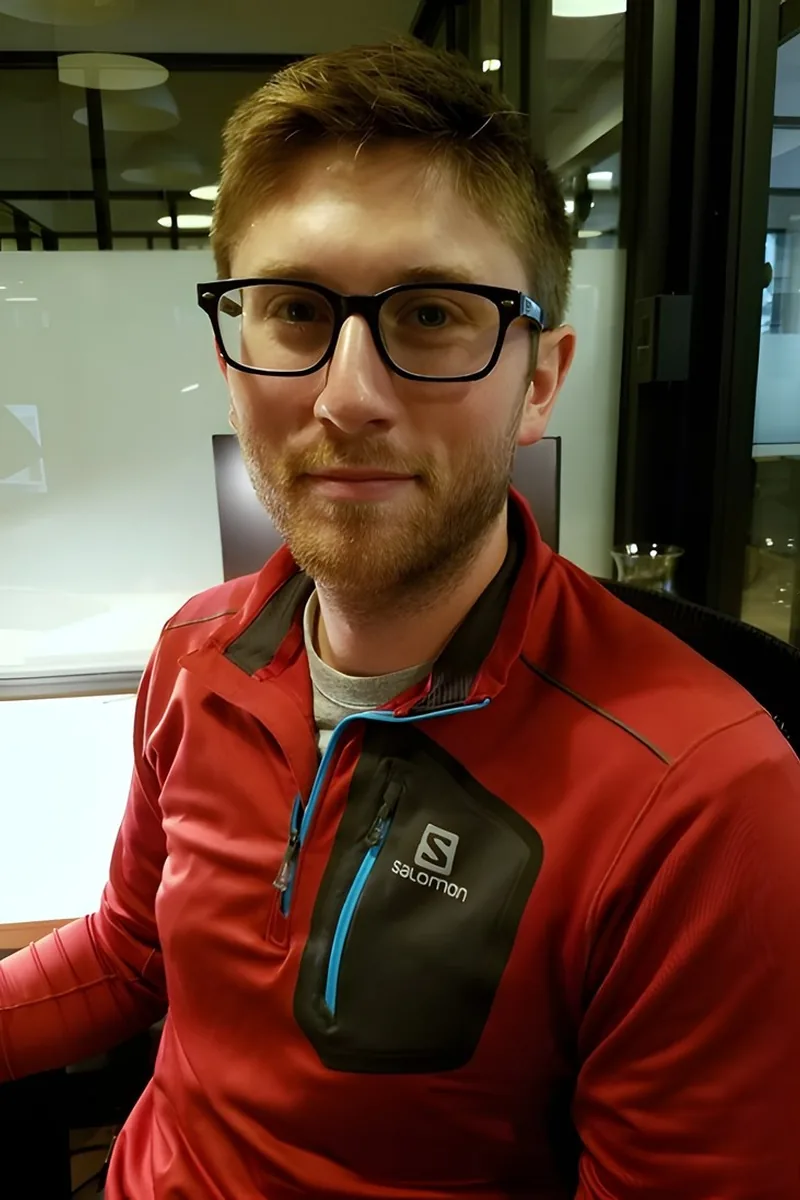
Evan's physics degree means he's built the calculus-based mechanics toolkit from the ground up — not just applying F=ma but deriving equations of motion, setting up energy integrals, and working through the vector analysis that the AP Physics C free-response section actually tests. Where he really shines is shifting a student's mindset from 'this is impossible' to 'this is hard but I have a method,' which keeps momentum going through the toughest rotational dynamics and variable-force problems. Rated 5.0 by students.
An applied physics degree means Karen didn't just study mechanics for an exam — she built her entire undergraduate education around the Newtonian framework, calculus-based problem-solving, and laboratory work that AP Physics C condenses into a single course. She's especially sharp at connecting real-world scenarios (a spinning figure skater, a car banking a curve) to the free-body diagrams and integrals students need to produce under timed conditions. Rated 5.0 by students.
Engineering coursework at Notre Dame means Alexandra is solving calculus-based mechanics problems every week — free-body diagrams with variable forces, work-energy integrals, the full Newton's second law treatment that AP Physics C demands. Her 1530 SAT and 32 ACT point to the quantitative comfort that lets her explain the reasoning behind each setup rather than just walking through formulas. Rated 5.0 by students.
Holding dual degrees in mathematics and physics, Maxwell brings the rare ability to see both sides of every AP Physics C: Mechanics problem simultaneously — the physical intuition and the calculus machinery. Where many students stumble is in translating a free-body diagram into the correct line integral or second-order differential equation; Maxwell treats that translation step as the core skill to master, not an afterthought. Rated 5.0 by students, with a 1520 SAT backing up the quantitative chops.
Four years of teaching undergraduate physics labs at the University of Michigan — especially circuits, electromagnetism, and wave mechanics — gave Michael a sharp eye for where students' calculus intuition breaks down inside a physics problem. For AP Physics C: Mechanics, he zeroes in on that breakdown point: translating a physical setup (a block on a spring, a rotating disk with non-uniform mass) into the correct integral or differential equation. His PhD-level fluency means he can explain not just which formula applies, but why the math takes that particular form.
AP Physics C: Mechanics often trips up students who are comfortable with calculus in a math class but freeze when they need to apply it to a pulley system or a variable-force spring problem. Andrew pairs his strong math background — he's pursuing a double focus in finance and mathematics at Boston College — with hands-on physics tutoring across multiple levels, including the SAT Physics subject test. That cross-subject fluency means he can spot whether a student's stuck on the physics setup or the calculus execution and address the right one.
AP Physics C: Mechanics isn't the obvious fit for a political science major — but Lila also tutors calculus, pre-calculus, and both AP Physics C courses, and her 36 ACT reflects the quantitative chops that calculus-based mechanics actually demands. She's especially useful for students who need someone to slow down and rebuild the connection between a free-body diagram and the integral it implies, rather than racing through derivations.
Three physics degrees and a 1570 SAT give Bryan the kind of deep mathematical fluency that AP Physics C: Mechanics rewards — particularly on problems where students need to set up differential equations for non-uniform circular motion or derive momentum impulse through integration. He teaches the course across both high school and college levels, so he knows exactly which conceptual leaps trip students up when the exam shifts from straightforward kinematics to multi-step rotational problems. Rated 5.0 by students.
Pharmacy school trains you to think in systems — how one variable cascades through an entire mechanism — and Lillian applies that same reasoning to mechanics problems where forces, constraints, and calculus all interact at once. Her prepharmacy science background covers the physics and math rigor AP Physics C demands, and her 34 ACT confirms the quantitative chops to back it up. She's especially effective at teaching students to identify which physical principle governs a problem before touching any equations, rated 4.9 by students.
Computational mathematics at Rice is essentially applied calculus with the volume turned up — Vinson's coursework in differential equations and numerical methods maps directly onto the mechanics problems where students need to set up Newton's second law as a differential equation and solve it, not just memorize kinematic formulas. His 36 ACT and National AP Scholar status (including AP Physics and the full calculus sequence) mean he's been through the exact exam pressure these students face. Rated 4.8 by students.
UCLA's engineering curriculum has David solving the same calculus-based mechanics — work-energy integrals, variable-force problems, rotational inertia derivations — that the AP Physics C exam tests, and his computer science training adds a systematic, algorithmic approach to setting up multi-step free-response problems. He's especially sharp at teaching students to diagram a physical system, identify which conservation law applies, and then write the correct integral or derivative before calculating anything. Rated 4.8 by students.
A PhD in Chemical and Biomolecular Engineering from Buffalo built on a nuclear engineering foundation means Sabry has spent years solving the calculus-heavy mechanics problems — work-energy integrals, rigid body torque derivations, variable-force differential equations — that AP Physics C tests in compressed form. He co-instructed both undergraduate and graduate physics and mechanics courses during his doctoral program, so he knows exactly where students confuse the physical setup with the mathematical execution and can address each independently.
Having earned a BS in both physics and math from Yale, Anthony did the calculus-based mechanics — Lagrangian setups, variable-force integrations, rotational energy derivations — before pivoting to a PhD in economics, which means he teaches the material with the clarity of someone who's already fully digested it rather than still learning alongside students. His 1560 SAT and 5.0 tutoring rating back up what his physics training makes obvious: he can untangle the spots where the calculus and the physical reasoning collide, especially on free-response problems that demand both.
Testimonials
Because the right AP Physics C: Mechanics tutor makes all the difference.
Average Session Rating – Based on 3.4M Learner Ratings
Practice AP Physics C: Mechanics
Free practice tests, flashcards, and AI tutoring for AP Physics C: Mechanics
Nearby AP Physics C: Mechanics Tutors
Other Denver Tutors
Related Science Tutors in Denver
Frequently Asked Questions
AP Physics C: Mechanics is a calculus-based physics course that focuses on kinematics, dynamics, energy, momentum, and rotational motion. Unlike AP Physics 1, which uses algebra-based concepts, Physics C: Mechanics requires calculus to solve problems and understand deeper physical principles. This course is ideal for students planning to study engineering, physics, or other STEM fields in college, as it aligns closely with introductory college physics courses.
Many students struggle with integrating calculus concepts into physics problem-solving, especially when applying derivatives and integrals to motion and forces. Others find it difficult to visualize complex scenarios like rotational dynamics or to identify which physics principles apply to multi-step problems. Time management during the exam is another major challenge, as students need to work through calculations quickly while showing their reasoning clearly.
Personalized 1-on-1 instruction allows a tutor to identify your specific weak areas—whether that's free-body diagrams, energy conservation, or calculus applications—and target those gaps directly. Tutors can walk you through problem-solving strategies, help you practice with released AP exams to build familiarity with question formats, and teach you time-management techniques for the exam. Research on 1-on-1 tutoring shows significant score improvements when students work with an expert who tailors instruction to their learning style.
Score improvement depends on your starting point and how consistently you work with a tutor, but students typically see meaningful gains within 4-8 weeks of regular sessions. If you're struggling with foundational concepts, you might focus on building a stronger understanding before tackling full practice tests. The AP Physics C: Mechanics exam is scored 1-5, and personalized instruction helps students move from barely passing (2-3) to scoring 4s and 5s by strengthening problem-solving skills and exam strategy.
Practice tests are essential—they help you understand the exam format, identify weak topics, and build stamina for the 90-minute exam. Varsity Tutors connects you with tutors who use released AP exams and quality practice materials to simulate real testing conditions. Working through practice tests under timed conditions also reveals pacing issues and helps you develop strategies for allocating time between the free-response and multiple-choice sections.
Your first session typically focuses on assessment—a tutor will review your current understanding of key concepts, look at past exams or assignments to identify patterns in errors, and discuss your goals and timeline. This helps the tutor create a personalized study plan tailored to your needs. You'll also discuss which topics feel most challenging, whether that's kinematics, circular motion, or applying calculus to physics problems.
Look for tutors with strong backgrounds in physics and calculus who have experience preparing students for AP exams. Ideally, they've scored well on the AP Physics C exam themselves or have taught physics at the high school or college level. Tutors who understand both the content deeply and the specific challenges of the exam format—like managing multi-step calculations under time pressure—are best equipped to help you succeed.
Varsity Tutors connects Denver students with expert tutors who specialize in AP Physics C: Mechanics and understand the curriculum and exam requirements. You can get matched with a tutor who fits your schedule and learning style, and many tutors offer flexible session formats to work around your school and extracurricular commitments. Start by telling us about your goals and current level, and we'll help you find the right fit.
Let’s find your perfect tutor
Answer a few quick questions. We’ll recommend the right plan and match you with a top 5% tutor.