Award-Winning Physical Chemistry Tutors
serving Fort Worth, TX
Physical Chemistry
Tutors in Fort Worth
Private 1-on-1 tutoring, weekly live classes for academic support, test prep & enrichment, practice tests and diagnostics, and more to elevate grades and test scores.
Based on 3.4M Learner Ratings
UniversitiesSchools & Universities
DeliveredHours Delivered
ProficiencyGrowth in Proficiency
Who needs tutoring?
No obligation. Takes ~1 minute.

Thermodynamics, quantum mechanics, and kinetics all collide in physical chemistry, and the math intensity alone can be overwhelming. As a chemistry major at TCU who's worked through p-chem coursework firsthand, Nathan breaks down derivations — partition functions, the Schrödinger equation, phase diagrams — into manageable logical steps. He connects the heavy math back to the physical meaning so equations stop feeling arbitrary.
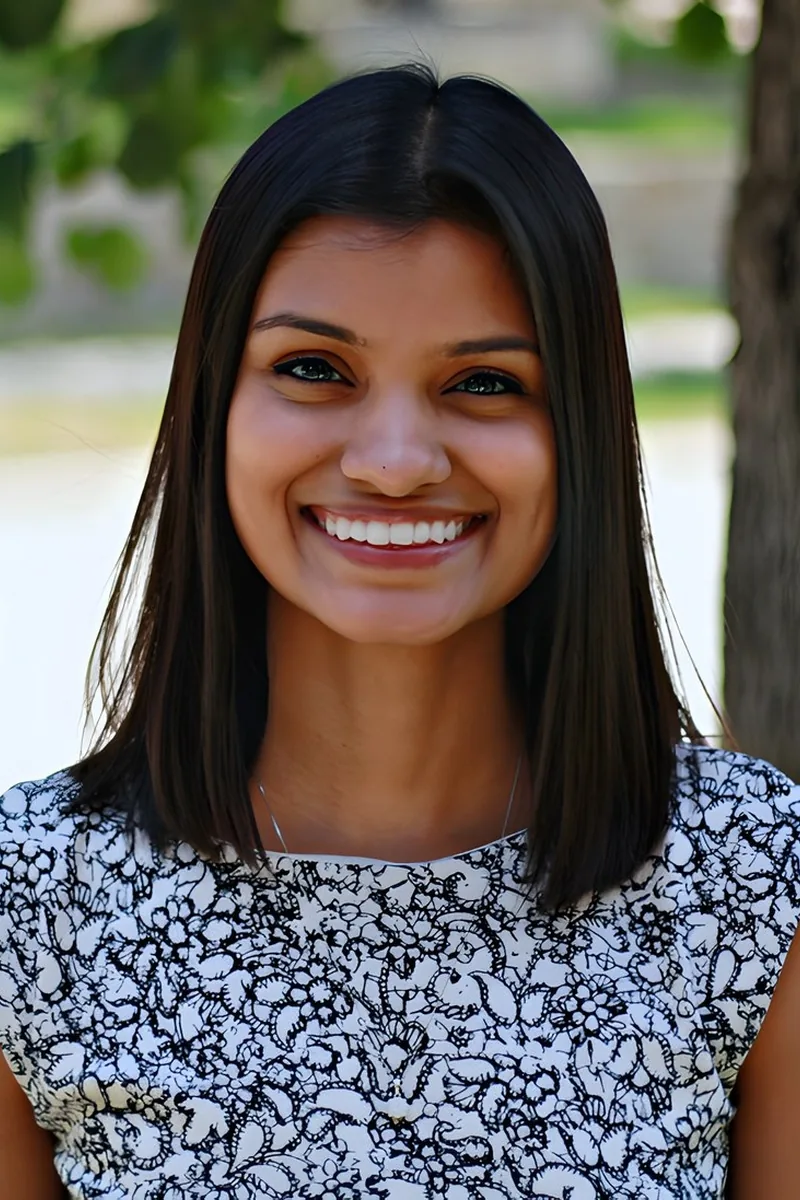
Studying biochemistry and cell biology at Rice means Sugi already had to internalize the thermodynamic and kinetic principles that drive cellular processes — free energy calculations for metabolic reactions, equilibrium constants governing binding events — before tackling them in their pure mathematical form. She unpacks p-chem derivations by linking each variable back to the molecular behavior it quantifies, turning something like a chemical potential expression into a description of what molecules are actually doing at a phase boundary. Rated 5.0 by students.
I am most passionate about biology and chemistry. I am a firm proponent of education, believing it to be absolutely necessary for an improved quality of life, and I try to impart this appreciation to all of my students.
Decades as a PhD chemical engineer meant Steven was solving Clausius-Clapeyron problems, reaction kinetics models, and energy balance derivations long before they were textbook exercises — they were daily work. He breaks down p-chem's toughest material by explaining a concept one way, re-explaining it from a different angle, then grounding it in a real engineering application where the math actually matters. Rated 4.9 by students.
Rice's chemistry curriculum put Asad through the full p-chem gauntlet — thermodynamics, quantum mechanics, kinetics — and his path to medical school at UT Houston means he's had to internalize concepts like enthalpy, entropy, and equilibrium well enough to apply them in biological and clinical contexts. That dual pressure of rigorous chemistry coursework and MCAT preparation sharpened his ability to explain why a derivation works, not just how to grind through the math.
Mechanical engineering at Rice means Aleksey has been solving thermodynamic cycles, heat transfer problems, and differential equations for years — the exact mathematical toolkit that p-chem throws at students in a chemistry wrapper. He breaks down topics like entropy, enthalpy, and phase equilibria by treating them as engineering problems first, then layering in the molecular-level chemistry that gives each variable its meaning. Rated 5.0 by students.
Environmental statistics at Rice required Alex to work extensively with the same calculus-heavy quantitative methods — differential equations, statistical modeling, multivariable analysis — that students encounter in thermodynamics and kinetics derivations throughout a p-chem sequence. His geography background adds a surprising edge: understanding energy balances and phase transitions in Earth systems translates directly to making sense of state functions and equilibrium in a chemistry context.
Pre-med coursework at Rice plus dual degrees in environmental sciences and ecology meant Daniel was solving energy balance problems and applying thermodynamic reasoning to natural systems well before encountering p-chem's formal derivations. His lab technician work at Rice keeps the quantitative skills sharp — setting up calculations involving enthalpy, equilibrium, and kinetic models is part of the daily routine, not a distant textbook memory.
Studying chemistry at UT while simultaneously tutoring undergraduates in math, chemistry, and physics gave Joshua a feel for exactly where p-chem's conceptual layers collide — the moment a thermodynamics derivation turns into a calculus problem, or when quantum mechanical notation obscures an otherwise intuitive idea about molecular behavior. He rebuilds those trouble spots by connecting the formalism back to the underlying chemistry, whether the topic is chemical kinetics, phase equilibria, or statistical mechanics.
Chemical engineering at McCombs drilled Mahan in the thermodynamics, reaction kinetics, and differential equations that form the backbone of any p-chem course — he solved energy balances and rate problems daily before ever seeing them dressed up in physical chemistry notation. That engineering instinct for tracking units and boundary conditions through a long derivation pays off when students hit walls with concepts like chemical potential or the Clausius-Clapeyron equation, where one misplaced variable can unravel an entire problem.
I am pursuing a career in dentistry/oral surgery and will be beginning dental school at Boston University this fall. For this reason I recently took the DAT, which I am capable of assisting you with as well. During my undergraduate education, which I completed this past December, I worked in my school's tutoring center, helping my peers succeed in mathematics and science courses. Outside of my academic life, I am a big sports fan and I mostly follow the New York sports teams. For fun, I like to play basketball and golf with my friends. I am looking forward towards getting to know you and helping you with your academic needs.
This is Jacob's home turf. He earned his Ph.D. in Physical Chemistry from UC Berkeley and now conducts research at Northwestern, so topics like quantum mechanics, statistical thermodynamics, and spectroscopy are part of his everyday work. He walks students through the math-heavy derivations that make p-chem notoriously difficult, connecting each equation back to the physical picture it describes.
Teaching high school chemistry daily means Kathleen regularly translates thermodynamic concepts like enthalpy, entropy, and equilibrium into language that clicks — a skill that carries directly into the more calculus-heavy treatment those same ideas get in a p-chem course. Her M.S.Ed from Penn and chemistry degree give her both the content depth and the instinct for spotting exactly where a derivation stops making sense to a student. Rated 5.0 by students.
I am a public school teacher (Chemistry and Living Environment) but can tutor most sciences. I truly believe in differentiated learning and once I know the learning style of a student, I tailor my teaching style for optimum time usage. I love to utilize stories from my real life experiences in labs to help students understand the implications of their science education.
Medical school at Tufts demands fluency in the thermodynamics and kinetics that p-chem students dread — Eric works through Gibbs free energy calculations, entropy-driven processes, and rate equations daily in a clinical science context, which keeps the material grounded rather than purely abstract. His economics background also sharpens the kind of quantitative modeling and equilibrium thinking that translates surprisingly well to topics like chemical potential and phase diagrams.
Pursuing a dual Ph.D./Pharm.D. at UConn with graduate work in medicinal chemistry means Xhesika encounters the thermodynamic and kinetic formalism of p-chem as daily working tools — calculating drug stability, modeling reaction pathways, predicting how molecular interactions shift with temperature and pressure. She teaches derivations like Maxwell relations and Clausius-Clapeyron by tying each variable back to the pharmacological systems where she actually uses them, so the math carries chemical weight instead of feeling like abstract symbol-pushing.
I am currently a graduate student in Chemical Engineering at the University of Delaware. I am working on using magnetic and flow fields to create advanced materials by directing the self-assembly process of nanoparticles . I have tutored students in Chemistry, Physics and Math all throughout undergraduate and graduate work. I truly enjoy breaking material down into its core components that allows the students to understand complicated information.
Biomedical engineering at BU and Tufts meant Anthony lived in the math that makes p-chem intimidating — differential equations, thermodynamic modeling, and the kinetics of biological systems — long before applying it to physical chemistry specifically. His research background studying neurodegenerative disease therapies keeps him fluent in the quantitative reasoning behind concepts like Gibbs free energy, phase equilibria, and reaction rate theory. Rated 4.9 by students, he connects each derivation to the physical system it describes so the notation carries real meaning.
Two chemistry degrees — bachelor's and master's — mean Chad has gone through the full p-chem gauntlet himself, from quantum mechanical models and statistical thermodynamics to the calculus-dense derivations of chemical kinetics. He teaches the subject by zeroing in on where the math and the molecular picture disconnect for each student, whether that's a tricky partial derivative in a thermodynamic identity or the logic behind a partition function. Rated 4.8 by students.
Two years as an organic chemistry lab TA at the college level gave Maha hands-on experience with the reaction kinetics and thermodynamic reasoning that form the backbone of any p-chem sequence. Now pursuing graduate work in public health at Johns Hopkins, she approaches topics like equilibrium constants and energy diagrams through the lens of someone who's had to apply them in real experimental settings, not just derive them on paper. Rated 5.0 by students.
Biology research through the American Museum of Natural History and pre-med coursework at Cornell gave Krishna hands-on exposure to the thermodynamic and kinetic principles that p-chem formalizes — energy changes in biological systems, reaction rates, equilibrium behavior. She uses that life-science grounding to make topics like Gibbs free energy and rate laws feel like descriptions of real molecular events rather than pure derivation exercises.
Testimonials
Because the right Physical Chemistry tutor makes all the difference.
Average Session Rating – Based on 3.4M Learner Ratings
Nearby Physical Chemistry Tutors
Other Fort Worth Tutors
Related Science Tutors in Fort Worth
Frequently Asked Questions
Physical chemistry bridges chemistry and physics by studying the properties of molecules and how chemical reactions occur at the atomic level. It's challenging because it requires understanding abstract concepts like thermodynamics, quantum mechanics, and kinetics—then applying mathematical equations to predict real-world behavior. Many students struggle with the math-heavy nature and the need to visualize molecular interactions that aren't directly observable.
Students typically struggle with thermodynamics concepts (entropy, enthalpy, free energy), balancing complex equations, unit conversions, and understanding reaction kinetics. Many find it difficult to connect abstract theoretical principles—like molecular orbital theory or statistical mechanics—to tangible lab work and real applications. Personalized tutoring helps clarify these connections and builds confidence with problem-solving strategies.
During your first session, a tutor will assess your current understanding of physical chemistry concepts, identify specific areas where you're struggling (whether it's thermodynamics, kinetics, or lab interpretation), and learn your learning style. Together, you'll create a personalized plan focused on your goals—whether that's improving exam scores, mastering lab reports, or building deeper conceptual understanding. This foundation ensures every subsequent session is targeted and effective.
Yes. Tutors can help you understand the theory behind experiments, work through data analysis, interpret results, and write clear lab reports. They can also explain how lab observations connect to the theoretical concepts you're learning in class, making the scientific method and experimental design more meaningful. This support strengthens both your practical skills and conceptual understanding.
Understanding is far more valuable than memorization. While you'll need to know key equations, physical chemistry is really about grasping *why* reactions happen and *how* to apply principles to new problems. A tutor will help you move beyond rote memorization to develop true conceptual mastery, which makes solving unfamiliar problems and tackling exams much more manageable.
Tutors use multiple strategies to make abstract concepts concrete: drawing molecular diagrams, working through energy diagrams, using analogies to real-world systems, and breaking complex processes into smaller steps. Visual problem-solving and repeated practice with different problem types help your brain build mental models of how molecules behave and energy flows. Many students find that once they can visualize a concept, the math becomes much more intuitive.
Look for tutors with strong backgrounds in chemistry or biochemistry, ideally with experience teaching or tutoring physical chemistry specifically. They should understand both the theoretical foundations and practical applications, and be able to explain complex concepts clearly. Varsity Tutors connects you with expert tutors who can assess your needs and adapt their teaching to help you succeed, whether you're in AP Chemistry, college general chemistry, or advanced physical chemistry courses.
A tutor will help you identify weak areas, practice problem-solving under timed conditions, review key concepts, and develop test-taking strategies specific to physical chemistry. They can also help you understand why you're making mistakes—whether it's a conceptual misunderstanding or a calculation error—so you don't repeat them on exam day. Consistent, targeted practice with personalized feedback significantly improves exam performance.
Let’s find your perfect tutor
Answer a few quick questions. We’ll recommend the right plan and match you with a top 5% tutor.