Award-Winning Physical Chemistry Tutors
serving McAllen, TX
Physical Chemistry
Tutors in McAllen
Private 1-on-1 tutoring, weekly live classes for academic support, test prep & enrichment, practice tests and diagnostics, and more to elevate grades and test scores.
Based on 3.4M Learner Ratings
UniversitiesSchools & Universities
DeliveredHours Delivered
ProficiencyGrowth in Proficiency
Who needs tutoring?
No obligation. Takes ~1 minute.
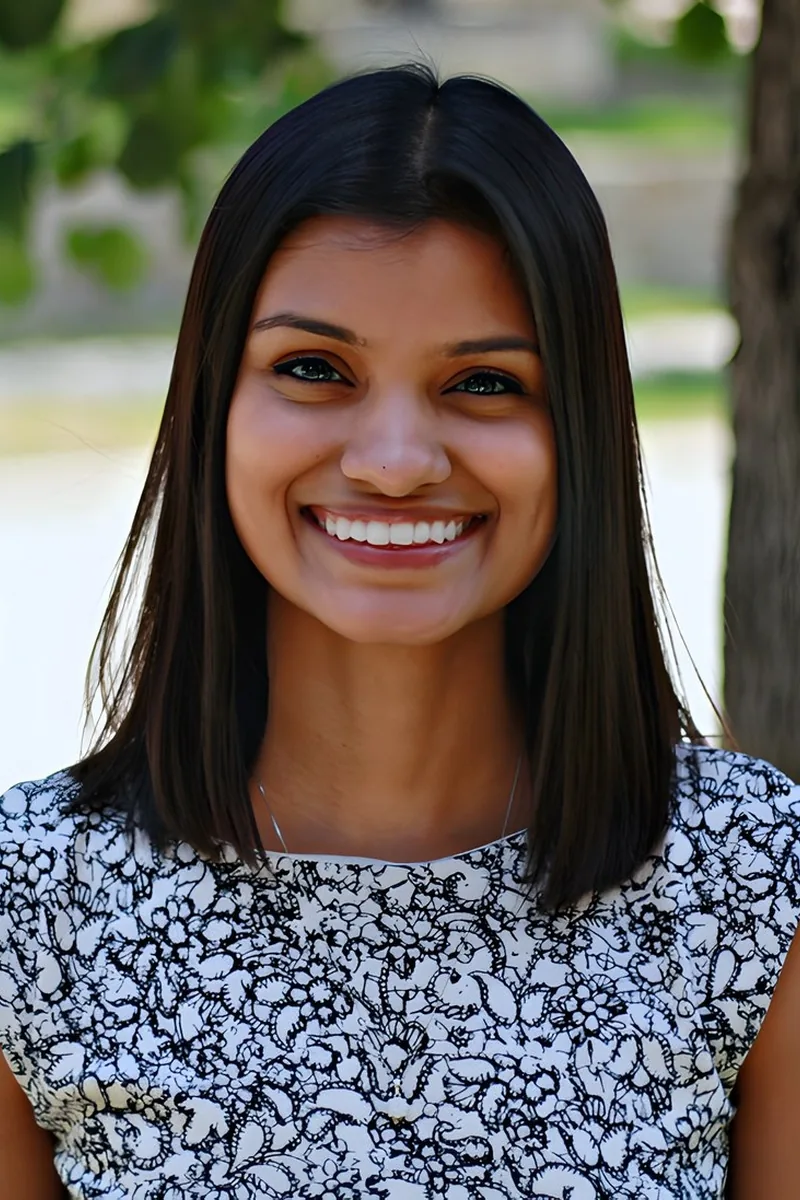
Studying biochemistry and cell biology at Rice means Sugi already had to internalize the thermodynamic and kinetic principles that drive cellular processes — free energy calculations for metabolic reactions, equilibrium constants governing binding events — before tackling them in their pure mathematical form. She unpacks p-chem derivations by linking each variable back to the molecular behavior it quantifies, turning something like a chemical potential expression into a description of what molecules are actually doing at a phase boundary. Rated 5.0 by students.
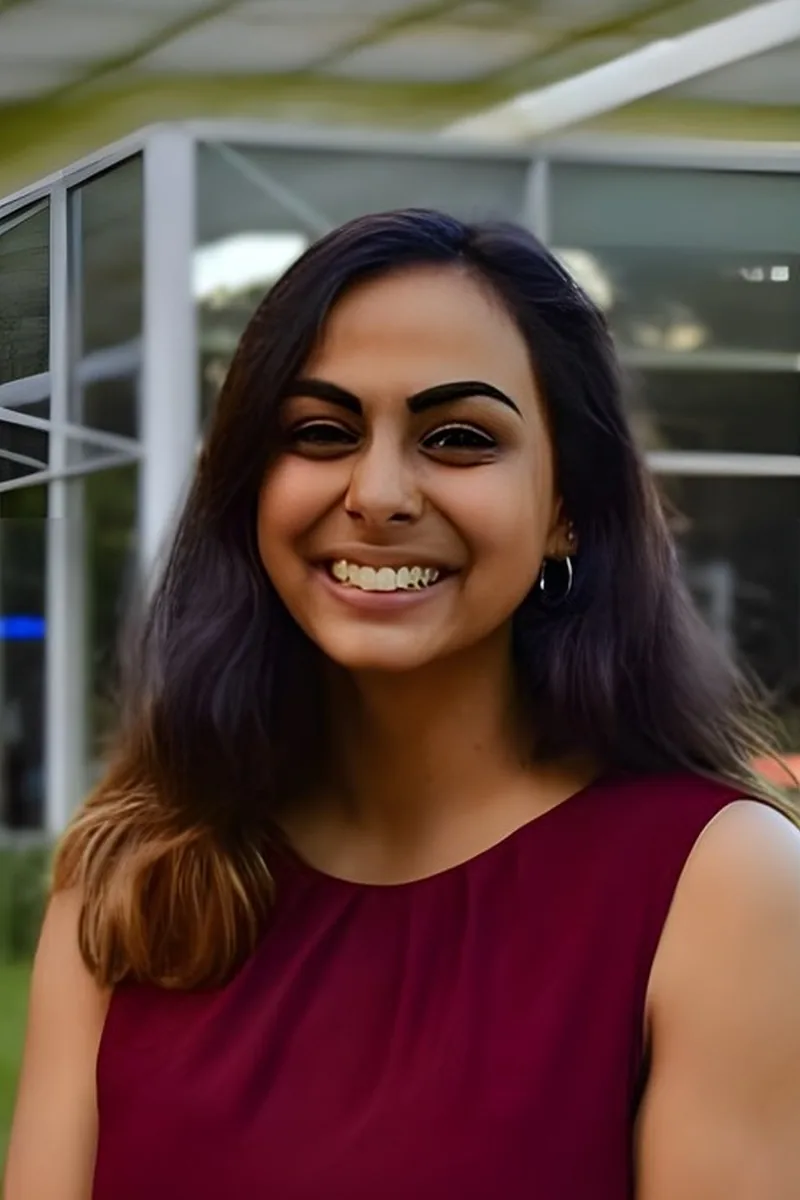
I am most passionate about biology and chemistry. I am a firm proponent of education, believing it to be absolutely necessary for an improved quality of life, and I try to impart this appreciation to all of my students.
Decades as a PhD chemical engineer meant Steven was solving Clausius-Clapeyron problems, reaction kinetics models, and energy balance derivations long before they were textbook exercises — they were daily work. He breaks down p-chem's toughest material by explaining a concept one way, re-explaining it from a different angle, then grounding it in a real engineering application where the math actually matters. Rated 4.9 by students.
Rice's chemistry curriculum put Asad through the full p-chem gauntlet — thermodynamics, quantum mechanics, kinetics — and his path to medical school at UT Houston means he's had to internalize concepts like enthalpy, entropy, and equilibrium well enough to apply them in biological and clinical contexts. That dual pressure of rigorous chemistry coursework and MCAT preparation sharpened his ability to explain why a derivation works, not just how to grind through the math.
Environmental statistics at Rice required Alex to work extensively with the same calculus-heavy quantitative methods — differential equations, statistical modeling, multivariable analysis — that students encounter in thermodynamics and kinetics derivations throughout a p-chem sequence. His geography background adds a surprising edge: understanding energy balances and phase transitions in Earth systems translates directly to making sense of state functions and equilibrium in a chemistry context.
Mechanical engineering at Rice means Aleksey has been solving thermodynamic cycles, heat transfer problems, and differential equations for years — the exact mathematical toolkit that p-chem throws at students in a chemistry wrapper. He breaks down topics like entropy, enthalpy, and phase equilibria by treating them as engineering problems first, then layering in the molecular-level chemistry that gives each variable its meaning. Rated 5.0 by students.
Pre-med coursework at Rice plus dual degrees in environmental sciences and ecology meant Daniel was solving energy balance problems and applying thermodynamic reasoning to natural systems well before encountering p-chem's formal derivations. His lab technician work at Rice keeps the quantitative skills sharp — setting up calculations involving enthalpy, equilibrium, and kinetic models is part of the daily routine, not a distant textbook memory.
Thermodynamics, quantum mechanics, and kinetics all collide in physical chemistry, and the math intensity alone can be overwhelming. As a chemistry major at TCU who's worked through p-chem coursework firsthand, Nathan breaks down derivations — partition functions, the Schrödinger equation, phase diagrams — into manageable logical steps. He connects the heavy math back to the physical meaning so equations stop feeling arbitrary.
Studying chemistry at UT while simultaneously tutoring undergraduates in math, chemistry, and physics gave Joshua a feel for exactly where p-chem's conceptual layers collide — the moment a thermodynamics derivation turns into a calculus problem, or when quantum mechanical notation obscures an otherwise intuitive idea about molecular behavior. He rebuilds those trouble spots by connecting the formalism back to the underlying chemistry, whether the topic is chemical kinetics, phase equilibria, or statistical mechanics.
Chemical engineering at McCombs drilled Mahan in the thermodynamics, reaction kinetics, and differential equations that form the backbone of any p-chem course — he solved energy balances and rate problems daily before ever seeing them dressed up in physical chemistry notation. That engineering instinct for tracking units and boundary conditions through a long derivation pays off when students hit walls with concepts like chemical potential or the Clausius-Clapeyron equation, where one misplaced variable can unravel an entire problem.
I graduated from Saint Louis University with a Bachelor of Science Degree in Biology. Since then, I took the DAT exam and received a very high score, which allowed me to secure interviews from multiple Dental Schools across the country. I'm ready and willing to share the studying skills I acquired during my academic career to make my students' lives easier and achieve success. I was a biology and chemistry tutor at St. Louis Community College, where I led both group study sessions and 1-on-1 tutoring sessions. Every student on this campus had different learning styles and academic backgrounds. Therefore, I adapted my teaching styles to suit each student and make the sessions as efficient as possible. I also have experience tutoring children, including those with learning disabilities. I enjoy tutoring science the most. I love seeing the twinkle in the eye when my students have an "Aha" moment after understanding a new concept, which is which I love my job as a tutor. During my free time, I go to community services, watch soccer, and play guitar.
I grew up in the Boston area and now live in Citrus County, Florida. I graduated from MIT in chemical engineering and worked for many years as a chemical process engineer, so I have a strong background in math and science, especially chemistry and thermodynamics. I've also been granted six U.S. patents. When the pandemic hit us, I moved to Florida and did part-time work as a chess tutor, then became a substitute teacher in the middle and high schools in our district. I enjoyed working with the students, many of whom had difficulty learning in big classes with many disruptions. I found that I could best help these students by using real-world examples to teach difficult concepts in a new way. Often, then, the student would come away with a new perspective and a much better understanding of the concept. I was happy to be able to help. These days as a VT tutor, I continue to use, whenever possible, real-world examples in my own material in chemistry and thermodynamics.
Having studied quantum mechanics and electromagnetism as part of his physics degree, Michael already speaks the mathematical language that makes p-chem so demanding — the wave equations, the statistical distributions, the calculus buried inside every thermodynamic derivation. He teaches from the physics side in, explaining why a Boltzmann distribution or a partition function behaves the way it does before layering on the chemical context that gives it practical meaning.
Cornell's chemical engineering curriculum puts you through p-chem at an intense pace — Rahul graduated magna cum laude, which means he didn't just survive thermodynamics, quantum mechanics, and kinetics but internalized the reasoning behind each derivation. He pushes past rote symbol manipulation to make sure students can articulate why a particular state function applies or what a phase boundary physically represents. Rated 4.9 by students.
Thermodynamics, kinetics, and quantum mechanics all converge in physical chemistry — and that's exactly where Monika's biochemistry and molecular biology training intersects. She breaks down intimidating topics like Gibbs free energy calculations and reaction rate laws by tying them to real chemical systems she studied during her PhD research. Rated 4.8 by students.
I am a public school teacher (Chemistry and Living Environment) but can tutor most sciences. I truly believe in differentiated learning and once I know the learning style of a student, I tailor my teaching style for optimum time usage. I love to utilize stories from my real life experiences in labs to help students understand the implications of their science education.
Biology coursework builds a surprising amount of p-chem intuition — enzyme kinetics, membrane energetics, and metabolic thermodynamics all run on the same free energy and rate equations that dominate a physical chemistry sequence. Ade uses that biological grounding to make abstract derivations tangible, turning something like a Boltzmann distribution into a concrete picture of how molecules actually partition energy across states.
A PhD in biophysical chemistry means Tom didn't just survive p-chem — he built a research career on it, working at the intersection of thermodynamics, quantum mechanics, and molecular behavior where the math has to be airtight. He treats the subject like a language students need to actively speak: drilling derivations and problem sets until manipulating a Maxwell relation or setting up a partition function becomes fluent rather than formulaic.
A biology degree paired with a 34 ACT and coursework heavy in chemistry — including AP Chemistry and college-level physical chemistry — means Joshua already knows what it feels like when the calculus in a derivation starts drowning out the chemistry it's supposed to describe. He tackles topics like partition functions, chemical kinetics, and thermodynamic state variables by rebuilding each derivation from its physical intuition outward, so students can follow not just the math but the molecular story it tells. Rated 4.8 by students.
Scoring in the 98th percentile on the MCAT required Nishant to internalize the thermodynamic and kinetic reasoning that p-chem makes rigorous — enthalpy diagrams, equilibrium constants, and rate law derivations all showed up under intense time pressure before he encountered them in their full mathematical form as a medical student at Case Western. He teaches a physics TA's instinct for applied problem-solving to the calculus-dense material, breaking a topic like a Maxwell relation or a phase diagram into the physical question it's actually answering.
A chemistry B.S. means Edward didn't just pass p-chem — he built his degree around it, working through the thermodynamic derivations, quantum mechanical models, and kinetics frameworks that the course demands at full rigor. That direct grounding in the subject lets him zero in on where a student's understanding breaks, whether it's a shaky grasp of partial derivatives in a Maxwell relation or confusion about what a wave function actually represents. Rated 5.0 by students.
Maurice's teaching background in special education sharpens his ability to break down the layered abstractions in p-chem — when a student is lost inside a Gibbs free energy derivation, he isolates exactly which conceptual step broke down and rebuilds from there. His coursework across calculus, statistics, and chemistry gives him enough quantitative range to walk through the thermodynamic and kinetic formalisms, even if p-chem isn't his deepest specialty.
Testimonials
Because the right Physical Chemistry tutor makes all the difference.
Average Session Rating – Based on 3.4M Learner Ratings
Nearby Physical Chemistry Tutors
Other McAllen Tutors
Related Science Tutors in McAllen
Frequently Asked Questions
Physical chemistry bridges chemistry and physics, focusing on the properties of molecules and how chemical reactions occur at the atomic level. It's challenging because it requires understanding abstract concepts like thermodynamics, kinetics, and quantum mechanics while also applying mathematical skills to solve complex problems. Many students struggle with visualizing molecular behavior and connecting equations to real-world chemical processes.
Students often find thermodynamics (entropy, enthalpy, Gibbs free energy), equilibrium calculations, and kinetics particularly difficult because they require both conceptual understanding and problem-solving skills. Balancing equations, unit conversions, and interpreting graphs are frequent pain points. Personalized tutoring helps break down these abstract concepts into manageable pieces and shows how they apply to real reactions and lab work.
Understanding is far more valuable than memorization in physical chemistry. When you grasp why a formula works and what each variable represents, you can apply it to new problems you've never seen before. A tutor can help you develop conceptual frameworks that make formulas meaningful rather than just something to memorize, which leads to better retention and stronger performance on exams and in lab work.
Physical chemistry labs require you to apply theoretical concepts to real experiments—measuring reaction rates, observing phase changes, or calculating thermodynamic properties. A tutor can help you understand the science behind your lab procedures, interpret your data correctly, and connect experimental results back to the theory. This deeper understanding makes lab reports more meaningful and helps you develop scientific reasoning skills beyond just following instructions.
During your first session, a tutor will assess your current understanding of physical chemistry, identify specific topics causing difficulty, and learn about your learning style and goals. Whether you're struggling with a particular unit, preparing for an exam, or working to improve your overall grade, the tutor will create a personalized plan tailored to your needs. This foundation ensures that every session after builds on what works best for you.
Yes, Varsity Tutors connects students in McAllen with expert tutors who specialize in physical chemistry. Whether you attend one of the local schools in the McAllen area or are taking physical chemistry at a nearby university, you can get matched with a tutor who understands the curriculum and can provide personalized instruction that fits your schedule and learning needs.
Physical chemistry involves abstract ideas that are hard to picture—molecular motion, electron orbitals, reaction mechanisms. A tutor can use diagrams, animations, real-world examples, and step-by-step explanations to make these concepts concrete and visual. By connecting abstract theory to tangible examples, you'll develop mental models that make problem-solving easier and help concepts stick in your long-term memory.
Absolutely. A tutor can help you review key concepts, practice problem-solving strategies, identify your weak areas, and build confidence before exams. Rather than cramming formulas, tutoring focuses on deep understanding and the ability to apply concepts to new problems—exactly what exams test. Many students see significant grade improvements when they work with a tutor in the weeks leading up to midterms or finals.
Let’s find your perfect tutor
Answer a few quick questions. We’ll recommend the right plan and match you with a top 5% tutor.