Award-Winning ACT Reading Tutors
serving El Paso, TX
ACT Reading
Tutors in El Paso
Private 1-on-1 tutoring, weekly live classes for academic support, test prep & enrichment, practice tests and diagnostics, and more to elevate grades and test scores.
Based on 3.4M Learner Ratings
UniversitiesSchools & Universities
DeliveredHours Delivered
ProficiencyGrowth in Proficiency
Who needs tutoring?
No obligation. Takes ~1 minute.
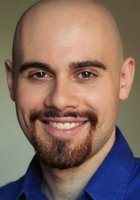
Reading four dense passages in 35 minutes requires a method, not just speed. John breaks the ACT Reading section into a decision-making process: how to skim for structure, when to go back to the text versus trusting your first read, and how to eliminate answer choices that sound right but distort the passage. His 36 composite and background in literature make him especially sharp on the prose fiction and humanities passages.
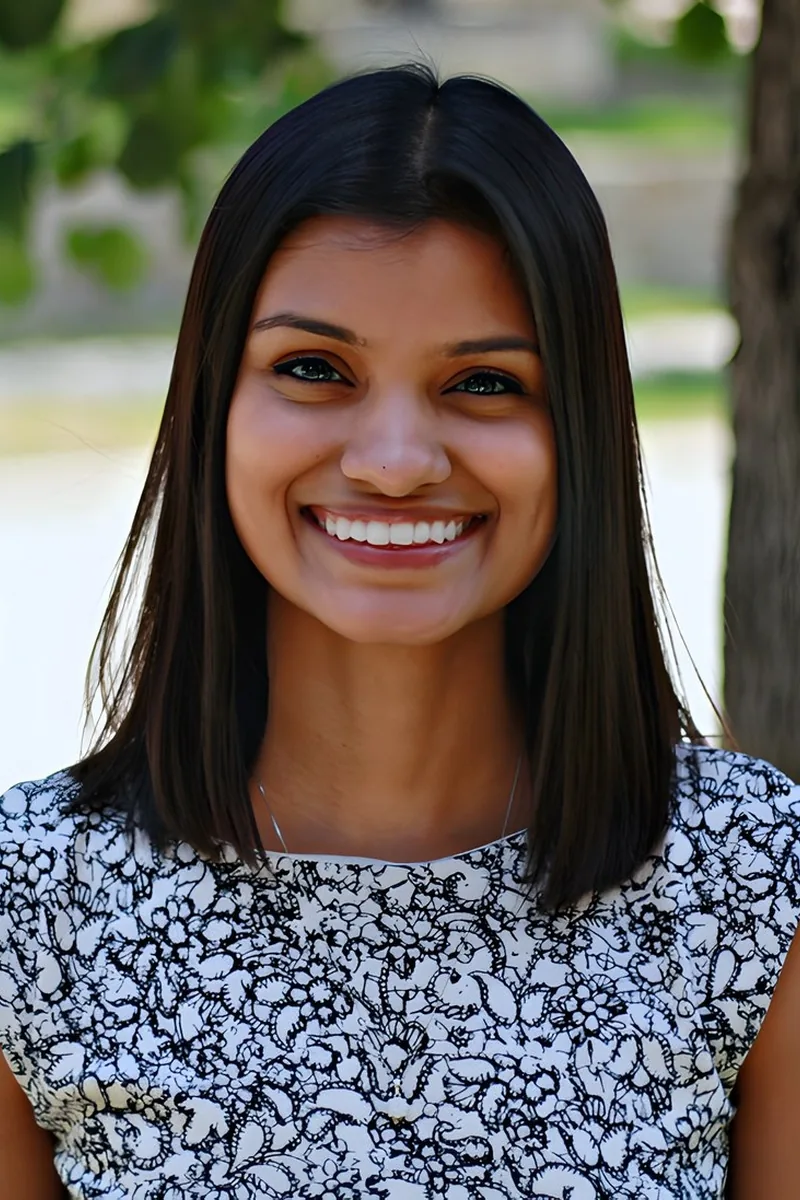
Reading four dense passages in 35 minutes forces a different kind of reading than most students are used to. Sugi's cognitive science training at Rice gives her a framework for teaching active reading strategies — how to map an argument's structure on a first pass so that inference and tone questions become straightforward rather than agonizing. She holds a perfect 36 ACT composite and a 5.0 tutoring rating.
Most ACT Reading mistakes happen not because students can't comprehend the passage but because they spend too long on it and rush the questions. Jiatian teaches a triage method: skim for structure first, then go back to the text with specific question stems in mind. It's the same prioritize-and-filter approach she uses in medical training, applied to literary narratives and social science passages instead of clinical data.
I am an undergraduate of the Johns Hopkins University, majoring in Biomedical Engineering and Computer Science. I have years of experience tutoring and teaching math and various sciences from an elementary to a college level. I primarily tutor college level courses such as physics and biochemistry, but also have extensive experience in social sciences, biology, and higher mathematics such as Calculus and Differential Equations. I believe that demonstrating the various real-world applications of a given concept is the best method to increase a student's understanding.
The ACT Reading section gives students just 35 minutes for four dense passages, which means raw reading speed matters less than knowing where to look. Alyssa teaches a passage-mapping strategy that pinpoints main claims and key details before touching the questions — an approach refined from her own 35 composite score. She's rated 5.0 by students.
I'm currently a freshman at Rice University studying applied math. I've always had a love for sharing knowledge with others, and I started tutoring when I was a junior in high school. As a former AP student and a National AP Scholar, I have the experience necessary to guide my students through challenging curriculum. Though I specialize in tutoring mathematics and physics, I am experienced with and am happy to tutor a broad range of subjects.
The ACT Reading section isn't really about reading — it's about efficiently locating evidence and eliminating wrong answers under tight time pressure. Eisha scored a perfect 36 ACT composite and teaches a strategic approach to paired passages and inference questions that cuts down on second-guessing. Rated 5.0 by students.
Miguel's dual degree in Computer Science and English means he's equally comfortable with logical structure and literary analysis — a combination that pays off on ACT Reading, where students need to parse both natural science arguments and prose fiction with the same precision under time pressure. He teaches students to identify the functional role of each paragraph before looking at questions, which cuts down on the frantic re-reading that eats up minutes on test day. His 35 ACT composite and 4.9 student rating back that up.
I am most passionate about biology and chemistry. I am a firm proponent of education, believing it to be absolutely necessary for an improved quality of life, and I try to impart this appreciation to all of my students.
Between a neuroscience major and NCAA Division 1 athletics at Rice, Brett knows something about processing large amounts of information under time pressure — which is essentially the entire ACT Reading section in a nutshell. He teaches students to prioritize passage structure over passage content, zeroing in on how authors frame their claims so that detail and inference questions become quick evidence checks rather than memory tests. His 35 ACT composite and 5.0 student rating back that up.
I am a graduate of Texas A&M University; I received a Bachelor of Science in Biology along with being a minor in Spanish. I also studied at Plano ISD in high school. As Plano ISD is recognized for its academic achievements and competitiveness, I have always been positively challenged by my curriculum and by my peers to improve and to push myself to excel. From a young age, I have always been a part of the Gifted and Talented program. Trying to challenge myself and wanting to be different, I took a risk and joined the International Baccalaureate (IB) Program, a program that was not as well recognized at the time and was extremely difficult. Joining the IB program was the best decision I have taken thus far. I gained knowledge from all around world- different insights, different histories, different philosophies, different literature, etc.
Most ACT Reading mistakes happen not because students can't comprehend the passage, but because they spend too long on it and rush the questions. Whitney teaches a passage-mapping strategy — identifying the author's argument structure and key claims on the first read — that cuts re-reading time dramatically. She used this approach herself on the way to a 35 composite and a National Merit Finalist designation.
The ACT Reading section isn't really about reading — it's about quickly locating evidence and matching it to answer choices under brutal time pressure. Tim teaches a systematic approach to the four passage types, showing students how to prioritize questions and avoid the traps built into "almost right" answers. His 35 ACT composite and 5.0 client rating speak to how well that approach translates to real score gains.
The ACT Reading section isn't about being a fast reader — it's about knowing what the questions actually ask and where to find the answers. Harsh teaches students to distinguish between "detail" and "inference" question types and to use passage structure to locate evidence quickly, a strategy that helped him earn a 35 composite. His approach turns a section many students dread into one of their most reliable scoring areas.
I'm a student at Vanderbilt University pursuing a BA in Cognitive Studies and a minor in Corporate Strategies. I have worked at the Mama Lere Hearing School at the Vanderbilt Medical Center for deaf preschoolers as well as volunteered as a first grade Sunday School teacher. In addition, I have had multiple ongoing volunteer positions as a tutor in schools in low-income areas in the subjects of Algebra I/II and English Language Arts. I have had the privilege of helping these students rise up beyond the any expectations, and I believe that a large part of their success comes not only from tutoring but from mentorship. Building a strong relationship with the student is first and foremost to being an effective tutor. I have strong skills in assessing the student's needs and meeting them where they are at.
Reading passages on the ACT aren't meant to be enjoyed — they're puzzles with predictable structures, and the answers are almost always sitting in the text rather than requiring interpretation. Adam's 35 ACT composite came partly from treating each passage as an evidence hunt, and he teaches students the same annotation and elimination techniques that make the section feel less rushed.
I am from Portland, Oregon and currently attend school in Dallas, Texas. I enjoy going outside and spending time with friends and family. I would love to help you study and get ahead or catch up in your classes!
An applied math degree might not scream 'reading comprehension,' but Rakhi's training means she approaches ACT Reading passages like logical structures — tracking how each paragraph's evidence connects to the author's central claim, which is exactly what inference and purpose questions test. She drills students on eliminating answer choices by finding the specific textual mismatch, turning the section into a systematic process rather than a guessing game. Her 32 ACT composite and 4.8 student rating back up that analytical approach.
Biochemistry coursework at Rice means Raj spends his weeks digesting research papers packed with competing data interpretations — the same skill the ACT Reading section tests when it asks students to distinguish what an author explicitly states from what a wrong answer subtly distorts. He drills students on eliminating answer choices by pinpointing the exact word or phrase in the passage that confirms or kills each option, a method that's especially effective on the natural science and social science passages where precision matters more than speed. His perfect 36 ACT composite and 5.0 student rating back up that evidence-first approach.
I'm a freshman at Rice University, and planning to major in Mathematical Economic Analysis and Computer Science. I'm also a student athlete and a starting member of The Rice University Men's Golf Team so I understand time is crucial and will do my best to help you understand and not just memorize concepts so you don't have to spend time every week trying to understand the same thing. A lot of math concepts repeat themselves in high school and college. My core is in math and that is where I will be most efficient in helping a student. Aside from that, please let me know if you have any questions or need anything.
I'm starting my junior year at Northwestern University in Evanston, IL. I'm currently getting my degree in biology with a concentration in health and human disease, global health, and a minor in French. I love reading, traveling, learning and helping others learn! I have experience tutoring high school and elementary school students in math, science, and English and I love tutoring in each subject equally. Eventually, I see myself going to medical school and researching topics related to viral diseases which I've been interested in since a very young age. I'm very passionate about the subjects I teach and hope to pass my passion on to the individuals I tutor!
Reading four dense passages in 35 minutes requires more than comprehension — it requires a system. Chaya teaches students how to actively annotate prose fiction, social science, humanities, and natural science passages so they can answer inference and main-idea questions without rereading entire paragraphs. Her literature and reading background at Michigan gives her a sharp eye for the kinds of textual evidence the ACT rewards.
I am a rising sophomore at Rice University in Houston, Texas. I am majoring in Social Policy Analysis with minors in global health technologies and biochemistry and cell biology. I am passionate about refugee advocacy, global health, and women's education. I am also on the pre-med track and hope to go to medical school after Rice. I have tutored for four years in high school and have a younger sibling that I have tutored in the ACT and standardized tests. I am pretty flexible and look forward to working with any new students.
I am a prematriculant student at the University of Chicago. In high school I took advanced STEM courses at the University of North Texas through a high school program called the Texas Academy of Math and Science. I love taking high level math courses, but I get even more excited when I can help friends and classmates in courses I have already taken. I believe that having a solid understanding of math concepts builds you up for success in any field. I have experience as a teaching assistant in pre-calculus and calculus and have experience tutoring and assisting students in high school math, calculus, and differential equations. When preparing students for standardized tests like the ACT and SAT, I focus on filling any gaps in material and teaching new techniques for making the test easier and quicker to take. I have used and perfected these techniques while taking the ACT and SAT myself and have had success on both tests. I am also a National Merit Finalist.
Most ACT Reading mistakes happen not because students misunderstand the passage but because they misread what the question is actually asking — detail retrieval versus inference, author's purpose versus tone. Meghana's English studies give her a sharp sense for how the test constructs wrong answers that sound right, and she walks students through annotation techniques that cut re-reading time on the four-passage, 35-minute sprint.
Scoring a 34 ACT composite means Snipta knows how to move through dense passages quickly and accurately — a skill sharpened by years of parsing technical research at Microsoft and the National Institutes of Health. For the Reading section specifically, she teaches students to identify author purpose, trace argument structure, and eliminate answer choices using textual evidence rather than gut instinct.
I am a third year student at The University of Texas at Austin studying Biomedical Engineering and Computer Science. I have 3 months of online tutoring experience, tutoring both computer science and chemistry. I like the students I tutor to have a hands on approach to learning. The easiest and most fun way to learn is to do. I love watching students use what they've learned to solve real problems.
The ACT Reading section isn't really about reading speed — it's about knowing what to look for before you start a passage. Aurnab, rated 4.9 by students, teaches a question-first approach that turns each 8-minute passage into a targeted search rather than a careful read-through. His 36 composite came partly from mastering the dual-passage comparison format that trips up even strong readers.
Don's favorite test-prep work has always been in reading comprehension, and his 35 ACT composite reflects how well that translates to results. He teaches a passage-mapping technique for ACT Reading that turns the four-passage, 35-minute sprint into a manageable sequence — pinpointing main ideas, locating detail questions without rereading, and handling the dual-passage comparison with confidence.
I am currently a senior at the University of Texas at Austin and graduated from high school in 2022 earning a 4.0 GPA along with a 1530 SAT (800 Math, 730 Reading) and a 34 ACT (30 Math, 34 Science, 35 English, 35 Reading). Achieving these results taught me that strong outcomes come from effective habits, not shortcuts, and I spent years refining study techniques such as active recall and spaced repetition that helped me learn more efficiently and with less stress. These strategies continue to support me in my college coursework and shape how I approach teaching. I began tutoring during high school and quickly discovered how meaningful it was to help other students gain confidence in subjects they once found intimidating. I have experience working one-on-one with middle school and high school students in both volunteer and informal tutoring settings, focusing on math, English, and standardized test preparation. My tutoring style centers on patience and clarity, breaking down complex ideas into manageable steps and reinforcing understanding through practice. I place a strong emphasis on helping students understand how to study effectively, rather than relying on memorization alone. I am comfortable tutoring math and English at all levels, as well as SAT Math and Reading and ACT Math and Reading. Having recently navigated rigorous coursework and competitive testing myself, I understand the pressures students face and strive to create a supportive, encouraging learning environment. My goal is not only to help students improve their grades or scores, but also to equip them with study skills and confidence that will benefit them well beyond our tutoring sessions.
I am currently studying petroleum engineering at The University of Houston. Although I was typically a strong student in all areas throughout high school, there were some teaching styles I encountered that complicated the material more than was necessary. In fact, I avoided certain subjects for several years simply because of one unpleasant introductory class.
I am majoring in Cognitive Sciences with the intention of getting into Medical school.
I am a graduate of the Johns Hopkins University with a major in Behavioral Biology. I am seeking admission to MD/PhD programs so a lot of my time has been spent in the lab, from a computational neuroscience lab at Hopkins to a genome editing lab at Rice. That being said, I have extensive experience tutoring for the ACT (35) and MCAT (516), both privately and contractually. I aim to get students the score of their dreams. With a solid plan of action and dedication YOU can get there.
I'm a senior at UT Austin studying biology pre-med with a certificate in business foundations. I remember high school being tough and teachers couldn't really help me one-on-one, so I'm here to help you with anything you may be struggling with!
I'm a Chemical Engineering major at the University of Texas at Austin with a strong passion for teaching. I enjoy helping students in biology, algebra, and chemistry, focusing on building meaningful relationships that make learning engaging and approachable. Teaching not only strengthens my own understanding but also allows me to see the impact of confidence and curiosity in others. Outside of academics, I love staying active through hiking and playing sports like basketball. I also enjoy exploring new food spots, which gives me a chance to connect with different cultures and experiences.
I am a rising sophomore in Georgetown University's School of Foreign Service. I am majoring in security studies thinking about working in counterterrorism. As far as tutoring style, I think it is really important not to give the student the answers but to ask them questions and help them come up with strategies to get to the answer for themselves; the goal is to make myself unnecessary in a way. My strengths (in school and tutoring) are in foreign languages including Latin and humanitiesexpect a very enthusiastic tutor especially if we are talking about Shakespeare! I also think it is important to try and frame things in a context students are used to, so if that means watching She's the Man in order to understand Twelfth Night, then that's what we will do (although we do have to read the actual play as well). If that sounds like something you could use, get in touch!
I am currently a student at the University of California at Berkeley. I have worked children of all ages, from kindergarten to high school. During my senior year in high school, I tutored fellow students in SAT and ACT prep, as well as various math and science courses. I enjoy teaching a variety of subjects, but my favorites are math and English. I enjoy getting to know each student and design my curriculums based on each student???s needs. In my spare time, I play the piano, violin, and guitar.
I am currently a student at the University of Texas-Austin, and in the Honors Biomedical Engineering Program. Throughout high school and into college, I have tutored students of all ages; anywhere from my employment at a mathematics tutoring center to private lessons for students my age. Other parts of my life include playing sports (tennis, soccer, ping pong, basketball), jamming on the piano, and doing extracurriculars at school.
Scoring a perfect 36 ACT composite means Lila knows what it feels like to manage all four Reading passages under real time pressure — and her political science coursework at Rice, heavy on policy briefs and competing legal arguments, built the rapid-synthesis habit that keeps the social science and humanities passages from becoming time sinks. She teaches students to zero in on how answer choices subtly shift an author's scope or tone, turning tricky inference questions into straightforward elimination exercises.
Most students lose points on ACT Reading not because they can't comprehend the passages but because they spend too long re-reading and run out of time. Paul, who scored a 34 composite, teaches a passage-mapping strategy that pinpoints where answers live so students can move through all four passages confidently within the 35-minute window.
Testimonials
Because the right ACT Reading tutor makes all the difference.
Average Session Rating – Based on 3.4M Learner Ratings
Practice ACT Reading
Free practice tests, flashcards, and AI tutoring for ACT Reading
Nearby ACT Reading Tutors
Other El Paso Tutors
Related Test Prep Tutors in El Paso
Frequently Asked Questions
Score improvement depends on your starting point and commitment to practice. Students often see 2-4 point gains within 8-12 weeks of focused tutoring, though some see larger jumps when addressing specific weaknesses like pacing or question comprehension. The key is identifying which reading strategies aren't working for you and practicing them consistently—tutoring helps accelerate this process by targeting your exact challenges rather than generic test prep.
Many students struggle to finish all five passages in 35 minutes while maintaining accuracy. Tutors help you develop a personalized pacing strategy—whether that's adjusting how long you spend on each passage, learning to skim strategically, or prioritizing questions by difficulty. The goal isn't just speed; it's finding the right balance between reading comprehension and time management that works for your brain.
Yes—inference questions and "big picture" questions about main ideas often challenge students because they require deeper comprehension than literal detail questions. Many students also struggle with questions asking you to identify an author's tone or purpose. Tutors can teach you the specific strategies for each question type, like how to spot clues for inference questions or how to distinguish between what the passage says and what it implies.
Tutors start by having you take a practice test or diagnostic, then analyze which passages, question types, and skills are causing the most problems. For El Paso students working with tutors, this might reveal patterns like struggling with science passages, missing inference questions, or running out of time on the last passage. Once you know your specific weaknesses, tutoring focuses on those areas rather than reviewing material you already know.
Taking 4-6 full practice tests under timed conditions is ideal for building stamina and identifying patterns in your mistakes. Tutors typically have you take one at the start to establish a baseline, then space additional tests throughout your tutoring period to track progress. Between practice tests, you'll focus on targeted drills for specific question types and passages, so each test serves a purpose rather than just being repetitive.
Test anxiety often stems from feeling unprepared or unsure about your strategies. When you work with a tutor, you build confidence through repeated practice with real test questions and proven techniques, which reduces anxiety on test day. Tutors also teach you practical strategies like how to manage time pressure, what to do if you get stuck on a passage, and how to stay focused—all of which help you feel more in control during the actual test.
Most students benefit from 1-2 tutoring sessions per week for 8-12 weeks leading up to test day, with each session lasting 60-90 minutes. Between sessions, you'll do independent practice on specific skills your tutor identifies. The exact schedule depends on your current score, target score, and how much time you can dedicate to studying—tutors work with you to create a realistic plan that fits your life.
Look for tutors with strong ACT Reading scores themselves and experience teaching test-taking strategies, not just general reading skills. They should be able to explain why certain answers are correct, teach you multiple strategies for different question types, and adapt their approach based on your learning style. Varsity Tutors connects you with tutors in El Paso who specialize in ACT Reading and can provide the personalized instruction that works best for your goals.
Let’s find your perfect tutor
Answer a few quick questions. We’ll recommend the right plan and match you with a top 5% tutor.