Award-Winning AP Calculus BC Tutors
serving Denton, TX
AP Calculus BC
Tutors in Denton
Private 1-on-1 tutoring, weekly live classes for academic support, test prep & enrichment, practice tests and diagnostics, and more to elevate grades and test scores.
Based on 3.4M Learner Ratings
UniversitiesSchools & Universities
DeliveredHours Delivered
ProficiencyGrowth in Proficiency
Who needs tutoring?
No obligation. Takes ~1 minute.
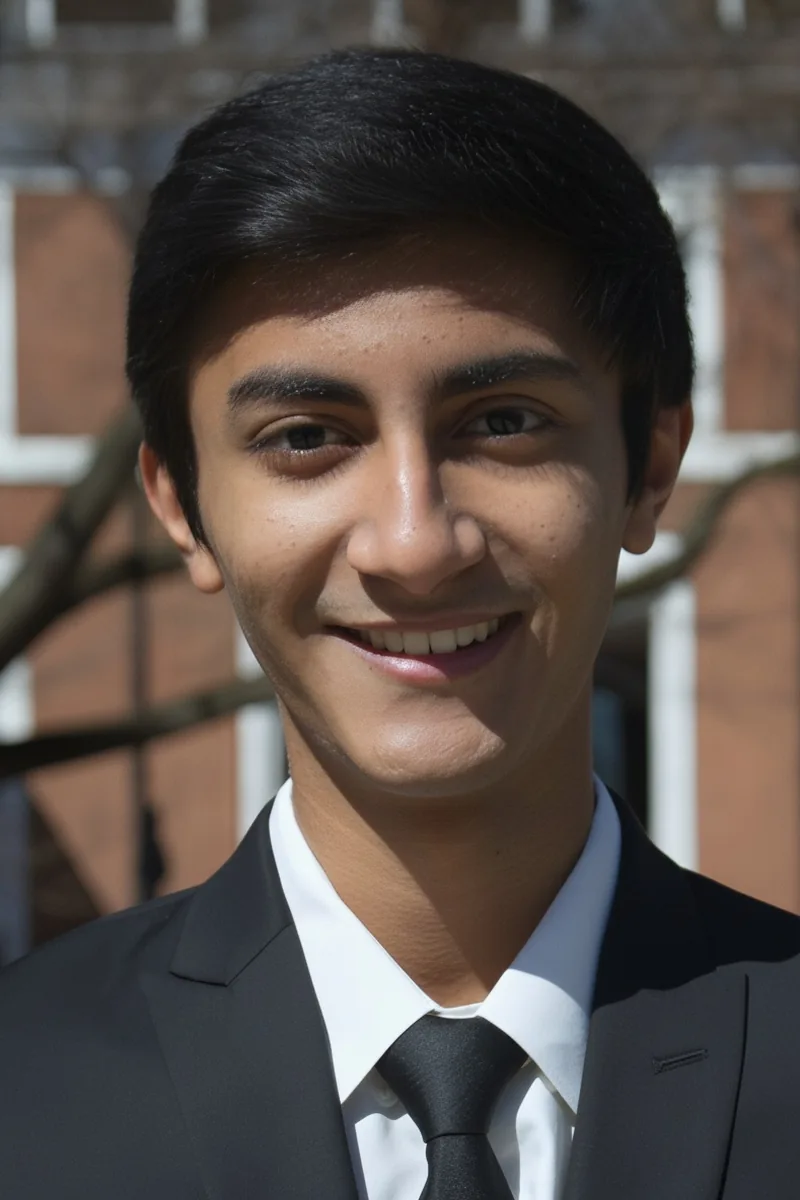
Biomedical engineering at Johns Hopkins means Bidyut uses series approximations and differential equations to model biological systems — the same convergence tests and integration techniques that define the BC curriculum beyond AB. He's especially sharp at showing how a topic like Taylor polynomial error bounds connects back to the derivative reasoning students already trust, turning what feels like a wall of new material into a logical extension. Holds a 5.0 rating and a 36 ACT composite.
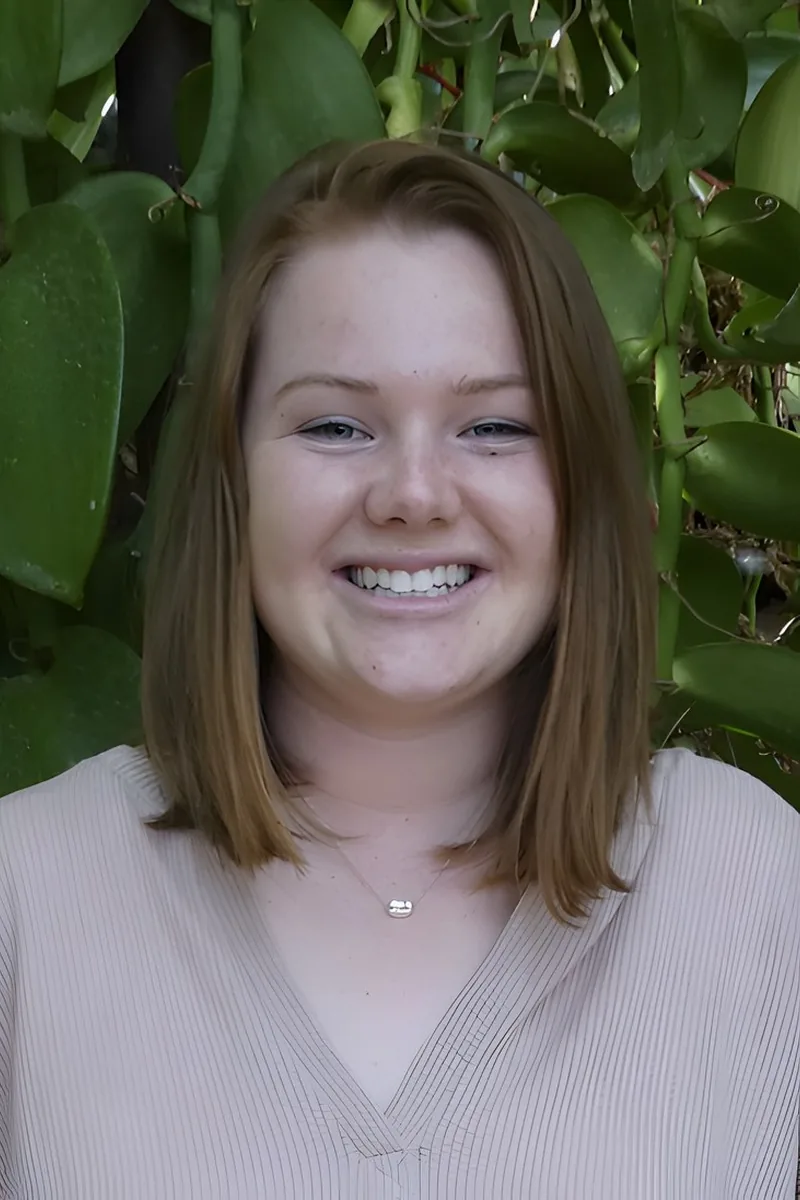
Mackenzie scored a 35 on the ACT and tutors math at every level from elementary through AP, which means she knows exactly which algebra and AB gaps trip students up once BC introduces new integration techniques and series. She walks through problems like setting up improper integrals or applying ratio tests by tracing each step back to the reasoning behind it, so students build intuition they can rely on during the exam.
Most BC students can mechanically apply a ratio test or crank out a Taylor expansion — where they get stuck is understanding *when* each tool is the right one and *why* it works. Alexander, an applied math major at Rice with a 1580 SAT, approaches BC as a problem-solving course rather than a formula catalog, building each new concept from the reasoning students already developed in AB. That mindset is especially useful for the trickier BC territory — convergence arguments, error bounds, and parametric integration — where intuition matters more than memorization.
Studying both mathematics and computer science at Rice, William is taking the courses that treat BC topics like series convergence and parametric integration as foundational tools rather than standalone exam material. His 1540 SAT reflects the kind of precise, structured reasoning he brings to breaking down the jump from AB to BC — especially when Taylor polynomial construction or convergence tests start feeling like they came out of nowhere.
BC Calculus layers convergence tests, parametric equations, and polar curves on top of an already demanding AB foundation, and the pacing leaves little room to fall behind. Vinson earned a 36 ACT and National AP Scholar distinction while building the kind of deep mathematical fluency that makes series analysis and integration techniques click. He breaks each new BC topic into the AB concept it extends, so the jump never feels arbitrary.
Having TA'd Calculus I and II at Rice while pursuing a graduate degree in computational and applied mathematics, Sakibul knows exactly where the AB-to-BC transition trips students up — particularly when series convergence and parametric differentiation demand a sharper kind of reasoning than anything before. He breaks down topics like interval of convergence arguments and integration techniques by rebuilding the logic from scratch rather than handing over shortcuts. His applied math background means he treats Taylor approximations and error bounds as precision tools, not abstract busywork.
Kenan's mathematical economics training means he's comfortable with the kinds of series, parametric equations, and integration techniques that make BC a step up from AB. He walks through convergence tests and Taylor polynomials by connecting each tool to the problem it was invented to solve, which keeps the logic clear even when the notation gets dense.
Two years tutoring Calculus I and II through Princeton's McGraw program gave Samantha a deep familiarity with the BC curriculum's trickiest territory: Taylor series, parametric and polar functions, and convergence tests. She breaks these topics into intuitive steps, building on the AB foundation so that new concepts feel like natural extensions rather than separate hurdles.
BC Calculus throws students into deep water fast — Taylor and Maclaurin series, parametric equations, and convergence tests all pile up in the second semester. Jacob is a pure math PhD student at Boston College who teaches these topics by connecting them to the underlying theory, so students understand *why* a series converges rather than just which test to apply. Rated 5.0 by students.
Mechanical engineering demands fluency with parametric equations and series approximations long before most students feel comfortable with them — Daniel's BS in the field means he learned these BC topics under pressure and knows exactly which conceptual gaps cause the most trouble. He breaks down polar area integrals and integration techniques by tracing each step back to the core AB reasoning, so the new material feels like a natural extension rather than a second course worth of memorization.
Two years running drop-in calculus sessions at UT Dallas' Peer Tutoring Program meant Alisa saw dozens of students hit the same BC sticking points — polar area integrals, choosing the right convergence test under pressure, and making sense of parametric derivatives when the geometry stops being intuitive. Her electrical engineering graduate work keeps those tools sharp, since signal analysis leans heavily on the series and integration techniques BC covers. Rated 5.0 by students.
Applied physics at the undergraduate level means Christina spent years relying on series approximations, parametric motion equations, and integration techniques to solve real problems — the same toolkit that defines the BC curriculum beyond AB. She's particularly sharp at walking through convergence tests as a logical sequence of questions rather than a memorized checklist, which tends to be the piece that finally unlocks the series unit for struggling students. Rated 4.9 by students.
Linguistics trains you to see structure in complexity — breaking language into phonological rules, syntactic trees, and morphological patterns — and Mathilde applies that same decomposition skill to BC Calculus, where students need to untangle layered problems involving series, parametric equations, and advanced integration techniques. She zeroes in on convergence tests by teaching students to read the structure of a series the way a linguist reads a sentence: identify the parts, apply the right rule, and know why it works.
BC Calculus covers a massive amount of ground, from parametric equations and polar curves to Taylor series and convergence tests. Ellyn's engineering background means she doesn't just teach the procedures — she explains the geometric and physical intuition behind each concept, which is exactly what the free-response section rewards. Rated 5.0 by students.
Biomedical engineering coursework means Huan encounters series approximations and integration techniques in contexts like modeling biological signals and physiological systems — so when a BC student asks "why does this convergence test matter," he has concrete answers ready. He's especially sharp at isolating the moment where AB reasoning ends and BC reasoning begins, which keeps topics like polar area integrals and the Lagrange error bound from feeling like they dropped out of nowhere. Rated 5.0 by students.
Biomedical engineering at UT Austin doesn't let you skate by on surface-level calculus — Felipe has worked through series convergence, parametric equations, and differential equations in contexts where getting the math wrong means getting the science wrong. That depth shows when he teaches BC-specific topics like Taylor polynomials and integration techniques, connecting each one to why it matters beyond the exam. He scored a 1480 SAT and 34 ACT, so he understands how to perform under timed, high-stakes conditions.
In electrical engineering, you don't just integrate a transfer function — you need to know whether the series representation you're working with actually converges and how tightly your polynomial approximation tracks the real behavior. Tim's EE honors degree means he learned BC staples like improper integrals, convergence criteria, and Taylor expansions as engineering necessities, and he teaches them with that same practical directness. Rated 5.0 by students.
Petroleum engineering at the University of Houston means Austin is actively using integration techniques and series approximations in coursework on fluid dynamics and reservoir modeling — so when a BC student asks "when would I ever need this?," he has real answers. His 1570 SAT and 34 ACT reflect the kind of precise, systematic thinking he brings to breaking down convergence tests and parametric problems into steps that actually make sense. Rated 5.0 by students.
Convergence tests, polar coordinates, and series expansions are where BC diverges from AB — and where many students lose their footing. Yuanxin tackles these topics by connecting them back to the engineering applications she studied at The Chinese University of Hong Kong, making abstract series behavior feel concrete and purposeful.
I am qualified to tutor many subjects, my favorite subject by far is math, specifically calculus. Math is a subject almost universally hated, and I believe that is mainly due to the narrow way in which it is taught. I have ADHD, and I often don't understand things the first time they are explained to me, meaning over the years I have had to figure out different ways of looking at information. Oftentimes, all a student needs is for something to be explained in a different way, and I love watching people finally understand a concept. Everyone learns differently, but everyone can learn.
Mechanical engineering at UT Austin means Shroothi is actively using series expansions to model physical systems and integration techniques to solve dynamics problems — so when she teaches BC topics like Taylor polynomials or convergence tests, she's drawing on tools she applies in her own coursework weekly. She's especially sharp at breaking down the transition from AB to BC, showing how parametric derivatives and polar area integrals grow directly out of the foundational calculus students already trust. Rated 5.0 by students.
I am both a native English and Spanish speaker. Thanks to living all around, I've found it important to adapt to every individual and find the most comfortable way of teaching and helping, whether that means translating English, Spanish, or math. My B.S. is in Mathematics and I am a current Economics PhD student.
Electrical and computer engineering at Rice means Omar works with series expansions and differential equations as everyday tools — designing filters, analyzing circuits, modeling signal behavior — so BC topics like Taylor polynomials and convergence tests carry real meaning for him. He connects each new BC concept to the AB reasoning underneath it, which keeps students from treating the course as a pile of disconnected formulas. Rated 5.0 by students.
Chemical engineering at UT Austin's Cockrell School means Ria is actively using series approximations and integration techniques in her thermodynamics and reactor design courses — so when she teaches Taylor polynomial construction or convergence tests, she can ground them in problems she's solving this semester. Her 1480 SAT and 5.0 tutoring rating back up what her engineering training suggests: she knows how to make the AB-to-BC jump feel like a natural step rather than a sudden cliff.
Laila's math degree at UT Austin means she's working through the rigorous proofs and theory behind the techniques BC students encounter — so when a topic like series convergence or integration by parts feels like arbitrary rule-following, she can trace it back to the underlying logic that makes it click. She's especially strong in discrete math and algebraic reasoning, which sharpens how she breaks down the structured, step-by-step thinking BC problems demand.
Computational engineering at UT Austin is where calculus stops being a class and starts being the language — Atharva uses series approximations, parametric models, and multivariable techniques in his actual coursework, which gives his BC tutoring a fluency that's hard to fake. He's particularly sharp at walking through the logic of convergence tests, treating each one as a question with a clear decision rather than a memorized checklist. Rated 5.0 by students.
BC Calculus layers on series convergence, parametric equations, and polar coordinates in ways that can feel disconnected from AB material. Austin breaks down each new concept by tying it back to the core calculus intuition students already have, building fluency with Taylor series and integration techniques along the way. His 1520 SAT and mechanical engineering coursework at Purdue reflect deep comfort with this level of math.
Having once genuinely disliked math before someone showed her the reasoning behind each step, Samantha brings that conversion story directly into how she teaches BC — she breaks down why a particular convergence test applies or how a Taylor series is built from successive derivatives, not just the mechanical steps to get an answer. Her UChicago physics and astrophysics training meant working with series approximations and integration techniques as essential tools for modeling real physical systems. That background keeps her explanations grounded in purpose rather than abstraction.
Bioinformatics lives at the intersection of math and biology, and Hamza's degree in the field meant working through the full calculus sequence — including the series expansions and integration techniques that form BC's core — as foundational tools for modeling biological systems. His perfect 1600 SAT speaks to the kind of precise, methodical reasoning that pays off when students are navigating convergence tests or constructing Taylor polynomials under exam pressure. Rated 4.6 by students.
Christi is finishing a graduate degree in chemical engineering while holding a mechanical engineering bachelor's — a combination that means she's solved real problems using improper integrals, series approximations, and differential equations across two demanding disciplines. When a BC student gets tangled in, say, the logic behind a particular convergence test, she traces it back to the underlying limit behavior rather than just drilling the procedural steps.
Series convergence is where BC separates itself from AB, and it's where most students start second-guessing every step — ratio test or root test? Taylor or Maclaurin? Miguel breaks down each convergence test by building intuition for what the series is actually doing, then layers in the formal justifications the AP graders look for. His dual background in computer science and English means explanations are both logically tight and clearly written.
My name is Raghav and I am excited to be your tutor. With years of experience, I've uncovered valuable strategies that helped me excel, and I'm eager to share them with you. Tutoring is my passion, and I'm dedicated to helping students like you reach their academic goals. Having successfully worked with over 100 students from various countries and subjects for over a year, I'm confident I can assist you in achieving your goals. Since each student learns differently, I adapt my teaching to your unique learning style, ensuring that you grasp the material thoroughly. At the moment, I am studying Aerospace Engineering at the University of Illinois at Urbana-Champaign and I am a private pilot working on my instrument rating(I'd love to chat about it with you). With me as your tutor, you will get someone patient and willing to explain everything in detail. I am particularly specialized in Math such as AP Calculus amd beyond, Sciences such as AP Physics, and AP Economics as well as SAT/ACT.
As a mathematics major at Texas A&M, Jonathan lives inside the theory that makes BC's trickiest units — convergence tests, polar area integrals, series representations — actually make sense instead of feeling like disconnected formulas. His 34 ACT and four years of teaching mean he knows both the math and the specific places students stall, so he can pinpoint whether a struggle with, say, the Lagrange error bound is really a gap in understanding polynomial approximation. He builds each BC concept from its mathematical logic rather than just drilling procedures.
When BC topics like series convergence or parametric derivatives start piling up, the real problem is often a shaky connection to the AB ideas they grew out of — and Muhammad's electrical engineering training means he's had to rebuild those connections himself under pressure, using integration techniques and differential equations to analyze circuits and signals. He teaches BC by making that chain of reasoning explicit, so a student staring down a ratio test or an improper integral can trace it back to something solid.
BC Calculus piles on convergence tests, parametric equations, and polar coordinates on top of everything AB already covers — so gaps compound fast. Jett's engineering coursework at UT Austin means he uses series expansions and integration techniques daily, and he can show students how each BC-specific topic connects to real applications. Rated 5.0 by students.
Biomedical engineering at UT Austin means Muhammad is solving differential equations and building series approximations in his coursework right now — the same BC topics that trip students up when they feel disconnected from anything real. His experience as Lead Assistant at Kumon, where he specifically tutored advanced calculus, sharpened his ability to trace a shaky convergence test or parametric problem back to the AB-level derivative or integral concept that needs reinforcing.
Having earned a perfect 1600 SAT, Sandra brings rigorous problem-solving instincts to the trickiest BC territory — she's especially sharp at walking students through the logic of series convergence, where knowing which test to reach for and why matters more than memorizing a checklist. Her computer science background at the undergraduate level also means she thinks algorithmically about multi-step integration and recursive sequences, giving students a structured way to attack problems that feel overwhelming. Rated 5.0 by students.
Electrical engineering at UIUC means Ramsey is actively using series expansions to analyze circuit behavior and integration techniques to model signal responses — so when he teaches convergence tests or constructs a Taylor polynomial in BC, he's drawing on tools he applies in his own coursework daily. His 1500 SAT and National AP Scholar recognition point to someone who learned to move fluidly between AB foundations and the more abstract BC extensions, especially the leap into parametric and polar problems where students often stall.
Convergence tests, parametric equations, and Taylor series expansions make BC the course where strong calculus students suddenly feel lost. David teaches these topics by building on AB concepts students already know, showing how each new idea extends something familiar rather than appearing out of nowhere. His Honors economics program at Clemson requires heavy use of multivariable and series-based math, so these tools stay sharp for him.
Engineering students at Texas A&M hit BC Calculus concepts like series expansions and integration techniques before they ever show up in their engineering courses — Logan is living that overlap right now, which means he teaches convergence tests and parametric problems with the perspective of someone actively applying them in coursework, not just recalling them from an old exam. He's particularly strong at bridging the jump from AB to BC, breaking down where new ideas like improper integrals or Taylor polynomials grow out of limits and derivatives students already know. Rated 5.0 by students.
Testimonials
Because the right AP Calculus BC tutor makes all the difference.
Average Session Rating – Based on 3.4M Learner Ratings
Practice AP Calculus BC
Free practice tests, flashcards, and AI tutoring for AP Calculus BC
Nearby AP Calculus BC Tutors
Other Denton Tutors
Related Math Tutors in Denton
Frequently Asked Questions
AP Calculus BC builds on AB concepts and covers limits, derivatives, integrals, differential equations, sequences, and series. The exam tests your ability to work with functions, understand rates of change, solve optimization problems, and apply calculus to real-world scenarios. Most students spend the year progressing from foundational derivative and integral concepts to more advanced topics like parametric equations and polar coordinates.
Score improvement depends on where you're starting and how much you practice. Students who work consistently with personalized 1-on-1 instruction typically see gains of 1-2 points on the AP scale (out of 5), though some improve more depending on their baseline and effort. The key is identifying your specific weak areas—whether that's integration techniques, series convergence, or free-response problem solving—and targeting those through focused practice and feedback.
Many students struggle with the pace of AP Calculus BC, especially the transition from AB concepts to BC-specific topics like series and parametric equations. Time management on the exam is another major challenge—students often spend too long on multiple-choice questions and rush through free-response problems. Additionally, understanding when to apply different techniques (like integration by parts vs. substitution) and recognizing question formats can be difficult without targeted practice and expert guidance.
The AP Calculus BC exam has two sections: multiple-choice (45 questions, 105 minutes) and free-response (6 problems, 90 minutes). A smart strategy is to spend about 2 minutes per multiple-choice question, flagging harder ones to revisit. For free-response, show all your work even if you can't finish—partial credit is valuable. Practice full-length exams under timed conditions to build pacing skills, and review your mistakes to identify patterns in what trips you up.
Varsity Tutors connects you with expert tutors who can break down complex topics like series convergence or parametric differentiation into understandable steps, identify your specific weak areas through practice problems, and teach you test-taking strategies tailored to how you learn best. Personalized 1-on-1 instruction is especially valuable for AP Calculus BC because tutors can adjust pacing, focus on your problem areas, and give you immediate feedback on free-response problem solving—something you won't get in a large classroom.
Most students benefit from consistent practice throughout the year, but if you're preparing in the final months, aim for 3-4 hours of focused study per week. This should include a mix of topic-specific practice problems and full-length practice exams. Taking at least 2-3 complete practice tests under timed conditions in the weeks before the exam helps you build stamina, refine your strategy, and identify any remaining gaps—your tutor can help you analyze what went wrong and adjust your approach.
Varsity Tutors matches you with expert tutors who have deep knowledge of AP Calculus BC and understand the exam format, common pitfalls, and effective teaching strategies. When you connect with a tutor, you can discuss your current level, specific challenges, and timeline so they can tailor their approach to your needs. The personalized matching process ensures you get someone who's a good fit for how you learn.
Your first session is typically a chance for your tutor to understand where you are in the curriculum, what topics feel solid, and where you're struggling. You might work through a few problems together to identify patterns in your thinking, discuss your goals and timeline, and create a plan for upcoming sessions. This foundation helps your tutor design personalized instruction that targets your specific needs rather than generic test prep.
Let’s find your perfect tutor
Answer a few quick questions. We’ll recommend the right plan and match you with a top 5% tutor.