Award-Winning Statistics Tutors
serving Denton, TX
Statistics
Tutors in Denton
Private 1-on-1 tutoring, weekly live classes for academic support, test prep & enrichment, practice tests and diagnostics, and more to elevate grades and test scores.
Based on 3.4M Learner Ratings
UniversitiesSchools & Universities
DeliveredHours Delivered
ProficiencyGrowth in Proficiency
Who needs tutoring?
No obligation. Takes ~1 minute.

An economics degree means Maggie didn't just study statistics in a textbook — she applied distributions, hypothesis testing, and regression analysis to real datasets. She teaches students to interpret what a p-value actually tells them and how to choose the right test for a given scenario, building the kind of statistical intuition that carries through exams and research projects alike.
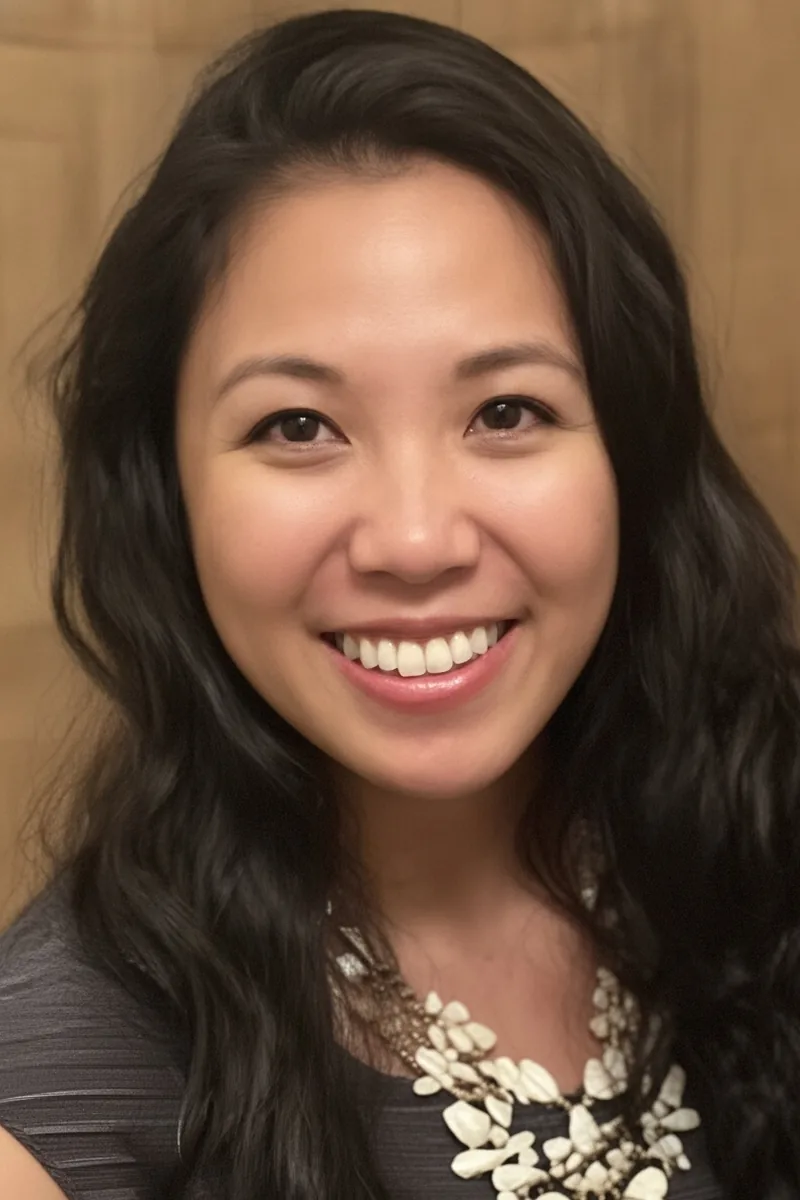
The hardest part of statistics for most students isn't the math — it's interpreting what a p-value or confidence interval actually means in context. Vy's training in cognitive studies at Vanderbilt, which is heavily research-methods driven, means she's spent real time designing studies and running analyses. She unpacks concepts like distributions, hypothesis testing, and regression by tying them to concrete research questions.
Studying economics at Brown meant Carter lived inside datasets — running regressions, testing hypotheses, and interpreting distributions long before he started tutoring. That firsthand experience makes him especially effective at teaching concepts like standard deviation, normal models, and conditional probability in ways that feel grounded rather than abstract. He's rated 5.0 by students.
Studying cognitive science at Rice required Adam to run experiments, interpret data sets, and draw conclusions from statistical tests — so he teaches statistics as a practical reasoning tool, not just a math course. Whether it's regression analysis, p-values, or probability distributions, he connects each topic to real research questions that make the material intuitive.
As experienced and passionated educator with a Bachelor's degree in Computer Science from Rice University, I am passionate about empowering students to achieve their academic goals. With over 3 years of tutoring experience in subjects such as AP Computer Science A, Machine Learning, and SAT Math, I adapt to different learning styles and create a supportive learning environment. My teaching philosophy centers on personalized instruction, where I connect with each student to understand their unique learning styles and challenges. I take pride in guiding students through the complexities of computer science and college application essays, equipping them with the skills they need for future success. Outside of tutoring, I enjoy exploring new technologies and engaging in coding projects to improve my teaching approach.
Understanding when to use a standard deviation versus an interquartile range — or why a skewed distribution changes your entire analysis — requires more than formula memorization. Vinson approaches statistics through data interpretation first, walking through probability distributions, hypothesis testing, and regression with an emphasis on what the numbers actually tell you. He's studying computational math at Rice, where statistical reasoning is woven into his daily coursework.
Studying mathematical economic analysis means Kenan lives in the world of probability distributions, hypothesis testing, and regression — the exact toolkit a statistics course demands. He unpacks concepts like p-values and confidence intervals by tying each one to a concrete decision it would inform, so the reasoning sticks long after the formula sheet is gone.
The IB Mathematics program threw Kinjal into statistics early — designing internal assessments that required real data collection, chi-square tests, and interpreting results under strict analytical standards. That experience, combined with her biology training at Texas A&M where statistical analysis underpins every lab report, means she teaches concepts like correlation, sampling, and variability as practical tools rather than isolated formulas. Rated 5.0 by students.
Engineering coursework forced Jonathan to live inside probability distributions, hypothesis testing, and regression analysis long before he started tutoring. He breaks statistical concepts into the same logical framework he uses for any problem: what information do you have, what assumptions can you make, and what conclusion follows? That structured approach makes even tricky topics like confidence intervals and p-values more intuitive.
Cognitive science leans heavily on statistical reasoning — from designing experiments to interpreting p-values and regression models — so Nikit has spent years applying these tools in real academic contexts. He breaks down concepts like probability distributions, hypothesis testing, and confidence intervals by connecting them to concrete research questions rather than abstract formulas.
Alexander calls statistics his favorite subject for a specific reason — it's where calculus, algebra, and real-world modeling all converge, and his math degree at Rice gave him the tools to teach that convergence clearly. His coursework in risk analysis means he can show students how concepts like expected value, variance, and probability distributions actually drive decisions outside the classroom. Rated 5.0 by students.
Psychology research runs on statistics — hypothesis testing, regression, confidence intervals — and Enstin spent his time at Rice applying these tools firsthand as a psychology major. That research context makes abstract concepts like p-values and standard deviation feel purposeful rather than arbitrary. He walks students through both the calculations and the reasoning behind choosing the right test for a given dataset.
Having scored a 1570 on the SAT, Emina knows how to break quantitative problems into manageable steps — a skill she brings directly to teaching statistics topics like data interpretation, probability, and measures of central tendency. Her background in political science means she's comfortable with polling data, survey design, and the kind of real-world statistical reasoning that makes abstract concepts click for students.
Earning an MPH required Thomas to live inside statistical methods — hypothesis testing, regression analysis, confidence intervals, and study design were daily tools, not textbook exercises. That applied fluency means he can explain not just how to run a t-test but why you'd choose it over an ANOVA, and what your p-value actually tells you. He holds a 5.0 client rating.
Ted's medical training required him to interpret clinical data daily — calculating confidence intervals, reading p-values, and distinguishing correlation from causation in research studies. That real-world statistical reasoning translates directly into how he teaches probability distributions, hypothesis testing, and regression analysis. He makes the logic behind each formula visible so students aren't just memorizing steps.
Having run statistical analyses on lab data throughout his biochemistry program at Texas A&M, Gabriel understands distributions, regression, and probability as practical tools, not just textbook exercises. He walks through problems by tying each formula — whether it's standard deviation or a chi-square test — to what it actually reveals about a data set.
Probability distributions, hypothesis testing, and regression analysis each require a different kind of thinking, and many students struggle to switch gears between them. Yuanxin's financial engineering training at USC meant applying every one of these tools to messy, real-world data, so she teaches statistics as a decision-making framework rather than a collection of isolated formulas.
Because Sage uses statistics daily in her Data Science coursework at Rice, she teaches concepts like standard deviation, sampling distributions, and regression analysis as tools with real purpose — not just formulas to memorize for an exam. She's particularly sharp at walking through the logic of when to apply a t-test versus a chi-square test, which is where most introductory students get stuck.
Hi y'all! I hold my Master of Science in Psychology of Sport and my Bachelor of Science in both Psychology and Applied Human and Sport Physiology. I have many years of tutoring under my belt, working with people of all levels from elementary school through college in hard science subjects (Biology, Chemistry, and Mathematics), a few social sciences (History, Psychology, Economics), and language arts. When not tutoring, I love playing soccer and I even coach a youth team. I love encouraging students to learn, grow, and think critically for themselves.
As a pre-med biomedical engineering student, Felipe encounters statistics in nearly every research paper he reads — from regression models in clinical trials to probability distributions in lab data. He teaches concepts like standard deviation, normal distributions, and correlation by grounding them in real examples rather than abstract formulas. That applied perspective makes topics like sampling methods and expected value click faster for students who want to understand the reasoning, not just pass the test.
Discrete math — Laila's strongest area within her UT mathematics degree — is built on combinatorics and probability, which means she arrives at statistics with the counting and logic skills that make topics like probability distributions and expected value click at a deeper level. She teaches students to trace a formula back to the combinatorial reasoning behind it, turning problems that look like memorization into something they can actually derive. Rated 4.5 by students.
Teaching philosophy at both the graduate and undergraduate level sharpened Will's ability to walk through logical arguments step by step — a skill that translates directly to statistics, where every hypothesis test follows a chain of reasoning from assumptions to conclusions. He tackles topics like probability and inference by making the logic explicit, so students understand why they reject or fail to reject a null hypothesis rather than just following a checklist.
Probability distributions, hypothesis testing, and confidence intervals require a different kind of mathematical thinking than most students are used to — less computation, more interpretation. Roozbeh's graduate training in industrial management leaned heavily on statistical analysis, so he brings firsthand experience with how these tools actually get used in research and decision-making. He's especially sharp at demystifying p-values and helping students read output from statistical software.
Probability distributions, hypothesis testing, and regression analysis all demand a specific way of thinking: comfort with uncertainty. Miguel's computer science degree gave him years of practice working with real datasets and statistical models, so he explains concepts like standard deviation and confidence intervals through concrete examples rather than abstract formulas. He's particularly good at demystifying the logic behind why we calculate a test statistic before we can draw any conclusion.
Probability distributions, hypothesis testing, confidence intervals — statistics is the one math course where the answer is almost never a clean number, and that throws a lot of students off. Snipta's research experience at the NIH required daily statistical analysis on real-world data, so she teaches these concepts through the lens of what they actually mean rather than just which formula to grab.
Probability distributions, hypothesis testing, confidence intervals — statistics has a language problem. The notation and terminology can make straightforward ideas feel impossibly abstract. Naushaba, who used statistics daily during her Epidemiology master's program, translates each concept into plain reasoning before connecting it back to the formal math.
Environmental statistics was the core of Alex's master's work at Rice, which means probability distributions, hypothesis testing, and regression analysis aren't textbook abstractions for him — they're tools he used daily to interpret real datasets. He breaks down concepts like p-values and confidence intervals by tying them to tangible questions students can visualize.
Applied math training means Rakhi doesn't just know the formulas for variance or regression — she understands the linear algebra and calculus that make them work, which lets her explain statistical concepts at whatever depth a student needs. Her 1550 SAT and competition math background reflect sharp quantitative instincts she channels into breaking down tricky topics like probability distributions and hypothesis testing. Rated 4.8 by students.
As a data science major at the University of Rochester, Lloyd lives in statistics — probability distributions, hypothesis testing, regression modeling, and everything in between. He teaches the reasoning behind each method so students can look at a problem and know which test to run and why. That blend of theoretical understanding and applied practice is exactly what makes stats stop feeling like guesswork.
Probability distributions, hypothesis testing, and confidence intervals show up constantly in Effie's medical training — she reads studies built on these tools every week. That real-world fluency means she can explain concepts like p-values and standard error using concrete examples that make abstract formulas feel intuitive. Her biochemistry and psychology research background adds even more depth to how she teaches data interpretation.
Probability distributions, hypothesis testing, confidence intervals — statistics asks students to think about uncertainty in a way that's fundamentally different from the rest of math. Michael's quantitative training in UT Austin's mathematics program means he can walk through the logic behind a t-test or a regression model, not just the calculator steps. He also draws on his science background to show how statistical reasoning applies to real experimental data.
As a medical student at Nova Southeastern, Brianna reads and interprets statistical analyses in clinical research papers regularly — probability distributions, p-values, confidence intervals, and hypothesis testing are part of her daily life. She translates that practical fluency into clear explanations for students encountering these concepts for the first time. Her approach ties each formula back to the question it actually answers, so the math stops feeling arbitrary.
Probability distributions, hypothesis testing, and standard deviation all click faster when someone explains the logic underneath the formulas. Ervin approaches statistics the way he learned it in engineering: as a toolkit for making decisions with incomplete information, which makes abstract concepts like p-values and confidence intervals feel grounded and purposeful.
Fieldwork in archaeology is surprisingly data-heavy — Brandi has used statistical methods on National Science Foundation grants to analyze artifact distributions, date findings, and draw conclusions from incomplete datasets. She brings that practical grounding to topics like probability, standard deviation, and hypothesis testing, making abstract formulas feel purposeful.
Running statistical analyses was a daily part of Salman's graduate research in pathology and laboratory medicine — designing experiments, calculating confidence intervals, and interpreting p-values with real consequences. He brings that hands-on fluency to topics like hypothesis testing, probability distributions, and regression, translating textbook formulas into the reasoning behind them.
Biochemistry coursework is surprisingly stats-heavy — from analyzing enzyme kinetics data to running hypothesis tests on experimental results — and Riya applies that hands-on experience when teaching probability distributions, confidence intervals, and regression analysis. She breaks down the logic behind each statistical test so the formulas actually make sense instead of feeling arbitrary.
Reading a dataset the way a political scientist does — looking for trends, questioning sampling methods, spotting misleading averages — is exactly how Samuel approaches statistics tutoring. His political science background means he's spent years interpreting polls, regression tables, and probability models, and he teaches students to do the same.
What makes statistics click for a lot of students is realizing it's actually a storytelling tool — and Megan, who spends her free time reading and making art, leans into that narrative angle when she teaches concepts like distributions, variability, and hypothesis testing. Her applied math and biology double major means she can pull examples from both lab data and mathematical theory, showing how a p-value or confidence interval answers a specific real-world question. Rated 4.9 by students.
Statistical analysis is baked into Shelly's forensic anthropology coursework, where she uses probability distributions, hypothesis testing, and regression to draw conclusions from skeletal data. That applied experience means she teaches stats as a decision-making tool — not just a formula sheet — and can show students how concepts like p-values and confidence intervals actually function in real research.
Computer science coursework means Rowdy encounters statistics where it actually lives — probability driving algorithm analysis, distributions shaping data structures, and regression powering machine learning models. He teaches concepts like expected value and variance by connecting them to the computational problems where they matter, giving the math a concrete anchor. Rated 5.0 by students.
Testimonials
Because the right Statistics tutor makes all the difference.
Average Session Rating – Based on 3.4M Learner Ratings
Practice Statistics
Free practice tests, flashcards, and AI tutoring for Statistics
Nearby Statistics Tutors
Other Denton Tutors
Related Math Tutors in Denton
Frequently Asked Questions
Statistics requires both conceptual understanding and practical application—many students struggle with interpreting what statistical measures actually mean rather than just calculating them. Common pain points include understanding probability concepts, reading and creating data visualizations, hypothesis testing, and translating real-world problems into statistical frameworks. Personalized tutoring helps students move beyond memorizing formulas to seeing the logic behind statistical methods and how they connect to actual data analysis.
Word problems in Statistics require students to identify what's being asked, determine which statistical tools apply, and interpret results in context—skills that go beyond calculation. Expert tutors work with students to break down complex problems into manageable steps, teach problem-solving strategies, and help them recognize patterns across different problem types. This builds confidence and the ability to tackle unfamiliar scenarios on tests and in real applications.
Yes. Varsity Tutors connects you with tutors who understand the Statistics curriculum taught across Denton's schools and can tailor instruction to match your specific course, textbook, and teacher's approach. Whether you're in AP Statistics, a college prep Statistics course, or a specialized program, personalized instruction ensures you're building the exact skills and knowledge your class requires.
Absolutely. Statistics anxiety often stems from feeling lost in abstract concepts or overwhelmed by unfamiliar notation and procedures. Personalized tutoring creates a low-pressure environment where you can ask questions freely, work at your own pace, and gradually build confidence as concepts click into place. Many students find that understanding the 'why' behind statistical methods—not just the 'how'—transforms their relationship with the subject.
Your first session is about understanding where you are and where you want to go. Tutors will assess your current understanding of key concepts, identify specific challenges or gaps, and learn about your learning style and goals. From there, you'll develop a personalized plan focused on the areas that matter most—whether that's mastering probability, improving data interpretation, or preparing for an exam.
In Statistics, showing work demonstrates your reasoning and helps identify exactly where misunderstandings occur—it's not just about the final answer. Tutors teach students how to organize their work clearly, explain each step, and justify their statistical choices, which deepens understanding and improves performance on assessments. This approach also builds the communication skills essential for real-world data analysis.
Data visualizations are a core part of Statistics, but many students struggle to interpret graphs or choose appropriate ones for different data types. Tutors help you understand what different charts reveal about data, how to read them critically, and when to use histograms, box plots, scatter plots, and other tools. This visual literacy is essential for both understanding others' analyses and communicating your own findings effectively.
Varsity Tutors connects you with tutors who have deep expertise in Statistics—many have advanced degrees in mathematics, statistics, or related fields, and experience teaching or tutoring the subject. Each tutor is vetted for subject knowledge and teaching ability, ensuring you're getting instruction from someone who truly understands both the material and how to explain it clearly.
Let’s find your perfect tutor
Answer a few quick questions. We’ll recommend the right plan and match you with a top 5% tutor.