Award-Winning AP Physics C: Mechanics Tutors
serving Pittsburgh, PA
AP Physics C: Mechanics
Tutors in Pittsburgh
Private 1-on-1 tutoring, weekly live classes for academic support, test prep & enrichment, practice tests and diagnostics, and more to elevate grades and test scores.
Based on 3.4M Learner Ratings
UniversitiesSchools & Universities
DeliveredHours Delivered
ProficiencyGrowth in Proficiency
Who needs tutoring?
No obligation. Takes ~1 minute.
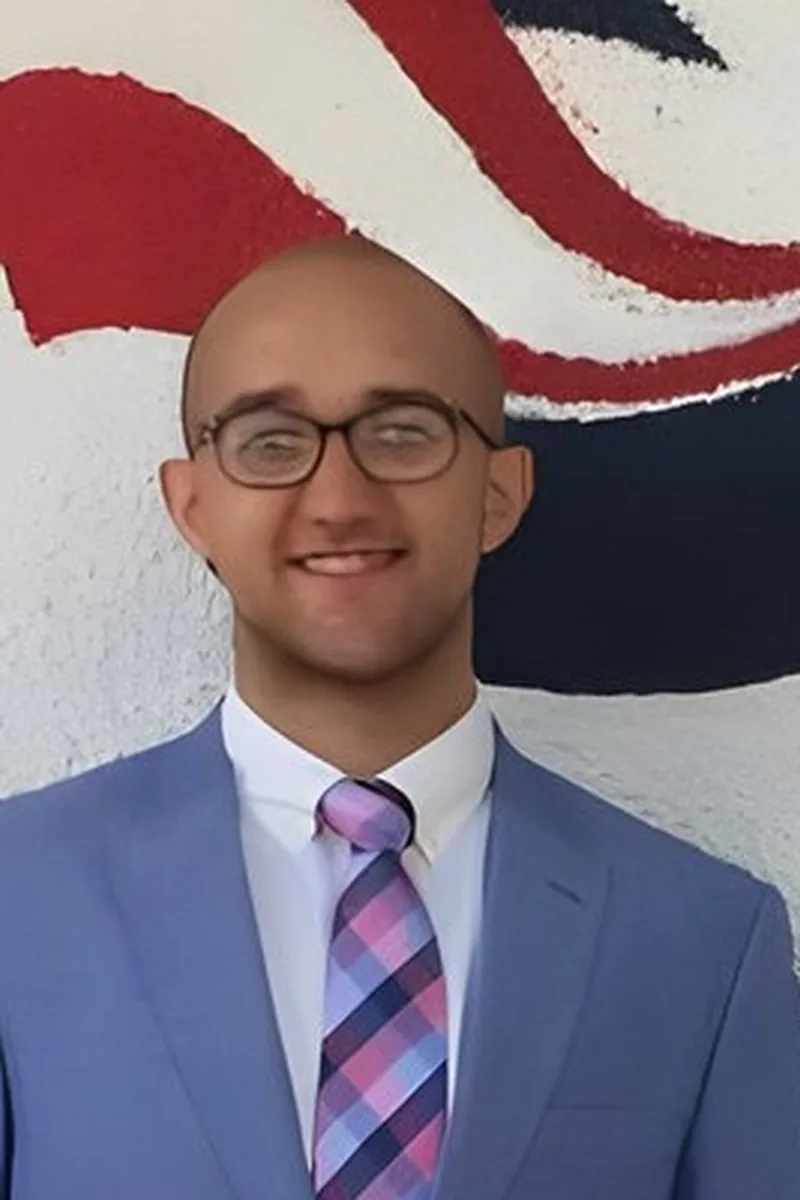
Vaughn's physics degree and 1590 SAT mean the calculus-based problem-solving AP Physics C: Mechanics demands — setting up Newton's second law as a differential equation, computing work done by variable forces — is squarely in his wheelhouse. He zeroes in on dimensional analysis and unit tracking as a way to catch errors before they cascade through multi-step free-response problems, a habit that pays off especially in rotational dynamics where signs and reference frames get tricky.

Studying mathematics and physics at Harvard, Matthew is building the calculus and mechanics toolkit simultaneously — which means he sees the connection between a differential equation and a physical system as one idea, not two separate steps. His 34 ACT and deep comfort with multivariable calculus let him dig into the trickier AP Physics C territory, like work done by position-dependent forces or setting up moment-of-inertia integrals for composite objects, with real mathematical fluency. Rated 4.9 by students.
Biomedical engineering throws you into calculus-based mechanics from day one — Spencer's coursework has him modeling forces on biological systems using the same Newtonian framework and integral setups that AP Physics C tests on free-response problems. His 35 ACT and parallel teaching across both AP Calculus BC and AP Physics C mean he can diagnose whether a student's stuck on the physics concept or the calculus execution, and address the right one.
Kimanthi's biomedical engineering degree from Duke required the same calculus-heavy mechanics — torque on prosthetic joints, force integrals through fluid systems, energy methods applied to biomechanical models — that AP Physics C tests in a more abstract form. That background means she can ground rotational dynamics and work-energy problems in tangible physical scenarios, giving students an intuitive hook before the math gets dense. Rated 5.0 by students.
Steven's biology degree from Drexel included the calculus-based physics sequence that maps directly onto AP Physics C: Mechanics — kinematics, Newton's laws in differential form, and energy conservation problems that demand clean integral setups. Where many science-track tutors skim the mechanics, his organismal physiology concentration meant applying force and motion concepts to biological systems, giving him a concrete way to explain why a free-body diagram matters before any calculus happens. Rated 5.0 by students.
Every AP Physics C: Mechanics problem ultimately comes down to two things — drawing the right free-body diagram and knowing which calculus tool to reach for next. Ryan's mechanical engineering studies at Temple mean he applies Newton's laws, work-energy integrals, and rotational kinematics to real systems in his coursework, so he can show students exactly where a problem shifts from physics reasoning to calculus execution. His 32 ACT and hands-on engineering background keep the math grounded in physical intuition rather than abstract symbol-pushing.
Biology majors who also score a 1590 SAT tend to be the ones who genuinely enjoy the quantitative side of science — and Kimberly's UNC coursework in biochemistry and IB/AP sciences means she's comfortable with the calculus-based force and energy problems that define this exam. She's especially useful for students who understand the physics conceptually but freeze when a free-response question asks them to set up a work integral or derive an equation of motion from Newton's second law. Rated 4.9 by students.
Working as a student researcher in a physics lab at Arizona State while completing her applied mathematics degree gave Madeleine hands-on experience with the Newtonian mechanics and calculus-based problem-solving that AP Physics C: Mechanics tests — particularly translating real physical setups into the force diagrams and integrals the free-response section demands. Her math background means she's comfortable with the calculus side students often fumble, like setting up work integrals for position-dependent forces or differentiating kinematic equations for variable acceleration. Rated 5.0 by students.
Data analytics trains you to model systems mathematically and interpret what the numbers actually mean — skills Vishank applies directly when tackling AP Physics C: Mechanics problems that require setting up kinematic equations or integrating variable forces. His coursework in calculus through linear algebra, combined with tutoring across both math and science, means he can diagnose whether a student's struggle on a free-response problem is a physics misunderstanding or a calculus execution error. Rated 4.9 by students.
Bidyut's biomedical engineering coursework at Johns Hopkins fuses calculus-based mechanics with real physical systems — analyzing forces on prosthetic joints, modeling fluid dynamics in arteries — so the Newtonian mechanics and rotational problems on the AP Physics C exam feel like simplified versions of what he already does daily. He scored a 36 ACT and holds a 5.0 tutoring rating, and he's particularly sharp at showing students how to translate a word problem into the correct integral or differential equation before touching any numbers.
Twenty-five years teaching physics in Massachusetts public schools means Jacques has watched thousands of students hit the same walls on AP Physics C — and he knows exactly how to dismantle them, particularly around variable-force problems and the calculus of rotational inertia. His Princeton chemical engineering degree built the mathematical backbone, but it's the decades of classroom reps that sharpened his ability to explain why you set up the integral that way, not just how to evaluate it. Rated 4.8 by students.
Thirty years of teaching physics and holding a state certification means Michael has watched thousands of students hit the same stumbling blocks in calculus-based mechanics — the shift from memorizing kinematic equations to actually deriving motion from Newton's second law in integral form. His molecular biology graduate work gave him the quantitative rigor to teach across disciplines, and he uses that cross-training to connect force diagrams and energy methods to the kind of systematic reasoning that clicks on free-response problems.
Three physics degrees and a 1570 SAT give Bryan the kind of deep mathematical fluency that AP Physics C: Mechanics rewards — particularly on problems where students need to set up differential equations for non-uniform circular motion or derive momentum impulse through integration. He teaches the course across both high school and college levels, so he knows exactly which conceptual leaps trip students up when the exam shifts from straightforward kinematics to multi-step rotational problems. Rated 5.0 by students.
A PhD in Chemical and Biomolecular Engineering from Buffalo built on a nuclear engineering foundation means Sabry has spent years solving the calculus-heavy mechanics problems — work-energy integrals, rigid body torque derivations, variable-force differential equations — that AP Physics C tests in compressed form. He co-instructed both undergraduate and graduate physics and mechanics courses during his doctoral program, so he knows exactly where students confuse the physical setup with the mathematical execution and can address each independently.
Rotational dynamics, energy methods, and Lagrangian-style thinking are daily territory for a mechanical and robotics engineering student — Matthew doesn't just solve AP Physics C: Mechanics problems, he uses these concepts to design and build actual robots. He walks through free-body diagrams, torque calculations, and conservation laws with the kind of physical intuition that comes from applying them in real engineering projects.
Cornell pre-med students rarely double down on calculus-based physics, but Pratik tutors AP Physics C: Mechanics alongside AP Chemistry and AP Biology — giving him a cross-disciplinary lens that's especially useful when mechanics problems involve biological or chemical systems in free-response scenarios. His 35 ACT confirms the quantitative fluency needed to walk students through setting up torque equations or integrating variable forces without losing sight of the underlying physics.
Mechanics is where Cory is most at home. He treats AP Physics C: Mechanics as a student's first real encounter with calculus-based reasoning about the physical world — deriving kinematic equations from integrals, connecting Newton's laws to differential equations in rotational dynamics, and building intuition for conservation laws that goes beyond plugging into formulas. His physics degree means the vector calculus never gets hand-waved away.
Scoring a 5 on both AP Physics C: Mechanics and AP Calculus BC while taking 16 AP courses total, Derek built the habit of connecting calculus tools to physical intuition under real exam pressure — and he brings that same efficiency to tutoring. His computer science major at Harvard sharpens his approach to mechanics problems: decompose the system, identify constraints, then execute the math cleanly, much like debugging code. Rated 4.9 by students, he's particularly effective at teaching the structured problem-solving that turns rotational dynamics and variable-force scenarios into manageable steps.
Having scored a 1580 SAT and studied computer science, Rishik brings a programmer's discipline to AP Physics C: Mechanics — treating each problem like an algorithm where you define your variables (forces, constraints, coordinate system) before executing the calculus. He also tutors both AP Physics C exams alongside AP Calculus BC, so he's comfortable moving between the electricity side and the mechanics side while keeping the underlying math sharp. Rated 4.6 by students.
Testimonials
Because the right AP Physics C: Mechanics tutor makes all the difference.
Average Session Rating – Based on 3.4M Learner Ratings
Practice AP Physics C: Mechanics
Free practice tests, flashcards, and AI tutoring for AP Physics C: Mechanics
Nearby AP Physics C: Mechanics Tutors
Other Pittsburgh Tutors
Related Science Tutors in Pittsburgh
Frequently Asked Questions
AP Physics C: Mechanics focuses on classical mechanics and covers kinematics, Newton's laws, work and energy, momentum, circular motion, oscillations, and gravitation. The course emphasizes calculus-based problem-solving, requiring students to apply derivatives and integrals to physics concepts. For students in Pittsburgh preparing for the AP exam, understanding how these topics interconnect is essential for both the multiple-choice and free-response sections.
AP Physics C: Mechanics combines rigorous physics concepts with calculus, which creates a steep learning curve for many students. The exam requires not just memorizing formulas, but understanding the underlying physics principles and applying them to novel problem scenarios. Common struggles include translating word problems into mathematical models, managing time during the exam, and distinguishing between similar concepts like work versus energy or velocity versus acceleration.
Score improvement depends on your starting point and commitment level, but personalized 1-on-1 instruction typically helps students identify and close knowledge gaps more efficiently than studying alone. Many students see meaningful gains by focusing on their weakest topics—whether that's problem-solving strategies, calculus applications, or specific units like oscillations or gravitation. Consistent practice with targeted feedback over several months often leads to score increases of 1-2 points on the 1-5 AP scale.
Practice tests are critical for AP Physics C: Mechanics success because they reveal which topics need more review and help you build pacing skills for the actual exam. Taking full-length practice tests under timed conditions allows you to experience the pressure of the real test and identify whether you struggle more with the multiple-choice section (45 minutes) or the free-response section (45 minutes). Reviewing your mistakes on practice tests—especially understanding why you chose wrong answers—is where the real learning happens.
Ideally, students benefit most from starting tutoring at the beginning of the course to build a strong foundation in calculus-based problem-solving and conceptual understanding. However, tutoring is valuable at any point—even students who start a few months before the exam can improve by focusing on their weakest units and test-taking strategies. For students in Pittsburgh aiming for a strong score, 8-12 weeks of consistent tutoring combined with regular practice tests typically provides solid preparation.
The free-response section rewards clear reasoning and proper setup as much as correct final answers—partial credit is generous if you show your work and use sound physics principles. A strong strategy is to read all three questions first, tackle the one you feel most confident about, and manage your time so you attempt all three. Expert tutors can help you practice organizing your solutions, identifying which equations to use, and avoiding common mistakes like forgetting to include units or missing negative signs in vector problems.
Calculus is fundamental to AP Physics C: Mechanics—you'll use derivatives to find velocity and acceleration, and integrals to find displacement and work. Unlike AP Physics 1 and 2, which are algebra-based, Physics C requires you to understand derivatives and integrals conceptually, not just mechanically. If calculus is a weak area, personalized tutoring can help you strengthen both your calculus skills and your ability to apply them to physics problems.
Your first session focuses on understanding where you stand: which topics feel solid, which are confusing, and what your goals are (improving overall understanding, targeting a specific score, or preparing for the exam). Varsity Tutors connects you with tutors who specialize in AP Physics C: Mechanics and can assess your strengths and gaps through discussion and sample problems. From there, your tutor creates a personalized plan that addresses your specific challenges, whether that's calculus applications, problem-solving strategies, or test anxiety management.
Let’s find your perfect tutor
Answer a few quick questions. We’ll recommend the right plan and match you with a top 5% tutor.