Award-Winning AP Calculus BC Tutors
serving Concord, NC
AP Calculus BC
Tutors in Concord
Private 1-on-1 tutoring, weekly live classes for academic support, test prep & enrichment, practice tests and diagnostics, and more to elevate grades and test scores.
Based on 3.4M Learner Ratings
UniversitiesSchools & Universities
DeliveredHours Delivered
ProficiencyGrowth in Proficiency
Who needs tutoring?
No obligation. Takes ~1 minute.
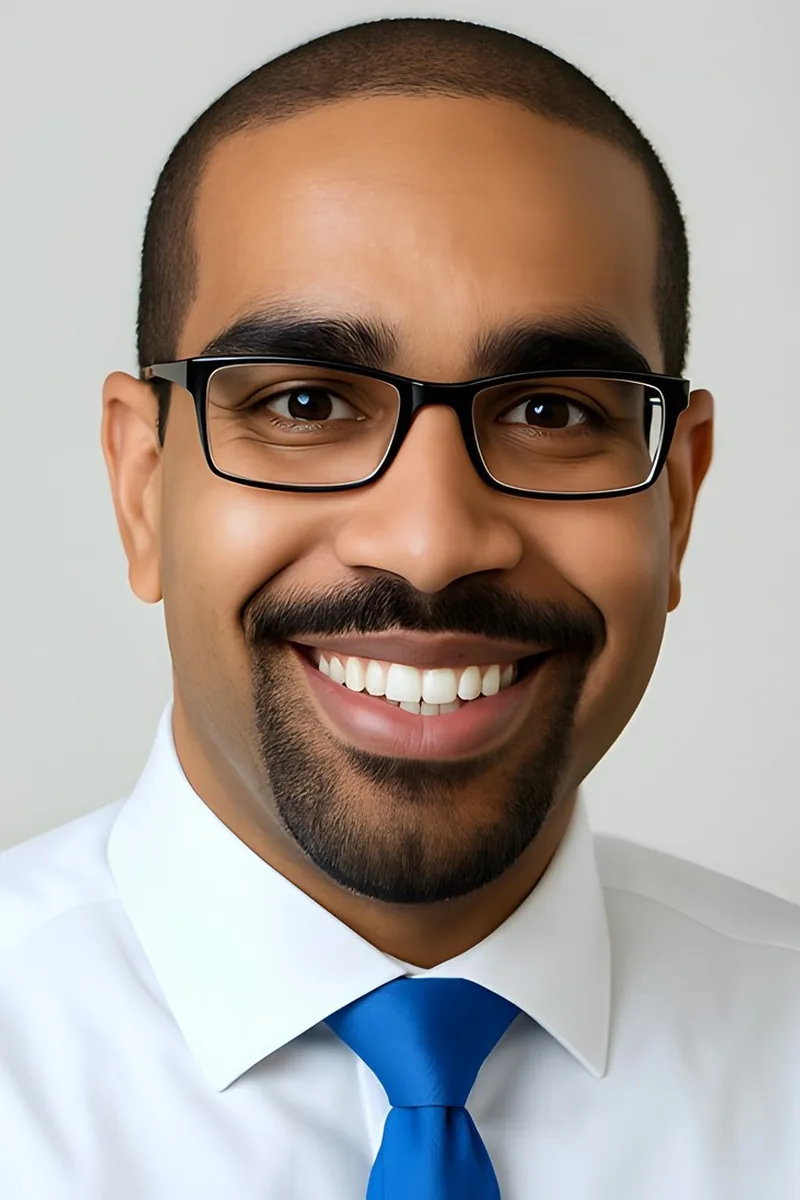
Winning Duke's DT Stallings Award for sustained tutoring of local school students means Taariq has logged serious hours watching where calculus understanding actually breaks down — and BC's leap into series, parametric curves, and advanced integration is where breakdowns happen fastest. His math degree from Duke gives him the theoretical grounding to trace a student's confusion with, say, a ratio test or a polar area integral back to the specific AB concept that isn't solid yet. Rated 4.9 by students.
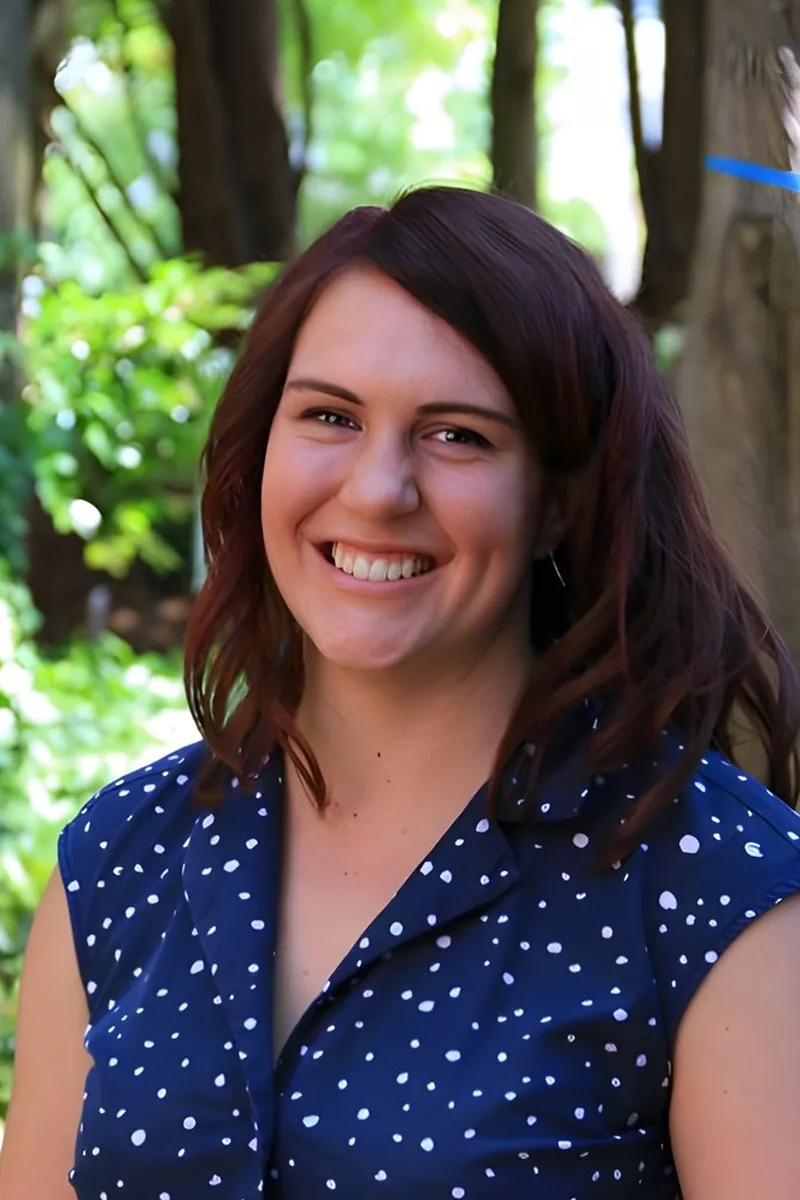
Series convergence, parametric equations, and polar coordinates can feel like a firehose of disconnected topics — but they're not. Jordan connects BC-specific material back to the core calculus intuitions students already have, drawing on the advanced math he used daily through a PhD in bioengineering at Georgia Tech.
Matt's math degree gives him the formal grounding to teach BC's trickiest material — convergence criteria, polar area integrals, parametric derivatives — while his quantitative policy work at Duke means he regularly uses series approximations and integration techniques to model real decisions. That combination keeps his explanations precise without feeling purely theoretical, because he can show students exactly where a Taylor expansion or an improper integral does actual work outside the classroom. Rated 5.0 by students.
Most BC students can follow a Taylor series procedure on the board but freeze when asked to choose between convergence tests on their own — Tanay, a math major at UNC Chapel Hill, zeroes in on that decision-making gap by teaching the underlying logic of each test rather than just the mechanical steps. His 35 ACT and 5.0 tutoring rating back up an approach that builds BC's toughest topics directly from the AB concepts students already trust.
Economics and data science at UC Berkeley meant Rebecca spent semesters immersed in the calculus that powers econometric modeling — series approximations, integration techniques, and the kind of rigorous limit reasoning that BC piles on top of AB. She now works as an economic researcher, so tools like convergence criteria and polynomial approximations stay active in her day-to-day quantitative work rather than gathering dust. Rated 5.0 by students.
Civil engineering coursework is where BC Calculus stops being theoretical — Elisa used series approximations for structural load analysis and integration techniques for modeling stress distributions throughout her degree, so topics like Taylor polynomials and improper integrals carry practical weight when she teaches them. She's particularly sharp at tracing a student's confusion with convergence tests back to shaky AB-level reasoning about limits, then rebuilding from there. Rated 4.8 by students.
Series convergence is where most AP Calculus BC students start to feel lost — Taylor polynomials, ratio tests, and interval-of-convergence problems demand a different kind of mathematical intuition than AB material. James tackles these topics by building each series concept visually and algebraically, connecting new ideas back to the limit foundations students already know. His 1550 SAT and 35 ACT speak to the depth of his math fluency.
My name is Ananya, and I am a recent graduate of Georgetown University, where I obtained a B.S. in Mathematics and a B.A. in Government, graduating with Honors. In college, my favorite areas of math were calculus, linear algebra, and data science, which led me to conduct math statistics research for two years. I am an incoming Master's student at Cambridge University, where I will be studying and researching Digital Policy. My interdisciplinary educational experience informs my creative and engaging approach to education. I have many years of teaching experience throughout high school, I tutored elementary and middle school math and English in both paid and volunteer positions, and served as a TA for Precalculus and AP US History. In college, I served as a leader for multiple mentorship programs for high schoolers and incoming college students. These experiences taught me patience and the ability to adapt learning experiences to individual students' strengths. I take a reflective and iterative approach to tutoring, with practice, feedback, and application of material in various contexts. As your tutor, I am passionate about fostering a deeper understanding of material that will lead to your success, while embedding fun into the process. Please consider booking a lesson, and I look forward to getting started!
BC Calculus layers on convergence tests, parametric equations, and polar coordinates right when students think they've mastered integration. Shourya breaks these topics into visual, intuitive pieces — connecting Taylor series to function behavior, for instance, so the formulas feel like natural extensions rather than arbitrary rules. His physics background at UNC Chapel Hill gives him a constant supply of real applications to make the math click.
Teaching BC Calculus for an international test prep company — alongside SAT Subject Tests and high school physics — gave Corey a detailed map of where students stall: usually the transition from AB techniques into series convergence, Taylor polynomial error analysis, and parametric integration. His Duke biomedical engineering degree meant applying those same tools to model biological systems, so he explains convergence tests and approximation methods as practical reasoning rather than formula lists. Rated 5.0 by students.
When BC students hit the wall of series convergence tests — ratio, root, integral, comparison — the real problem is usually that they're memorizing a checklist instead of understanding what each test actually checks. Artem, an electrical and computer engineering undergrad who uses these tools in circuit and signal analysis, teaches the reasoning behind each test so students can identify which one applies and why. Rated 5.0 by students.
Most BC students can follow a convergence test step by step but freeze when they have to choose which test to apply — that decision-making is where Sarah, a mathematics-statistics major, zeroes in. Her statistical training sharpens the way she teaches series and approximation topics, since stats coursework demands comfort with summation behavior and error analysis that maps directly onto Taylor polynomials and remainder bounds. A 1450 SAT and 34 ACT reflect the kind of precise, methodical thinking she brings to each session.
Physical chemistry coursework is where BC Calculus stops being theoretical — Amanda uses series approximations and integration techniques daily in her chemistry program, which means she teaches topics like Taylor polynomials and convergence tests as tools she actually relies on, not abstract procedures. She's especially sharp at tracing a stuck moment on, say, an interval of convergence problem back to the specific limit or comparison reasoning that needs reinforcing.
BC Calculus covers a massive range — from parametric equations and polar curves to Taylor series and convergence tests — and Dennis's physics research at Princeton demanded fluency in all of it. He connects topics like integration techniques and differential equations to the physical problems they were invented to solve, which makes the logic behind each method click.
BC Calculus layers convergence tests, parametric equations, and polar curves on top of an already demanding AB foundation, and the pacing leaves little room to fall behind. Vinson earned a 36 ACT and National AP Scholar distinction while building the kind of deep mathematical fluency that makes series analysis and integration techniques click. He breaks each new BC topic into the AB concept it extends, so the jump never feels arbitrary.
Convergence tests, parametric equations, and Taylor series expansions are where BC separates from AB — and where many students start to feel lost. Rithi breaks these topics into intuitive steps, connecting new concepts back to the foundational calculus reasoning students already have. Her 1550 SAT and deep STEM background reflect the kind of mathematical fluency that makes those connections clear.
Notre Dame's Science-Computing program front-loads calculus-heavy coursework — Aidan moved through multivariable calc and differential equations while simultaneously applying integration techniques and series in his science courses, so BC topics like Taylor polynomials and convergence tests landed as tools he actually needed, not just exam hurdles. He's especially sharp at tracing where a BC struggle — say, setting up an integral in polar coordinates or choosing the right convergence test — traces back to an AB concept that needs reinforcing. His 35 ACT and premed science background keep explanations precise and grounded.
Biology majors at WashU don't just memorize — Laura's upper-level coursework in evolutionary modeling and physical chemistry means she's actively using integration techniques, differential equations, and series approximations to solve problems outside a math classroom. That cross-disciplinary fluency is especially useful for BC's trickiest conceptual leap: understanding what a Taylor polynomial actually approximates and why specific convergence tests apply in specific situations. Rated 5.0 by students.
Molecular biophysics at Brown means Srini is constantly using series approximations and integration techniques to model protein folding dynamics and molecular interactions — BC Calculus isn't a prerequisite he passed, it's a toolkit he reaches for weekly. That active use sharpens how he teaches convergence tests and parametric problems, grounding each in the kind of quantitative reasoning his 1600 SAT and 35 ACT reflect. Rated 4.8 by students.
Princeton's electrical engineering program leans hard on series expansions and differential equations from day one — Sabrina uses them to analyze circuits and model signal behavior in her applied physics coursework, which means BC topics like Taylor polynomials and convergence tests aren't abstract exercises for her but tools she reaches for weekly. She's especially clear at breaking down the logic behind each convergence test so students can choose the right one on their own instead of guessing. Rated 5.0 by students.
BC Calculus piles on topics like Taylor series, parametric equations, and convergence tests at a pace that leaves little room for falling behind. As a Penn math major who also tutors multivariable calculus and linear algebra, Ben understands these concepts at a depth that lets him explain not just the how but the why behind each technique. That deeper perspective makes integration methods and series analysis click faster.
Derek scored a 5 on the AP Calculus BC exam and now studies applied mathematics at Harvard, which means series convergence tests, parametric equations, and polar area problems are still part of his daily toolkit. He breaks down intimidating topics like Taylor series error bounds and integration by parts into repeatable strategies that click on exam day. Rated 4.9 by students.
Molecular biology might seem distant from BC Calculus, but Agustin's 1560 SAT and deep comfort with competition math mean he's built the kind of rigorous problem-solving instincts that make topics like convergence tests and parametric derivatives tractable rather than terrifying. He breaks down the logic behind each technique — why the ratio test actually tells you something, how polar area integrals connect back to Riemann sums — so the BC extension from AB feels like a natural next step. Rated 4.5 by students.
As a multivariable calculus teaching assistant at Harvard's Math Department, Kristi spent semesters watching exactly where students' BC foundations cracked under pressure — shaky series intuition, mechanical convergence testing, parametric reasoning that never quite solidified. Her astrophysics training means she learned these tools by necessity, using Taylor expansions to model orbital mechanics and integration techniques to analyze planetary data, so she teaches the logic driving each method rather than just the steps. Rated 5.0 by students.
Scoring a 36 on the ACT while studying environmental engineering at Cornell means Akanksha lives in the calculus that BC demands — her coursework in fluid dynamics and pollutant modeling leans heavily on integration techniques, series approximations, and differential equations. She breaks down the transition from AB to BC by treating topics like convergence tests and parametric curves as practical extensions of tools students already trust, not as an overwhelming new syllabus. Rated 4.8 by students.
Testimonials
Because the right AP Calculus BC tutor makes all the difference.
Average Session Rating – Based on 3.4M Learner Ratings
Practice AP Calculus BC
Free practice tests, flashcards, and AI tutoring for AP Calculus BC
Nearby AP Calculus BC Tutors
Other Concord Tutors
Related Math Tutors in Concord
Frequently Asked Questions
Varsity Tutors matches Concord students with expert AP Calculus BC tutors for 1-on-1 instruction. We pair each student with a tutor based on their specific needs, learning style, and goals.
Whether you need homework help, exam prep, or want to get ahead, our AP Calculus BC tutors are ready to help.
Common challenges include gaps from earlier material, difficulty with specific concepts, and trouble applying learning to new problems. These issues can snowball quickly in AP Calculus BC.
A tutor identifies where you're stuck, fills in gaps, and provides targeted practice. The 1-on-1 format means you get help exactly where you need it.
Tutors work with your student's actual coursework—homework assignments, class notes, and upcoming tests. This keeps tutoring directly relevant to what's happening in the classroom.
When you share information about your student's school and curriculum, we can match you with a tutor who has relevant experience.
All tutors complete background checks, credential verification, and teaching evaluation. Many of our AP Calculus BC tutors hold advanced degrees or have years of teaching experience.
You can review tutor profiles to find someone with the right background for your student's level and needs.
Many students see improved grades within a few weeks, along with better understanding of AP Calculus BC concepts and more confidence tackling challenging material.
Tutors track progress and adjust their approach to ensure continued improvement.
Most students benefit from 1-2 sessions per week. More frequent sessions help if your student is significantly behind or has an important exam coming up.
Your tutor can recommend a schedule based on your student's specific situation and goals.
Tutoring is purchased in packages of hours, with rates varying by tutor experience. Varsity Tutors offers several options to fit different budgets and needs.
You can discuss pricing during your consultation to find what works best.
Your tutor will assess where your student is, discuss goals, and start working on priority areas. Most students bring current homework or upcoming test material to focus on.
By the end, you'll have a clear sense of how the tutor can help and a plan for moving forward.
Let’s find your perfect tutor
Answer a few quick questions. We’ll recommend the right plan and match you with a top 5% tutor.