Award-Winning AP Physics C: Electricity and Magnetism Tutors
serving Charlotte, NC
AP Physics C: Electricity and Magnetism
Tutors in Charlotte
Private 1-on-1 tutoring, weekly live classes for academic support, test prep & enrichment, practice tests and diagnostics, and more to elevate grades and test scores.
Based on 3.4M Learner Ratings
UniversitiesSchools & Universities
DeliveredHours Delivered
ProficiencyGrowth in Proficiency
Who needs tutoring?
No obligation. Takes ~1 minute.
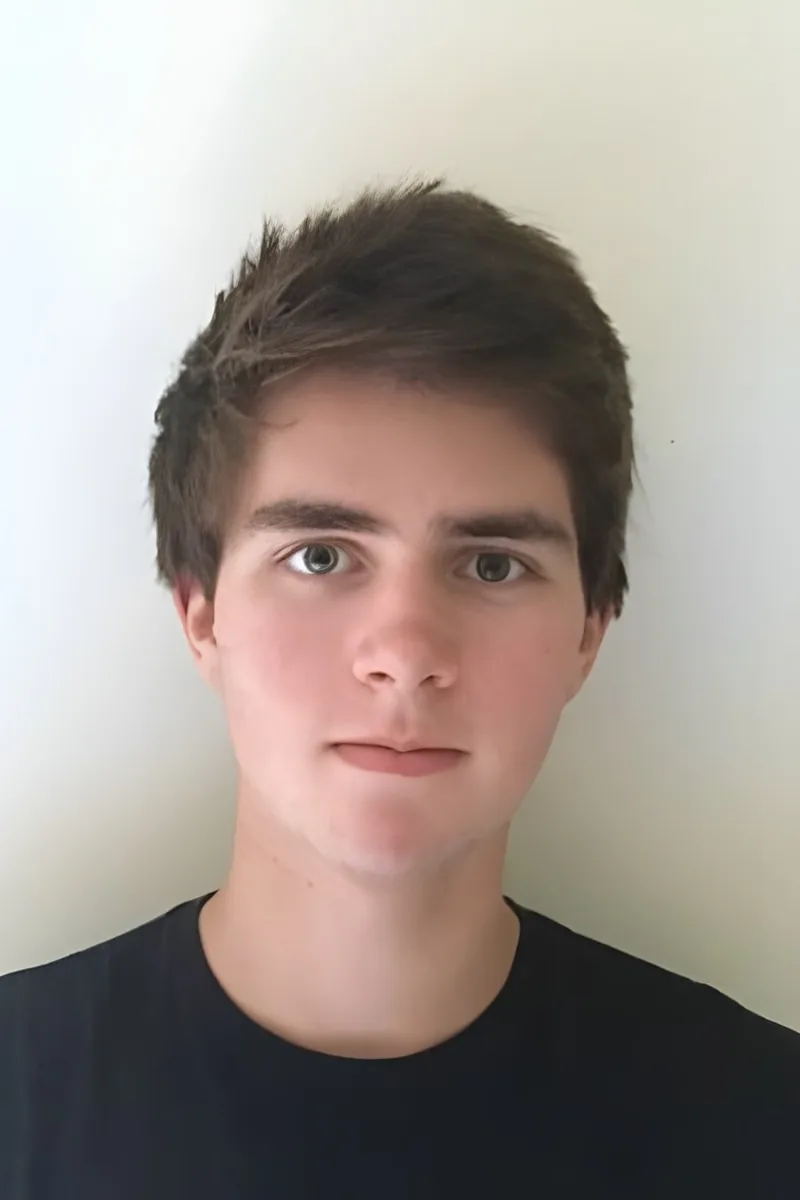
Gauss's law, Ampère's law, Faraday's law — E&M asks students to visualize invisible fields and then describe them with vector calculus. David approaches each topic by first making the field geometry concrete, using symmetry arguments and sketches before diving into surface or line integrals. His physics coursework gives him firsthand familiarity with the exact problem types and conceptual traps the AP exam targets.
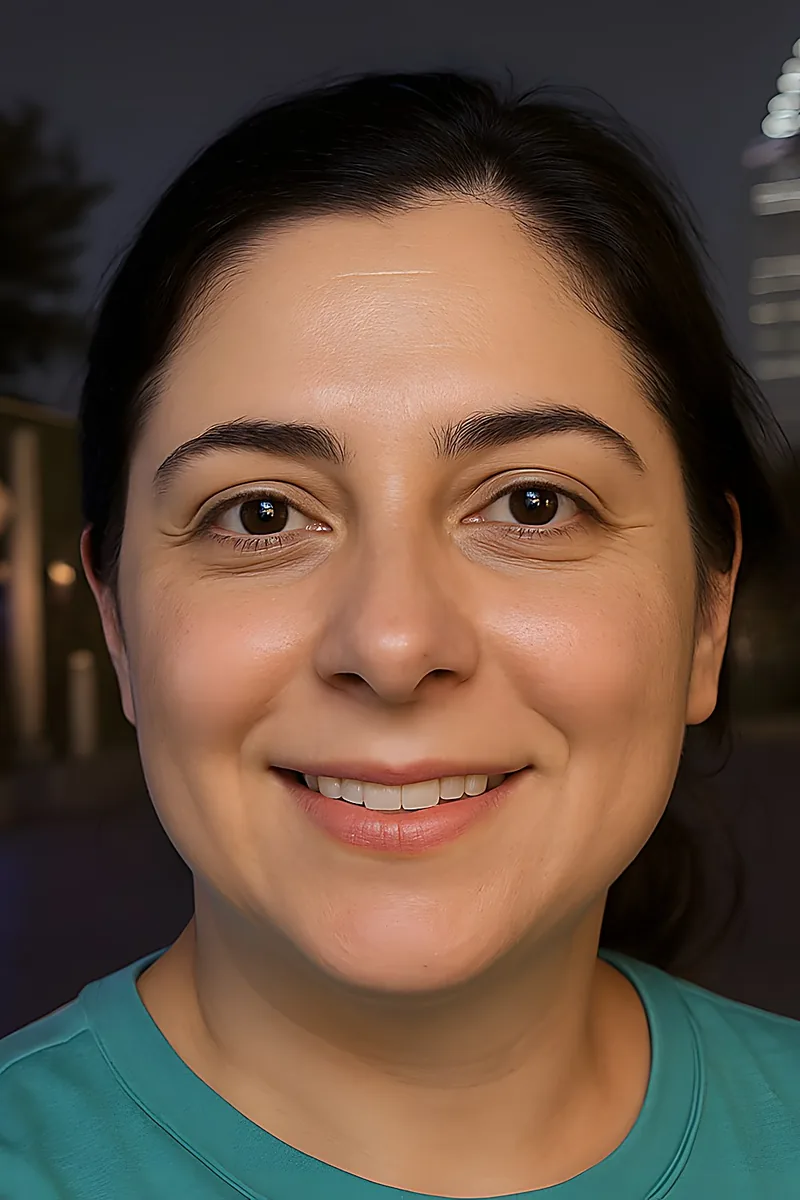
Gauss's law, Ampère's law, Faraday's law — AP Physics C: E&M asks students to think in three dimensions with vector calculus tools they've barely learned. Taha breaks down each Maxwell equation into physical intuition first, then builds up the mathematical formalism around it. His deep background in both calculus and physics lets him bridge the gap between what students see in their math classes and what the E&M exam actually demands.
Gauss's law, Ampère's law, and Faraday's law each require students to set up integrals over surfaces and paths that feel nothing like standard calculus problems. Vishank's comfort with multivariable math and his experience teaching across physics and calculus let him bridge that gap — showing exactly how to choose a Gaussian surface or an Amperian loop and why the math works the way it does.
Gauss's law, Ampère's law, Faraday's law, RC circuits — AP Physics C: E&M asks students to wield vector calculus in physical contexts most haven't encountered before. Justin earned his bachelor's in physics and mathematics at Washington University in St. Louis before completing a PhD in Computational Mathematics at the University of Chicago, giving him the exact blend of mathematical rigor and physical intuition this course demands. He breaks down intimidating surface integrals and field superposition problems into clear, repeatable reasoning steps.
Gauss's law, Ampère's law, and Faraday's law all require students to visualize invisible fields and reason through multivariable integrals — a combination that trips up even strong physics students. Dylan's coursework at Vanderbilt covers exactly this material, and his instinct is to sketch field lines, draw Gaussian surfaces, and build physical intuition before diving into the math. That graphical-first approach turns E&M from the most feared AP Physics exam into something manageable.
Gauss's law, Ampère's law, Faraday's law — AP Physics C: E&M asks students to wield vector calculus inside electromagnetic theory, which is a steep jump from mechanics. Richard's electrical and computer engineering background at the University of Tulsa means he's worked through these derivations extensively and can connect abstract field equations to tangible circuits and real devices. He breaks down each Maxwell equation into physical intuition first, then builds toward the math.
Gauss's law, Ampère's law, Faraday's law — AP Physics C: E&M asks students to wield vector calculus in the service of invisible fields, which is a genuinely difficult conceptual shift. Spencer's biomedical engineering studies require exactly this skill set, since electromagnetic principles drive technologies like MRI and neural signal processing. He unpacks each law with clear diagrams and step-by-step integral setups so the math reinforces the physics instead of obscuring it.
AP Physics C: E&M is widely considered the hardest AP science exam, and it's also the subject closest to Sabrina's daily life as a Princeton electrical engineering student with an applied physics focus. She digs into Gauss's law, Ampère's law, RC circuits, and Faraday's law with the fluency of someone who uses Maxwell's equations in her own research and coursework. Her physics research at a Max Planck Institute adds another layer of depth to her explanations.
Gauss's Law, Ampère's Law, Faraday's Law — E&M asks students to think in three dimensions about invisible fields, which is a genuinely different skill from anything in Mechanics. Lila tackles this by grounding each law in a concrete setup (a charged sphere, a solenoid, a changing flux through a loop) before generalizing, so the vector calculus feels like a tool rather than an obstacle.
Gauss's law, Ampère's law, Faraday's law — AP Physics C: E&M throws a wall of abstract vector calculus at students who were just getting comfortable with mechanics. Lillian tackles each law by grounding it in a concrete physical scenario first, then layering in the math. Her systematic approach to problem-solving, sharpened through years of STEM coursework, translates well to navigating complex circuit and field problems.
I am a graduate of Cornell University's College of Arts and Sciences. I received my Bachelor of Arts in Chemistry with Distinction in 2015. Since graduation, I was a physics/chemistry teacher and soccer coach at a private school in Virginia for a year, where I led the soccer team to an undefeated season. Before teaching and coaching professionally, I was a Teaching Assistant for the Cornell Math and Physics Departments, where I taught many subjects including calculus, mechanics, electromagnetism. Throughout my time at Cornell and as a teacher, I tutored subjects ranging from the SAT to AP Physics and Algebra II, which is where my true talents lie: in small group or one-on-one settings where I can give students the full attention they deserve and tailor my approach specifically to their learning styles. This is why I am now pursuing tutoring as a part-time occupation at Varsity Tutors. I embrace teaching all math and science subjects, especially physics and calculus, at both the college and high school level and will go above and beyond to make sure all of my students succeed, according to their definition of success. In my spare time, I enjoy playing league soccer, basketball, tennis and guitar, and also like to travel and see as much of the world as I can.
Gauss's law, Faraday's law, RC circuits — AP Physics C: E&M asks students to visualize invisible fields and then describe them with calculus, which is a genuinely difficult skill to develop. Satvik's aerospace engineering training at Georgia Tech keeps him immersed in electromagnetism, and his 800 on the Physics SAT Subject Test reflects a command of fundamentals that makes abstract field concepts concrete. He earned a 5.0 rating by meeting each problem at the exact point where a student gets stuck.
AP Physics C: E&M is where most students first encounter vector calculus applied to real physical systems — Gauss's law in integral form, Ampère's law with displacement current, Faraday's law across non-trivial geometries. Burhanuddin's coursework at Georgia Tech goes deep into these topics daily, and he breaks down the connection between the math and the physics so that problems involving capacitors, inductors, and RC/RL circuits stop feeling like guesswork.
Testimonials
Because the right AP Physics C: Electricity and Magnetism tutor makes all the difference.
Average Session Rating – Based on 3.4M Learner Ratings
Practice AP Physics C: Electricity and Magnetism
Free practice tests, flashcards, and AI tutoring for AP Physics C: Electricity and Magnetism
Nearby AP Physics C: Electricity and Magnetism Tutors
Other Charlotte Tutors
Related Science Tutors in Charlotte
Frequently Asked Questions
AP Physics C: Electricity and Magnetism covers electrostatics, conductors and insulators, electric potential, capacitance, current and resistance, magnetic fields, and electromagnetic induction. The course emphasizes calculus-based problem-solving and typically requires strong foundational knowledge of vectors, derivatives, and integrals. For students in Charlotte preparing for the exam, understanding how these topics interconnect—especially the relationship between electric and magnetic fields—is essential for success on the free-response section.
Many students find Electricity and Magnetism more conceptually challenging than Mechanics because the phenomena are less intuitive—you can't see electric fields or magnetic forces directly. However, the mathematical tools are similar to Mechanics. The key difference is that E&M requires stronger visualization skills and a deeper understanding of abstract concepts like field theory. Personalized tutoring can help you develop these mental models and work through the trickier problem types before test day.
Score improvement depends on your starting point and consistency with practice. Students who work with tutors typically see gains by identifying conceptual gaps, mastering problem-solving strategies, and building confidence with free-response questions. The AP Physics C exam is scored 1-5, with most students aiming for a 3 or higher for college credit. Tutors can help you target weak areas—whether that's circuit analysis, magnetic induction, or Gauss's law—and develop a realistic study schedule leading up to exam day.
The biggest challenges are typically: (1) visualizing invisible fields and understanding field direction/magnitude, (2) applying Gauss's law and other advanced theorems correctly, (3) managing multi-step free-response problems under time pressure, and (4) connecting calculus concepts to physics principles. Many students also struggle with the distinction between electric potential and electric field, or with the right-hand rule for magnetic forces. Working through these specific pain points with expert tutors helps you build fluency before the exam.
Key strategies include: (1) reading free-response questions carefully to identify what's being asked before diving into calculations, (2) showing all work to earn partial credit even if your final answer is wrong, (3) managing time by tackling easier problems first, and (4) using dimensional analysis to check if your answer makes sense. Practice tests are invaluable—they help you get comfortable with pacing and identify which question types take you longest. Tutors can review your practice test performance and help you refine your approach for maximum efficiency.
Most students benefit from starting review 8-12 weeks before the exam, dedicating 5-7 hours per week to practice problems, concept review, and full-length practice tests. If you're taking the course for the first time, consistent study throughout the year is more effective than cramming. For students in Charlotte juggling multiple AP courses, personalized tutoring can help you prioritize topics and create an efficient study plan that fits your schedule and targets your specific weak areas.
Practice tests are essential—they help you understand the exam format, build time management skills, and identify which topics need more review. Taking full-length, timed practice tests under realistic conditions is the best way to prepare. After each test, analyzing your mistakes (especially on free-response questions) reveals patterns in your thinking. Tutors can help you interpret practice test results and develop targeted strategies to address recurring errors before test day.
Varsity Tutors connects you with tutors who have deep expertise in AP Physics C: Electricity and Magnetism and understand the specific challenges students face. When you get matched with a tutor, you can discuss your goals—whether that's improving from a 2 to a 4, mastering free-response questions, or building confidence with difficult topics. Personalized 1-on-1 instruction allows tutors to adapt to your learning style and focus on the areas that will have the biggest impact on your score.
Let’s find your perfect tutor
Answer a few quick questions. We’ll recommend the right plan and match you with a top 5% tutor.