Award-Winning Statistics Tutors
serving Baltimore, MD
Statistics
Tutors in Baltimore
Private 1-on-1 tutoring, weekly live classes for academic support, test prep & enrichment, practice tests and diagnostics, and more to elevate grades and test scores.
Based on 3.4M Learner Ratings
UniversitiesSchools & Universities
DeliveredHours Delivered
ProficiencyGrowth in Proficiency
Who needs tutoring?
No obligation. Takes ~1 minute.
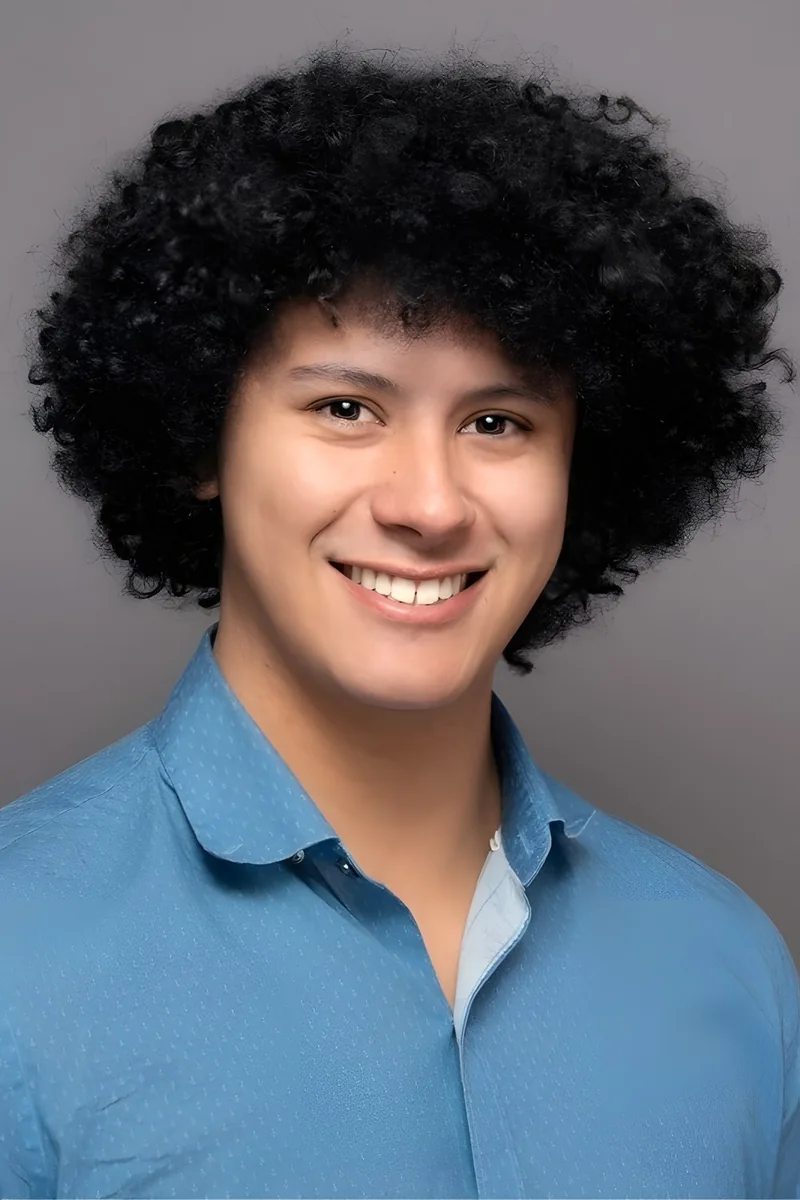
Hello! My name is Gabe, and I currently work as a Biostatistician in New York. I hold a Master's degree in Epidemiology from Johns Hopkins and a Bachelor's degree from NYU. Statistics isn't for everyone, but I hope to help students expand their knowledge or gain confidence in using it for a class. I am skilled in R studio for statistical and epidemiological analysis. My goal is to help students perform their best by becoming comfortable with the concepts.

I have spent 20 years teaching students across Singapore and North America, supporting learners in English, math, science, geography, and philosophy. I enjoy helping students who are not native English speakers understand complex concepts and terminology. I hold a BA in Criminology from Simon Fraser University, an MBA in healthcare management, and I am currently pursuing a PhD in Health Sciences at Liberty University. I also bring over 10 years of experience as a nonclinical investigator and work as a fraud analyst in the healthcare industry. My diverse background strengthens my communication, critical thinking, and problemsolving skills, all of which influence my teaching. Outside of work, I enjoy the outdoors, spending time with my family, and caring for my Bernese Mountain Dog. I am committed to helping students grow in confidence and reach their academic goals.
Biochemistry coursework at Swarthmore means Allan regularly interprets experimental data — calculating p-values, analyzing variance across sample groups, and deciding whether a result is statistically meaningful or just noise. That lab-bench familiarity with hypothesis testing and data analysis translates directly into how he teaches statistics, grounding concepts like confidence intervals and standard error in the kind of messy, real datasets students will eventually encounter.
As a dedicated tutor with a Bachelor's in Policy Studies from Lafayette College, I have experience helping students excel in subjects such as ACT preparation, Algebra, AP U.S. Government, Politics, and English Grammar. My teaching philosophy centers on creating a supportive learning environment where students feel confident to ask questions and explore complex concepts. I believe that every student has unique strengths, and my goal is to tailor my approach to meet their individual needs. I am passionate about fostering academic success and inspiring a love for learning, which I achieve through engaging lessons and constructive feedback. Outside of tutoring, I enjoy reading and exploring new educational resources to enhance my teaching methods.
During her psychology degree at Penn, Brittany used statistics constantly — hypothesis testing, probability distributions, regression analysis — as core tools for understanding research. She also tutored middle schoolers in introductory statistics as a volunteer in West Philadelphia, so she's comfortable adjusting her explanations whether someone is learning mean and median or wrestling with p-values.
As an economics major at Yale, Conor uses statistical methods constantly — regression analysis, probability distributions, hypothesis testing — so he teaches statistics as a practical toolkit rather than an abstract set of formulas. He's especially sharp at walking through the logic behind concepts like p-values and confidence intervals, which tend to confuse students who try to memorize procedures without understanding what the numbers actually mean.
A biology degree from UIUC means Todd spent years designing experiments, interpreting data sets, and running statistical tests — skills he now brings directly to tutoring statistics. He unpacks concepts like probability distributions, hypothesis testing, and standard deviation by grounding them in real data scenarios rather than abstract formulas.
Probability distributions, hypothesis testing, and confidence intervals require a different kind of mathematical thinking than most students are used to. Nicholas pairs his applied mathematics background at Johns Hopkins with real problem-solving instincts, teaching students to interpret what a p-value actually means and when to apply which test. He's especially effective at connecting statistical reasoning to the kind of data analysis students encounter in science and engineering contexts.
Emily's computational biology concentration at Cornell is essentially applied statistics — she uses probability distributions, confidence intervals, and regression analysis to interpret biological data every week. That hands-on context lets her explain statistical reasoning through concrete examples rather than abstract formulas.
Yi's graduate training in research and experimental psychology required heavy use of statistical methods — from hypothesis testing and ANOVA to regression modeling and interpreting p-values in published studies. That hands-on experience with real data analysis means she teaches statistics as a tool for answering questions, not just a set of formulas to memorize.
Probability distributions, hypothesis testing, and regression analysis all clicked for Crony during his neuroscience research at Brown, where he used statistics daily to interpret experimental data. He brings that applied perspective to tutoring sessions, showing students how each concept works in practice — not just on a problem set.
Probability distributions, hypothesis testing, and regression analysis all click faster when you understand the engineering problems they were designed to solve. Zora's Management Science and Engineering coursework at Stanford means she teaches statistics through real applications — modeling uncertainty, interpreting p-values, and designing experiments — not just formula sheets.
Probability distributions, hypothesis testing, and regression analysis all click faster when you've actually used them to make decisions. Hari's finance background means he's applied statistical methods to real datasets — forecasting, risk analysis, variance modeling — and he teaches the logic behind each test so students can choose the right approach on their own.
Kaylah's graduate work in Computational Social Science at the University of Chicago is built almost entirely on statistical methods — probability distributions, hypothesis testing, regression modeling, and data interpretation. She teaches statistics the way she actually uses it: starting with what question you're trying to answer, then selecting and applying the right tool. Her background in cognitive neuroscience research means every example she pulls from is grounded in real data.
A neurobiology degree from Harvard meant designing experiments, interpreting data sets, and living inside statistical analysis for four years. Katherine teaches statistics with that research lens — connecting probability distributions, hypothesis testing, and confidence intervals to how they're actually used in published studies. Rated 5.0 by students.
Most students walk into statistics expecting another math class and get blindsided by the emphasis on interpretation — explaining what a confidence interval actually means, or why correlation isn't causation. Amber tackles that interpretive layer head-on, teaching students to read context before crunching numbers. Her theater background gives her a knack for making abstract concepts like probability distributions feel concrete and memorable.
Testimonials
Because the right Statistics tutor makes all the difference.
Average Session Rating – Based on 3.4M Learner Ratings
Practice Statistics
Free practice tests, flashcards, and AI tutoring for Statistics
Other Baltimore Tutors
Related Math Tutors in Baltimore
Frequently Asked Questions
Statistics requires both conceptual understanding and practical application—students often struggle with interpreting what statistical measures actually mean, not just calculating them. Common pain points include understanding probability concepts, working with distributions, interpreting confidence intervals, and designing experiments. Many students also find it challenging to translate real-world scenarios into statistical problems and to communicate their findings clearly. Personalized tutoring helps students move beyond memorizing formulas to truly grasping the "why" behind statistical methods.
While algebra focuses on solving equations and manipulating variables, Statistics emphasizes data analysis, probability, and drawing conclusions from evidence. Statistics requires students to think critically about what data tells us, recognize patterns, and make informed decisions—skills that apply directly to science, business, and everyday life. The transition can be challenging because it demands a different type of mathematical thinking, one that's more conceptual and less procedural. Tutors experienced in Statistics help students develop this analytical mindset and connect statistical concepts to real-world applications.
Baltimore City Public Schools and Baltimore County Public Schools follow Maryland State Standards for Mathematics, which include Statistics and Probability standards at multiple grade levels. Students typically encounter Statistics concepts in middle school (data analysis and probability) and then take dedicated Statistics or AP Statistics courses in high school. The specific curriculum materials and pacing vary by school, so it's helpful to work with a tutor familiar with your student's particular course and textbook. Varsity Tutors connects students with tutors who understand Maryland's standards and can align instruction with what's being taught in the classroom.
Word problems in Statistics require students to identify what's being asked, determine which statistical methods apply, and interpret results in context—a multi-step process that many students find overwhelming. Tutors help break down complex scenarios into manageable pieces, teach students to recognize problem types, and develop strategies for translating words into statistical notation. Through guided practice with diverse examples, students build confidence in their problem-solving approach and learn to check whether their answers make sense in the real-world context.
The first session focuses on understanding your student's current level, learning style, and specific challenges. The tutor will review recent coursework, identify gaps in foundational concepts, and discuss goals—whether that's improving test scores, building confidence, or mastering particular topics like hypothesis testing or regression. This conversation helps the tutor create a personalized plan tailored to your student's needs. From there, tutoring sessions combine targeted instruction, practice problems, and feedback to help students develop both skill and confidence.
In Statistics, showing work isn't just about getting the right answer—it demonstrates understanding of the reasoning behind the calculation and helps identify where errors occur. Teachers and standardized tests expect students to justify their methods, interpret results, and explain their conclusions. Tutors teach students to organize their work clearly, label key steps, and write explanations that connect calculations to statistical concepts. This practice builds both accuracy and communication skills that are essential for success in Statistics and beyond.
Statistics can feel intimidating because it combines multiple concepts and requires comfort with both formulas and interpretation. One-on-one tutoring creates a judgment-free space where students can ask questions, work through problems at their own pace, and build confidence gradually. Tutors help students recognize that struggling with Statistics is normal and that understanding grows through practice and persistence. By celebrating small wins, breaking concepts into digestible pieces, and connecting Statistics to real-world relevance, tutoring transforms anxiety into curiosity and confidence.
Effective Statistics tutoring goes beyond drilling practice problems—it builds deep understanding of core concepts so students can apply knowledge to unfamiliar questions on exams. Tutors help students master the language of Statistics, understand when to use different tests and methods, and interpret results correctly. For AP Statistics specifically, tutoring focuses on the four main themes of the exam: exploring data, sampling and experimentation, probability and simulation, and statistical inference. Regular practice with released AP exam questions, combined with conceptual instruction, prepares students for both the multiple-choice and free-response sections.
Let’s find your perfect tutor
Answer a few quick questions. We’ll recommend the right plan and match you with a top 5% tutor.