Award-Winning IB Mathematics: Analysis and Approaches Tutors
serving Tampa, FL
IB Mathematics: Analysis and Approaches
Tutors in Tampa
Private 1-on-1 tutoring, weekly live classes for academic support, test prep & enrichment, practice tests and diagnostics, and more to elevate grades and test scores.
Based on 3.4M Learner Ratings
UniversitiesSchools & Universities
DeliveredHours Delivered
ProficiencyGrowth in Proficiency
Who needs tutoring?
No obligation. Takes ~1 minute.

IB Analysis and Approaches demands comfort with proof-style reasoning and multi-step problems that weave together functions, sequences, and calculus. Caitlin's familiarity with the IB framework means she knows how the exam's long-form questions are structured and where students typically lose marks. She teaches the kind of precise mathematical communication the IB graders are looking for.
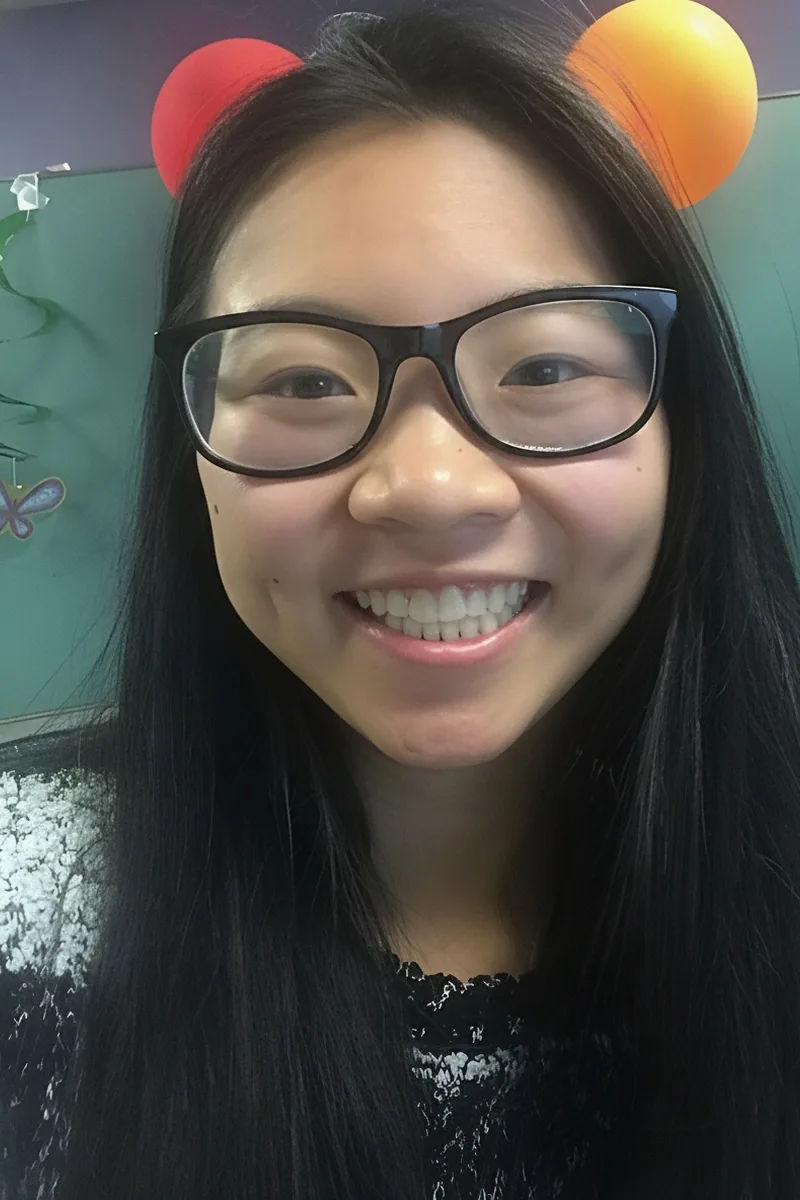
I am graduated from Penn State University in Industrial Engineering in 2017. I've tutored ever since I was in high school, and I love helping people! I like to help my students understand math (and other topics) instead of just doing it blindly. My goal is to help my students improve their math (and other topics) and build skills that will help them find learning easier in the future! Fun fact, I used to work for Disney and I like to salsa dance!
IB Analysis and Approaches demands more than computational skill — the exam expects students to construct proofs, interpret results in context, and navigate both paper 1's non-calculator constraints and paper 3's extended problems. Daniel's background in applied mathematics and computer science aligns closely with the course's emphasis on rigorous reasoning across calculus, algebra, and statistics. He knows how to prepare students for the style of questioning IB examiners actually use.
Having completed the IB program himself before heading to Georgia Tech for aerospace engineering, Vansh knows the Analysis and Approaches curriculum from both sides — as a student who sat the exam and as someone who now uses that math professionally. He digs into the proof-based and exploratory elements of the course, particularly calculus and statistics topics that the IA demands.
Analysis and Approaches leans heavily on pure mathematical reasoning — proof-style thinking, calculus concepts, and algebraic manipulation that many students haven't encountered at that intensity before. Adriana's biochemistry training at Rice meant working through differential equations and statistical models regularly, giving her a practical grip on the topics that dominate Paper 1 and Paper 2. She also knows how to coach students through the exploration component so it reads as genuine mathematical inquiry.
During my Bachelor's studies at the University of Michigan-Dearborn, I was a mathematics and statistics tutor for a year, which I greatly enjoyed. I am currently a fourth-year Ph.D. student studying mathematics at the University of Florida. During my Ph.D. at the University of Florida, I was a teaching assistant for Calculus I, Calculus II, and Precalculus, and I was an instructor for a section of Calculus I. These experiences helped me develop my tutoring skills. Many students see math as a set of formulas that they can apply to the problems on their exams and homework. However, I feel that this way of thinking not only stifles true understanding, but also makes students' lives harder. My teaching philosophy is that if a strong conceptual understanding is built, then students will be well-equipped to answer any question that they can be asked. When I tutor, I make sure that students develop this foundation first and foremost.
IB Analysis and Approaches is one of the most demanding high school math curricula out there, blending proof-based reasoning with heavy calculus and statistics content. Kaitlyn's strength is connecting the course's abstract topics — sequences and series, complex differentiation, probability distributions — to the scientific modeling she does as a medical student. She also knows how to structure study around IB's specific exam format, including the paper 3 investigation component.
IB Analysis and Approaches leans heavily on proof-style reasoning and abstract problem-solving, especially in the HL calculus and algebra units. Juan tackles these topics by connecting them to the applied math he does as an industrial engineering and statistics major at UF, which makes concepts like convergence tests and differential equations feel grounded. His 4.9 rating speaks to how well that approach lands with students.
The Analysis and Approaches course demands genuine mathematical reasoning — from proof-based thinking in functions and sequences to the rigor of calculus at HL. Sidra's biology background means she naturally connects abstract math to applied contexts, which is especially useful for Paper 3's modeling questions. She's patient enough to rework a tricky differential equation or limits problem until the underlying logic is clear.
I hold a Bachelor of Science degree in Mathematics from MIT, with a concentration in Philosophy at Harvard University. I have more than a decade of experience teaching High School Mathematics at international schools in Singapore, Germany, The Netherlands and Mexico. I am fluent in English and Spanish, and also have working proficiency in French, Italian, and German. I tutor Mathematics in both English and Spanish. I specialize in one to one tutoring, where I can tailor lessons to the specific needs of each student. My approach is structured and incremental, building understanding from first principles while encouraging independent thinking and problem solving. My goal is not only exam success, but also lasting confidence in Mathematics. I focus on clarity, solid foundations, and effective study habits that support students well beyond a single course or assessment. Many of my students have improved their grades significantly and gone on to succeed in competitive university programs.
Analysis and Approaches leans heavily on proof-style thinking and algebraic manipulation, especially at HL, but even SL students need to be comfortable with sequences, calculus concepts, and function transformations. Lindsey's double major in biology and maritime studies gave her daily practice applying these exact tools to data analysis and modeling, so she teaches them with that practical lens intact.
IB Math: Analysis and Approaches demands comfort with both rigorous proof-style thinking and applied problem-solving across calculus, algebra, and statistics. Navian's engineering program at UVA overlaps heavily with the HL syllabus — differential equations, vector geometry, and optimization are part of his daily coursework. He knows which exam-style questions tend to combine multiple topics and teaches students to recognize those connections quickly.
I am a current student at the University of Florida pursuing an Accounting degree and Entrepreneurship minor. Math has always been my passion, and I hope to show fellow students the fun in it!
IB Math: Analysis and Approaches packs proof-based reasoning, differential calculus, and probability into a curriculum that rewards deep understanding over formula sheets. Priya's biotechnology background gives her particular strength in the calculus and statistics strands, and she knows how to prepare students for the style of questioning IB examiners favor on Papers 1 and 2.
Having completed the IB diploma program herself — ranking in the academic top ten — Rithika knows the Analysis and Approaches curriculum inside out, from proof-based reasoning and sequences to the exploration (IA) that trips up so many students. She walks through Paper 1 and Paper 2 question styles separately, teaching the specific calculator and non-calculator strategies each one demands.
I am very interested in a career in the medical field, so I am apart of some pre-medical organizations. I really enjoy playing all different sports, from soccer to volleyball to tennis.
I have completed my Bachelor's degree from the University of Florida in both Biology and Business Administration. I currently love to tutor all students in numerous Mathematics and Science subjects as I want to spark that same passion that I have for these subjects. I have significant mastery of mathematics including pre-calculus, algebra 1/2, trigonometry, geometry, statistics, finite math, college level algebra, business math, and quantitative reasoning, etc. I have significant experience in science subjects including biology, chemistry, physics, anatomy, organic chemistry, and biochemistry as well. I love to help students use their logic and problem-solving skills in order to advance their learning ability to a higher degree more efficiently. While learning how to apply these skills in real life situations using both math and science topics, respectively. I like to tailor lesson plans and study strategies to that particular student (as we are all unique) to ensure each student understands the concepts completely. I love to help any and all students ranging from the inquisitive mind to a struggling student trying to achieve an A+ in class!
I am listening to and learning about him or her as an individual. I can also discover what motivates the student during this conversation and plan for how to frame future tutoring sessions in terms of what the student already knows and enjoys.
IB Analysis and Approaches leans heavily on proof-based thinking, from limits and convergence in the calculus units to the rigor expected in Paper 1's non-calculator section. Michelle's science and quantitative background gives her a sharp instinct for the kind of structured reasoning IB examiners reward, and she walks students through past-paper problems to internalize both technique and exam strategy.
IB Analysis and Approaches demands comfort with proof-style reasoning, calculus concepts, and probability at a level most high schoolers haven't encountered before. Alokika's science training gives her a practical grip on the modeling and statistical analysis portions of the curriculum, and she walks through the longer exam-style problems step by step so the logic becomes repeatable.
I am a law student, but I took an unusual route to get there. I used to attend medical school but had a change of heart in my career path. Part of this was due to my political science major (double major with biology) in college as well as a number of Spanish and other courses that I took. Tutoring is something, I feel, that has come naturally to me, even back to my high school days. My goal is to help you learn as much as you can and reach your true potential. I will work hard to make sure that this happens, as long as you put in the work, too! We will work together to tailor your learning experience to your needs.
IB Analysis and Approaches demands both deep conceptual understanding and the ability to apply it under timed exam conditions — from differential calculus to probability distributions. Evan digs into the "why" behind each topic so students can reconstruct solutions even when a problem looks unfamiliar. His interactive, question-driven style keeps sessions from turning into passive lectures.
IB Math AA demands more than calculation speed; the exam's long-form problems require students to connect topics like sequences, differential calculus, and probability in a single question. Noelle's computer science degree gave her deep comfort with abstract mathematical reasoning, and she teaches students to read those multi-part problems strategically rather than panicking at their length.
IB Analysis and Approaches leans heavily on proof-based thinking and abstract reasoning — areas where Payal's physics degree gives her a natural edge. She digs into the calculus, complex numbers, and proof by induction topics that trip up most AA students, connecting each concept to its underlying logic rather than just exam technique. Rated 5.0 by students.
Having gone through the IB program herself — including the rigorous math curriculum — Elizabeth knows firsthand what IB Analysis and Approaches demands, from proof-style reasoning to the internal assessment. She walks students through topics like sequences, differential calculus, and probability distributions with the kind of specificity the IB examiners actually reward.
Having earned his IB diploma at Largo High School, Gabriel completed the full IB Mathematics curriculum firsthand — from differential calculus and complex integration to sequences, series, and probability distributions. He knows the internal assessment inside and out and teaches students how to structure mathematical exploration papers that score well. Rated 4.8 by students.
IB Analysis and Approaches demands comfort with proof-style reasoning and multi-step problems that blend calculus, algebra, and trigonometry into a single question. Antonia's biology degree gave her daily practice with mathematical modeling — exponential growth, logarithmic scales, statistical analysis — which maps directly onto the HL syllabus. She breaks down Paper 1 and Paper 2 strategies so students know how to structure solutions for full marks.
IB Analysis and Approaches is proof-heavy and conceptual in a way that surprises students used to procedural math classes — the exam expects real reasoning about functions, sequences, and differential calculus. Having navigated the IB system herself, Kaya knows how to prepare for both Paper 1's no-calculator rigor and Paper 2's applied problems. She also coaches students through the internal assessment from topic selection to final write-up.
IB Math: Analysis and Approaches demands comfort with proof-style reasoning and multi-step problems that blend calculus, algebra, and statistics in a single question. Allison's physics background gives her fluency with the kind of mathematical modeling the IB curriculum emphasizes, and her eight years of tutoring experience mean she knows how to pace students through both SL and HL content without letting anything slip through the cracks.
Hello, my name is Yosef and I would be happy to serve as a math tutor. I place strong emphasis on a good balance between knowledge of mathematical content and proficiency in problem-solving, reasoning, and conveying mathematical ideas in writing. There are times when a student needs to be informed of a solution, times when he or she also needs to hear the explanation of why the solution works, and times when he or she should be guided to finding the solution on his or her own. It is important for the tutor to recognize which approach is appropriate. Frequently, when students struggle, it is because they do not understand the notation or terminology in use. In such cases, it is important to reassure the student, reminding him or her that he or she is only struggling with understanding a single word, not the entire mathematical concept. As a rule, people perform better and are better motivated when they have self-confidence, not when the task ahead seems frighteningly daunting. It is also important to recognize that different students learn best through different means. As an example, some students are visual learners and can understand the material best through pictures and gestures. Other students learn best through hearing the procedures vocalized, while still others learn best through writing out the steps of the solution procedure. I know to adapt my teaching style to the individual student. with these considerations in mind, I promise to provide the best assistance that I can, taking your individual needs into consideration.
IB Analysis and Approaches leans heavily on proof-based reasoning and abstract problem-solving, especially at the HL boundary — even SL students need comfort with formal mathematical arguments. Rosalyn's university math training at Amherst gives her fluency with the kind of rigorous thinking the course demands, from differential calculus to probability distributions. She adapts her explanations until each concept lands, which is reflected in her 5.0 student rating.
IB Math: Analysis and Approaches demands comfort with proof-based reasoning, extended problem sets, and topics like sequences, complex numbers, and differential equations that go well beyond a standard curriculum. James's physics background aligns closely with the course's emphasis on mathematical modeling and analytical thinking. He's particularly effective at preparing students for Paper 2 and Paper 3 problems that require multi-step synthesis across topics.
I am a recent graduate of Princeton University's Mechanical and Aerospace Engineering Department. I am passionate about teaching and mentoring and have done so in multiple capacities over the last four years, including a fellowship during which I taught pre-algebraic math to a group of middle school students from traditionally underserved backgrounds in Saint Paul, MN. I love interacting with students and seeing them grow over the course of their studies. I'm ecstatic at the opportunity to learn alongside them as we venture into educational rabbit holes and uncover key concepts about math, science, and everything else.
IB Analysis and Approaches demands fluency in calculus, proof-based reasoning, and statistical analysis — all areas Jacques has used professionally as a Princeton-trained chemical engineer. Over 25 years of teaching math and physics in Massachusetts public schools means he knows exactly where students stumble on topics like optimization, differential equations, and the internal assessment's exploration paper.
IB Math: Analysis and Approaches demands fluency across calculus, proof-based reasoning, and mathematical modeling at a level that surprises many students. Ryan's coursework at Cornell in computer science overlaps heavily with the program's emphasis on sequences, series, and formal logic, giving him a practical grip on the material that goes well beyond exam prep.
IB Analysis and Approaches leans heavily on pure mathematical reasoning — proof by induction, complex numbers, and the rigorous side of calculus that standard courses often skip. Terry digs into the "why" behind each theorem and technique, which is exactly what IB examiners reward in Paper 1 and Paper 2 long-response questions. He also walks students through the internal assessment process, from choosing a viable topic to writing a mathematically sound exploration.
IB Analysis and Approaches leans heavily on proof-based reasoning and abstract thinking — from differential calculus to complex number theory. Bryson teaches students to read IB-style questions carefully, map them to the correct technique, and present solutions with the rigor IB examiners expect. His experience across multiple math levels means he can reinforce prerequisite skills on the fly when needed.
Analysis and Approaches is the IB's most proof-heavy math course, demanding comfort with algebraic manipulation, calculus, and formal reasoning all at once. Eshita zeroes in on the areas that tend to sink exam scores — series convergence, optimization problems, and the Paper 3 investigation — and teaches students to structure their written solutions the way examiners want to read them.
I'm currently a Process Assistant at an Amazon warehouse, which is like an assistant manager. My job is interesting, active, and varied, but I missed tutoring and want to make math and other subjects as easy as possible to approach and grasp for students. With the right time and a commitment to tailoring a tutoring style for the person being assisted, any student can pass their classes and retain lifelong knowledge and experience. I'm looking forward to working with you!
Testimonials
Because the right IB Mathematics: Analysis and Approaches tutor makes all the difference.
Average Session Rating – Based on 3.4M Learner Ratings
Nearby IB Mathematics: Analysis and Approaches Tutors
Other Tampa Tutors
Related Math Tutors in Tampa
Frequently Asked Questions
IB Mathematics: Analysis and Approaches focuses on developing deep conceptual understanding rather than just procedural skills. The curriculum covers algebra, functions, trigonometry, calculus, and statistics, with an emphasis on mathematical reasoning and real-world applications.
A tutor specializing in this course can help you see how these topics connect—for example, how the derivative concept builds from limits and functions. This interconnected understanding is crucial for success on the IB exams, where questions often require you to apply multiple concepts together rather than follow a single procedure.
The key difference is the shift from "how do I solve this?" to "why does this work?" IB Mathematics emphasizes mathematical reasoning, proof, and understanding underlying concepts. You'll need to explain your thinking, not just get the right answer.
Many students find this transition challenging because it requires deeper engagement with material. Personalized tutoring can help you bridge this gap by building your conceptual foundation, teaching you how to construct mathematical arguments, and showing you how to communicate your reasoning clearly—all essential skills for the IB assessment.
The Internal Assessment is a mathematical exploration where you investigate a real-world problem or pattern and present your findings. It's worth a significant portion of your grade and requires you to demonstrate deep mathematical thinking, not just calculation skills.
Many students struggle with choosing an appropriate topic or structuring their investigation. A tutor can guide you in selecting a topic that's manageable yet interesting, help you develop a rigorous mathematical approach, and provide feedback on how clearly you're communicating your reasoning—all critical for earning a strong IA grade.
The IB exam consists of three papers: Paper 1 and 2 (multiple choice and short/extended response questions) test core content, while Paper 3 focuses on application, reasoning, and deeper problem-solving. Unlike standardized tests with purely computational questions, IB exams expect you to justify your methods and explain your thinking.
Personalized instruction can help you practice the type of reasoning required for each paper. A tutor can teach you how to approach unfamiliar problems, manage your time across different question types, and develop clear written explanations that earn full marks.
Students often struggle with three main areas: (1) proof-based questions, where you must justify every step; (2) multi-concept problems that require connecting algebra, functions, and calculus; and (3) communicating reasoning clearly on paper rather than just finding answers.
Additionally, word problems and real-world applications can be challenging because they require translating a situation into mathematical language—a skill that takes practice. A tutor can break down problem-solving strategies, help you understand why certain approaches work, and build your confidence in tackling unfamiliar problem types.
Yes. Math anxiety often stems from feeling lost or disconnected from the material, which tutoring directly addresses. When you work with a tutor one-on-one, they can slow down and focus on exactly what's confusing you, breaking concepts into manageable pieces and showing you the patterns and connections that make math click.
Building this understanding—seeing why something works rather than just memorizing steps—is powerful for confidence. As you start solving problems independently and seeing your progress, anxiety typically decreases. For Tampa-area students in IB Mathematics, personalized instruction can transform your relationship with math and position you for success on the final exams.
Varsity Tutors connects you with tutors who have expertise in the IB Mathematics: Analysis and Approaches curriculum and understand the specific demands of IB assessment. When matching, look for tutors with IB experience, strong reviews from other IB students, and availability that fits your schedule.
The best tutors can explain not just how to solve a problem, but why that approach works and how it connects to other concepts you've learned. Don't hesitate to ask potential tutors about their approach to building conceptual understanding and how they help students prepare for the exam and Internal Assessment.
Let’s find your perfect tutor
Answer a few quick questions. We’ll recommend the right plan and match you with a top 5% tutor.