Award-Winning AP Environmental Science Tutors
serving Tampa, FL
AP Environmental Science
Tutors in Tampa
Private 1-on-1 tutoring, weekly live classes for academic support, test prep & enrichment, practice tests and diagnostics, and more to elevate grades and test scores.
Based on 3.4M Learner Ratings
UniversitiesSchools & Universities
DeliveredHours Delivered
ProficiencyGrowth in Proficiency
Who needs tutoring?
No obligation. Takes ~1 minute.
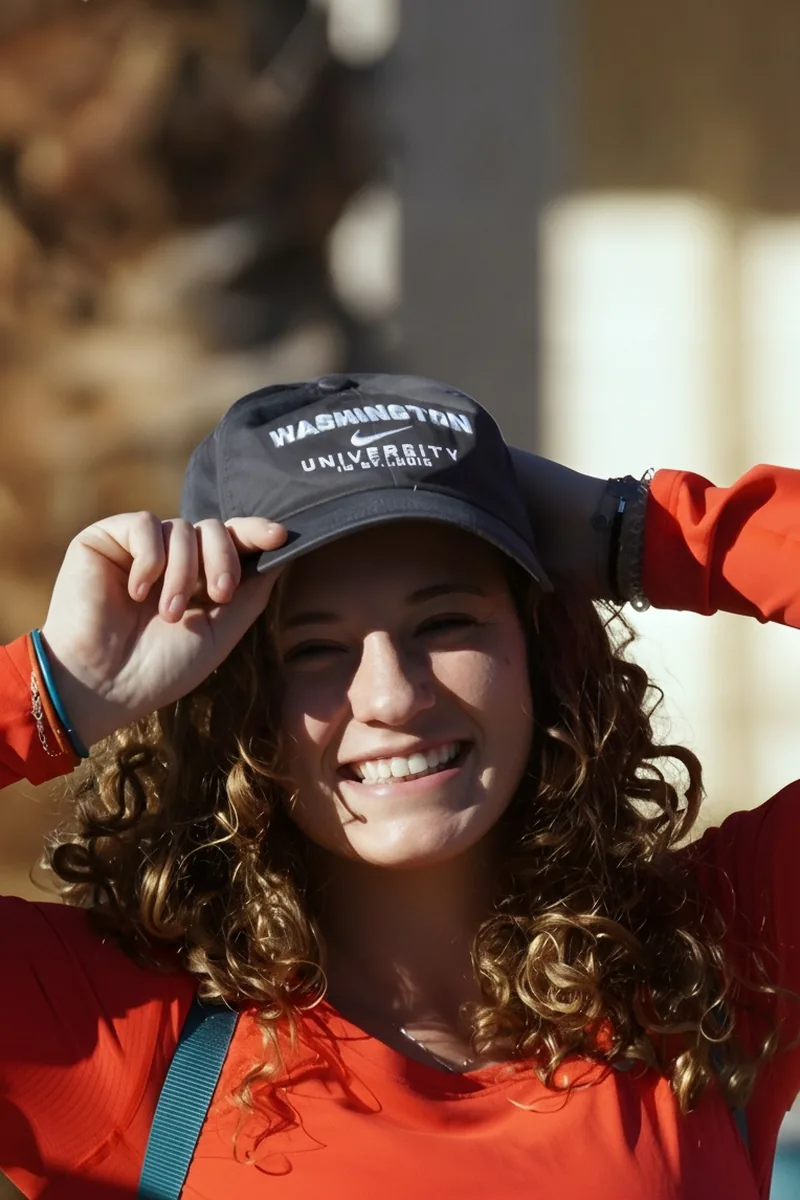
An anthropology degree might seem like an unusual background for APES, but it's surprisingly relevant — Libby understands human-environment interactions, resource use patterns, and cultural dimensions of environmental policy, which are exactly the themes the exam's free-response questions probe. She teaches students to think about ecological problems through the lens of human systems, connecting topics like land use, pollution, and sustainability to the societal forces driving them. Rated 5.0 by students.

Neuroscience teaches you to think about interconnected systems — how a single disruption cascades through networks of dependent processes — and Ankit applies that same framework to APES topics like trophic cascades, biogeochemical disruptions, and feedback loops in climate systems. His dual background in neuroscience and computer science at Duke, combined with a perfect 36 ACT, means he's comfortable with both the conceptual modeling and the quantitative problem-solving the exam demands.
Political science might seem distant from APES, but Emily's government background is a real asset for the policy-heavy free-response questions — evaluating legislation like the Clean Air Act, weighing economic trade-offs of resource management, and constructing evidence-based arguments about environmental regulation. She pairs that with a 34 ACT and the visual-thinking skills of a trained photographer, which means she's unusually effective at teaching students to extract information from the data tables, diagrams, and graphs the exam relies on. Rated 5.0 by students.
Stanford's Science, Technology, and Society major sits at the exact intersection APES lives in — where ecological science meets human systems, policy decisions, and technological trade-offs. Rithika's IB and National AP Scholar background means she's already navigated the kind of interdisciplinary, essay-heavy exams that APES models itself on, and she uses that experience to teach students how to connect scientific evidence to real-world environmental consequences in their free-response answers.
Brett earned three bachelor's degrees and a master's in biology, which means topics like biogeochemical cycles, ecosystem energy flow, and population ecology aren't just APES vocabulary for him — they're concepts he studied repeatedly across multiple degree programs. He brings that layered understanding to the lab-design and data-analysis questions where students need to explain mechanisms, not just label diagrams. Rated 5.0 by students.
Biology majors have a built-in advantage on APES because so much of the course — population ecology, biogeochemical cycles, biodiversity — is rooted in the life sciences Jenna studies every day. She connects that biological grounding to the environmental policy and human-impact questions the exam layers on top, and teaches students to write FRQ answers that trace ecological cause-and-effect rather than just list vocabulary. Rated 5.0 by students.
Cellular and molecular biology at Johns Hopkins means Christopher studies the biochemical machinery behind processes like photosynthesis, decomposition, and nitrogen fixation — the same mechanisms that drive the ecosystem-level concepts APES tests on. He bridges that molecular understanding to big-picture topics like climate feedback loops and biodiversity loss, giving students the mechanistic "why" behind each environmental process instead of just a surface-level definition.
Gordon's biology degree from Arizona State and his Teach for America experience mean he's taught environmental science concepts to students with wildly different starting points — from kids encountering food webs for the first time to premed undergrads already comfortable with biochemical cycles. That range sharpened his ability to adjust explanations on the fly, which pays off on APES units like global water resources and soil degradation where students need to toggle between memorized vocabulary and applied problem-solving within the same free-response question.
Most APES students can memorize vocabulary lists but freeze when a free-response question asks them to explain how a neurotoxin moves through a food web or why bioaccumulation affects top predators disproportionately — Jhonatan's neuroscience specialization means he actually understands those biological mechanisms at the molecular level. He teaches students to trace environmental disruptions through living systems rather than treating each unit as isolated content, which is the connective thinking the exam scores highest. Rated 5.0 by students.
Brown's public health curriculum digs into the human side of environmental problems — epidemiology, toxicology, resource policy — and Paul pairs that perspective with a biology major's understanding of the ecological systems APES actually tests. He teaches students to connect pollution sources to health outcomes and trace nutrient cycles through ecosystems, building the kind of layered cause-and-effect reasoning that earns full marks on free-response questions. Rated 5.0 by students.
Studying biological sciences means Liana is learning the underlying mechanisms — cellular respiration, nutrient cycling, population growth models — that APES questions are built on, rather than encountering them as isolated vocabulary terms. She breaks down topics like energy flow and species interactions using the same biological logic her college coursework demands, which pays off on free-response questions that ask students to explain processes rather than just name them. Rated 4.9 by students.
Business students learn to think in systems — supply chains, market feedback loops, cost-benefit trade-offs — and Myna applies that same framework to APES topics like resource depletion, environmental policy trade-offs, and the economic arguments embedded in free-response questions about sustainability. Her 34 ACT reflects sharp reading comprehension and data interpretation skills, which she channels into breaking down the graphs, experimental designs, and calculation problems that catch students off guard on exam day.
Eric's degree in Ecology & Evolutionary Biology means he studied the actual science behind APES — population ecology, species interactions, and ecosystem-level processes — not just the survey-course version. He teaches students to think about environmental problems the way an ecologist would, tracing how a disturbance like deforestation or nutrient loading ripples through trophic levels and feedback loops until the full picture clicks.
Chemical engineering coursework at Princeton drills material and energy balances — tracking what flows in, what transforms, and what flows out — which maps directly onto APES topics like biogeochemical cycles, pollution transport, and energy resource calculations. Satya applies that systems-level thinking to the exam's quantitative questions, breaking down ecological footprint math and efficiency problems with an engineer's precision. A perfect 36 ACT score speaks to the data-interpretation and scientific reasoning skills the free-response section demands.
Kiera is majoring in Ecology and Evolutionary Biology at Dartmouth, which means she's studying biodiversity, population dynamics, and ecosystem interactions at a level well beyond what the APES exam requires — and her engineering modification adds the quantitative rigor needed for calculations like energy transfer efficiency and ecological footprint math. She scored a 35 on the ACT and holds a 5.0 tutoring rating, bringing that same precision to the data-analysis and experimental-design questions that make up the bulk of the free-response section.
I am a 3rd year bio major at GT with minors in biochemistry and computer science. My tutoring subjects are math, bio, and chem. I have tutored for a few years, and I have also TAed! My favorite subjects are general chemistry and molecular biology (: My personal belief is that anyone can enjoy a subject once they truly understand it.
Three years working on organic farms and sustainable land stewardship projects gave Dylan firsthand experience with the biogeochemical cycles, soil science, and ecosystem dynamics that AP Environmental Science tests in detail. He connects FRQ-style questions back to real fieldwork — explaining nutrient runoff or biodiversity loss through situations he's actually observed — which makes the material stick far better than rote review.
Training as a family medicine resident means Jordan regularly encounters the real-world health consequences of environmental issues — lead exposure, air quality-driven asthma, waterborne illness — which gives her a clinical lens on APES units covering pollution, toxicology, and human impact that most tutors can't offer. She teaches students to think through dose-response relationships and environmental health data the way a physician evaluates a patient, building the cause-and-effect reasoning that free-response questions reward. Rated 5.0 by students.
Testimonials
Because the right AP Environmental Science tutor makes all the difference.
Average Session Rating – Based on 3.4M Learner Ratings
Practice AP Environmental Science
Free practice tests, flashcards, and AI tutoring for AP Environmental Science
Nearby AP Environmental Science Tutors
Other Tampa Tutors
Related Science Tutors in Tampa
Frequently Asked Questions
Score improvement depends on your starting point and commitment level, but many students see meaningful gains with focused preparation. If you're starting from a 2-3, reaching a 4 is realistic with consistent study. Students already scoring 3-4 often push to a 4-5 by targeting weak content areas and mastering free-response writing. The key is identifying exactly where you're losing points—whether it's Unit 1 concepts like photosynthesis and energy flow, or Unit 8 global issues—and drilling those specific topics with practice tests to build confidence.
The AP Environmental Science exam covers eight units: Unit 1 (Energy and Ecosystems), Unit 2 (The Living World), Unit 3 (Populations), Unit 4 (Earth Systems and Resources), Unit 5 (Land and Water Use), Unit 6 (Energy Resources and Consumption), Unit 7 (Atmospheric Pollution and Climate Change), and Unit 8 (Human Impact on the Environment). The exam is 70% multiple-choice and 30% free-response, with a heavy emphasis on data interpretation, graphing skills, and understanding cause-and-effect relationships in environmental systems. Many students in Tampa find units on water systems and climate change particularly challenging due to their complexity.
The three free-response questions (worth 70 points combined) require you to demonstrate deep understanding and analytical skills. Start by reading each question carefully—many ask you to "explain," "analyze," or "predict," which require different types of responses. Allocate roughly 20-25 minutes per question, and structure your answer with clear topic sentences and evidence-based explanations. A strong approach is to identify the concept being tested (like nutrient cycling or carrying capacity), explain the underlying science, and then apply it to the specific scenario. Practice tests are essential here—aim to complete at least 5-10 full free-response sets before test day to build speed and clarity in your writing.
You have roughly 90 minutes for 80 multiple-choice questions, which breaks down to about 67 seconds per question. This tight pacing is a common challenge for AP Environmental Science students. The strategy is to move quickly through questions you recognize (often Unit 1 and Unit 2 content) in under a minute, giving yourself extra time for data interpretation questions and scenario-based questions that require more analysis. If a question stumps you after 60 seconds, mark it and move on—you can return at the end if time permits. Practicing with timed sections helps you develop a rhythm and identify which question types consistently slow you down.
Most students struggle with three key areas: (1) quantitative concepts like calculating biomass transfer between trophic levels, NPP vs GPP, and energy efficiency, (2) climate science including greenhouse gas mechanisms and feedback loops, and (3) data interpretation questions that require you to read graphs, tables, and charts accurately. Students in Tampa often report that Unit 7 (Atmospheric Pollution and Climate Change) requires the most careful study because it combines complex chemistry with systems thinking. Unit 3 (Populations) is another stumbling block due to population models and growth equations. Targeted tutoring on these units, combined with repeated practice with similar question types, makes a significant difference in test day performance.
Most students benefit from 3-4 months of consistent preparation, dedicating 5-8 hours per week to reviewing content, completing practice problems, and taking full-length practice tests. If you're starting later in the year, focus first on high-value units (Units 1-3 and Unit 7) that appear frequently on the exam, then work backward. In your final 2-3 weeks, shift to full-length practice tests and targeted review of your weakest areas. A typical study schedule might look like: weeks 1-8 learning content and completing practice sets, weeks 9-12 taking full-length practice tests and analyzing mistakes, and the final week reviewing weak topics and building test-day confidence. Consistency matters more than cramming.
Varsity Tutors connects you with tutors who specialize in AP Environmental Science and understand exactly where students typically struggle. A tutor can help you develop a personalized study plan based on your current level, break down complex topics like nutrient cycles or population dynamics into understandable pieces, and provide targeted feedback on your free-response writing. Tutors also help you build test-taking strategies—like how to manage timing on the multiple-choice section, how to avoid common mistakes on quantitative problems, and how to structure high-scoring free-response answers. For students in Tampa juggling multiple classes and activities, personalized 1-on-1 instruction makes it easier to stay on track and address weak areas before test day.
Let’s find your perfect tutor
Answer a few quick questions. We’ll recommend the right plan and match you with a top 5% tutor.