Award-Winning AP Environmental Science Tutors
serving Miami, FL
AP Environmental Science
Tutors in Miami
Private 1-on-1 tutoring, weekly live classes for academic support, test prep & enrichment, practice tests and diagnostics, and more to elevate grades and test scores.
Based on 3.4M Learner Ratings
UniversitiesSchools & Universities
DeliveredHours Delivered
ProficiencyGrowth in Proficiency
Who needs tutoring?
No obligation. Takes ~1 minute.
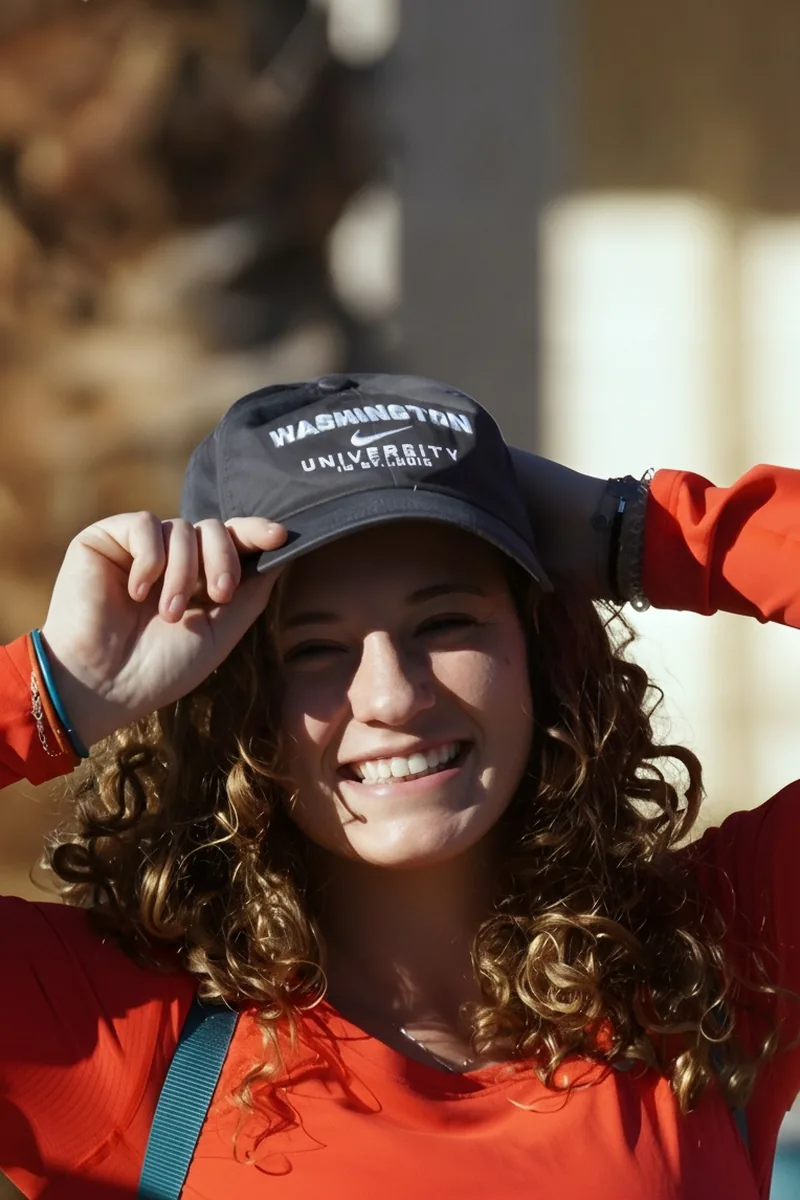
An anthropology degree might seem like an unusual background for APES, but it's surprisingly relevant — Libby understands human-environment interactions, resource use patterns, and cultural dimensions of environmental policy, which are exactly the themes the exam's free-response questions probe. She teaches students to think about ecological problems through the lens of human systems, connecting topics like land use, pollution, and sustainability to the societal forces driving them. Rated 5.0 by students.

Neuroscience teaches you to think about interconnected systems — how a single disruption cascades through networks of dependent processes — and Ankit applies that same framework to APES topics like trophic cascades, biogeochemical disruptions, and feedback loops in climate systems. His dual background in neuroscience and computer science at Duke, combined with a perfect 36 ACT, means he's comfortable with both the conceptual modeling and the quantitative problem-solving the exam demands.
Political science might seem distant from APES, but Emily's government background is a real asset for the policy-heavy free-response questions — evaluating legislation like the Clean Air Act, weighing economic trade-offs of resource management, and constructing evidence-based arguments about environmental regulation. She pairs that with a 34 ACT and the visual-thinking skills of a trained photographer, which means she's unusually effective at teaching students to extract information from the data tables, diagrams, and graphs the exam relies on. Rated 5.0 by students.
Stanford's Science, Technology, and Society major sits at the exact intersection APES lives in — where ecological science meets human systems, policy decisions, and technological trade-offs. Rithika's IB and National AP Scholar background means she's already navigated the kind of interdisciplinary, essay-heavy exams that APES models itself on, and she uses that experience to teach students how to connect scientific evidence to real-world environmental consequences in their free-response answers.
Brett earned three bachelor's degrees and a master's in biology, which means topics like biogeochemical cycles, ecosystem energy flow, and population ecology aren't just APES vocabulary for him — they're concepts he studied repeatedly across multiple degree programs. He brings that layered understanding to the lab-design and data-analysis questions where students need to explain mechanisms, not just label diagrams. Rated 5.0 by students.
Biology majors have a built-in advantage on APES because so much of the course — population ecology, biogeochemical cycles, biodiversity — is rooted in the life sciences Jenna studies every day. She connects that biological grounding to the environmental policy and human-impact questions the exam layers on top, and teaches students to write FRQ answers that trace ecological cause-and-effect rather than just list vocabulary. Rated 5.0 by students.
Finance majors learn to model complex systems with multiple interacting variables — resource scarcity, cost-benefit trade-offs, long-term risk — and Rinky applies that same analytical framework to APES topics like resource depletion, environmental cost analysis, and sustainability trade-offs that show up heavily in free-response prompts. Her 1520 SAT and 5.0 tutoring rating speak to the precision she brings when walking through the data-interpretation and calculation questions that surprise students expecting a soft science course.
Cellular and molecular biology at Johns Hopkins means Christopher studies the biochemical machinery behind processes like photosynthesis, decomposition, and nitrogen fixation — the same mechanisms that drive the ecosystem-level concepts APES tests on. He bridges that molecular understanding to big-picture topics like climate feedback loops and biodiversity loss, giving students the mechanistic "why" behind each environmental process instead of just a surface-level definition.
Running a marine biology summer camp means Zoey has taught kids to trace real ecological relationships — predator-prey dynamics, nutrient runoff in coastal systems, habitat loss from human development — which map directly onto the APES curriculum's core units. Her master's in marine biology gives her the field-level understanding of biodiversity, conservation, and ecosystem interactions that turns abstract exam topics into concrete examples students actually remember. Rated 4.9 by students.
Most APES students can memorize vocabulary lists but freeze when a free-response question asks them to explain how a neurotoxin moves through a food web or why bioaccumulation affects top predators disproportionately — Jhonatan's neuroscience specialization means he actually understands those biological mechanisms at the molecular level. He teaches students to trace environmental disruptions through living systems rather than treating each unit as isolated content, which is the connective thinking the exam scores highest. Rated 5.0 by students.
Premed coursework in human biology builds an intuitive grasp of the biological systems that APES questions test — nutrient cycling, population growth models, and the health consequences of environmental degradation aren't abstract concepts for Sharan, they're threads running through his own studies at Cornell. He scored a 36 on the ACT, and that same precision with data shows up in how he teaches students to work through the math-based questions on ecological footprints and resource consumption that the exam buries between the conceptual material. Rated 5.0 by students.
Shawn's master's in chemistry gives him a molecular-level understanding of the processes that drive APES content — ocean acidification equilibria, nitrogen fixation pathways, ozone depletion mechanisms — so he can explain the why behind environmental phenomena instead of just naming them. He also teaches the course's surprisingly tricky math, from parts-per-million conversions to energy budget calculations, with the comfort of someone who's done far harder stoichiometry. Rated 4.9 by students.
Hello, students! My name is Pranav, and I'm so excited to be tutoring with Varsity Tutors. I have vast experience tutoring both personally and professionally; I've held officer positions in several nonprofit organizations, including STEMpals and The Do Re Mi Project, teaching courses ranging from biology to music theory. I took 16 AP courses throughout high school with all 5s, and I earned a 1570 on my SAT, so I'm pretty familiar with the majority of academic subjects! I have experience tutoring any and all skill levels, and I'm always open to expanding my horizons, so please don't hesitate to book your first lesson. I'm looking forward to meeting with you!
Chemical engineering coursework at Princeton drills material and energy balances — tracking what flows in, what transforms, and what flows out — which maps directly onto APES topics like biogeochemical cycles, pollution transport, and energy resource calculations. Satya applies that systems-level thinking to the exam's quantitative questions, breaking down ecological footprint math and efficiency problems with an engineer's precision. A perfect 36 ACT score speaks to the data-interpretation and scientific reasoning skills the free-response section demands.
A Harvard-trained researcher who wrote his senior thesis on John Dewey's philosophy of education, Henry connects AP Environmental Science topics like biogeochemical cycles and ecosystem dynamics to the real-world policy debates that make them matter. He teaches students to interpret data sets and construct free-response answers that earn full credit by linking evidence to scientific claims.
Todd's biology degree from UIUC gives him the ecological and cellular foundations that underpin APES topics like nutrient cycling, energy flow through trophic levels, and ecosystem disruption — and his social work training adds a surprisingly useful lens for the policy and human-impact questions that dominate the free-response section. He teaches students to trace cause-and-effect across units, which is the skill the exam actually scores on. Rated 5.0 by students.
Cognitive science trains you to think in systems — how inputs, feedback loops, and cascading effects connect across complex networks — which maps surprisingly well onto APES topics like biogeochemical cycles, ecosystem disruption, and human-environment feedback. Zachary applies that systems-thinking lens to help students trace cause-and-effect chains across units, which is the skill that separates 3s from 5s on the free-response section. He scored a 32 on the ACT and carries a 4.8 tutoring rating.
A history and political science background turns out to be a real asset for the APES units on environmental legislation, resource policy, and the human-systems questions that dominate the free-response section — Andrew can explain why the Clean Air Act matters in both a political and ecological context. He also tutors across math and science, so he's comfortable walking through the quantitative problems like resource depletion rates and energy calculations that trip up students who expected a purely memorization-based course.
Testimonials
Because the right AP Environmental Science tutor makes all the difference.
Average Session Rating – Based on 3.4M Learner Ratings
Practice AP Environmental Science
Free practice tests, flashcards, and AI tutoring for AP Environmental Science
Nearby AP Environmental Science Tutors
Other Miami Tutors
Related Science Tutors in Miami
Frequently Asked Questions
Score improvement depends on your starting point and commitment level, but students typically see meaningful gains within 8-12 weeks of consistent preparation. Many students improve by 1-2 points on the AP scale (which ranges from 1-5), though those starting with foundational gaps often see larger jumps. The key is identifying which sections of the exam—the multiple-choice questions, free-response questions, and data analysis problems—are holding you back, then targeting those weaknesses with focused practice.
Free-response questions require you to explain concepts clearly and apply them to real-world scenarios—which is different from multiple-choice. The best strategy is to practice writing under timed conditions (typically 10 minutes per question) and learn how the College Board grades these responses. Many students struggle with being concise while hitting all the points scorers look for. Working with a tutor who understands the specific rubrics used for AP Environmental Science can help you structure answers to maximize points, especially on questions requiring calculations or data interpretation.
Most students benefit from 3-4 months of consistent preparation if starting from a solid foundation in the course material. If you're behind or struggling with specific units (like biogeochemical cycles or energy flow), starting earlier—around 5-6 months out—gives you time to fill gaps without cramming. Aim for 5-7 hours per week during the regular school year, ramping up to 10+ hours weekly in the final 4-6 weeks before the May exam. This should include active practice with past exam questions, not just passive review of notes.
Students in Miami and across the country frequently struggle with biogeochemical cycles (nitrogen, carbon, phosphorus), population ecology calculations, and quantitative reasoning with data sets. These topics appear heavily on both the multiple-choice and free-response sections. The challenge is that they require understanding complex systems and being able to apply math skills—not just memorization. Targeted tutoring on these topics, combined with repeated practice working through problems step-by-step, helps build the confidence and fluency you need to handle them on test day.
Test anxiety often peaks when you're unsure of your strategy or unfamiliar with question formats. Build confidence by taking full-length practice tests under timed conditions—this removes the surprise factor on exam day. During the test, manage your time by skipping difficult multiple-choice questions and returning to them later, and allocate your free-response time strategically. Many students also find it helpful to review their practice test mistakes with a tutor to identify patterns (Are you rushing? Misreading questions? Struggling with specific concepts?) and address them before test day.
Varsity Tutors connects you with expert tutors experienced in AP Environmental Science preparation for students in Miami. When you get matched with a tutor, look for someone who has helped other students prepare for the AP exam and understands the specific format and content the College Board tests. A good tutor will assess your current level, identify your weak areas, and create a customized study plan rather than just reviewing the entire curriculum. Many tutors also have experience with Miami-area high schools and understand the specific preparation approach your school may emphasize.
Start with released AP exams and free-response questions from the College Board website—these are the gold standard because they match the actual exam format exactly. Supplement with your textbook's practice problems and your teacher's materials, which help reinforce conceptual understanding. Many students also benefit from practice question banks that let you drill specific topics (like population ecology or ecosystem services). Working through these resources with a tutor is especially valuable because they can explain why an answer is correct and help you recognize question patterns that appear year after year on the AP exam.
Let’s find your perfect tutor
Answer a few quick questions. We’ll recommend the right plan and match you with a top 5% tutor.