Award-Winning AP Chemistry Tutors
serving Washington, DC
AP Chemistry
Tutors in Washington
Private 1-on-1 tutoring, weekly live classes for academic support, test prep & enrichment, practice tests and diagnostics, and more to elevate grades and test scores.
Based on 3.4M Learner Ratings
UniversitiesSchools & Universities
DeliveredHours Delivered
ProficiencyGrowth in Proficiency
Who needs tutoring?
No obligation. Takes ~1 minute.
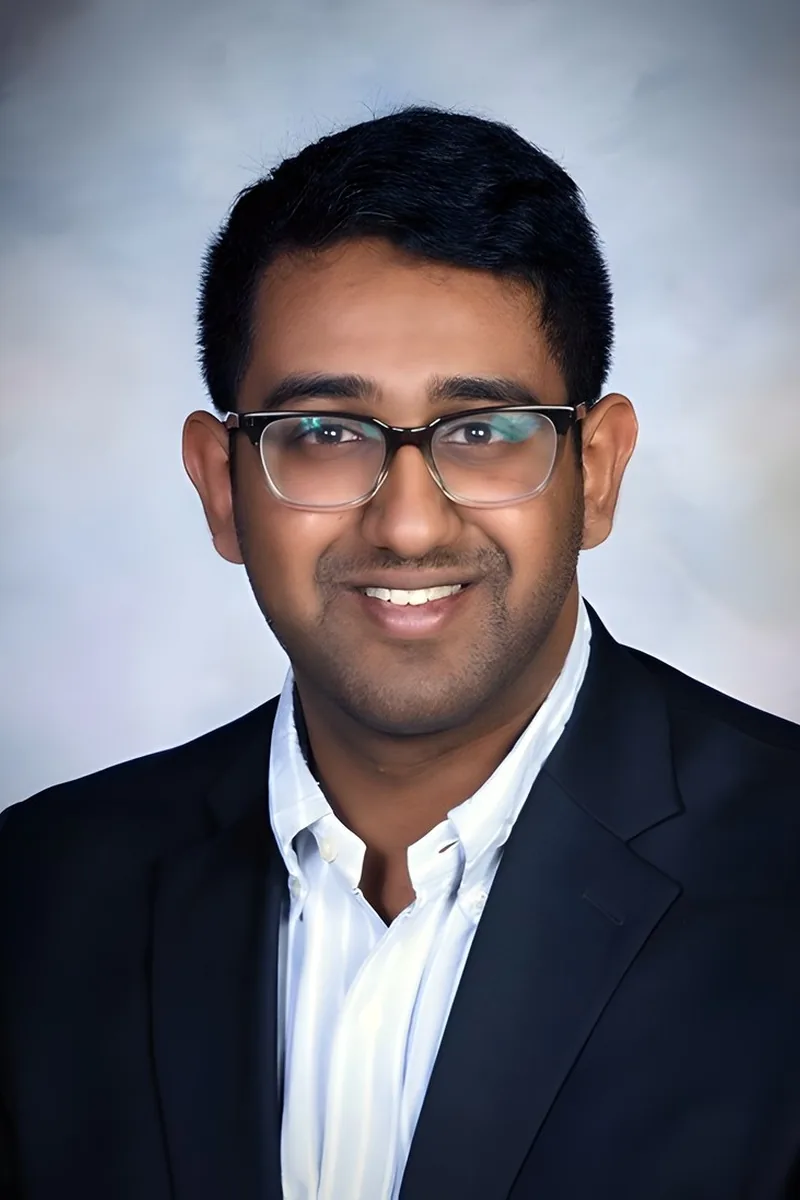
Cornell's chemical engineering program put Rahul through physical chemistry, thermodynamics, and reaction engineering courses where AP Chemistry concepts like enthalpy, equilibrium, and kinetics were just the starting point — so he can teach those topics with the depth that makes free-response questions feel manageable. He's especially sharp on thermochemistry, his self-described favorite, and connects energy diagrams and Hess's law to the industrial-scale processes he studied as an engineer. Rated 4.9 by students.

AP Chemistry's toughest stretch for most students is the leap from stoichiometry into equilibrium, thermodynamics, and electrochemistry, where conceptual reasoning matters as much as calculation. Jhonatan's extensive lab science background in biological sciences means he thinks about chemical principles in applied contexts — reaction kinetics, buffer systems, Gibbs free energy — and explains them with that same concreteness.
Enric earned his PhD in Chemistry, which means AP Chem topics like equilibrium, thermodynamics, and kinetics aren't just exam material — they're the foundation of his professional expertise. He knows which free-response question styles the College Board favors and teaches students to connect particulate-level reasoning to macroscopic observations, the skill that separates 4s from 5s. Rated 5.0.
In 2022, I completed my Ph.D. in Chemistry at Vanderbilt University. My goal is to use my expertise in chemistry, algebra, and calculus to help students not only learn but also enjoy these subjects. My favorite subject to teach is general chemistry as it highlights the importance of interdisciplinary study combining, physics, math, and even biology. While my degree expertise lies in chemistry, I am equally adapt in teaching all levels of mathematics. I take pride in reinforcing mathematics concepts with tangible applications in other fields to highlight its importance and making learning interesting.
Equilibrium calculations and thermodynamics tend to be the units where AP Chemistry separates students who understand the 'why' from those running on memorized procedures. Sharan digs into the conceptual logic behind Le Chatelier shifts and Gibbs free energy so that quantitative problems feel like extensions of ideas, not isolated formulas. Her premed science background at Cornell keeps her sharp on exactly the kind of rigorous problem-solving the AP exam rewards.
Computational biology at Cornell means Emily lives at the intersection of quantitative reasoning and molecular science — she's worked through the same college-level chemistry that AP students are preparing for, but with the added demand of modeling chemical systems computationally. She teaches topics like equilibrium and reaction energetics by emphasizing the mathematical structure underneath, so students learn to read what equations are actually telling them about molecular behavior. Rated 4.9 by students.
Thermodynamics, electron orbitals, kinetics — AP Chemistry sits right at the intersection of Dennis's physics and math training. His research simulating turbulent plasmas and designing optical filters required deep fluency with atomic behavior and energy transfer, so he explains concepts like equilibrium and electrochemistry through the underlying physics rather than just memorized rules.
Thermodynamics, equilibrium, and reaction kinetics form the backbone of AP Chemistry — and they're also foundational to Owen's neuroscience studies at Brown, where understanding chemical behavior at the molecular level is non-negotiable. He unpacks abstract concepts like Gibbs free energy and intermolecular forces by tying them to tangible examples, making the logic behind each problem visible before students ever touch a calculator.
Rice University's biology curriculum gave Perry a college chemistry foundation built around real applications — understanding how Le Chatelier's principle governs physiological buffering, or why Gibbs free energy determines whether a metabolic pathway runs forward. He brings that applied lens to AP Chemistry's free-response questions, teaching students to reason through problems rather than pattern-match from practice sets. Rated 5.0 by students.
AP Chemistry's free-response questions demand more than correct calculations — they want students to explain why a reaction proceeds, connect molecular structure to macroscopic behavior, and justify claims with particulate-level reasoning. Jake digs into those conceptual explanations alongside the quantitative work, so students aren't blindsided by the written portions of the exam.
AP Chemistry's toughest sections — equilibrium, thermodynamics, electrochemistry — demand both conceptual understanding and fast quantitative reasoning. Brian brings strong analytical instincts from his Caltech science training, where rigorous problem-solving across disciplines was the norm. He breaks down multi-step free-response problems into the kind of logical chains that earn full credit on exam day.
Cornell's environmental engineering program requires a chemistry sequence heavy on aqueous equilibria, redox reactions, and thermodynamics — exactly the content that dominates AP Chemistry's most demanding free-response questions. Akanksha draws on that coursework plus her experience teaching chemistry through Cornell's STEP program to walk students through topics like acid-base titrations and reaction energetics with real-world environmental applications that make the material stick. Rated 4.8 by students.
Testimonials
Because the right AP Chemistry tutor makes all the difference.
Average Session Rating – Based on 3.4M Learner Ratings
Practice AP Chemistry
Free practice tests, flashcards, and AI tutoring for AP Chemistry
Other Washington Tutors
Related Science Tutors in Washington
Frequently Asked Questions
Score improvement depends on your starting point and consistency with tutoring. Students who work with tutors typically see gains of 1-2 points on the AP scale (out of 5), though some improve more significantly by addressing specific weak areas like equilibrium or thermodynamics. The key is identifying which concepts are holding you back—whether it's lab calculations, free-response writing, or multiple-choice strategy—and targeting those gaps systematically.
Yes. Varsity Tutors connects you with expert tutors who are familiar with the full AP Chemistry curriculum, including atomic structure, bonding, kinetics, thermodynamics, equilibrium, acid-base chemistry, electrochemistry, and organic chemistry. Tutors can work through the entire course with you or focus on specific units where you're struggling, depending on your timeline and needs.
Many students struggle with conceptual understanding of equilibrium and Le Chatelier's principle, as well as multi-step stoichiometry and thermodynamic calculations. Free-response questions—especially those requiring written explanations and lab analysis—also trip up students who can do calculations but struggle to communicate their reasoning. A tutor can help you build both computational fluency and the ability to explain your thinking clearly, which is critical for the exam.
The AP Chemistry exam has 60 multiple-choice questions (90 minutes) and 3 free-response questions (90 minutes), so pacing is crucial. Tutors can teach you to spend roughly 1-1.5 minutes per multiple-choice question and allocate 20-30 minutes per free-response question. Practice tests under timed conditions are essential—they help you identify which question types slow you down and develop strategies to work more efficiently without sacrificing accuracy.
Practice tests are one of the most effective study tools for AP Chemistry. They help you understand the exam format, identify weak content areas, and build stamina for the full 3-hour test. Tutors typically recommend taking full-length practice tests every 2-3 weeks during prep, then reviewing your mistakes in detail. This cycle of testing, analysis, and targeted review is what drives real score improvement.
Lab questions appear in both the multiple-choice and free-response sections and test your understanding of experimental design, data analysis, and error analysis. You don't need to memorize specific lab procedures, but you should understand core concepts like controlling variables, interpreting graphs, and explaining why certain results occur. Tutors can walk you through released exam lab questions to help you recognize patterns and develop a systematic approach to these questions.
Test anxiety often stems from uncertainty about content or exam format. Working with a tutor builds confidence through repeated practice with real exam questions, mastery of challenging concepts, and familiarity with what to expect on test day. Tutors can also teach you practical test-taking strategies—like how to manage difficult questions, when to skip and return, and how to check your work—which reduces the feeling of being overwhelmed during the actual exam.
Your first session typically involves an assessment of your current knowledge, understanding of your goals (whether you're aiming for a 3, 4, or 5), and identifying which topics feel most confusing. The tutor will then create a personalized study plan that prioritizes your weak areas and aligns with your timeline before the exam. This foundation ensures that every subsequent session is focused and efficient.
Let’s find your perfect tutor
Answer a few quick questions. We’ll recommend the right plan and match you with a top 5% tutor.