Award-Winning AP Physics C: Electricity and Magnetism Tutors
serving Washington, DC
AP Physics C: Electricity and Magnetism
Tutors in Washington
Private 1-on-1 tutoring, weekly live classes for academic support, test prep & enrichment, practice tests and diagnostics, and more to elevate grades and test scores.
Based on 3.4M Learner Ratings
UniversitiesSchools & Universities
DeliveredHours Delivered
ProficiencyGrowth in Proficiency
Who needs tutoring?
No obligation. Takes ~1 minute.
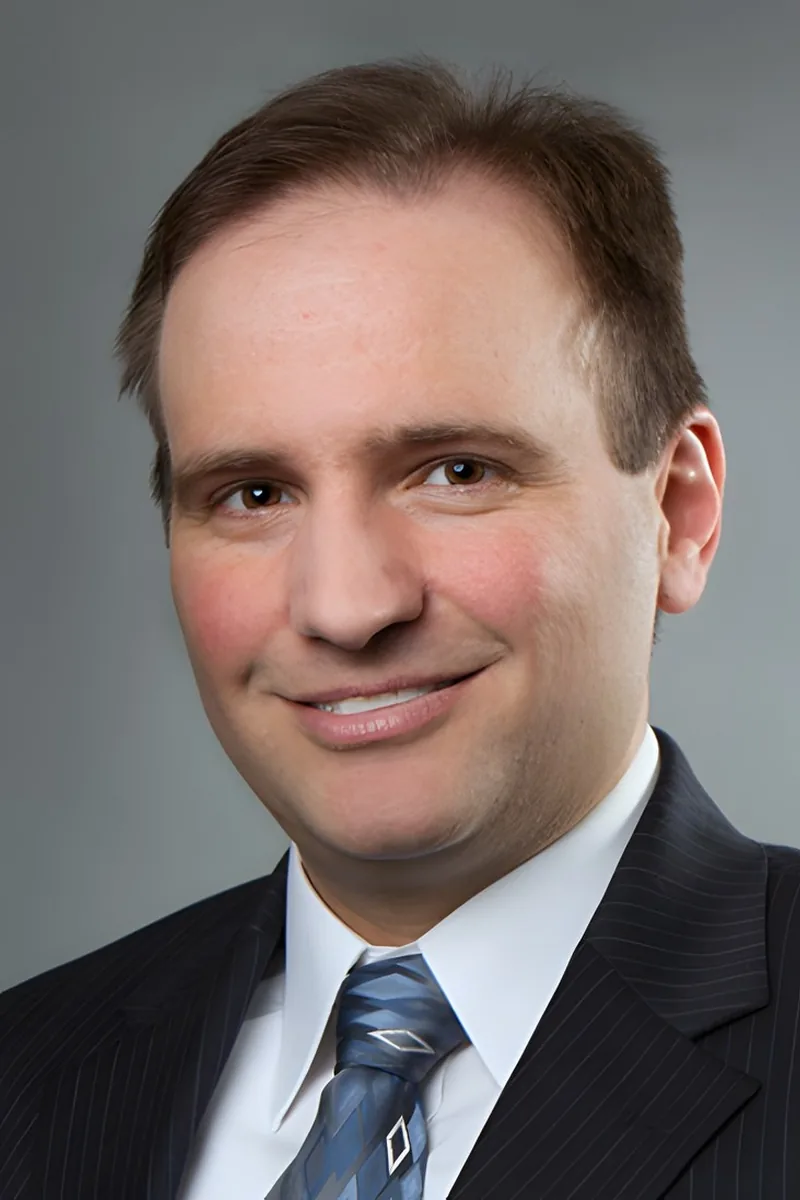
During his physics PhD, Jonathan taught E&M at the university level — not just the conceptual overview, but the full calculus-heavy treatment of Maxwell's equations, dielectric materials, and magnetic induction that AP Physics C demands. He walks students through the reasoning behind each problem setup, showing how to identify symmetry, choose the right integration path, and connect the math back to what the fields are actually doing. Rated 5.0 by students.

Gauss's law, Ampère's law, Faraday's law — E&M asks students to visualize invisible fields and then describe them with vector calculus. David approaches each topic by first making the field geometry concrete, using symmetry arguments and sketches before diving into surface or line integrals. His physics coursework gives him firsthand familiarity with the exact problem types and conceptual traps the AP exam targets.
AP Physics C: E&M is where calculus and physics collide — Gauss's law integrals, Faraday's law, RC circuits, and Maxwell's equations all demand fluency in both. As a mechanical engineering student at Purdue, Austin uses these concepts daily and can unpack the vector calculus behind electromagnetic fields in a way that makes the math feel purposeful. Rated 4.9 by students.
Gauss's law, Ampère's law, Faraday's law — AP Physics C: E&M asks students to think in vector fields and surface integrals, which is a major leap from mechanics. As an astrophysics and chemistry double major at CU Boulder, Graham works with electromagnetic theory as a core part of his studies and breaks down each law into the physical picture behind the math. He holds a 5.0 rating from students.
Gauss's law, Ampère's law, RC circuits, electromagnetic induction — E&M demands that students think in vector fields and apply calculus to invisible phenomena. As a Stony Brook physics major who also codes simulations, Kiran unpacks these abstractions by walking through the physical setup before touching an integral, which turns intimidating problems into a sequence of logical steps.
Gauss's law, Ampère's law, Faraday's law — AP Physics C: E&M throws a wall of abstract vector calculus at students who were just getting comfortable with mechanics. Lillian tackles each law by grounding it in a concrete physical scenario first, then layering in the math. Her systematic approach to problem-solving, sharpened through years of STEM coursework, translates well to navigating complex circuit and field problems.
Gauss's law, Ampère's law, RC circuits, electromagnetic induction — AP Physics C: E&M is where most students hit a wall because the math and the physical intuition have to work together simultaneously. Dennis's research designing optical-electronic multiplexers required him to model electromagnetic wave behavior at a professional level, and he brings that fluency to breaking down the toughest problems on the exam.
Gauss's law, Ampère's law, Faraday's law — E&M asks students to visualize invisible fields and then describe them with surface and line integrals. Bryan breaks each problem into two stages: building geometric intuition about what the field looks like, then choosing the right mathematical tool to exploit symmetry. His physics degree and 5.0 student rating back up that structured approach.
Gauss's law, Ampère's law, RC circuits, and electromagnetic induction can feel abstract until someone connects them to physical systems. Justin's ME coursework at Illinois includes electronics and E&M-heavy physics sequences, so he unpacks Maxwell's equations and circuit analysis with the same rigor his engineering professors demand. He teaches students to sketch field diagrams first, turning intimidating integrals into manageable geometry.
Gauss's law, Ampère's law, Faraday's law, RC circuits — AP Physics C: E&M asks students to wield vector calculus in physical contexts most haven't encountered before. Justin earned his bachelor's in physics and mathematics at Washington University in St. Louis before completing a PhD in Computational Mathematics at the University of Chicago, giving him the exact blend of mathematical rigor and physical intuition this course demands. He breaks down intimidating surface integrals and field superposition problems into clear, repeatable reasoning steps.
Gauss's law, Faraday's law, Ampère's law — AP Physics C: E&M asks students to wield vector calculus in ways that feel like a massive leap from mechanics. Lindamulage tackles these topics regularly in his research at Brookhaven National Laboratory, so he can unpack concepts like electric flux, induced EMF, and RC circuits with the kind of physical intuition that turns intimidating math into clear reasoning.
I have a Master's degree in Chemical Engineering, with additional graduate studies in Chemical Engineering and Computer Science, and over 10 years of experience teaching and tutoring STEM subjects. I work with students of different ages, backgrounds, and learning styles in mathematics, physics, chemistry, and related subjects. I believe the best tutoring starts with understanding how each student thinks. My goal is to identify where a concept becomes unclear, explain it from the student's perspective, and help them build both understanding and confidence. I want my students to learn not just how to find the right answer, but why it is the right answer and how to approach similar problems independently. I believe there is always learning in teaching, and that is one of the reasons I continue to enjoy working with students after all these years.
Testimonials
Because the right AP Physics C: Electricity and Magnetism tutor makes all the difference.
Average Session Rating – Based on 3.4M Learner Ratings
Practice AP Physics C: Electricity and Magnetism
Free practice tests, flashcards, and AI tutoring for AP Physics C: Electricity and Magnetism
Other Washington Tutors
Related Science Tutors in Washington
Frequently Asked Questions
AP Physics C: E&M requires both strong conceptual understanding and calculus-based problem-solving skills, making it significantly more challenging than algebra-based physics courses. The exam heavily emphasizes Gauss's Law, electric potential, and magnetic fields—topics that are abstract and require visualizing invisible forces. Many students struggle with the mathematical rigor and the need to apply calculus to derive and manipulate equations rather than just memorize them.
Score improvement depends on your starting point and commitment level. Students who work with a tutor typically see gains of 2-4 points on the AP scale (out of 5), though some improve more significantly by addressing fundamental gaps in understanding. The most dramatic improvements come from consistent practice with full-length exams, targeted review of weak topics, and developing stronger problem-solving strategies—all areas where personalized tutoring makes a measurable difference.
The biggest hurdles are understanding vector fields and Gauss's Law applications, managing multi-step problem-solving under time pressure, and translating word problems into mathematical models. Many students also struggle with the distinction between electric field and electric potential, and with visualizing magnetic force directions using the right-hand rule. Additionally, pacing is critical—the exam requires solving complex problems in limited time, so students need both conceptual mastery and efficient problem-solving techniques.
Most students benefit from starting serious exam prep 3-4 months before the May exam, dedicating 5-8 hours per week to focused study. This timeline allows you to work through the curriculum systematically, take multiple practice tests, and identify weak areas for targeted review. If you're starting later or have significant gaps, working with a tutor can help you prioritize the highest-impact topics and study more efficiently.
Practice tests are essential—they're the best way to build test-taking stamina, identify weak topics, and get comfortable with the exam's pacing and question formats. Taking full-length, timed practice exams every 2-3 weeks during your prep period helps you track progress and reveals patterns in where you lose points. Beyond just taking them, reviewing every single problem (especially ones you missed) is where the real learning happens.
The most effective tutoring sessions focus on problem-solving strategies, working through practice problems together, and clarifying conceptual misconceptions—especially around Gauss's Law, electric potential energy, and magnetic forces. Rather than re-teaching entire units, tutors should help you develop stronger intuition for why equations work, practice applying them to unfamiliar problems, and build confidence tackling the multi-step reasoning required on the exam.
Your first session focuses on assessment and planning. A tutor will review your current understanding of key topics, identify your strongest and weakest areas, and discuss your target score and timeline. You'll likely work through a few practice problems together to understand your problem-solving approach and where misconceptions might be hiding. This gives the tutor a clear picture of how to personalize your prep plan.
Washington, DC's strong academic environment—with 292 schools and an average student-teacher ratio of 11.7:1—means many students have access to quality physics programs. However, AP Physics C: E&M is specialized enough that finding a tutor with deep expertise in calculus-based physics and AP exam strategy is valuable. Varsity Tutors connects you with expert tutors who can provide the focused, personalized instruction that goes beyond what's typically available in classroom settings.
Let’s find your perfect tutor
Answer a few quick questions. We’ll recommend the right plan and match you with a top 5% tutor.