Award-Winning Japanese Tutors
serving Washington, DC
Japanese
Tutors in Washington
Private 1-on-1 tutoring, weekly live classes for academic support, test prep & enrichment, practice tests and diagnostics, and more to elevate grades and test scores.
Based on 3.4M Learner Ratings
UniversitiesSchools & Universities
DeliveredHours Delivered
ProficiencyGrowth in Proficiency
Who needs tutoring?
No obligation. Takes ~1 minute.

Emily minored in Japanese at Texas A&M and continues to engage with the language through media and self-study. She teaches hiragana, katakana, and foundational grammar patterns like particle usage with the same structured approach she applies to her other languages, making the writing systems feel systematic rather than overwhelming.
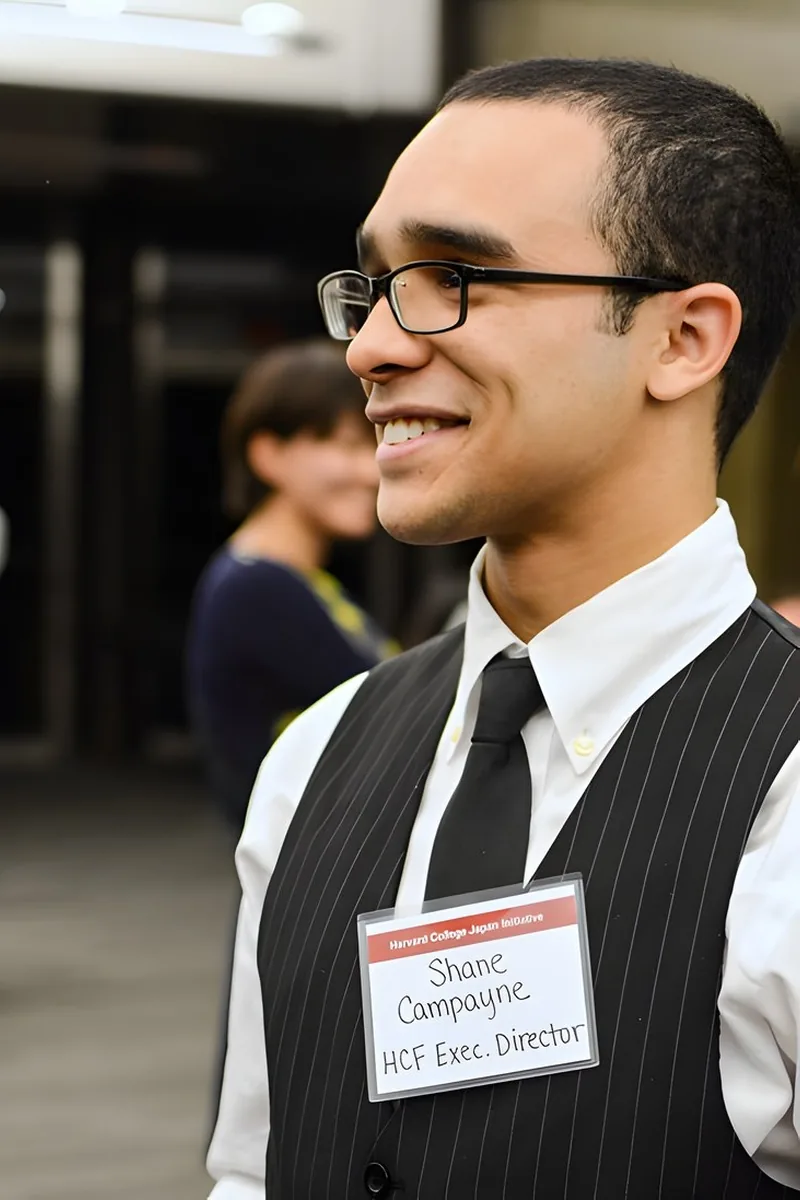
Between his East Asian Studies major at Harvard, his presidency of the Harvard College Japan Initiative, and his work in the Yenching Library's Japanese Collection, Shane lives and breathes Japanese. He reads novels and plays games in Japanese for fun, which means he teaches the language the way it's actually used — from kanji recognition and particle usage to the register shifts that textbooks barely cover.
Learning Japanese means juggling three writing systems, a grammar structure that's the reverse of English, and cultural nuances that change how you speak depending on who you're talking to. Natasha taught Japanese at the high school level and lived in Japan teaching in elementary schools, giving her the kind of practical fluency that makes hiragana drills, particle usage, and conversational practice feel grounded in real life. She's 5.0-rated and works with beginners through advanced learners.
Most students learning Japanese hit a wall somewhere between mastering hiragana and actually constructing sentences with particles, verb conjugations, and counters. Kai has been teaching Japanese through the student organization meetings on campus, building lessons that move learners from basic self-introductions to reading short passages and holding simple conversations.
During his final summer at NYU, William traveled to Japan to study the language alongside traditional music and wartime film, grounding his Japanese in real cultural context. That immersive experience means he connects vocabulary and grammar to the situations where they're actually used — from reading signs and menus to discussing historical texts. He's especially strong at bridging the gap between textbook Japanese and how the language sounds in practice.
I am open to tutoring in a broad range of subjects, including Algebra, Spanish I/II, ESL and Biology (SAT II, AP, and MCAT).
Having completed an Asian Languages minor at UCLA, Abrahim brings formal training in Japanese grammar, kanji acquisition, and reading comprehension to his tutoring. He approaches the language methodically — building from particle usage and verb conjugation patterns up to reading authentic texts — which works especially well for students who want structure rather than immersion-only learning.
Linguistics training gives Andrew a structural advantage when teaching Japanese — he understands how languages build meaning differently, which matters when explaining why particles replace prepositions or why verbs land at the end of every sentence. His background in Korean and German means he's personally navigated multiple grammar systems far removed from English, and he applies that comparative instinct to make Japanese word order and conjugation feel logical rather than arbitrary.
Earning a full bachelor's degree in Japanese — not just a minor or a few semesters — means Jina can teach well beyond survival phrases into kanji readings, grammar particles like は vs. が, and the nuances of keigo (formal speech). She brings the same analytical rigor from her science training to breaking down sentence structure and verb conjugation patterns.
I am studying Chemical Biology in UC Berkeley. One of my passions is Organic Chemistry, which I used to loath but now enjoys after taking a year of it. Also, because I like helping others, I enjoys tutoring/teaching students who are struggling. During high school, I have tutored other high students after school on various subjects such as Math, Physics, Chemistry, and Latin. During college, I have held informal review sessions for General Chemistry and Organic Chemistry for my underclassmen. I tutored my roommate and one of my underclassmen in Organic Chemistry. Finally, with a Graduate Student TA, I co-taught a Organic Chemistry Lab class section , where I answer questions regarding lab material and demonstrate lab techniques. Currently, I am interested in tutoring Organic Chemistry, General Chemistry, Biochemistry, Physics, and Calculus
I am particularly passionate about math as well as standardized test prep. I studied math on a double-accelerated track throughout middle school and high school, covering math from algebra to multivariable calculus. Aside from teaching academic subjects, I am also trained in playing the piano and violin, having taken lessons for piano from the ages of 4 to 18 and playing violin in my school orchestra from 5th to 12th grade. I love working with students to improve their skills in an area of study, and my favorite part is getting to see them gain confidence in themselves and their own abilities!
Learning Japanese means juggling three writing systems, unfamiliar sentence structures, and layers of politeness that don't exist in English. Aki breaks down hiragana, katakana, and basic kanji recognition alongside grammar patterns like particle usage and verb conjugation, building reading and conversational skills in parallel.
Testimonials
Because the right Japanese tutor makes all the difference.
Average Session Rating – Based on 3.4M Learner Ratings
Other Washington Tutors
Related Languages Tutors in Washington
Frequently Asked Questions
Speaking practice is one of the biggest challenges in traditional classroom settings, especially with Washington DC's average student-teacher ratio of 11.7:1. Personalized 1-on-1 instruction with a Japanese tutor gives you consistent speaking opportunities in a low-pressure environment where you can practice conversational patterns, receive immediate feedback on pronunciation, and build confidence with natural dialogue.
Regular conversation practice—even 30 minutes per week—significantly accelerates fluency development because you're actively producing language rather than passively listening or reading.
Japanese verbs change based on tense, formality level, and context—and memorizing conjugation charts alone isn't effective. Expert tutors break conjugation patterns into logical groups, show how they're used in real conversations, and use spaced repetition and practice testing so the patterns become automatic rather than memorized.
A tutor can tailor explanations to your learning style and focus on the verb forms you'll actually use first, making the system feel manageable instead of overwhelming.
Vocabulary retention improves dramatically when words are learned in context rather than isolated lists. Tutors use evidence-based techniques like spaced repetition (reviewing words at strategic intervals), retrieval practice (actively recalling words rather than re-reading), and connecting new vocabulary to words you already know.
Personalized 1-on-1 instruction also lets tutors focus on vocabulary relevant to your goals—whether that's conversational Japanese, academic topics, or preparing for the JLPT (Japanese Language Proficiency Test).
The best approach depends on your goals and current level. For students building conversational fluency, speaking and listening should come early because they're harder to practice in a classroom and unlock real-world communication immediately. Reading and writing skills naturally develop alongside speaking once you have foundational vocabulary and grammar patterns.
A tutor can assess your level and goals, then design a balanced progression that builds all four skills while prioritizing what matters most for your needs—whether that's surviving a study abroad experience, passing an AP Japanese exam, or achieving JLPT certification.
Japanese has three writing systems (hiragana, katakana, kanji), formal and casual speech levels, and expressions rooted in cultural concepts that don't translate directly to English. Understanding context—like when to use polite forms, how to address people by status, and why certain expressions exist—makes the language feel logical rather than arbitrary.
Expert tutors weave cultural context into lessons so grammar rules make sense, vocabulary becomes memorable, and you develop the intuition native speakers have about what sounds natural. This deeper understanding accelerates both fluency and retention.
Japanese pronunciation is more forgiving than tones languages like Mandarin—clear syllable pronunciation matters more than perfect pitch accent. However, correct intonation patterns, natural rhythm, and clear vowel sounds do affect how easily native speakers understand you and how confident you sound.
Personalized 1-on-1 tutoring is invaluable for pronunciation because tutors can listen to your speech, identify specific sounds that need work, model correct pronunciation repeatedly, and give real-time feedback. This targeted practice is difficult to get in classroom settings where teachers can't focus individual attention on each student's accent.
AP Japanese Exam success requires proficiency across all four skills (reading, writing, speaking, listening) plus cultural knowledge—a broad scope that benefits from personalized instruction. Tutors can focus on your specific weak areas, practice exam-format tasks repeatedly, build test-taking strategies, and provide the speaking practice that classroom instruction can't always offer in sufficient quantity.
With 292 schools in the DC area, AP Japanese courses vary in depth and pacing. A tutor can bridge gaps in your classroom instruction, maintain consistent practice outside class, and ensure you're prepared for the rigorous proficiency standards the AP exam assesses.
Let’s find your perfect tutor
Answer a few quick questions. We’ll recommend the right plan and match you with a top 5% tutor.