Award-Winning Physical Chemistry Tutors
serving Bridgeport, CT
Physical Chemistry
Tutors in Bridgeport
Private 1-on-1 tutoring, weekly live classes for academic support, test prep & enrichment, practice tests and diagnostics, and more to elevate grades and test scores.
Based on 3.4M Learner Ratings
UniversitiesSchools & Universities
DeliveredHours Delivered
ProficiencyGrowth in Proficiency
Who needs tutoring?
No obligation. Takes ~1 minute.
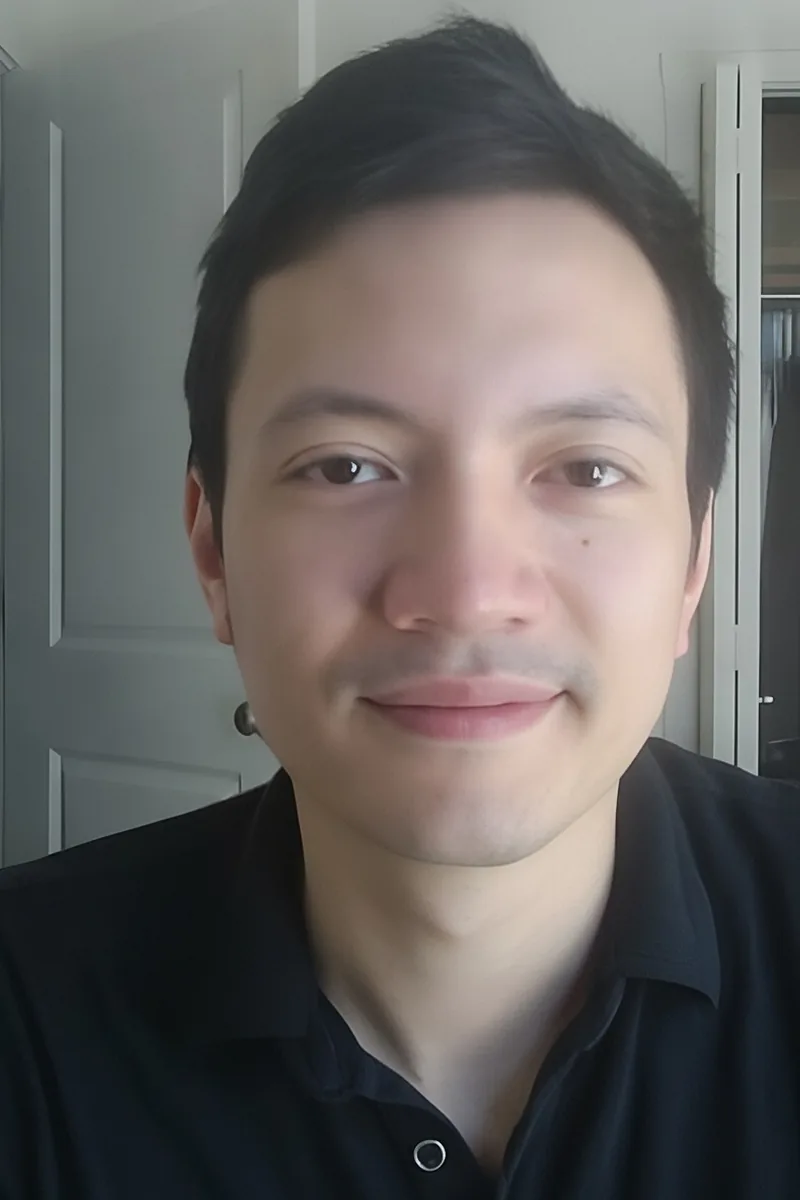
A physics degree gives Cory something many p-chem tutors lack — native comfort with the quantum mechanics and statistical mechanics that chemistry students often encounter for the first time in this course. He treats topics like wave functions, partition functions, and thermodynamic state variables as extensions of the physics he already thinks in, then builds the chemical context around them. Rated 4.9 by students.

Thermodynamic potentials, quantum mechanical models, kinetic rate laws — physical chemistry demands comfort with both rigorous math and chemical intuition simultaneously. Mark's chemical engineering degree from Yale required multiple semesters of p-chem coursework, and he tackles the subject by grounding intimidating derivations in the physical phenomena they describe. He's especially strong at walking through the calculus embedded in topics like entropy and partition functions.
Thermodynamics, kinetics, and quantum mechanics all converge in physical chemistry — and that's exactly where Monika's biochemistry and molecular biology training intersects. She breaks down intimidating topics like Gibbs free energy calculations and reaction rate laws by tying them to real chemical systems she studied during her PhD research. Rated 4.8 by students.
A chemistry B.S. means Edward didn't just pass p-chem — he built his degree around it, working through the thermodynamic derivations, quantum mechanical models, and kinetics frameworks that the course demands at full rigor. That direct grounding in the subject lets him zero in on where a student's understanding breaks, whether it's a shaky grasp of partial derivatives in a Maxwell relation or confusion about what a wave function actually represents. Rated 5.0 by students.
Conservation biology at ASU gave River a working familiarity with the thermodynamic and kinetic principles that p-chem puts under a mathematical microscope — energy flows in ecosystems, reaction energetics in biochemical cycles, and the statistical behavior of molecular populations. That biology-first perspective lets River approach topics like Gibbs free energy and equilibrium constants by starting with the physical intuition before wading into the calculus. Rated 4.8 by students.
Environmental statistics at Rice required Alex to work extensively with the same calculus-heavy quantitative methods — differential equations, statistical modeling, multivariable analysis — that students encounter in thermodynamics and kinetics derivations throughout a p-chem sequence. His geography background adds a surprising edge: understanding energy balances and phase transitions in Earth systems translates directly to making sense of state functions and equilibrium in a chemistry context.
Biomedical engineering at BU and Tufts meant Anthony lived in the math that makes p-chem intimidating — differential equations, thermodynamic modeling, and the kinetics of biological systems — long before applying it to physical chemistry specifically. His research background studying neurodegenerative disease therapies keeps him fluent in the quantitative reasoning behind concepts like Gibbs free energy, phase equilibria, and reaction rate theory. Rated 4.9 by students, he connects each derivation to the physical system it describes so the notation carries real meaning.
Two chemistry degrees — bachelor's and master's — mean Chad has gone through the full p-chem gauntlet himself, from quantum mechanical models and statistical thermodynamics to the calculus-dense derivations of chemical kinetics. He teaches the subject by zeroing in on where the math and the molecular picture disconnect for each student, whether that's a tricky partial derivative in a thermodynamic identity or the logic behind a partition function. Rated 4.8 by students.
Cornell's chemical engineering curriculum puts you through p-chem at an intense pace — Rahul graduated magna cum laude, which means he didn't just survive thermodynamics, quantum mechanics, and kinetics but internalized the reasoning behind each derivation. He pushes past rote symbol manipulation to make sure students can articulate why a particular state function applies or what a phase boundary physically represents. Rated 4.9 by students.
Studying biochemistry and cell biology at Rice means Sugi already had to internalize the thermodynamic and kinetic principles that drive cellular processes — free energy calculations for metabolic reactions, equilibrium constants governing binding events — before tackling them in their pure mathematical form. She unpacks p-chem derivations by linking each variable back to the molecular behavior it quantifies, turning something like a chemical potential expression into a description of what molecules are actually doing at a phase boundary. Rated 5.0 by students.
I am currently an adjunct professor of chemistry at a small liberal arts college in the Chicago area. Previously, I worked in the chemical industry for several years as a researcher, but I've found that the most satisfying moments have come when I am able to share my expertise with someone else. Similarly, I very much enjoyed the four semesters in the graduate school when I was a teaching assistant. It gave me the opportunity to work with students and help them develop an understanding for the subject. These are the primary reasons that I have decided to go into teaching.
A PhD in chemistry means Justin didn't just pass p-chem — he lived in its formalism for years, from quantum mechanical models to statistical thermodynamics, and then kept using it through doctoral research. That depth shows when he teaches: he can trace a concept like chemical potential or a Maxwell relation back to the physical picture driving the math, catching the exact step where a student's understanding breaks down. Rated 5.0 by students.
Testimonials
Because the right Physical Chemistry tutor makes all the difference.
Average Session Rating – Based on 3.4M Learner Ratings
Nearby Physical Chemistry Tutors
Other Bridgeport Tutors
Related Science Tutors in Bridgeport
Frequently Asked Questions
Physical Chemistry combines abstract theoretical concepts with complex mathematical problem-solving, making it one of the most challenging chemistry courses. Students often struggle with visualizing molecular-level phenomena, balancing equations, unit conversions, and understanding thermodynamics and kinetics. Many also find it difficult to connect theory to real-world applications, which is essential for truly grasping why these concepts matter beyond the exam.
Personalized 1-on-1 instruction allows tutors to identify exactly where your understanding breaks down—whether it's the math, the conceptual framework, or the connection between theory and application. A tutor can slow down on difficult topics like thermodynamics or quantum mechanics, use multiple explanations and visual models to help abstract concepts click, and guide you through problem-solving strategies that build confidence. This targeted approach is far more effective than generic review, especially in a subject where one missed concept often cascades into confusion in later topics.
During your first session, a tutor will assess your current understanding of Physical Chemistry fundamentals, identify specific areas of struggle, and learn about your goals—whether that's improving your grade, preparing for an exam, or building confidence in the subject. They'll discuss your learning style and preferences, then create a personalized plan focused on your biggest challenges, whether that's equilibrium calculations, thermodynamic principles, or molecular visualization. This foundation ensures every subsequent session is tailored to help you progress efficiently.
Understanding Physical Chemistry means seeing how abstract theories—like entropy, activation energy, or orbital theory—connect to observable phenomena and real-world applications. Expert tutors help you build this deeper understanding by asking guiding questions, working through multi-step problems together, and explaining the 'why' behind equations and laws. Rather than memorizing formulas, you'll learn the underlying logic, which makes problem-solving intuitive and helps you retain knowledge long after the exam.
Yes. Tutoring can help you understand the theory behind lab procedures, interpret experimental results, and develop stronger scientific reasoning skills. Tutors can walk you through how to approach lab reports, explain what your data means in the context of Physical Chemistry principles, and help you troubleshoot if results don't match predictions. This bridges the gap between classroom theory and hands-on experimentation, making labs more meaningful and improving your overall performance in the course.
Varsity Tutors connects you with tutors who have strong backgrounds in Physical Chemistry and understand how to teach it effectively. When you get matched with a tutor, you can review their qualifications and experience with the specific topics you need help with—whether that's kinetics, thermodynamics, or quantum mechanics. The matching process ensures you work with someone who not only knows the subject deeply but also teaches in a way that works for your learning style.
Starting tutoring early in the course is ideal, especially since Physical Chemistry builds on prior chemistry knowledge and math skills. If you're already struggling, connecting with a tutor as soon as possible prevents gaps from widening. That said, tutoring is valuable at any point—whether you need help from day one, want to strengthen your foundation midway through, or are preparing for a final exam or AP exam. The sooner you start, the more time you have to build genuine understanding rather than cramming.
Pricing varies based on the tutor's experience and your specific needs, and Varsity Tutors works with you to find options that fit your budget. Scheduling is flexible—you can arrange sessions around your class schedule and other commitments, whether you need weekly ongoing support or intensive help before an exam. Once you're matched with a tutor, you'll work together to establish a consistent schedule that keeps you on track.
Let’s find your perfect tutor
Answer a few quick questions. We’ll recommend the right plan and match you with a top 5% tutor.