Award-Winning Physical Chemistry Tutors
serving New Haven, CT
Physical Chemistry
Tutors in New Haven
Private 1-on-1 tutoring, weekly live classes for academic support, test prep & enrichment, practice tests and diagnostics, and more to elevate grades and test scores.
Based on 3.4M Learner Ratings
UniversitiesSchools & Universities
DeliveredHours Delivered
ProficiencyGrowth in Proficiency
Who needs tutoring?
No obligation. Takes ~1 minute.

A PhD in chemistry means Justin didn't just pass p-chem — he lived in its formalism for years, from quantum mechanical models to statistical thermodynamics, and then kept using it through doctoral research. That depth shows when he teaches: he can trace a concept like chemical potential or a Maxwell relation back to the physical picture driving the math, catching the exact step where a student's understanding breaks down. Rated 5.0 by students.
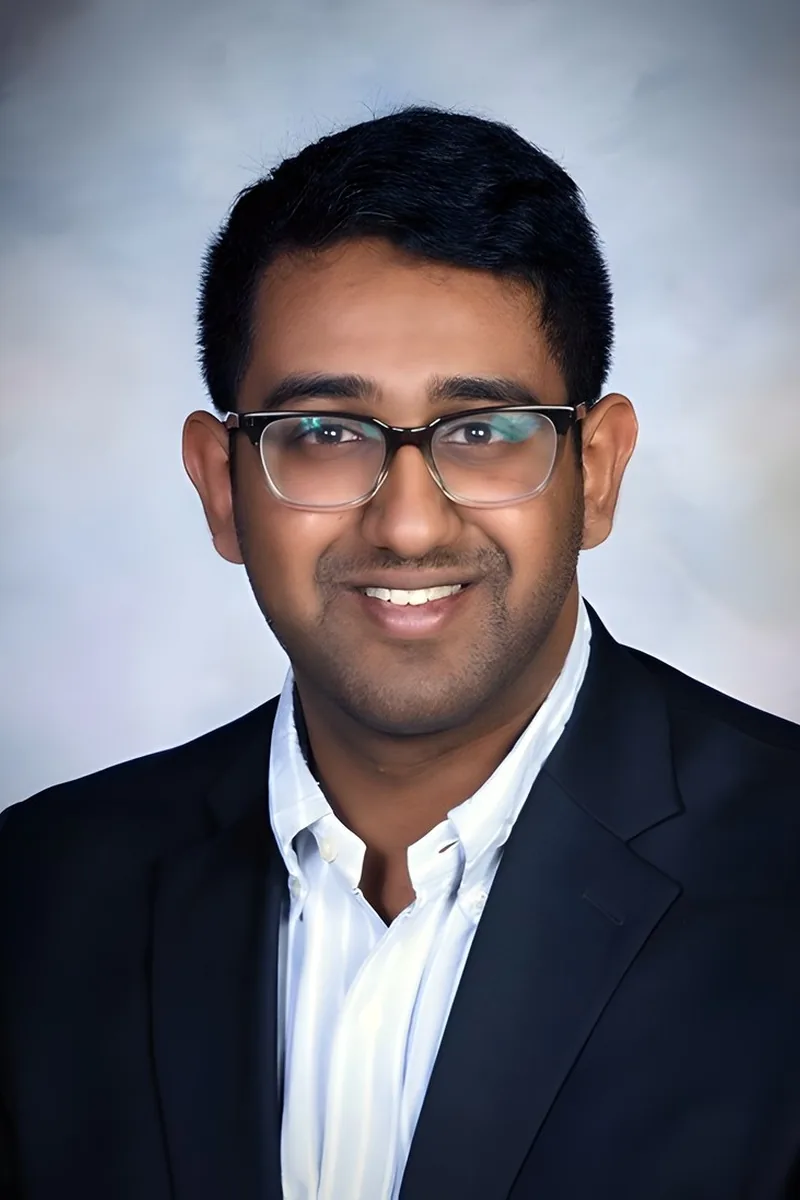
Cornell's chemical engineering curriculum puts you through p-chem at an intense pace — Rahul graduated magna cum laude, which means he didn't just survive thermodynamics, quantum mechanics, and kinetics but internalized the reasoning behind each derivation. He pushes past rote symbol manipulation to make sure students can articulate why a particular state function applies or what a phase boundary physically represents. Rated 4.9 by students.
A physics degree gives Cory something many p-chem tutors lack — native comfort with the quantum mechanics and statistical mechanics that chemistry students often encounter for the first time in this course. He treats topics like wave functions, partition functions, and thermodynamic state variables as extensions of the physics he already thinks in, then builds the chemical context around them. Rated 4.9 by students.
Cornell's biological sciences curriculum put Alec through rigorous quantitative coursework, but it was his TA experience in general chemistry — running problem-solving sessions where students had to wrestle with energy, equilibrium, and rate laws — that sharpened his instinct for where p-chem concepts start to blur. He teaches the subject by slowing down at the exact calculus step where the physical meaning tends to disappear, whether that's setting up a thermodynamic cycle or interpreting what a rate constant actually tells you about molecular collisions. Rated 4.8 by students.
An applied mathematics degree plus active graduate math coursework gives Drisana the calculus fluency that p-chem demands — she's comfortable with the differential equations, multivariable integrals, and linear algebra that show up in everything from quantum mechanical wave functions to statistical thermodynamics. Where many chemistry students struggle because the math outpaces them, she tackles derivations from the opposite direction, building physical meaning onto mathematical structures she already knows cold. Rated 5.0 by students.
Medical school at the Medical College of Wisconsin means Abrahim encounters p-chem's core concepts daily — reaction kinetics in pharmacology, thermodynamic energy balances in physiology, and the quantum mechanical principles behind spectroscopic diagnostics. His UCLA biology degree and 34 ACT demonstrate the mathematical fluency needed to work through derivations involving state functions, equilibrium constants, and entropy calculations without losing sight of what the chemistry actually describes. Rated 5.0 by students.
P-chem is where thermodynamics, quantum mechanics, and kinetics collide, and most students feel overwhelmed by the math intensity alone. Jacob's biochemistry-emphasis BS in Chemistry means he tackled these derivations firsthand — from partition functions to the Schrödinger equation — and he's skilled at unpacking the physical meaning behind each equation so the math stops feeling arbitrary. Rated 5.0 by students.
I am currently an adjunct professor of chemistry at a small liberal arts college in the Chicago area. Previously, I worked in the chemical industry for several years as a researcher, but I've found that the most satisfying moments have come when I am able to share my expertise with someone else. Similarly, I very much enjoyed the four semesters in the graduate school when I was a teaching assistant. It gave me the opportunity to work with students and help them develop an understanding for the subject. These are the primary reasons that I have decided to go into teaching.
I am most passionate about biology and chemistry. I am a firm proponent of education, believing it to be absolutely necessary for an improved quality of life, and I try to impart this appreciation to all of my students.
Mechanical engineering at Rice means Aleksey has been solving thermodynamic cycles, heat transfer problems, and differential equations for years — the exact mathematical toolkit that p-chem throws at students in a chemistry wrapper. He breaks down topics like entropy, enthalpy, and phase equilibria by treating them as engineering problems first, then layering in the molecular-level chemistry that gives each variable its meaning. Rated 5.0 by students.
Two biomedical engineering degrees mean Allyson has been doing the calculus-heavy thermodynamics and kinetics work that p-chem formalizes — modeling energy transfer in biological systems, working through rate equations for physiological processes — since undergrad. She zeroes in on the specific mathematical step where a derivation goes from followable to opaque, whether that's a tricky partial derivative in a Maxwell relation or the statistical reasoning inside a Boltzmann distribution. Rated 4.9 by students.
Testimonials
Because the right Physical Chemistry tutor makes all the difference.
Average Session Rating – Based on 3.4M Learner Ratings
Nearby Physical Chemistry Tutors
Other New Haven Tutors
Related Science Tutors in New Haven
Frequently Asked Questions
Physical Chemistry combines abstract theoretical concepts with complex mathematical problem-solving, making it one of the most challenging chemistry courses. Students often struggle with visualizing molecular behavior at the quantum level, mastering thermodynamics and kinetics equations, and understanding how to apply these concepts to real lab work. Many find the bridge between theory and practical application—like predicting reaction rates or understanding equilibrium—particularly difficult without personalized guidance.
Personalized 1-on-1 instruction allows tutors to break down abstract concepts into concrete explanations tailored to how you learn best. A tutor can help you visualize molecular interactions, work through complex derivations step-by-step, and connect theoretical principles to lab experiments and real-world applications. This targeted approach builds both conceptual understanding and problem-solving skills, rather than relying on memorization alone.
Your first session focuses on understanding your current level, identifying specific challenges, and establishing learning goals. The tutor will ask about topics you find most confusing—whether that's quantum mechanics, thermodynamics, kinetics, or lab-related concepts—and assess your comfort with the math involved. From there, they'll create a personalized plan to address your gaps and build confidence in Physical Chemistry.
Yes, Physical Chemistry is heavily math-based, involving calculus, differential equations, and unit conversions. However, you don't need to be a math expert—many students strengthen their math skills alongside their chemistry understanding with the right support. Tutors can help you review relevant math concepts, work through derivations, and develop strategies for tackling complex problem sets.
Understanding the theory behind experiments makes lab work much more meaningful and helps you interpret results accurately. Tutors can help you understand what's happening at the molecular level during reactions, predict outcomes based on thermodynamic principles, and troubleshoot when experiments don't go as expected. This connection between theory and practice deepens your grasp of both the concepts and the scientific method.
Varsity Tutors connects you with tutors who have strong backgrounds in Physical Chemistry and experience helping high school and college students master this challenging subject. When you get matched with a tutor, you can discuss their expertise in specific areas—quantum mechanics, thermodynamics, kinetics, or lab preparation—to ensure the best fit for your needs.
Progress depends on your starting point and how frequently you meet with a tutor, but many students see noticeable improvement in understanding and grades within 4-6 weeks of consistent tutoring. Regular sessions help you build a solid foundation in core concepts, develop problem-solving strategies, and gain confidence tackling challenging topics. Ongoing tutoring through the course ensures you stay on track as material becomes more complex.
Tutors work with students on core Physical Chemistry topics including thermodynamics (enthalpy, entropy, Gibbs free energy), kinetics and reaction rates, quantum mechanics and atomic structure, equilibrium, electrochemistry, and spectroscopy. They also help with problem-solving strategies, lab preparation, and connecting these concepts to real-world applications in chemistry and related fields.
Let’s find your perfect tutor
Answer a few quick questions. We’ll recommend the right plan and match you with a top 5% tutor.