Award-Winning AP Statistics Tutors
serving Los Angeles, CA
AP Statistics
Tutors in Los Angeles
Private 1-on-1 tutoring, weekly live classes for academic support, test prep & enrichment, practice tests and diagnostics, and more to elevate grades and test scores.
Based on 3.4M Learner Ratings
UniversitiesSchools & Universities
DeliveredHours Delivered
ProficiencyGrowth in Proficiency
Who needs tutoring?
No obligation. Takes ~1 minute.
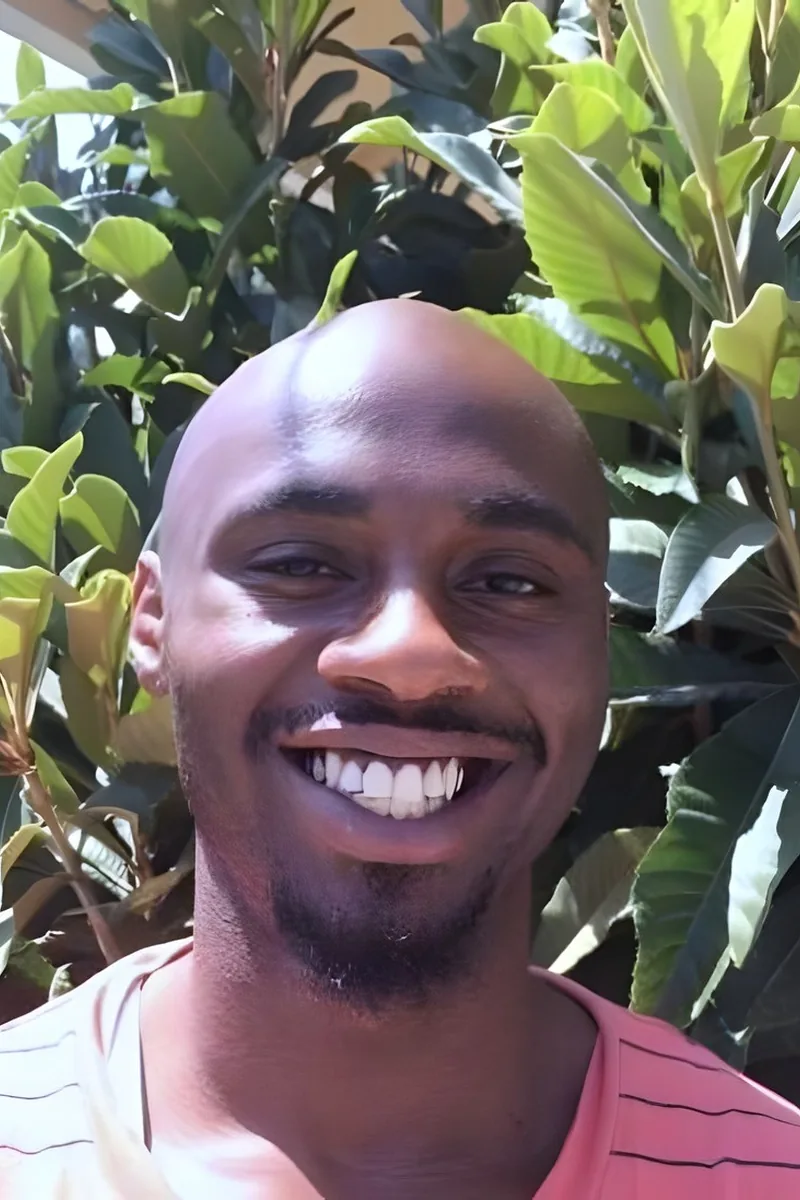
Caltech's economics program is quantitatively rigorous — Brian's coursework meant building econometric models, running hypothesis tests on real datasets, and defending statistical conclusions in ways that mirror exactly what AP Stats free-response questions demand. His dual background in CS and economics gives him a knack for explaining the logic behind choosing between z-procedures and t-procedures, or why independence conditions matter, in terms that click for students who think algorithmically. SAT score of 1580 speaks to the precision he brings to exam strategy.

Business economics at UCLA meant Alain was constantly building and interrogating statistical models — testing whether consumer behavior patterns held up under regression analysis, or whether a pricing strategy's results were just sampling noise. His math minor adds the formal probability backbone that makes topics like binomial and geometric distributions click on a conceptual level, not just a calculator-button level. He's planning to pursue graduate work in mathematical game theory, which is essentially applied probability and strategic inference all the way down.
Most AP Stats students come in expecting another formula-driven math class, then hit a wall when the exam asks them to explain *why* a normal model applies or *what* a 95% confidence level actually means in context. JF's math and CS background at Stanford means he thinks in both precise computation and logical argumentation — exactly the combination the free-response section rewards. Rated 5.0 by students.
Kyle's statistics degree means he didn't just learn AP Stats concepts — he kept going, building the theoretical framework underneath topics like sampling distributions, expected value, and the normal model that the course only scratches the surface of. That deeper fluency makes him especially effective at explaining why a particular inference procedure applies in a given scenario, not just how to execute it on a calculator. Rated 4.9 by students.
Crony's dual degrees in Neuroscience and Economics from Brown meant constant exposure to both experimental design and data modeling — two threads that converge neatly in the AP Stats curriculum. He breaks down the normal distribution and z-score reasoning that underpins so much of the course by connecting it to real research contexts, like determining whether a drug trial's results are meaningful or just random variation. Rated 4.6 by students.
Cornell biology coursework has Drishti knee-deep in research methods — designing controlled experiments, interpreting data tables, and evaluating whether results actually support a hypothesis or just look like they do. That training maps cleanly onto the AP Stats units on experimental design and inference, where she teaches students to articulate the reasoning behind their procedure choices instead of just punching numbers into a calculator. Rated 5.0 by students.
I am a graduate of Cornell University's College of Arts and Sciences. I received my Bachelor of Arts in Chemistry with Distinction in 2015. Since graduation, I was a physics/chemistry teacher and soccer coach at a private school in Virginia for a year, where I led the soccer team to an undefeated season. Before teaching and coaching professionally, I was a Teaching Assistant for the Cornell Math and Physics Departments, where I taught many subjects including calculus, mechanics, electromagnetism. Throughout my time at Cornell and as a teacher, I tutored subjects ranging from the SAT to AP Physics and Algebra II, which is where my true talents lie: in small group or one-on-one settings where I can give students the full attention they deserve and tailor my approach specifically to their learning styles. This is why I am now pursuing tutoring as a part-time occupation at Varsity Tutors. I embrace teaching all math and science subjects, especially physics and calculus, at both the college and high school level and will go above and beyond to make sure all of my students succeed, according to their definition of success. In my spare time, I enjoy playing league soccer, basketball, tennis and guitar, and also like to travel and see as much of the world as I can.
Licensed math teacher with a bachelor's in mathematics, Jacob brings the algebraic backbone that makes AP Stats click — he knows exactly when students need a quick refresher on transformations or logarithmic properties to make sense of Normal calculations or linearizing curved data. His classroom experience with Common Core's data and statistics strands means he's already taught the conceptual groundwork that the AP exam builds on, particularly around variability, sampling, and making claims from data. Rated 5.0 by students.
Studying statistics as an actual major at UVA — not just taking a service course — means Benjamin has gone well beyond the AP curriculum into multivariate methods, probability theory, and statistical computing, giving him a deep bench to draw from when explaining why, say, a sampling distribution behaves the way it does or when a normal model applies. He's particularly sharp on the inference units, where students need to move from calculator output to writing conclusions that use the specific contextual language the free-response rubric demands. Rated 4.7 by students.
Behavioral science research runs on SPSS and Stata — Hidefusa has used both extensively to analyze experimental data, build regression models, and run the exact hypothesis tests that AP Stats students need to master for the exam's free-response section. His clinical psychology training at Harvard meant designing studies with proper sampling methods and defending statistical conclusions in front of faculty, which sharpened his ability to teach the interpretive reasoning the AP rubric rewards most heavily. Rated 4.9 by students.
Graduate-level applied statistics at Penn State is a different animal from AP Stats, but William uses that deeper training to show students why formulas like the one for standard error of a sampling distribution are built the way they are — which makes the interpretation questions on the exam far less mysterious. His biomedical engineering background also means he's comfortable grounding lessons in real study designs, from clinical trials to observational health data, so students practice writing the kind of context-specific conclusions the free-response rubric actually rewards. Rated 4.8 by students.
Neuroscience research at Brown means Oladele has spent semesters analyzing behavioral data, interpreting variability in experimental results, and deciding whether observed effects in the brain are real or just random noise — skills that map directly onto AP Stats concepts like hypothesis testing and inference. He zeroes in on the thinking-through-the-problem side of the course, teaching students to reason about why a particular test applies to a given scenario instead of just memorizing which calculator function to press. His 1430 SAT and role as head math coach for a college prep program speak to how naturally he breaks down quantitative reasoning for others.
Studying neuroscience at Cornell with a math minor, Aneri encounters statistics constantly — analyzing behavioral data, interpreting research findings, and evaluating whether experimental results actually mean something. She digs into the normal distribution and sampling logic that underpin most AP Stats inference questions, connecting the abstract formulas to the kind of real study designs her psychology coursework requires her to critique every week.
Hello, my name is Yosef and I would be happy to serve as a math tutor. I place strong emphasis on a good balance between knowledge of mathematical content and proficiency in problem-solving, reasoning, and conveying mathematical ideas in writing. There are times when a student needs to be informed of a solution, times when he or she also needs to hear the explanation of why the solution works, and times when he or she should be guided to finding the solution on his or her own. It is important for the tutor to recognize which approach is appropriate. Frequently, when students struggle, it is because they do not understand the notation or terminology in use. In such cases, it is important to reassure the student, reminding him or her that he or she is only struggling with understanding a single word, not the entire mathematical concept. As a rule, people perform better and are better motivated when they have self-confidence, not when the task ahead seems frighteningly daunting. It is also important to recognize that different students learn best through different means. As an example, some students are visual learners and can understand the material best through pictures and gestures. Other students learn best through hearing the procedures vocalized, while still others learn best through writing out the steps of the solution procedure. I know to adapt my teaching style to the individual student. with these considerations in mind, I promise to provide the best assistance that I can, taking your individual needs into consideration.
Testimonials
Because the right AP Statistics tutor makes all the difference.
Average Session Rating – Based on 3.4M Learner Ratings
Practice AP Statistics
Free practice tests, flashcards, and AI tutoring for AP Statistics
Nearby AP Statistics Tutors
Other Los Angeles Tutors
Related Math Tutors in Los Angeles
Frequently Asked Questions
AP Statistics covers four major units: exploring data through distributions and relationships, sampling and experimentation, probability and random variables, and inference. The course emphasizes statistical thinking, data analysis, and interpreting real-world data rather than heavy computation. Understanding these core concepts—from descriptive statistics to hypothesis testing—is essential for performing well on the exam.
Score improvement depends on your starting point and consistency with practice. Students who work with tutors typically see gains by strengthening weak areas—whether that's interpreting probability problems, designing experiments, or understanding inference procedures. The key is identifying exactly where you're losing points and building targeted skills through practice and feedback, which personalized 1-on-1 instruction excels at providing.
Many students struggle with the conceptual reasoning required—AP Statistics isn't just about calculations, but understanding *why* methods work and when to apply them. Other common pain points include distinguishing between different types of studies (observational vs. experimental), interpreting confidence intervals and p-values correctly, and managing time during the free-response section. A tutor can help you build conceptual clarity and develop efficient problem-solving strategies.
The exam has two sections: 40 multiple-choice questions (90 minutes) and 6 free-response questions (90 minutes). Effective strategies include reading questions carefully to identify what's being asked, showing all work on free-response to earn partial credit, and managing your time so you don't rush through the second section. Practice tests are invaluable for building pacing skills and identifying which question types slow you down most.
A solid study plan starts 8-12 weeks before the exam, focusing on one unit at a time with regular practice problems. Once you've covered all units, shift to full practice tests under timed conditions—this reveals pacing issues and reinforces test-day strategies. Spacing out your studying with regular review of previous units helps with retention. A tutor can help you create a personalized schedule that targets your specific weak areas and builds confidence as exam day approaches.
Your first session typically focuses on understanding where you are in the course and what you need most help with. A tutor will assess your comfort level with key concepts, review any recent exams or problem sets to identify patterns in your mistakes, and discuss your goals for the AP exam. From there, you'll work together to create a focused study plan that addresses your specific challenges, whether that's probability, inference, or test-taking strategy.
Look for tutors with strong backgrounds in statistics and mathematics, ideally with experience teaching or tutoring AP Statistics specifically. They should understand both the technical content and the exam format—knowing which concepts are heavily tested and how to explain them clearly. Experience helping students improve their scores and familiarity with common misconceptions in statistics are valuable indicators of someone who can guide you effectively.
Varsity Tutors connects you with expert tutors in Los Angeles who specialize in AP Statistics and understand the exam format and curriculum. Whether you're at a school in one of LA's 169 school districts or preparing independently, you can get matched with a tutor whose expertise fits your needs—whether you're starting the course, preparing for the exam, or targeting a specific score goal. The matching process ensures you work with someone who can help you succeed.
Let’s find your perfect tutor
Answer a few quick questions. We’ll recommend the right plan and match you with a top 5% tutor.