Award-Winning IB Mathematics: Analysis and Approaches Tutors
serving Hickory, NC
IB Mathematics: Analysis and Approaches
Tutors in Hickory
Private 1-on-1 tutoring, weekly live classes for academic support, test prep & enrichment, practice tests and diagnostics, and more to elevate grades and test scores.
Based on 3.4M Learner Ratings
UniversitiesSchools & Universities
DeliveredHours Delivered
ProficiencyGrowth in Proficiency
Who needs tutoring?
No obligation. Takes ~1 minute.
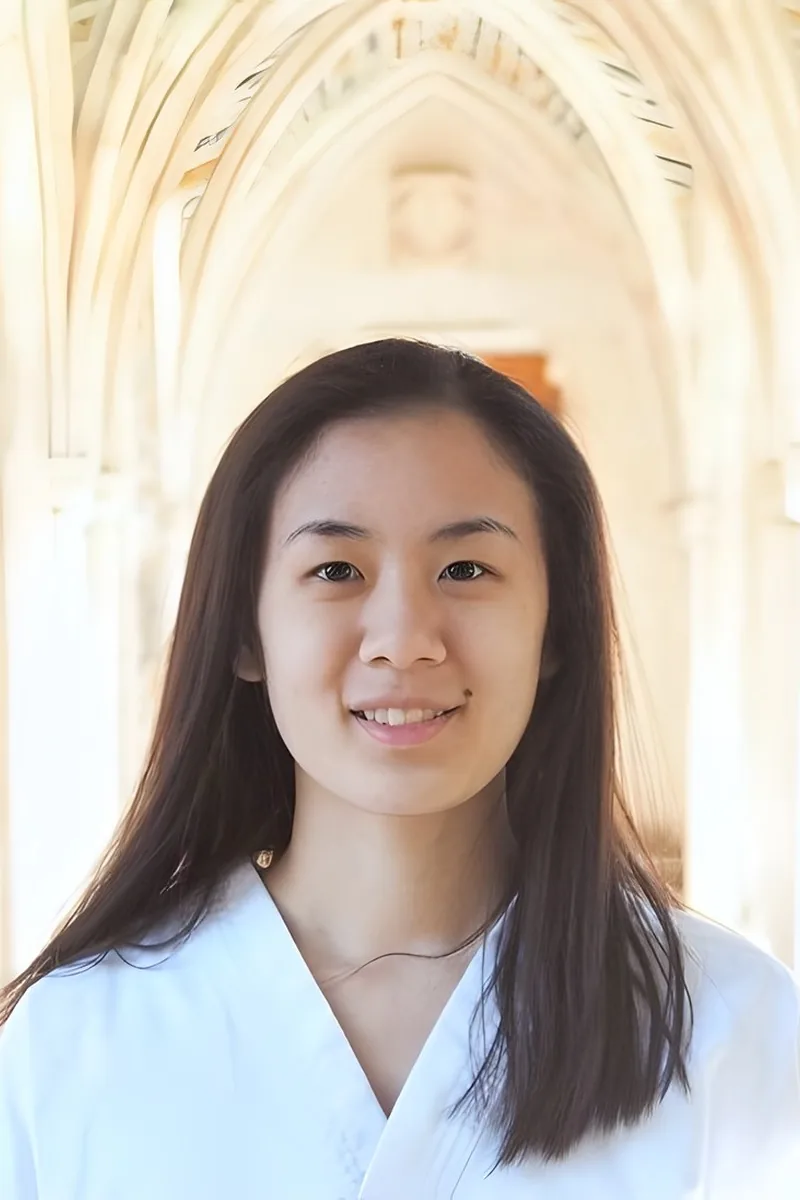
IB Analysis and Approaches covers a demanding range — from proof by induction and complex numbers to calculus-based optimization — and the exam expects both procedural skill and conceptual depth. Florence's combined CS and physics background at Duke maps directly onto the course's emphasis on mathematical modeling and rigorous reasoning. She's scored a 36 ACT and holds a 5.0 tutoring rating, so she knows how to perform under pressure and teach others to do the same.

IB Analysis and Approaches leans heavily on proof-based reasoning and pure math, especially in the HL Paper 1 sections covering sequences, calculus, and complex numbers. Ritu's familiarity with the IB curriculum means she knows exactly where the syllabus demands rigorous justification versus computational fluency. She zeroes in on the proof-writing and algebraic manipulation skills that separate 6s from 7s.
IB Math AA throws curvature, optimization, and series convergence at students alongside a paper structure unlike any other math course they've encountered. Kathleen's background spanning calculus, statistics, and multivariable math means she can tackle both the Analysis and Approaches SL and HL syllabi with real depth — particularly the calculus-heavy sections where most marks are won or lost. Rated 4.9 by students.
IB Math: Analysis and Approaches demands comfort with proof-style reasoning, calculus applications, and statistics at a level that surprises many students used to standard curricula. Srikavya tackles the course's emphasis on mathematical argumentation head-on, drawing on her chemistry and advanced math training to unpack problems in sequences, series, and differential calculus. She's especially useful for students navigating the IA process and needing help structuring a rigorous exploration.
IB Analysis and Approaches demands more than computational skill — the exam expects students to construct proofs, interpret results in context, and navigate both paper 1's non-calculator constraints and paper 3's extended problems. Daniel's background in applied mathematics and computer science aligns closely with the course's emphasis on rigorous reasoning across calculus, algebra, and statistics. He knows how to prepare students for the style of questioning IB examiners actually use.
IB Analysis and Approaches demands comfort with proof-style reasoning and multi-step problem solving that goes well beyond standard coursework. Stephen's experience across abstract and applied math lets him walk students through the program's trickier territory, from differential calculus to probability distributions, while keeping the IB's emphasis on mathematical communication front and center.
During my Bachelor's studies at the University of Michigan-Dearborn, I was a mathematics and statistics tutor for a year, which I greatly enjoyed. I am currently a fourth-year Ph.D. student studying mathematics at the University of Florida. During my Ph.D. at the University of Florida, I was a teaching assistant for Calculus I, Calculus II, and Precalculus, and I was an instructor for a section of Calculus I. These experiences helped me develop my tutoring skills. Many students see math as a set of formulas that they can apply to the problems on their exams and homework. However, I feel that this way of thinking not only stifles true understanding, but also makes students' lives harder. My teaching philosophy is that if a strong conceptual understanding is built, then students will be well-equipped to answer any question that they can be asked. When I tutor, I make sure that students develop this foundation first and foremost.
IB Analysis and Approaches leans heavily on proof-style reasoning and abstract problem solving, especially at Higher Level where topics like complex numbers, differential equations, and formal proof by induction appear. Logan's physics degree means he's comfortable with the rigorous mathematical thinking the course demands. He also understands IB assessment structure — the difference between what Paper 1 expects without a calculator and what Paper 2 rewards with one.
IB Analysis and Approaches rewards the kind of rigorous, proof-oriented thinking that Ezra developed through his philosophy degree. He digs into the "why" behind calculus concepts, trigonometric identities, and the paper-specific problem styles that distinguish SL from HL. Rated 4.8 by students.
IB Analysis and Approaches demands comfort with proof-style reasoning and multi-step problems that blend calculus, algebra, and trigonometry in a single question. Carter's interdisciplinary training at Brown — spanning applied math, economics, and philosophy — maps naturally onto the kind of analytical thinking this course rewards. He's particularly effective at unpacking Paper 1 non-calculator questions where conceptual clarity matters most.
IB Analysis and Approaches demands comfort with proof-style reasoning and multi-step problems that blend calculus, trigonometry, and statistics in a single question. Ehigbor's science-heavy premed training gave her daily practice with exactly that kind of applied mathematical thinking. She tackles both SL and HL content, including the exploration (IA), where choosing a viable research question is half the battle.
Hello, my name is Yosef and I would be happy to serve as a math tutor. I place strong emphasis on a good balance between knowledge of mathematical content and proficiency in problem-solving, reasoning, and conveying mathematical ideas in writing. There are times when a student needs to be informed of a solution, times when he or she also needs to hear the explanation of why the solution works, and times when he or she should be guided to finding the solution on his or her own. It is important for the tutor to recognize which approach is appropriate. Frequently, when students struggle, it is because they do not understand the notation or terminology in use. In such cases, it is important to reassure the student, reminding him or her that he or she is only struggling with understanding a single word, not the entire mathematical concept. As a rule, people perform better and are better motivated when they have self-confidence, not when the task ahead seems frighteningly daunting. It is also important to recognize that different students learn best through different means. As an example, some students are visual learners and can understand the material best through pictures and gestures. Other students learn best through hearing the procedures vocalized, while still others learn best through writing out the steps of the solution procedure. I know to adapt my teaching style to the individual student. with these considerations in mind, I promise to provide the best assistance that I can, taking your individual needs into consideration.
IB Analysis and Approaches rewards students who can move fluidly between proof-based reasoning and applied problem-solving, especially in the calculus and statistics units. Steven's PhD-level engineering background means he's comfortable with both the rigor the IB expects and the real-world modeling questions that distinguish HL from SL. He carries a 4.9 student rating.
IB Analysis and Approaches leans heavily on proof-style reasoning and formal calculus, which can blindside students used to plug-and-chug math. Yan breaks down topics like differential calculus and sequences and series by tying each theorem to a visual or real-world anchor. Her Master's in Curriculum and Instruction also means she understands how to structure study around IB's internal assessment requirements.
Having earned the IB Diploma herself, Zo knows the Analysis and Approaches curriculum inside out — the internal assessment expectations, the way Paper 1 and Paper 2 split non-calculator and calculator work, and the specific style of justification IB examiners want. She breaks down topics like differential calculus and probability distributions with the kind of clarity that comes from recently navigating the program as a student.
IB Analysis and Approaches leans heavily on proof-based reasoning and formal calculus — topics like convergence of series, differential equations, and rigorous probability that demand both computational skill and conceptual clarity. Emily's math background extends through Calc 3, giving her the depth to explain the theory behind HL topics rather than just walking through mark schemes. As a University of Chicago student familiar with the IB system, she also knows how to prep for the paper-specific question styles that catch students off guard.
Testimonials
Because the right IB Mathematics: Analysis and Approaches tutor makes all the difference.
Average Session Rating – Based on 3.4M Learner Ratings
Nearby IB Mathematics: Analysis and Approaches Tutors
Other Hickory Tutors
Related Math Tutors in Hickory
Frequently Asked Questions
Varsity Tutors matches Hickory students with expert IB Mathematics: Analysis and Approaches tutors for 1-on-1 instruction. We pair each student with a tutor based on their specific needs, learning style, and goals.
Whether you need homework help, exam prep, or want to get ahead, our IB Mathematics: Analysis and Approaches tutors are ready to help.
Common challenges include gaps from earlier material, difficulty with specific concepts, and trouble applying learning to new problems. These issues can snowball quickly in IB Mathematics: Analysis and Approaches.
A tutor identifies where you're stuck, fills in gaps, and provides targeted practice. The 1-on-1 format means you get help exactly where you need it.
Tutors work with your student's actual coursework—homework assignments, class notes, and upcoming tests. This keeps tutoring directly relevant to what's happening in the classroom.
When you share information about your student's school and curriculum, we can match you with a tutor who has relevant experience.
All tutors complete background checks, credential verification, and teaching evaluation. Many of our IB Mathematics: Analysis and Approaches tutors hold advanced degrees or have years of teaching experience.
You can review tutor profiles to find someone with the right background for your student's level and needs.
Many students see improved grades within a few weeks, along with better understanding of IB Mathematics: Analysis and Approaches concepts and more confidence tackling challenging material.
Tutors track progress and adjust their approach to ensure continued improvement.
Most students benefit from 1-2 sessions per week. More frequent sessions help if your student is significantly behind or has an important exam coming up.
Your tutor can recommend a schedule based on your student's specific situation and goals.
Tutoring is purchased in packages of hours, with rates varying by tutor experience. Varsity Tutors offers several options to fit different budgets and needs.
You can discuss pricing during your consultation to find what works best.
Your tutor will assess where your student is, discuss goals, and start working on priority areas. Most students bring current homework or upcoming test material to focus on.
By the end, you'll have a clear sense of how the tutor can help and a plan for moving forward.
Let’s find your perfect tutor
Answer a few quick questions. We’ll recommend the right plan and match you with a top 5% tutor.