Award-Winning SAT Math Tutors
serving Greensboro, NC
SAT Math
Tutors in Greensboro
Private 1-on-1 tutoring, weekly live classes for academic support, test prep & enrichment, practice tests and diagnostics, and more to elevate grades and test scores.
Based on 3.4M Learner Ratings
UniversitiesSchools & Universities
DeliveredHours Delivered
ProficiencyGrowth in Proficiency
Who will be getting tutoring?
No obligation. Takes ~1 minute.
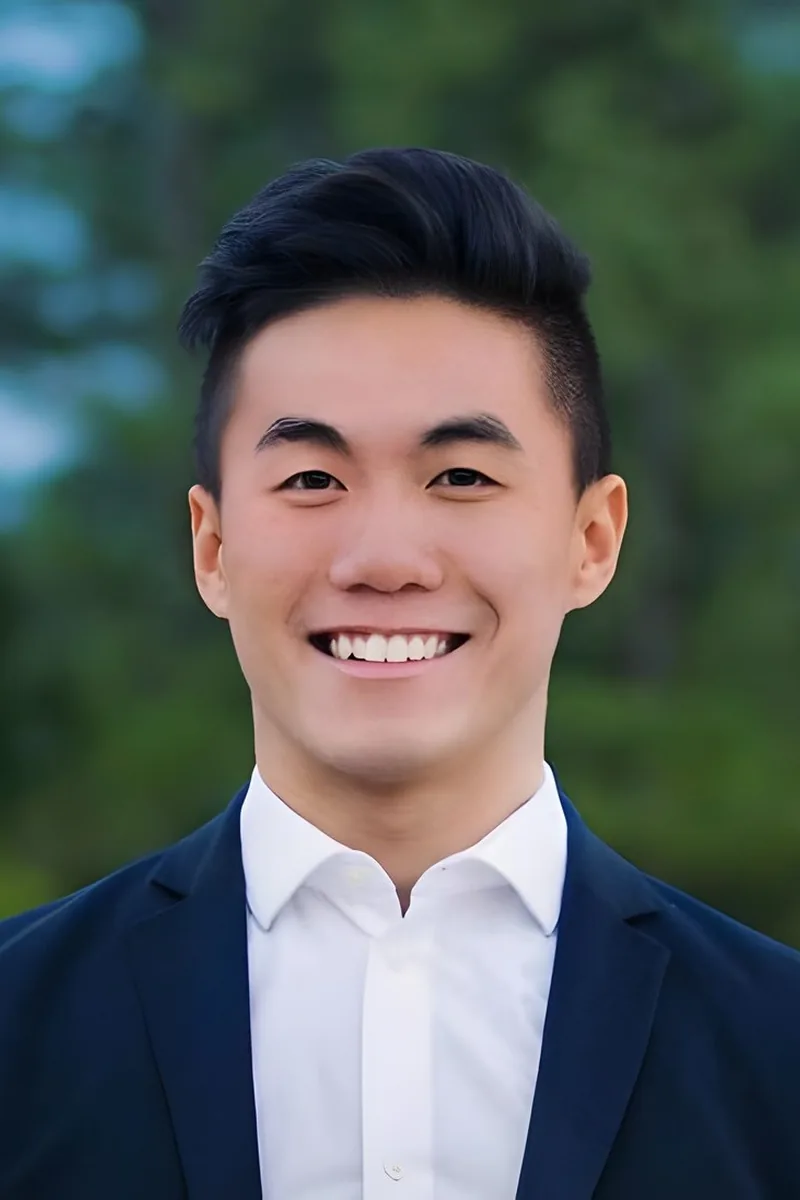
I'm not tutoring or buried in my textbooks, you will either find me rock climbing at the Triangle Rock Club, playing Ultimate Frisbee, working on my car, or enjoying the great outdoors (beaches, mountains, forests--you name it, I love it). On rainy weekends I enjoy tinkering with computers and old electronics, playing Pokemon, or picking at my guitar.
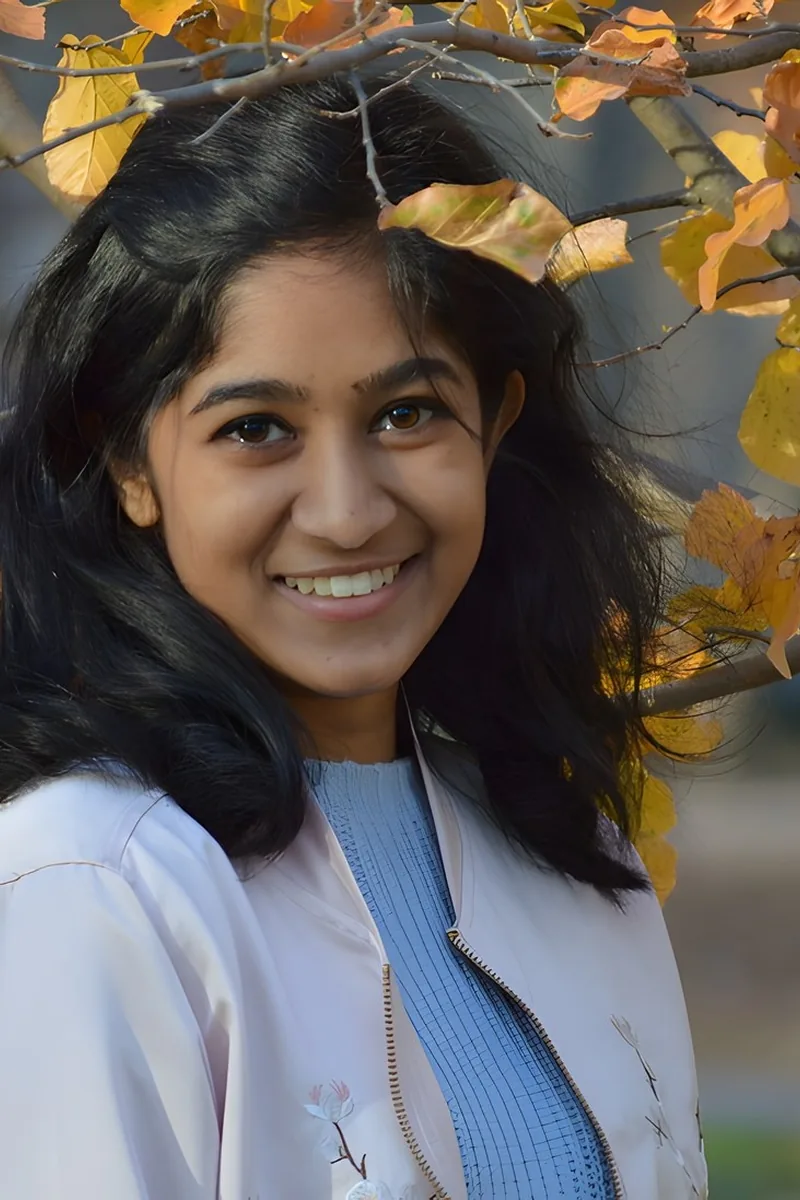
Economics and computer science at UNC Chapel Hill keep Rashmi immersed in quantitative problem-solving daily — regression models, algorithm efficiency, optimization — which sharpens exactly the kind of flexible thinking the SAT Math section rewards. She scored a 1580 on the SAT and is especially effective at teaching students to recognize when a problem that looks like it needs five steps can actually be solved in two with the right setup. Rated 5.0 by students.
I am an undergraduate at the University of North Carolina at Chapel Hill on a pre-medicine track, majoring in Health Policy and Management, and minoring in Medical Spanish and Education! I am a National Merit Scholar as well as a Carolina Research Scholar. I'm originally from Brookline, MA and I've been a tutor for about five years now. I work a lot with elementary/middle school kids as both a volunteer and at Kumon, and I have also peer tutored at my high school in honors biology, chemistry, math, and Spanish. Primarily specializing in ACT test prep, I've improved many of my clients' scores by 3 or more points, and helped all of my students achieve their ACT goals. In my free time, I love singing with my a cappella group, the UNC Loreleis, swimming, hanging out with my friends, traveling, going on runs, and petting every dog I see.
I am currently a grad student in NC State's School of Education. I love education and working with folks of all ages to learn. I've been tutoring in some capacity for over 15 years. At first, I primarily taught swim lessons, and then, overtime, I branched out to a myriad of subjects from rock climbing to essay writing and test prep. These days I focus on literacy, organization/executive function skills, test prep, and writing.
The SAT's trickiest math questions aren't actually hard math — they're straightforward algebra and geometry wrapped in deliberately misleading phrasing, and Claude's UNC Chapel Hill training in close reading and argumentation makes him unusually good at teaching students to decode what a problem is really asking. His 1570 SAT backs up that approach with results, and he drills the specific test-taking habits — like eliminating answer choices before solving — that turn strong math students into high scorers. Rated 5.0 by students.
Quadratic modeling, interpreting scatterplots, and manipulating complex equations are where most students lose points on SAT Math — not because the concepts are impossible, but because the phrasing is deliberately tricky. Tammy earned a 1550 composite and teaches students to decode what each question is actually asking before reaching for a formula. Rated 5.0 by students.
I am passionate about biomedical engineering, and am endlessly amazed by intricacies of the world around us. My degrees are in engineering (BS-General Engineering from Harvey Mudd, MS- Mechanical Engineering, and PhD-Bioengineering from Georgia Tech), but I also love art and literature and linguistics. Outside of academics, I am an avid sports fan (and rugby player) and I love to cook, hike with my dog, and travel.
I am always excited to help students learn. I would characterize myself as patient and understanding, and aim to help students understand processes rather than just find answers.
I am a current senior at the University of North Carolina at Chapel Hill. I am completing a degree in Health Policy and Management with minors in chemistry and biology. Currently, I am on the pre-medical track at UNC I am applying to medical schools for next year. I have worked as a tutor at the UNC Learning Center for two semesters and I have been a TA for anatomy and physiology for three semesters (two of those as lead TA).
I am an avid rower and bicyclist. I also greatly enjoy growing vegetables and playing basketball.
The SAT Math section rewards students who can move fluidly between algebra setups and strategic elimination — and Zhong's 1590 SAT means he's done exactly that under real testing conditions. His sociology coursework at Duke involves enough quantitative methods and data interpretation to keep those skills sharp, and he teaches students to spot the section's recurring patterns around linear models and percentage problems so they stop second-guessing themselves on test day.
I am a freshman at Vanderbilt University currently pursuing a B.S. in Biochemistry. My inquisitive nature has fostered a love for mathematics, the natural sciences, and how they interact to produce the world we experience every day. This extends to my teaching strategy, where I emphasize the importance of conceptual understanding rather than pure memorization of equations and steps. My recent experience in a wide variety of Advanced Placement courses lends me insight to recent changes in course objectives and exam formatting.
Biochemistry coursework means Abir solves equations and interprets quantitative data every day, but what makes her SAT Math tutoring click is how recently she took the test herself — her 1560 means she remembers exactly which problem types eat up time and which ones reward a two-second shortcut. She zeroes in on the geometry and advanced math questions where students most often second-guess correct instincts, teaching them to commit to a solution path instead of waffling between approaches. Rated 5.0 by students.
Callie scored a 1560 SAT and uses that experience to zero in on the algebra, advanced math, and data analysis concepts that make up the bulk of the SAT Math section. She's especially effective at demystifying word problems — translating real-world scenarios into equations is a skill she practices daily in her scientific research at Duke. Students learn not just how to solve each problem type, but how to recognize which approach a question is actually testing.
I'm a current junior at the College of William and Mary majoring in French and Francophone Studies and Linguistics. I have a history of high achievement and lots of on-the-job experience tutoring and teaching young people. My areas of expertise are French, Latin, linguistics, and English/language arts. I'm very excited and privileged to help unlock students' potentials to achieve!
As a dedicated tutor who is currently a Political Science and Public Policy student at the University of North Carolina at Chapel Hill, I am passionate about fostering a love for learning in my students. I specialize in ACT and SAT preparation, AP Literature and Language courses, and any other English or writing related subjects! My teaching philosophy centers on creating a supportive environment where students feel encouraged to express themselves and engage with the material. I strive to tailor my approach to each individual learner, ensuring that they not only grasp the concepts but also gain confidence in their abilities. Outside of tutoring, I enjoy reading literature and exploring new ideas, which I believe enriches my teaching and inspires my students.
I am dedicated to meeting students where they are in order to find the best path forward.
Wallis's arts background might seem unlikely for SAT Math, but her 1470 SAT means she's proven she can perform on the quantitative side of the test — and her writing-center experience taught her to break problems down into clear, logical steps, a skill that's just as useful for translating wordy algebra setups into solvable equations. She's particularly effective with students who are stronger in humanities and need someone who speaks their language while tackling the ratio, proportion, and linear-function questions that dominate the scoring.
My name is Ananya, and I am a recent graduate of Georgetown University, where I obtained a B.S. in Mathematics and a B.A. in Government, graduating with Honors. In college, my favorite areas of math were calculus, linear algebra, and data science, which led me to conduct math statistics research for two years. I am an incoming Master's student at Cambridge University, where I will be studying and researching Digital Policy. My interdisciplinary educational experience informs my creative and engaging approach to education. I have many years of teaching experience throughout high school, I tutored elementary and middle school math and English in both paid and volunteer positions, and served as a TA for Precalculus and AP US History. In college, I served as a leader for multiple mentorship programs for high schoolers and incoming college students. These experiences taught me patience and the ability to adapt learning experiences to individual students' strengths. I take a reflective and iterative approach to tutoring, with practice, feedback, and application of material in various contexts. As your tutor, I am passionate about fostering a deeper understanding of material that will lead to your success, while embedding fun into the process. Please consider booking a lesson, and I look forward to getting started!
I am pursuing a Bachelor of Science in Computer Science and a Bachelor of Arts in Physics. I primarily tutor physics and math subjects. I especially love tutoring physics because it is an opportunity to make sense of the physical world surrounding us through mathematical relationships. Many students have difficulty with physics at first because it introduces new methods of thinking, so I love trying to help students reach that "click" moment where everything comes together. The actual calculations of physics problems may be daunting, but I aim to strengthen fundamental concepts during my tutoring sessions so that students feel confident to tackle difficult problems on AP and other standardized tests. Outside of my academic pursuits, I love music production, sound design, and song writing.
I am a freshman at the University of Pittsburgh looking to pursue the pre-med track as a Neuroscience major. In my free time, I enjoy playing tennis, playing the piano, writing, reading, listening to music, etc.
Rebecca's economics and data science work at UC Berkeley meant constant fluency with the exact quantitative reasoning the SAT Math section tests — building equations from real-world scenarios, interpreting data tables, and manipulating algebraic relationships under time constraints. She zeroes in on the problem-solving and data-analysis questions where students often misread what's being asked, teaching them to map wordy setups onto clean mathematical operations before solving. Her 1520 SAT and 5.0 rating speak for themselves.
School psychology grad work at Texas State has Alyssa constantly assessing how students process information under pressure — a skill she applies directly to SAT Math by pinpointing whether a student's mistakes stem from conceptual gaps, rushing, or misreading the question's setup. Her 1550 SAT means she's already mastered the geometry and algebra problems that dominate the test, and she teaches students to slow down on the tricky conditional phrasing the College Board uses to disguise straightforward calculations. Rated 5.0 by students.
Paul earned a 1540 SAT composite and uses that experience to teach the math section strategically — identifying which Heart of Algebra and Problem Solving questions to attack first and which to flag for a second pass. He drills students on the specific skill of back-solving and plugging in, two techniques that turn abstract-looking questions into straightforward arithmetic.
I am a senior at Virginia Commonwealth University. I am working towards a BFA in Dance and Choreography with minors in Political Science and Psychology. I have served as a TA for a freshman honors writing course at VCU since Fall 2018. I have also assisted and taught children's dance classes. I enjoy babysitting and helping my younger sister with her homework. While I tutor a broad range of subjects, I am most passionate about Math, Science, and Psychology. I am also happy to help students prepare for Standardized Tests, particularly with the math portions of the exams. I have always felt respect and admiration towards my teachers in both smaller and more grand situations who have shaped me into the lifelong learner that I am. As a tutor, my goal is to make good on this foundation and show students the same courtesy my teachers have shown me.
I am currently a student at The University of North Carolina at Chapel Hill pursuing a degree in Computer Science. I not only am incredibly passionate about programming and computer science, but about math and learning in general. I have experience teaching people young and old about computers and the way the work in depth. I love meeting new people and finding out the way they think so I can better serve them as a teacher.
I am a senior Public Policy major at the University of North Carolina at Chapel Hill with a minor in Southern Studies and History. I will be attending law school next fall. I tutor the LSAT, English, general essay writing and composition, American history, music theory, economics, statistics, and more. In my free time, I'm reading a book, playing the piano, or watching college basketball.
Scoring 1570 on the SAT gave Lexy firsthand insight into the math section's particular blend of algebra, data analysis, and strategic problem-solving. She designs targeted practice around the question types students actually lose points on — whether that's systems of equations, quadratic modeling, or tricky word problems that bury the real question in context. Her worksheets walk through each concept step by step so students internalize the reasoning, not just the answer.
Students who ace their math classes but underperform on the SAT often have a pacing problem, not a knowledge problem — and Kathleen's background teaching everything from pre-algebra through multivariable calculus means she can quickly pinpoint whether a student is slow because they're shaky on fundamentals or because they're overcomplicating the solve. She scored a 1470 on the SAT herself and builds practice around the geometry and advanced math questions where strong students most often waste time second-guessing a correct first instinct. Rated 4.9 by students.
Economics majors spend their days turning word problems into equations — supply and demand curves, marginal cost functions, optimization — which is exactly the muscle the SAT Math section tests across its algebra and data-interpretation questions. Ify scored a 1550 on the SAT and brings that same translate-then-solve instinct to the ratio, percentage, and linear modeling problems students tend to rush through and botch. Rated 5.0 by students.
I'm a rising junior at the University of North Carolina at Chapel Hill. I was born and raised in Charlotte, NC, and I love helping others understand new subjects.
I'm a dental hygiene resident at UNC Adams School of Dentistry and studying to be dental hygiene educator. My thesis and research is focused on environmentally sustainable dental practices. Part of my graduate student duties is to educate and tutor adult learners on subjects such oral pathology, microbiology, tooth anatomy, and clinical skills. I also have experience educating and tutoring learners from grades pre-k to 12 on subjects that range from writing/reading to math. Educating and learning is for everyone but sometimes it's about finding the method that works for you. Personal understanding of what learning methods work and willingness to explore is key to lifelong academic success and development.
Studying both economics and biostatistics at UNC Chapel Hill means Alex works with data, models, and algebraic reasoning every week — exactly the skill set the SAT Math section leans on hardest. His 1590 SAT shows he's mastered the test's pacing and question design, and he's especially sharp at teaching students how to handle the "Problem Solving and Data Analysis" questions where reading a table correctly matters as much as the arithmetic behind it.
I am: I graduated from Yale University in 2016 and I am currently on my gap year between college and medical school.
I am a current student at Guilford College pursuing a degree in Biology, and I would love to help any student find their passion in math and science! I especially enjoy teaching cellular biology and botany, as those are my academic specialties. I love working with visual learners especially to help create diagrams and charts that can take information to a new level. Outside of the classroom, I like to hike and tend to my plants in my garden. Let me know if I can be of any service, either online or in a local coffee shop!
I am a Marshall Scholar and will begin graduate studies at the University of Cambridge in the fall.
I am currently studying English literature and secondary education at Meredith College in Raleigh, North Carolina. I love Game of Thrones, Warhammer, and YouTube channels about world travel and languages. I am currently learning Spanish and Arabic, and I hope to be fluent in both someday. My biggest bucket list item is to travel to Bolivia and see the Salar de Uyuni. I have had extensive experience as a tutor of all ages, from helping kindergarteners learn to read and write English to working with adult students on their term papers for college. I am available to tutor reading, writing, basic Spanish, SAT/ACT prep, algebra, geometry, and study skills. As your tutor, my goal is to provide you with the tools to catch your own mistakes rather than just correcting them myself. I want to help you grow as a learner so you can use your own strengths to master the material.
Scoring a 1470 on the SAT gave Victoria a clear map of what the Math section actually tests — and it's not always the hardest math. She zeroes in on the question types that trip students up most, like multi-step word problems involving systems of equations and percent change, and teaches efficient strategies for avoiding careless errors under time pressure.
Isabella scored a 1490 on the SAT and knows that the math section rewards strategic reading as much as computation — missing one word in a word problem can send you down the wrong path entirely. She teaches students to decode what each question is actually asking before touching their calculator, especially on the no-calculator section where algebraic manipulation and number sense matter most.
I am a graduate student at George Mason University studying Computer Science. I also graduated at Vanderbilt University, with Bachelors Degrees in Computer Science, Mathematics, and Philosophy. When a student does not understand a topic or concept, I believe the best way to teach it is to meet students where they are at, providing individually catered feedback, and exploring the aspects of a student's weaknesses, finding a way to explain the concept in a way that resonates with and makes sense to the student. I am most familiar with tutoring for the SAT, where I have generally increased scores by 120-300 points.
Testimonials
Because the right SAT Math tutor makes all the difference.
Average Session Rating – Based on 3.4M Learner Ratings
Practice SAT Math
Free practice tests, flashcards, and AI tutoring for SAT Math
Other Greensboro Tutors
Related Test Prep Tutors in Greensboro
Frequently Asked Questions
Varsity Tutors matches Greensboro students with expert SAT Math tutors for 1-on-1 instruction. We pair each student with a tutor based on their specific needs, learning style, and goals.
Whether you need homework help, exam prep, or want to get ahead, our SAT Math tutors are ready to help.
Common challenges include gaps from earlier material, difficulty with specific concepts, and trouble applying learning to new problems. These issues can snowball quickly in SAT Math.
A tutor identifies where you're stuck, fills in gaps, and provides targeted practice. The 1-on-1 format means you get help exactly where you need it.
Tutors work with your student's actual coursework—homework assignments, class notes, and upcoming tests. This keeps tutoring directly relevant to what's happening in the classroom.
When you share information about your student's school and curriculum, we can match you with a tutor who has relevant experience.
All tutors complete background checks, credential verification, and teaching evaluation. Many of our SAT Math tutors hold advanced degrees or have years of teaching experience.
You can review tutor profiles to find someone with the right background for your student's level and needs.
Many students see improved grades within a few weeks, along with better understanding of SAT Math concepts and more confidence tackling challenging material.
Tutors track progress and adjust their approach to ensure continued improvement.
Most students benefit from 1-2 sessions per week. More frequent sessions help if your student is significantly behind or has an important exam coming up.
Your tutor can recommend a schedule based on your student's specific situation and goals.
Tutoring is purchased in packages of hours, with rates varying by tutor experience. Varsity Tutors offers several options to fit different budgets and needs.
You can discuss pricing during your consultation to find what works best.
Your tutor will assess where your student is, discuss goals, and start working on priority areas. Most students bring current homework or upcoming test material to focus on.
By the end, you'll have a clear sense of how the tutor can help and a plan for moving forward.
Let’s find your perfect tutor
Answer a few quick questions. We’ll recommend the right plan and match you with a top 5% tutor.