Award-Winning Physical Chemistry Tutors
serving Grand Rapids, MI
Physical Chemistry
Tutors in Grand Rapids
Private 1-on-1 tutoring, weekly live classes for academic support, test prep & enrichment, practice tests and diagnostics, and more to elevate grades and test scores.
Based on 3.4M Learner Ratings
UniversitiesSchools & Universities
DeliveredHours Delivered
ProficiencyGrowth in Proficiency
Who needs tutoring?
No obligation. Takes ~1 minute.
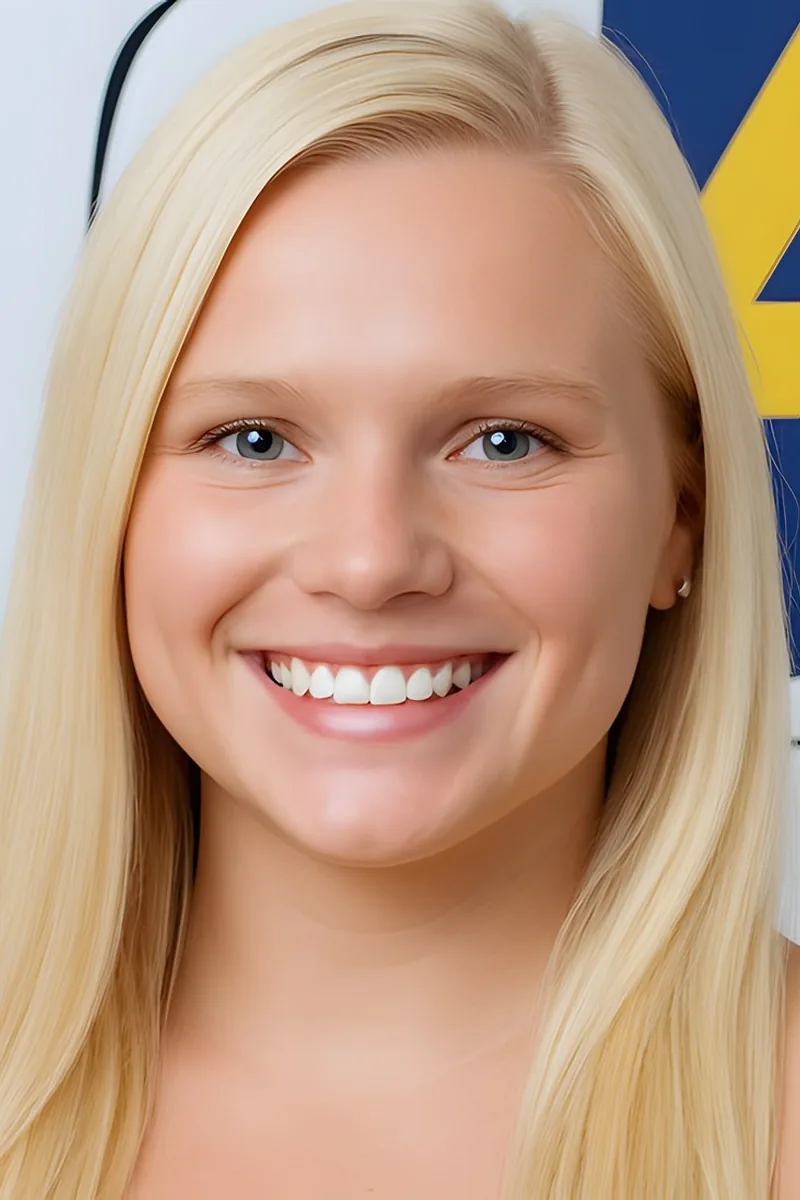
Kirby's biochemistry degree at Michigan meant grinding through the thermodynamics and kinetics that sit at the heart of p-chem — Gibbs free energy calculations, equilibrium derivations, and the statistical mechanics of molecular systems were baked into her upper-level coursework. She breaks down the calculus-heavy formalism by keeping each variable tied to the chemical reality it represents, so a daunting derivation like a Clausius-Clapeyron equation reads as a description of phase behavior rather than an abstract math exercise. Rated 4.9 by students.
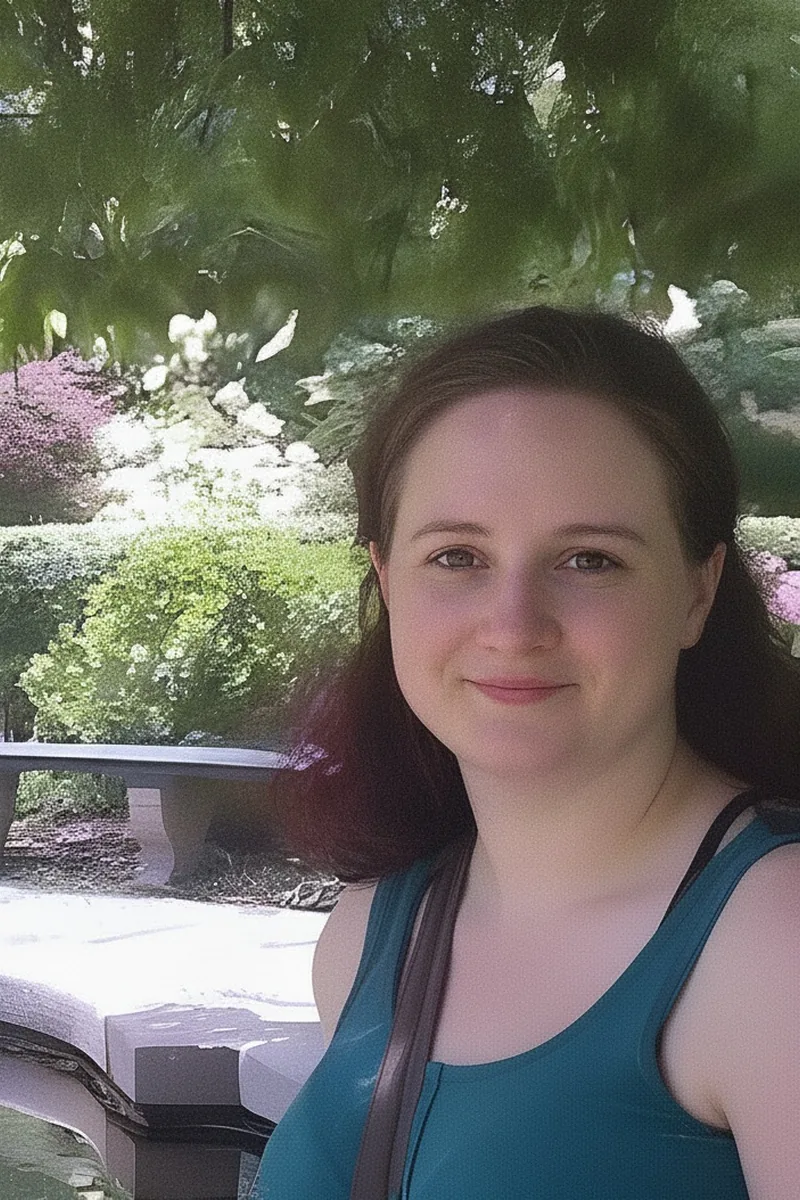
Between biochemistry, organic chemistry, and physical chemistry, Samantha sits at the intersection where biology meets the math-heavy formalism of thermodynamics and kinetics — she understands both the molecular systems and the derivations that describe them. She breaks apart intimidating topics like Gibbs free energy or chemical equilibria by tying each variable back to the biological and chemical processes students already recognize from earlier coursework. Rated 5.0 by students.
Enric holds a PhD in Chemistry, which means p-chem wasn't just a course requirement — it was the foundation his entire research career was built on, from quantum mechanical modeling to thermodynamic analysis at the graduate level. He teaches the subject by slowing down at the exact calculus step where a derivation goes from followable to opaque, rebuilding the physical reasoning behind each manipulation before moving forward. Rated 5.0 by students.
Medical school at the Medical College of Wisconsin means Abrahim encounters p-chem's core concepts daily — reaction kinetics in pharmacology, thermodynamic energy balances in physiology, and the quantum mechanical principles behind spectroscopic diagnostics. His UCLA biology degree and 34 ACT demonstrate the mathematical fluency needed to work through derivations involving state functions, equilibrium constants, and entropy calculations without losing sight of what the chemistry actually describes. Rated 5.0 by students.
Garrett's biology degree means he already thinks in terms of systems — enzyme kinetics, membrane potentials, metabolic energy flow — which gives him a concrete anchor for the abstract math that makes p-chem so intimidating. He teaches thermodynamic and kinetic concepts by connecting derivations to the biological and chemical phenomena they describe, so something like a Gibbs free energy calculation feels like a tool rather than an exercise in symbol-pushing.
Decades as a PhD chemical engineer meant Steven was solving Clausius-Clapeyron problems, reaction kinetics models, and energy balance derivations long before they were textbook exercises — they were daily work. He breaks down p-chem's toughest material by explaining a concept one way, re-explaining it from a different angle, then grounding it in a real engineering application where the math actually matters. Rated 4.9 by students.
Katherine's broad math and science background — spanning calculus, thermodynamics, and physics — means she's comfortable with the multivariable calculus and differential equations that make p-chem derivations so dense. She takes apart concepts like Maxwell relations and chemical potential by slowing down at the exact algebraic step where the physical intuition tends to disappear. Rated 5.0 by students.
Thermodynamic state functions, quantum mechanical models, and kinetic rate laws all converge in Physical Chemistry, and most students need someone who can bridge the math and the chemistry simultaneously. Abismael's chemical engineering training put him through the full gauntlet — partial differential equations applied to heat transfer, Gibbs free energy calculations for phase equilibria, statistical mechanics. He explains each derivation from multiple angles and tests understanding with problems designed to be harder than what shows up on the exam.
Mechanical engineering at Rice means Aleksey has been solving thermodynamic cycles, heat transfer problems, and differential equations for years — the exact mathematical toolkit that p-chem throws at students in a chemistry wrapper. He breaks down topics like entropy, enthalpy, and phase equilibria by treating them as engineering problems first, then layering in the molecular-level chemistry that gives each variable its meaning. Rated 5.0 by students.
Conservation biology at ASU gave River a working familiarity with the thermodynamic and kinetic principles that p-chem puts under a mathematical microscope — energy flows in ecosystems, reaction energetics in biochemical cycles, and the statistical behavior of molecular populations. That biology-first perspective lets River approach topics like Gibbs free energy and equilibrium constants by starting with the physical intuition before wading into the calculus. Rated 4.8 by students.
Thermodynamics, kinetics, and quantum mechanics all converge in physical chemistry — and that's exactly where Monika's biochemistry and molecular biology training intersects. She breaks down intimidating topics like Gibbs free energy calculations and reaction rate laws by tying them to real chemical systems she studied during her PhD research. Rated 4.8 by students.
Environmental statistics at Rice required Alex to work extensively with the same calculus-heavy quantitative methods — differential equations, statistical modeling, multivariable analysis — that students encounter in thermodynamics and kinetics derivations throughout a p-chem sequence. His geography background adds a surprising edge: understanding energy balances and phase transitions in Earth systems translates directly to making sense of state functions and equilibrium in a chemistry context.
Pre-med coursework at Rice plus dual degrees in environmental sciences and ecology meant Daniel was solving energy balance problems and applying thermodynamic reasoning to natural systems well before encountering p-chem's formal derivations. His lab technician work at Rice keeps the quantitative skills sharp — setting up calculations involving enthalpy, equilibrium, and kinetic models is part of the daily routine, not a distant textbook memory.
Testimonials
Because the right Physical Chemistry tutor makes all the difference.
Average Session Rating – Based on 3.4M Learner Ratings
Other Grand Rapids Tutors
Related Science Tutors in Grand Rapids
Frequently Asked Questions
Physical Chemistry bridges chemistry and physics by studying the properties of molecules and how chemical reactions occur at a molecular level. It combines theoretical concepts—like thermodynamics, kinetics, and quantum mechanics—with mathematical problem-solving, making it one of the most demanding chemistry courses. Students often struggle because it requires both deep conceptual understanding and strong math skills, plus the ability to visualize molecular-scale processes that can't be directly observed.
The biggest hurdles are understanding abstract concepts like entropy and free energy, mastering equilibrium calculations, and connecting mathematical equations to real molecular behavior. Many students also struggle with unit conversions, thermodynamic problem-solving, and visualizing how molecular interactions drive macroscopic properties. Additionally, the course demands rigorous scientific reasoning—it's not enough to memorize formulas; you need to understand *why* they work and when to apply them.
Personalized 1-on-1 instruction allows tutors to break down complex theoretical concepts into manageable pieces and connect them to real-world applications—like how thermodynamics explains why reactions occur spontaneously. Tutors can also help you develop problem-solving strategies, work through challenging calculations step-by-step, and identify gaps in your understanding before they compound. For students in Grand Rapids with varying learning styles, customized tutoring adapts to your pace and focuses on your specific weak areas rather than generic review.
Yes. Tutors can help you understand the theory behind your lab experiments, interpret data, and connect your observations to Physical Chemistry principles. Whether you're working on calorimetry, kinetics experiments, or spectroscopy, tutoring helps you grasp the underlying chemistry and physics so you can write stronger lab reports and draw meaningful conclusions from your results.
During your first session, a tutor will assess your current understanding of Physical Chemistry concepts, identify your specific challenges—whether that's thermodynamics, equilibrium, or mathematical problem-solving—and learn your learning style. Together, you'll create a personalized plan focused on your goals, whether that's improving your grade, preparing for an exam, or building confidence in the subject. This foundation ensures every future session is targeted and productive.
Absolutely. Physical Chemistry is heavily mathematical, and many strong chemistry students struggle with calculus, logarithms, and unit conversions in this context. Tutors can help you strengthen the specific math skills you need—like solving differential equations for kinetics or manipulating thermodynamic equations—while connecting the math directly to the chemistry concepts. This targeted approach builds both your mathematical confidence and your ability to apply it meaningfully.
Effective exam prep focuses on understanding core concepts deeply rather than last-minute memorization. Tutors can help you work through practice problems, identify patterns in question types, develop time-management strategies, and clarify misconceptions before test day. Starting prep several weeks in advance allows time to build genuine understanding, practice retrieval of information under timed conditions, and address any remaining gaps—leading to stronger performance than cramming alone.
Varsity Tutors connects you with expert tutors who specialize in Physical Chemistry and understand the specific challenges students face. You can share your goals, current level, and preferred learning style, and we'll match you with someone who fits your needs. Getting started is straightforward—reach out to discuss your situation, and we'll help you find the right tutor to support your success.
Let’s find your perfect tutor
Answer a few quick questions. We’ll recommend the right plan and match you with a top 5% tutor.