Award-Winning High School Chemistry Tutors
serving Grand Rapids, MI
High School Chemistry
Tutors in Grand Rapids
Private 1-on-1 tutoring, weekly live classes for academic support, test prep & enrichment, practice tests and diagnostics, and more to elevate grades and test scores.
Based on 3.4M Learner Ratings
UniversitiesSchools & Universities
DeliveredHours Delivered
ProficiencyGrowth in Proficiency
Who needs tutoring?
No obligation. Takes ~1 minute.
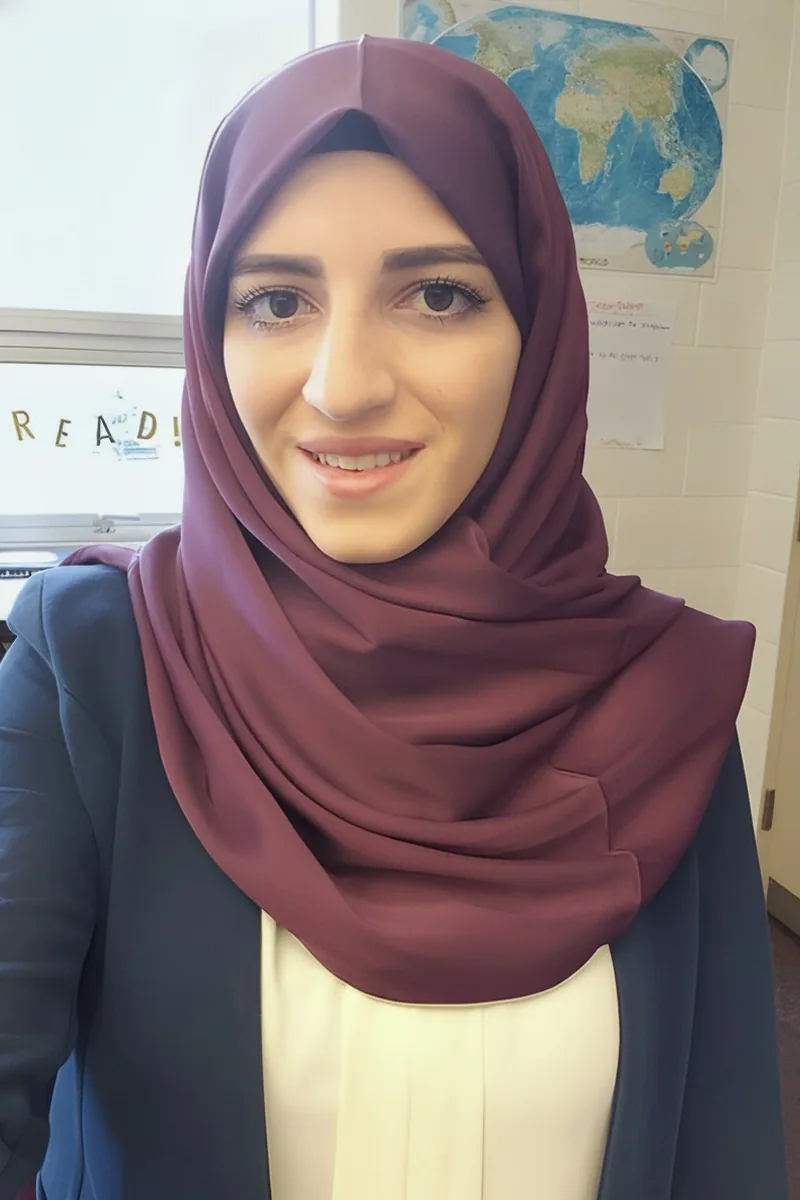
The jump from memorizing element names to balancing redox reactions and calculating molarity trips up a lot of high school students. Israa holds teaching certifications in both biology and chemistry, which means she understands the subject deeply enough to explain electron configurations or gas laws in multiple ways until one sticks. She's particularly skilled at walking through dimensional analysis step by step — the single skill that unlocks most chemistry problem sets.

Stoichiometry is where most high school chemistry students either build real confidence or start falling behind. Suzie tackles it by connecting mole ratios and limiting reagents back to the atomic-level logic that makes them intuitive. Her chemical engineering training and 5.0 rating speak to how well she translates complex ideas into manageable steps.
A Bachelor's in Chemistry means David didn't just study high school topics like stoichiometry and equilibrium — he built on them through upper-level coursework where those ideas became the entry point for understanding kinetics, quantum mechanics, and thermodynamics at depth. That layered knowledge lets him trace a concept like electron orbitals from its introductory textbook version all the way to the physical reasoning underneath, giving students a sturdier grasp when problems get less straightforward. Rated 4.9 by students.
The jump from memorizing element symbols to actually predicting how substances react trips up a lot of students around the mole concept and stoichiometry. Sreya, a chemistry major who recently aced these same courses, walks through dimensional analysis and reaction balancing step by step until the logic feels automatic rather than formulaic. She holds a 5.0 rating from students.
Balancing redox reactions, predicting molecular geometry, and navigating stoichiometry all require a kind of structured thinking that doesn't come naturally to most students. Arianna teaches chemistry by connecting each concept to the one before it — moles lead to limiting reagents, which lead to yield calculations — so the course builds instead of fragments. Rated 4.8 by her students.
Microbiology coursework at Arizona State put Surina through the full general chemistry gauntlet — not just memorizing periodic trends and nomenclature, but actually using concepts like equilibrium and reaction energetics to understand how microorganisms metabolize and interact with their chemical environments. She draws on that background to make topics like the mole concept and chemical equations feel less abstract, tying the math back to tangible processes students can picture. Rated 5.0 by students.
I am a second year medical student at Wayne State University. I graduated from Grand Valley State University with two bachelor's degrees in Biomedical Sciences and Classics with a minor in Chemistry. I have been tutoring for four years in various subjects, but my favorites are Chemistry and Latin. I have experience tutoring from middle school to college age students and enjoy working with them one on one to identify their weaknesses and create a plan to rectify them. I believe that each student learns differently and finding the best strategies for them will lead to their success.
Stoichiometry and gas law problems are really just math problems wearing a lab coat — and Phil, heading to the University of Michigan to major in Mathematics this fall, is unusually good at stripping away the intimidating chemistry vocabulary to reveal the proportional reasoning and unit analysis underneath. He teaches students to set up the quantitative framework first, then layer in the chemistry, which turns multi-step calculations from overwhelming to methodical.
Balancing equations and predicting products can feel like guesswork until someone shows you the logic underneath. Carly teaches high school chemistry by connecting each concept — mole conversions, gas laws, periodic trends — back to a handful of core principles that make the subject click. Her engineering training at Oakland University gave her years of applied chemistry practice, which she uses to ground abstract ideas in real examples.
Balancing equations, understanding molarity, predicting reaction products — high school chemistry requires a kind of problem-solving that blends math skills with conceptual reasoning. Syeda's pharmacy training at the University of Michigan gave her extensive work in medicinal chemistry and pharmacokinetics, so she can walk through stoichiometry or acid-base equilibria with the fluency of someone who uses these principles professionally.
Balancing redox equations, predicting reaction products, working through stoichiometry — high school chemistry is where students either build real chemical thinking or start memorizing without understanding. Uchenna graduated magna cum laude in biochemistry and tackles these topics by walking through the reasoning behind each step rather than handing students a shortcut. His 4.9 rating speaks to how well that approach clicks.
The jump into high school chemistry can feel overwhelming when moles, electron configurations, and gas laws all hit at once. Alaaeddeen tackles this by slowing down at the conceptual level — explaining *why* Avogadro's number matters or what's really happening during a phase change — before moving to calculations. He's been teaching students at this level since 2011 and holds a 5.0 rating.
That first high school chemistry class can feel like learning a new language — moles, electron configurations, Lewis structures — all at once. Tyler, who earned his bachelor's in chemistry and is now in a doctoral program at the University of Michigan, walks through each concept with real-world context so the periodic table starts to make intuitive sense instead of feeling like random memorization.
I have a Master's degree in Chemical Engineering, with additional graduate studies in Chemical Engineering and Computer Science, and over 10 years of experience teaching and tutoring STEM subjects. I work with students of different ages, backgrounds, and learning styles in mathematics, physics, chemistry, and related subjects. I believe the best tutoring starts with understanding how each student thinks. My goal is to identify where a concept becomes unclear, explain it from the student's perspective, and help them build both understanding and confidence. I want my students to learn not just how to find the right answer, but why it is the right answer and how to approach similar problems independently. I believe there is always learning in teaching, and that is one of the reasons I continue to enjoy working with students after all these years.
Most high school chemistry struggles come down to a few sticking points: balancing equations, understanding molarity, or visualizing electron configurations. Vikhyathi zeroes in on whichever concept is causing the roadblock and rebuilds clarity from there, drawing on her own experience navigating rigorous science coursework at Michigan.
Stoichiometry clicks faster when the tutor genuinely thinks in moles — and Kirby's biochemistry degree from the University of Michigan means she spent years doing exactly that, applying concepts like reaction yields, solution chemistry, and equilibrium well past the introductory level. She zeroes in on the dimensional analysis and unit-tracking skills that trip up most high school students, turning what feels like formula chaos into a repeatable, logical process. Rated 4.9 by students.
Balancing equations, mole conversions, and stoichiometry demand a comfort with math that many chemistry students don't yet have. Nikki's mechanical engineering training at Eastern Michigan gave her a strong handle on the quantitative side of chemistry, so she can unpack both the math and the science behind each reaction simultaneously.
Mole conversions, electron configurations, and equilibrium calculations all require a kind of structured thinking that Jonathan teaches explicitly rather than assuming students will just absorb it. His daily work at Johns Hopkins School of Medicine means he applies chemical principles in a research setting, so he can show students why a concept like acid-base chemistry matters beyond the textbook. That context turns high school chemistry from a formula-memorization exercise into something that actually makes sense.
I'm Yanti, a USC award-winning writing instructor, an emergency medicine continuing educator, and a biology major with a chemistry minor. For 36 years, I've taught students how to master difficult concepts across a very wide range of subjects. While I focus on professional licensing and standardized exam test prep, I've taught most major subjects at every level and ability. I love teaching, not lecturing. You will get information and techniques in any way that works for you: color-coded charts, visual mind maps, easy-to-memorize songs. Whatever the format, I break complex ideas into clear, doable steps that make sense to you. No fluff. No jargon. Just clarity, confidence, and even some fun. In our sessions, you get structure, support, and a coach who makes learning enjoyable and easy again. If you're ready to succeed, laugh a little, and learn a lot, please book a lesson. I'd love to work with you. Thank you!
Balancing redox reactions, predicting products, and navigating stoichiometry are the concepts that tend to trip students up most in high school chemistry. Adam approaches each one methodically — mapping out the logic behind dimensional analysis and reaction types so students can solve problems independently, not just follow memorized steps.
I am passionate about. Throughout my education, even in elementary school, I would love helping my friends do better in their schooling, whether that be by just answering a few questions they had, some one-on-one time, or a group study session.
I am eternally grateful! I minored in Chemistry after getting interested in the inner workings of organic chemistry. While going to college I earned money by tutoring classes I had already taken. I also offered "supplemental instruction" which were informal classroom question and answer sessions. I worked in a research lab after earning an undergraduate research fellowship and explored Physiology at the School of Medicine. Then went on to study Toxicology at the University of Wisconsin, Madison. While there a decision appeared clear between focusing on research or teaching. I like teaching better. I truly enjoy spreading knowledge about Biology and Chemistry and finding fun ways to introduce people to these (often difficult) subjects.
Neuroscience at Yale meant David didn't just take chemistry — he needed it to work, especially when tracing how ion channels, neurotransmitters, and cellular signaling depend on concepts like electronegativity, polarity, and equilibrium. That gives him a concrete answer when students ask why any of this matters, and it shapes how he teaches topics like chemical bonding and reaction energetics: rooted in what molecules actually do, not just what shows up on a worksheet.
Balancing equations and predicting reaction products can feel like learning a foreign language, but Eric breaks inorganic chemistry concepts down into logical steps that build on each other. His science training across biology and ecology gives him a knack for connecting chemical principles — like bonding and stoichiometry — to real-world processes students can actually picture.
Fourth-year medical students don't usually think about stoichiometry or gas laws anymore, but Michael's path through Albert Einstein College of Medicine — plus his biology degree earned summa cum laude — means he's built on those high school chemistry foundations repeatedly in biochemistry, pharmacology, and physiology. He also spent time tutoring Regents-level chemistry and teaching MCAT prep for Kaplan, so he knows exactly where the gaps tend to form around topics like nomenclature, mole calculations, and balancing equations, and how to close them quickly.
Balancing redox reactions, predicting molecular geometry, and navigating stoichiometry all require a different kind of thinking than most students have used before. Lauren minors in chemistry at Duke and uses that depth to explain *why* electron configurations drive periodic trends or *why* a reaction favors products — not just how to get the right answer on a worksheet. She's rated 4.8 across her subjects.
Balancing equations, mole conversions, and electron configurations all follow patterns that become obvious once someone lays them out clearly. Tim's experience teaching chemistry at a STEM camp means he's practiced at breaking these topics down for students encountering them for the first time. His quantitative training at MIT keeps him sharp on the math-heavy units — gas laws, enthalpy, and solution chemistry — where many high schoolers hit a wall.
Chemistry can feel like learning a new language — balancing equations, interpreting the mole concept, predicting reaction types — and Asta treats it that way, breaking each topic into its own vocabulary and logic. Her experience tutoring internationally in Hong Kong gave her practice explaining scientific concepts to students from varied academic backgrounds. Rated 5.0 by students.
Stoichiometry, equilibrium, and electron configurations each demand a slightly different kind of thinking, and Emily switches between them fluidly thanks to her science-heavy coursework at Cornell. Her biology concentration means she often connects chemistry concepts to real biochemical contexts — why buffer systems matter, how thermodynamics drives reactions — which tends to make the material click faster for students who need more than rote formulas.
The jump from memorizing chemical formulas to actually solving equilibrium and redox problems is where most high school chemistry students struggle. JF tackles this gap head-on, walking through dimensional analysis, electron bookkeeping, and reaction predictions with the precision his Stanford math background provides. He's rated 5.0 by students who've worked with him.
Stoichiometry, equilibrium, and reaction kinetics stop being abstract once a student sees how they connect to each other — and Aimee teaches those connections explicitly. Her chemical and biomolecular engineering degree from Georgia Tech required mastering these concepts at a deep quantitative level, which means she can explain not just how to balance an equation but why the math works the way it does.
Stoichiometry tends to be the first place high school chemistry students feel genuinely lost — and it's a topic Elijah has tackled from every angle through his biochemistry coursework, where mole relationships and reaction yields weren't just problem sets but the backbone of lab work. He teaches students to read a balanced equation like a recipe, tracking atoms and mass so the math feels logical instead of arbitrary. Rated 5.0 by students.
Stoichiometry and gas laws tend to feel like arbitrary math until someone connects them back to what's actually happening at the molecular level — and Nishad's pre-med training means he's spent years building that connection across chemistry, biology, and anatomy courses. He teaches students to trace the logic from balanced equations through to mole ratios and limiting reagents, so the calculations follow naturally from understanding rather than formula memorization.
Three-plus years of classroom instruction in advanced chemistry means Sugi has seen exactly where high school students get stuck — balancing redox equations, applying Le Chatelier's principle, or connecting molecular geometry to polarity. She teaches the underlying logic of each topic so students build real problem-solving skills, and her biochemistry training at Rice keeps the material grounded in real-world applications.
Testimonials
Because the right High School Chemistry tutor makes all the difference.
Average Session Rating – Based on 3.4M Learner Ratings
Other Grand Rapids Tutors
Related Science Tutors in Grand Rapids
Frequently Asked Questions
High school chemistry requires balancing abstract thinking with practical application—students often struggle with visualizing molecular structures, balancing chemical equations, and understanding why reactions happen the way they do. Unit conversions, stoichiometry, and connecting lab observations to theoretical concepts are frequent pain points. Personalized tutoring helps students move beyond memorization to develop genuine understanding of how chemistry works in the real world.
Tutors can help you understand the scientific method behind experiments, predict outcomes before you enter the lab, and troubleshoot unexpected results. They'll work with you to connect what you observe in the lab to the chemical principles you're learning in class, making experiments meaningful rather than just procedural. This deeper understanding builds confidence and helps you succeed on lab reports and practical assessments.
Balancing equations trips up many students because it requires visualizing atoms and understanding conservation of mass—concepts that aren't always intuitive. A tutor can break down the process into manageable steps, teach you systematic strategies, and help you recognize patterns that make balancing faster and more accurate. With practice and personalized feedback, what feels impossible becomes second nature.
Chemistry involves thinking about things you can't see—atoms, electrons, molecular bonds—which is why many students struggle. Tutors use diagrams, models, analogies, and real-world examples to make abstract concepts concrete and memorable. For example, they might use everyday comparisons to explain electronegativity, or work with molecular model kits to help you see how atoms actually bond together.
Your first session is about understanding where you are right now—what topics make sense, where you're stuck, and what your goals are. A tutor will ask diagnostic questions, review your recent assignments or exams, and identify the specific concepts holding you back. This foundation helps them create a personalized plan that addresses your unique challenges, whether that's struggling with equilibrium, thermodynamics, or lab skills.
Yes—personalized 1-on-1 instruction is one of the most effective ways to improve grades, especially in challenging subjects like chemistry. Research consistently shows that students who receive individualized tutoring make significant gains because tutors can target exactly what's holding you back and adjust their teaching to how you learn best. Many students see improvements within a few weeks of consistent tutoring, particularly when they're actively preparing for tests or tackling difficult units.
Look for tutors with strong chemistry backgrounds—ideally someone who has studied chemistry at the college level or has significant teaching experience with high school chemistry. They should understand the specific curriculum and standards in Michigan schools, be able to explain concepts clearly, and have experience helping students move from confusion to confidence. Varsity Tutors connects you with tutors who have proven expertise in chemistry and a track record of helping students succeed.
True understanding means you can explain why something happens, apply concepts to new situations, and predict outcomes—not just recall facts. A tutor can test your understanding by asking you to explain concepts in your own words, solve unfamiliar problems, and connect different topics together. If you can do these things, you're building real chemistry knowledge that will serve you on exams, in labs, and beyond.
Let’s find your perfect tutor
Answer a few quick questions. We’ll recommend the right plan and match you with a top 5% tutor.