Award-Winning College Physics Tutors
serving Grand Rapids, MI
College Physics
Tutors in Grand Rapids
Private 1-on-1 tutoring, weekly live classes for academic support, test prep & enrichment, practice tests and diagnostics, and more to elevate grades and test scores.
Based on 3.4M Learner Ratings
UniversitiesSchools & Universities
DeliveredHours Delivered
ProficiencyGrowth in Proficiency
Who needs tutoring?
No obligation. Takes ~1 minute.
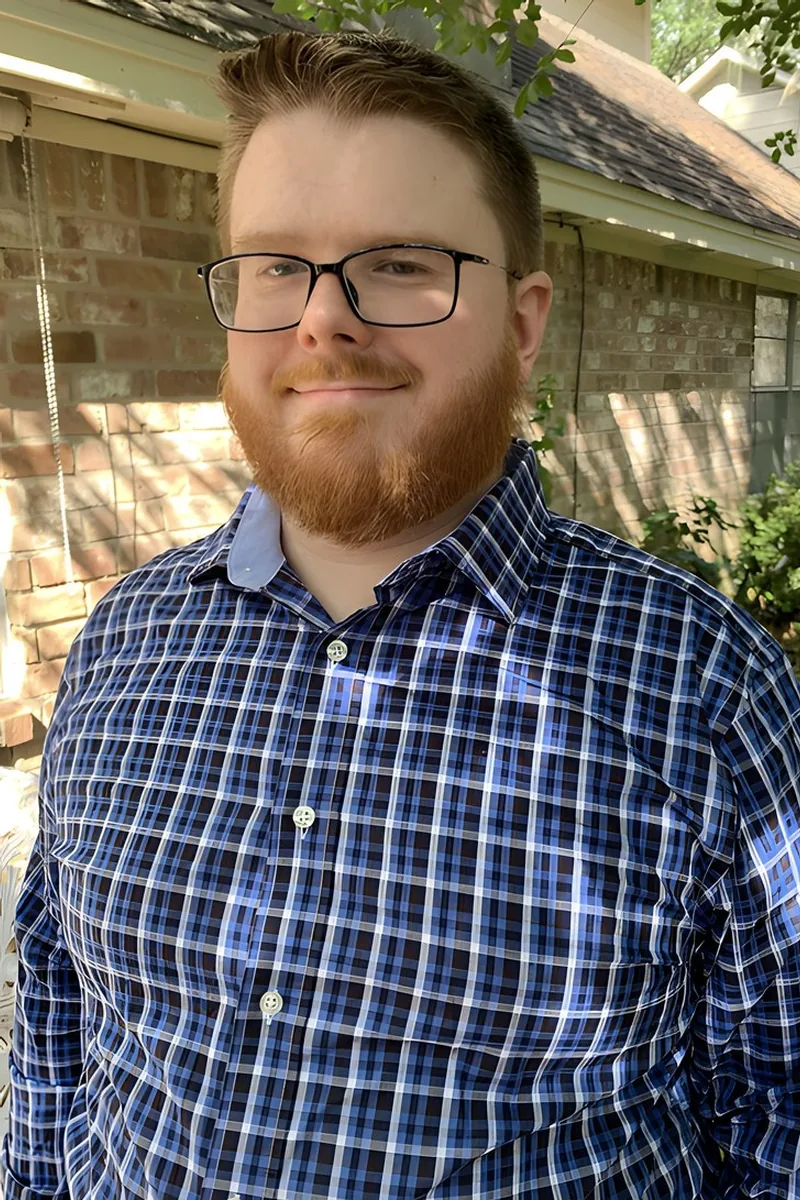
Four years teaching undergraduate physics labs at the University of Michigan — especially courses designed for non-STEM majors — taught Michael how to strip intimidating topics like electromagnetism, circuits, and wave optics down to their physical intuition before layering the math back on. His PhD research deepened that fluency across the full spectrum of college physics, from introductory mechanics through advanced electrodynamics and special relativity. Rated 4.7 by students.
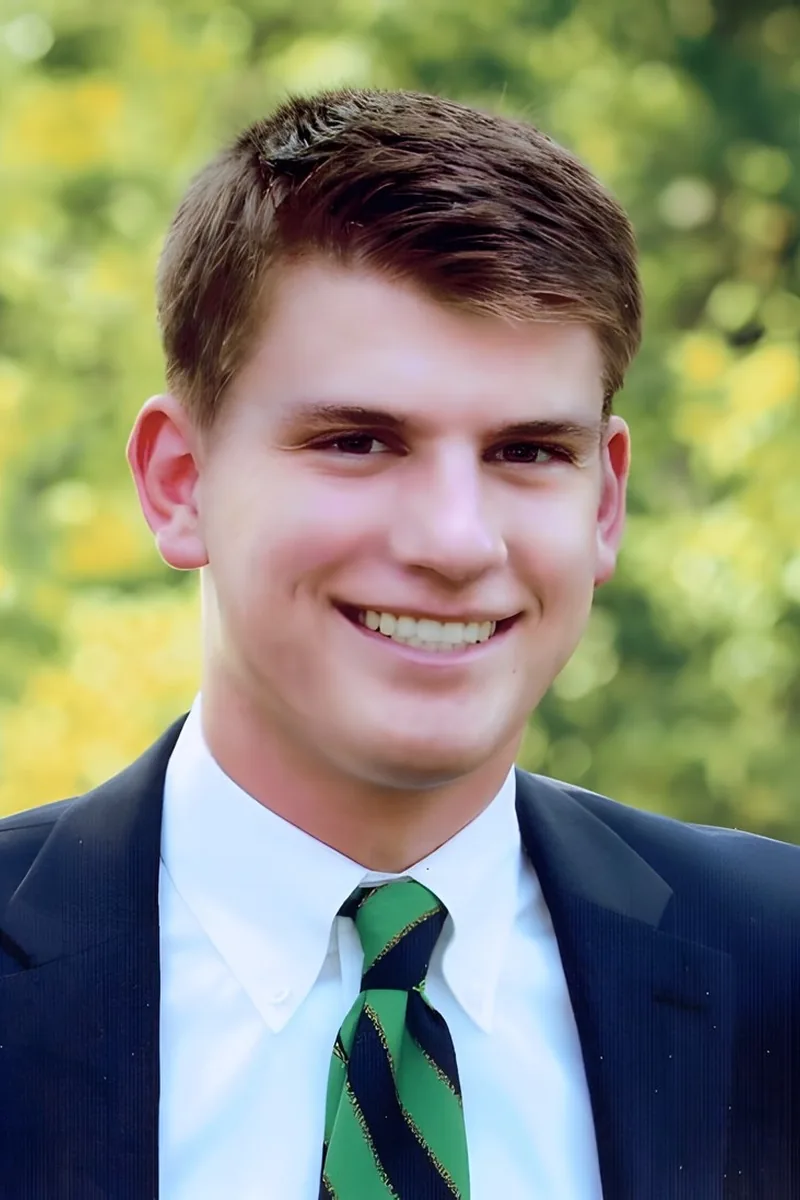
Studying mechanical engineering at Yale means Andrew's daily coursework runs on calculus-based physics — statics, dynamics, thermodynamics, fluid mechanics — so the concepts in a college physics sequence are ones he's actively applying, not distantly remembering. He breaks down force and energy problems by starting with the physical setup and constraints before touching an equation, a habit drilled into him by engineering design courses where skipping that step means your bridge collapses. His 1550 SAT reflects the quantitative precision he brings to problem solving.
As a premed at Cornell, Pratik takes the same calculus-based physics sequence his students are grinding through — mechanics, waves, thermodynamics, E&M — which means he knows exactly which problem types show up on exams and where the conceptual gaps tend to hide. He breaks down force diagrams and energy conservation problems step by step, connecting the math to the physical intuition that makes solutions click rather than feel like formula hunts. His 35 ACT reflects the kind of sharp quantitative reasoning that translates directly to tackling multi-concept physics problems.
Every problem in calculus-based physics starts with the same question: what are the forces, and how do they interact? Lane's mechanical engineering degree means he spent years answering that question across statics, dynamics, thermodynamics, and material behavior — not as textbook exercises but as design constraints for systems that actually need to work. He breaks down free-body diagrams and energy methods with the practicality of someone who's had to get the physics right before anything gets built.
I am a learner for life and I love sharing my knowledge with others. I have tutored middle-school students for one year and university students for two years. My focus is mainly on mathematics, chemistry, and related fields. I have degrees in both mathematics and biomedical engineering so I cover a lot of ground in the physiological sciences, computer programming, and statistics as well. Taking tests is one of my strong points and I have some killer strategies to share!
Free-body diagrams, energy conservation, projectile motion — Douglas spent his mechanical engineering degree solving these problems daily, which means he can walk through college physics concepts with the fluency of someone who actually built things with them. He's particularly good at teaching students to set up problems cleanly before diving into math, a habit that separates students who grind through equations from those who see the physics first. Rated 5.0 by students.
Between a math degree and hands-on tutoring experience in college physics, Matthew tackles the subject from both sides — he knows the calculus cold and he knows where students actually get stuck applying it to force diagrams, projectile motion, and conservation laws. He breaks problems into clear steps, starting with the physical setup before any numbers appear, so students learn to think through scenarios rather than hunt for formulas. Rated 4.9 by students.
Being a final-year medical student who also tutors math through calculus gives Pareesa an unusual angle on college physics — she regularly encounters mechanics and fluid dynamics in clinical contexts (blood pressure as hydrostatics, lung ventilation as gas laws) and can translate those connections back into the problem-solving framework introductory courses demand. Her 5.0 rating suggests that bridging physics concepts to something concrete and memorable actually clicks for students.
Medical school demands a working fluency in physics — from fluid dynamics in the cardiovascular system to optics in clinical imaging — and Macklin applies that perspective to college-level topics like electromagnetism, thermodynamics, and wave mechanics. He unpacks derivations so students understand where formulas come from, not just when to use them. His 5.0 rating speaks to that approach.
Working as an engineer in the automotive industry means William solves force balance, energy transfer, and dynamics problems professionally — the same concepts that fill college physics problem sets, just applied to real drivetrain and suspension systems. That hands-on engineering context lets him walk through free-body diagrams and work-energy calculations with concrete examples that make abstract coursework click. Holds a 5.0 rating.
Having worked as a mechanical engineer in the automotive industry, Matthew regularly deals with the same physics that fills college problem sets — force analysis, torque, material stress, energy transfer — except applied to real components under real constraints. That professional context lets him explain why a free-body diagram matters or how thermodynamic cycles actually behave, grounding abstract coursework in something tangible. His 1530 SAT reflects the quantitative sharpness he brings to calculus-based problem solving.
Samantha teaches AP Physics 1 and 2 alongside college-level physics, which means she's comfortable moving between the conceptual framing of introductory courses and the more rigorous calculus-based problem solving that college physics demands. Her biology degree at Michigan gives her a useful cross-disciplinary lens — she's particularly good at grounding abstract topics like wave optics or fluid dynamics in the biological systems where students can actually see them at work. A 35 ACT reflects the quantitative reasoning she brings to multi-step problems.
Studying physics and mathematics at the University of Windsor meant Ozair spent years working through the full sequence of calculus-based mechanics, electromagnetism, and thermodynamics — not as service courses for another major, but as the core of his degree. That depth shows when he breaks down problems involving torque, Gauss's law, or wave superposition, because he can trace each concept back to the underlying math and explain where the formulas actually come from.
A Doctor of Engineering in Materials Science means Vazrik has spent years applying force analysis, wave behavior, and thermodynamic principles to understand how real materials deform, conduct heat, and respond to stress — which is essentially college physics with consequences. He grounds problem-solving in those tangible engineering contexts, so concepts like stress-strain relationships or heat transfer equations carry physical meaning rather than staying abstract. Rated 4.7 by students.
Biomedical engineering forced Adam to internalize physics from the body up — fluid dynamics in blood flow, stress-strain relationships in tissue, electrical signals in neural circuits — which gives him a concrete anchor for the abstract equations that fill college physics problem sets. His master's work in CAD and design kept him deep in applied mechanics and material behavior, so he can walk through force analyses and energy problems with the fluency of someone who's actually modeled these systems. Rated 4.9 by students.
Engineering students at Michigan Tech take the same calculus-based physics sequence Sawyer is currently working through — mechanics, E&M, thermodynamics — which means he knows exactly which problem types are showing up on exams right now and where the conceptual gaps tend to hide. He leans on his strong quantitative instincts (1510 SAT) to break down force diagrams and energy conservation setups step by step, making sure the physics reasoning clicks before the math takes over. Rated 4.7 by students.
I'm working towards a B.S. in Physics at Michigan State University with a minor in Computational Mathematics, Science, and Engineering. I've made the Chancellor's List every semester and am a member of my university's Honors College. I've worked with students as young as 11 and as old as 25 for the past couple of years, both online and in-person. Since I'm still a student myself, I can relate to clients and teach in a way that creates a comfortable and safe space. I tutor a broad range of subjects and would love to help you!
College-level physics ramps up the mathematical rigor fast — suddenly you're integrating electric fields, applying vector calculus to fluid dynamics, or solving differential equations for oscillatory motion. Jason earned his B.S. in Physics and approaches each topic by grounding the math in physical intuition first, then layering in the formal derivations.
As an accomplished online math tutor with expertise in high school and undergraduate mathematics, my primary focus is on optimizing the learning experience for students. With a genuine passion for guiding students towards their academic goals, I am committed to personalized instruction tailored to each student's unique needs. I possess a strong track record of simplifying intricate mathematical concepts, enabling students to grasp core principles with clarity and confidence. By leveraging my extensive experience, I create an engaging learning environment that fosters deep comprehension and application of mathematical knowledge. My tutoring approach combines effective teaching strategies with interactive resources, ensuring that students actively participate in the learning process. Through targeted exercises, real-world examples, and practical applications, I empower students to develop a strong foundation in mathematics while simultaneously cultivating critical thinking and problem-solving skills. Furthermore, I emphasize adaptability and flexibility in my teaching style, recognizing that each student possesses different learning styles and paces. By customizing lesson plans and employing various instructional techniques, I accommodate diverse learning preferences and facilitate optimal progress. I am eager to contribute my expertise and dedication to foster academic excellence among students. Together, we can unlock their full potential and guide them towards a successful mathematical journey.
Working as a project leader in the automotive industry, Annie solves the same force analysis, torque, and energy transfer problems every day that show up on college physics problem sets — except her answers have to hold up in a real engine bay. Her mechanical engineering degree means she's been through the full calculus-based physics sequence and can walk students through the problem-setup logic that turns a wall of text into a clean free-body diagram or energy conservation equation. Rated 4.9 by students.
Studying computer science and applied math at Harvard means Derek uses physics constantly — from electromagnetism in circuit design to mechanics in computational modeling. He tackles college-level topics like Lagrangian dynamics and wave equations by connecting the math to physical intuition, making dense derivations feel less abstract.
Two physics degrees — a B.S. and a PhD — mean Zhengdong has worked through every layer of the college physics sequence, from introductory Newtonian mechanics all the way to quantum theory and advanced electrodynamics. He's particularly effective at teaching students to translate a physical scenario into the right mathematical framework, whether that's setting up free-body diagrams in mechanics or applying Gauss's law to symmetric charge distributions. Rated 4.8 by students.
College-level physics ramps up fast, and the jump from textbook examples to exam problems can be brutal. Bryan earned his B.S. in Physics and tackles that gap by teaching problem-solving frameworks — symmetry arguments in electrostatics, constraint equations in multi-body dynamics — that transfer across chapters instead of requiring a new trick every week.
MIT's core physics sequence is calculus-heavy and fast — Vania not only survived it but tutored other students through it via the university's Seminar XL program, which means she's seen firsthand where classmates stall on topics like rotational motion, wave mechanics, and Gauss's law. Her mechanical engineering major keeps her applying those physics principles daily in coursework on statics, dynamics, and thermodynamic systems, so her explanations stay rooted in how the concepts actually get used. Rated 5.0 by students.
Engineering physics at Cornell means Daniel is taking the most mathematically demanding version of every physics course — mechanics, E&M, waves, thermo — and building the intuition to move fluidly between physical reasoning and formal derivation. He's particularly strong at teaching students how to set up problems from scratch, translating a word problem into a free-body diagram or energy equation before any numbers appear. Rated 5.0 by students.
A physics degree means Nima didn't just pass college physics — he built his entire undergraduate education on top of it, from classical mechanics through electromagnetism and modern physics. He breaks down multi-step problems by teaching students to identify the governing principle first, then translate it into math, which is where a 1580 SAT and deep comfort with calculus-based reasoning pay off.
When a college physics problem looks like pure abstraction — a block on a frictionless ramp, a charge in a uniform field — Dylan's instinct is to sketch it out, graph it, and show what's physically happening before touching an equation. That visual, graphical approach comes from his physics major at Vanderbilt, where he's simultaneously studying classics and computer science, giving him an unusual ability to translate dense quantitative reasoning into clear, intuitive language. He holds a 4.5 rating and a 36 ACT composite.
Studying computer science at MIT means Brice lives inside the math and physics that most students only encounter on problem sets — his coursework regularly demands fluency in mechanics, wave behavior, and electromagnetism as foundations for everything from signal processing to computational modeling. He breaks physics problems into the same kind of step-by-step logical structure he'd use to debug code, which makes tangled multi-concept questions feel systematic rather than overwhelming. Rated 4.9 by students.
College-level physics ramps up quickly, especially once calculus-based mechanics and electromagnetism enter the picture. Richard's time as a course assistant in Harvard's math department gave him deep comfort with the calculus underpinning topics like electric flux integrals and differential equations of motion. He teaches the physics and the math simultaneously, so students aren't left wondering where a derivation came from.
Between simulating supernova shock fronts at Princeton and building optical filters at Norfolk State, Dennis has applied college-level physics across mechanics, electromagnetism, thermodynamics, and wave optics in real research settings. He unpacks difficult problem sets by connecting each concept to the physical scenario it describes — an approach that's especially effective for students transitioning from plug-and-chug to genuine problem-solving.
Bidyut's biomedical engineering coursework at Johns Hopkins means he tackles college physics problems — from rotational dynamics to electromagnetic induction — with the applied perspective of someone who uses these principles in lab and design work daily. He connects abstract force diagrams and circuit analyses to real engineering scenarios so the physics actually clicks. Rated 5.0 by students.
Chemical engineering at Georgia Tech means Aimee's spent years solving problems that blend thermodynamics, fluid mechanics, and energy balances — the same physics concepts that make college-level courses demanding, except she's applied them to reactor design and process optimization. Her biosystems engineering graduate work adds another layer, connecting classical mechanics and heat transfer to biological systems in ways that make abstract problem sets feel more concrete. Rated 4.9 by students.
Testimonials
Because the right College Physics tutor makes all the difference.
Average Session Rating – Based on 3.4M Learner Ratings
Other Grand Rapids Tutors
Related Science Tutors in Grand Rapids
Frequently Asked Questions
College Physics usually covers mechanics (motion, forces, energy), waves and sound, thermodynamics, electricity and magnetism, and often includes optics and modern physics. The exact curriculum depends on your institution, but most courses emphasize both conceptual understanding and problem-solving skills, with lab components that reinforce theoretical concepts through hands-on experimentation.
Many students struggle with translating word problems into mathematical equations, understanding the physical meaning behind formulas rather than just memorizing them, and visualizing abstract concepts like electric fields or wave behavior. Additionally, unit conversions and dimensional analysis often trip up students, and connecting theoretical principles to real-world applications can feel disconnected without proper guidance.
Personalized tutoring helps you develop a systematic approach to physics problems—breaking them into components, identifying which concepts apply, and working through solutions step-by-step. Tutors can also help you understand why certain approaches work and how to check your answers for reasonableness, building confidence and deeper comprehension beyond just getting the right answer.
Yes. Tutors can help you understand the theoretical concepts behind lab experiments, guide you through data analysis and error assessment, and help you connect your experimental results to the physics principles you're studying. This support strengthens both your understanding of the material and your ability to write clear lab reports.
Your first session is typically a chance to discuss your current challenges, review your course syllabus and recent assignments, and identify which topics need the most attention. The tutor will assess your understanding of foundational concepts and develop a personalized plan to help you succeed, whether that's building conceptual understanding, improving problem-solving speed, or preparing for exams.
Varsity Tutors connects you with tutors who have strong backgrounds in physics—many hold degrees in physics, engineering, or related fields and have experience teaching or tutoring at the college level. Each tutor is selected based on their expertise and ability to explain complex concepts clearly, ensuring you get instruction from someone who truly understands the material.
Tutors use multiple strategies to make abstract concepts concrete—drawing diagrams, using analogies to familiar situations, working through specific examples, and sometimes using interactive tools or simulations. By approaching concepts from different angles and connecting them to real-world applications, you'll develop intuition for how physics works beyond just memorizing equations.
A tutor can help you identify which topics are most likely to appear on your exam, review problem types you've struggled with, and practice timed problem-solving to build speed and accuracy. They can also help you develop test-taking strategies and review common mistakes, so you walk in feeling confident about both the content and your ability to apply it under pressure.
Let’s find your perfect tutor
Answer a few quick questions. We’ll recommend the right plan and match you with a top 5% tutor.