Award-Winning ACT Science Tutors
serving Norwich, CT
ACT Science
Tutors in Norwich
Private 1-on-1 tutoring, weekly live classes for academic support, test prep & enrichment, practice tests and diagnostics, and more to elevate grades and test scores.
Based on 3.4M Learner Ratings
UniversitiesSchools & Universities
DeliveredHours Delivered
ProficiencyGrowth in Proficiency
Who needs tutoring?
No obligation. Takes ~1 minute.

The ACT Science section isn't really a science test — it's a data interpretation exercise disguised as one. Ethan scored a 36 ACT composite and teaches students to read graphs, compare experimental designs, and extract trends from dense passages without getting bogged down by unfamiliar terminology. Rated 5.0 by students, he breaks each question type into a repeatable process.
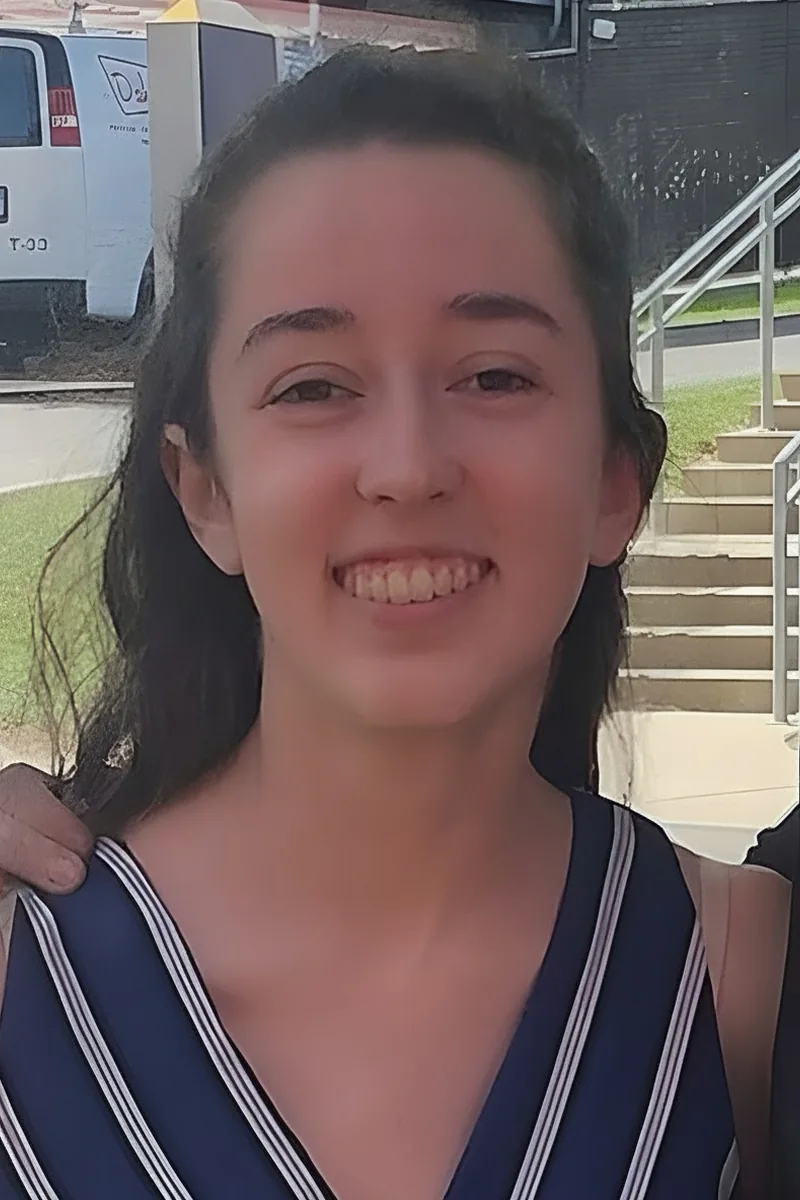
I am a senior at the University of New Haven working on a B.S. in Forensic Science-Biology with a Pre-Medical designation who hopes to go to medical school in the future. I am most passionate about biology and chemistry but have a strong personal interest in history, especially topics overlooked in the past study of history. To me, learning is a life long process and leads to the development of a well-rounded individual. Seeing understanding of a difficult topic and creating enthusiasm for learning is what draws me to tutoring.
The ACT Science section is less about knowing science and more about reading graphs, tables, and conflicting viewpoints under pressure. Tessa, who scored a 36 composite, treats it as a data interpretation exercise — she walks students through how to extract trends from figures quickly and how to handle the Dueling Scientists passage that trips up most test-takers.
The ACT Science section barely tests science knowledge — it's really about interpreting graphs, comparing experimental setups, and drawing conclusions from conflicting data under time pressure. Christina (34 ACT) teaches students to ignore the jargon, locate the relevant figure, and extract the answer in under a minute per question. Her 4.8 rating speaks to how well that method clicks with students.
I am a Duke University graduate in Economics and Computer Science. I am currently pursuing an MBA degree at the Yale School of Management. I have worked in the financial field, both at a management consulting firm and a fortune 500 company. My hobbies include playing and coaching soccer.
I am a rising senior at Wesleyan University pursuing a Bachelor of Arts degree in Government and Latin American Studies. I have extensive experience with Spanish-language coursework and tutoring: I spent a semester one-on-one tutoring a high school student in beginning Spanish, have taken countless university-level Spanish classes, have taken both the Language and Literature AP Spanish tests, and have traveled and lived abroad in Spanish-speaking countries.
The ACT Science section is less about knowing biology or chemistry and more about reading graphs, interpreting experimental setups, and comparing competing hypotheses under time pressure. James's 34 ACT composite and his graduate-level science training mean he can teach both the data-extraction speed tricks and the deeper scientific reasoning that the conflicting-viewpoints passages require. He drills students on passage triage so they spend their 35 minutes where it matters most.
I am a current undergraduate student at Cornell University studying Electrical and Computer Engineering. I have a strong science and math background having taken many courses in Physics, Computer Programming, and various mathematics subjects ranging from Geometry, to Multivariable Calculus, to Differential Equations. I am also very passionate about English, Literature, Russian Studies, Spanish Language, and History. I believe that the key to success is having a well rounded education, so when I am not programming microcontrollers, one can either find me watching Russian news channels to polish up my vocabulary, reading textbooks on the history of the Middle East, or simply immersing myself in a Jane Austen novel. In my free time I also enjoy training for CrossFit, playing the viola, and traveling.
I am a freshman at Yale University. I am majoring in computer science, and my other interests include economics and history. I have experience tutoring in an Algebra 1 classroom. I edited essays and tutored students in general subject in my high school's Literacy Resource Center. I also have privately tutored calculus. In college, I am a teaching assistant for a program that teaches middle and high school girls to code.
I am an incoming medical student passionate about tutoring, counseling, and mentoring. From an early age, I tutored my fellow elementary school students in reading comprehension. From there, I gained extensive experience in my local library and other academic settings.
I am a senior majoring in Mathematical Physics at the University of Connecticut with years of experience tutoring and teaching math and science from elementary through college. I primarily tutor high school math and sciences but also have extensive experience in all forms of physics and higher mathematics including Calculus and Linear Algebra. Not only do I have experience as a tutor, I was also an instructional assistant in college and a camp counselor. I like to use real world examples to help students realize how math and science can be applied in everyday life.
Treating the ACT Science section as a data-interpretation exercise rather than a science quiz is the single biggest shift that moves scores. Noah, a PhD candidate in medicinal chemistry who reads complex experimental data daily, teaches students to pull trends from graphs, compare experimental designs, and handle conflicting viewpoints passages — all without needing to recall any outside science knowledge. He scored a 33 composite on the ACT himself and holds a 5.0 tutoring rating.
As a molecular biology researcher at Yale studying gene expression in planarian stem cells, Maxwell reads data tables, conflicting experimental results, and figure legends every day — which is essentially what the ACT Science section tests. He breaks down each passage type (data representation, research summaries, conflicting viewpoints) and teaches students to extract answers from visuals before wading into the text. His 33 composite score backs up the approach.
Most students panic when they see the ACT Science section, but it's really a data interpretation test disguised as biology and chemistry. Stephanie's neuroscience coursework at Yale means she reads graphs, experimental designs, and conflicting viewpoints daily — and she teaches students to attack each passage type with a specific strategy rather than trying to recall content they may not have learned yet.
I'm a current junior at the University of North Carolina at Chapel Hill, where I study public policy and peace, war, and defense. I hope to pursue a career in diplomacy and speak French and Mandarin Chinese.
The ACT Science section looks intimidating, but it's really a data-interpretation test disguised in lab coats. Francis approaches it by teaching students to read graphs, tables, and experimental setups before touching the actual science content — a skill that transfers directly from his math background. His own 32 ACT composite reflects comfort across every section of the exam.
Most students panic when they see the ACT Science section, but it's really a data interpretation exercise disguised as science. Mackenzie (32 ACT composite) teaches students to ignore the jargon, zero in on graph trends and table relationships, and answer confidently without needing deep content knowledge. Her analytical training in philosophy translates surprisingly well to parsing conflicting viewpoints passages.
I love participating in learning with other people. This is why I have been a high school teacher for 20 years and why I am a tutor now. One of my major skills as a tutor is breaking down skills and concepts into small parts to identify exactly where someone is struggling. I can do this with organization and learning needs, too, not just math and English content. I am also versatile and flexible; I can work on all sorts of content and handle unknown problems. I can teach you how to do that, too. I also have a great deal of experience working with students with special needs. I have been trained in some workshops, but I have only experience, not a license, in this area.
I am an aspiring applied mathematician, with particular interest in image processing and climate science. I graduated in May 2017 from Washington University in St. Louis with a bachelor's in physics and mathematics, and am beginning a PhD program in September 2017 at the University of Chicago in Computational and Applied Mathematics. I've tutored introductory physics students for three years and enjoyed it thoroughly, as a chance to help other students while revisiting fundamental concepts to enhance my own knowledge. I'm eager to continue reaching out and helping students of math and physics to succeed and, furthermore, to appreciate the beauty and power of these subjects.
The ACT Science section barely tests science knowledge — it tests whether you can read a graph under pressure and extract the right data point in seconds. Emily scored a 36 composite and, as a computational biology major at Cornell, spends her coursework interpreting exactly these kinds of data-heavy figures. She walks students through conflicting-viewpoints passages and experimental design questions until the format feels routine.
I am available to tutor in a broad range of subjects, though I am most passionate about Economics, History, and Civics. Please feel free to contact me and I would be happy to arrange a session.
I am a sophomore at the Georgia Institute of Technology and am working towards a major in Computer Engineering. I have been tutoring students of all ages and backgrounds in various math topics ranging from elementary school math to AP Calculus throughout high school. I love teaching math and always find it amazing to watch my students grow and improve in their mathematical abilities. While helping students with standardized testing, we go through several tricks and tactics that have helped my students succeed and have fun in the process. I am also well versed in Physics and have spent 3 years taking the highest levels of physics courses. I love playing all sports (especially soccer) and enjoy playing the guitar in my free time as well.
I am currently a student at Duke University studying Biomedical Engineering and Economics. Just a little bit about me and some of my interests. Some of my favorite academic interests include memoirs and modern classics. I think Catcher in the Rye is still one of my all time favorite books but Percy Jackson, a modern classic, is up there too. Beyond academics, I take great guilty pleasure in watching TV shows such as Westworld, Sherlock, How I Met Your Mother, and even The Bachelorette when I'm at a low point.
Most students panic when they see an unfamiliar experiment on the ACT Science section, but the test is really about interpreting graphs, tables, and conflicting viewpoints under time pressure. Sugi's dual background in biochemistry and cognitive science — plus years of reading dense research literature in medical school — makes her especially effective at teaching students to extract data quickly without getting lost in scientific jargon. Her perfect 36 ACT speaks for itself.
I am a patient, intellectual, and calm college student at the University of Michigan passionate about tutoring others to improve their proficiency in a wide variety of subjects. I teach students by creating individualized plans that cater to the strengths and weaknesses of the student. I work hard and as long as it takes to ensure that the student derives maximum benefit. I love teaching a wide variety of subjects, and have a speciality in standardized tests.
The ACT Science section is really a data-interpretation exam disguised as science, and Talia treats it that way. She breaks down how to read conflicting-scientist passages, extract trends from dense graphs, and eliminate answer choices without needing any outside scientific knowledge — the same approach that earned her a perfect 36 composite.
The ACT Science section is really a data interpretation exam in disguise — it tests how quickly you can read graphs, parse experimental setups, and identify trends across conflicting viewpoints. Nicholas scored a 36 ACT composite and teaches students to stop overthinking the science content and instead zero in on what the tables and figures actually say. His systematic approach to eliminating distractors and managing time keeps students calm and efficient on test day.
Most of ACT Science isn't really about science — it's about reading graphs, interpreting experimental setups, and spotting trends under time pressure. David treats it as a data-literacy exercise, drilling students on how to extract the right information from dense figures without getting lost in unfamiliar terminology. His 36 ACT composite confirms he's mastered this approach himself.
Treating the ACT Science section as a data-interpretation exercise rather than a science quiz is the key shift most students need. Zhenrui's background in electrical engineering and premed coursework at Columbia means he can quickly decode graphs, conflicting viewpoints passages, and experimental designs — and he teaches students the same systematic reading approach that earned him a perfect 36 composite.
I'm referring to math, of course, but I didn't always like the subject. Until about age 16, I thought of math as a boring, mind-numbing process of blindly memorizing formulas and then forgetting them after the test, but a series of wonderful teachers showed me the truth. I had thought that everything in math was invented arbitrarily just to torture students, but actually it all made sense in a deep way. When I caught a glimpse of what math really was, I found it irresistible and I ended up majoring in math in college at UChicago. I'm currently a Master's student in Computer Science at NYU.
Testimonials
Because the right ACT Science tutor makes all the difference.
Average Session Rating – Based on 3.4M Learner Ratings
Practice ACT Science
Free practice tests, flashcards, and AI tutoring for ACT Science
Nearby ACT Science Tutors
Other Norwich Tutors
Related Test Prep Tutors in Norwich
Frequently Asked Questions
Varsity Tutors matches Norwich students with expert ACT Science tutors for 1-on-1 instruction. We pair each student with a tutor based on their specific needs, learning style, and goals.
Whether you need homework help, exam prep, or want to get ahead, our ACT Science tutors are ready to help.
Common challenges include gaps from earlier material, difficulty with specific concepts, and trouble applying learning to new problems. These issues can snowball quickly in ACT Science.
A tutor identifies where you're stuck, fills in gaps, and provides targeted practice. The 1-on-1 format means you get help exactly where you need it.
Tutors work with your student's actual coursework—homework assignments, class notes, and upcoming tests. This keeps tutoring directly relevant to what's happening in the classroom.
When you share information about your student's school and curriculum, we can match you with a tutor who has relevant experience.
All tutors complete background checks, credential verification, and teaching evaluation. Many of our ACT Science tutors hold advanced degrees or have years of teaching experience.
You can review tutor profiles to find someone with the right background for your student's level and needs.
Many students see improved grades within a few weeks, along with better understanding of ACT Science concepts and more confidence tackling challenging material.
Tutors track progress and adjust their approach to ensure continued improvement.
Most students benefit from 1-2 sessions per week. More frequent sessions help if your student is significantly behind or has an important exam coming up.
Your tutor can recommend a schedule based on your student's specific situation and goals.
Tutoring is purchased in packages of hours, with rates varying by tutor experience. Varsity Tutors offers several options to fit different budgets and needs.
You can discuss pricing during your consultation to find what works best.
Your tutor will assess where your student is, discuss goals, and start working on priority areas. Most students bring current homework or upcoming test material to focus on.
By the end, you'll have a clear sense of how the tutor can help and a plan for moving forward.
Let’s find your perfect tutor
Answer a few quick questions. We’ll recommend the right plan and match you with a top 5% tutor.