Award-Winning AP Calculus BC Tutors
serving Tucson, AZ
AP Calculus BC
Tutors in Tucson
Private 1-on-1 tutoring, weekly live classes for academic support, test prep & enrichment, practice tests and diagnostics, and more to elevate grades and test scores.
Based on 3.4M Learner Ratings
UniversitiesSchools & Universities
DeliveredHours Delivered
ProficiencyGrowth in Proficiency
Who needs tutoring?
No obligation. Takes ~1 minute.
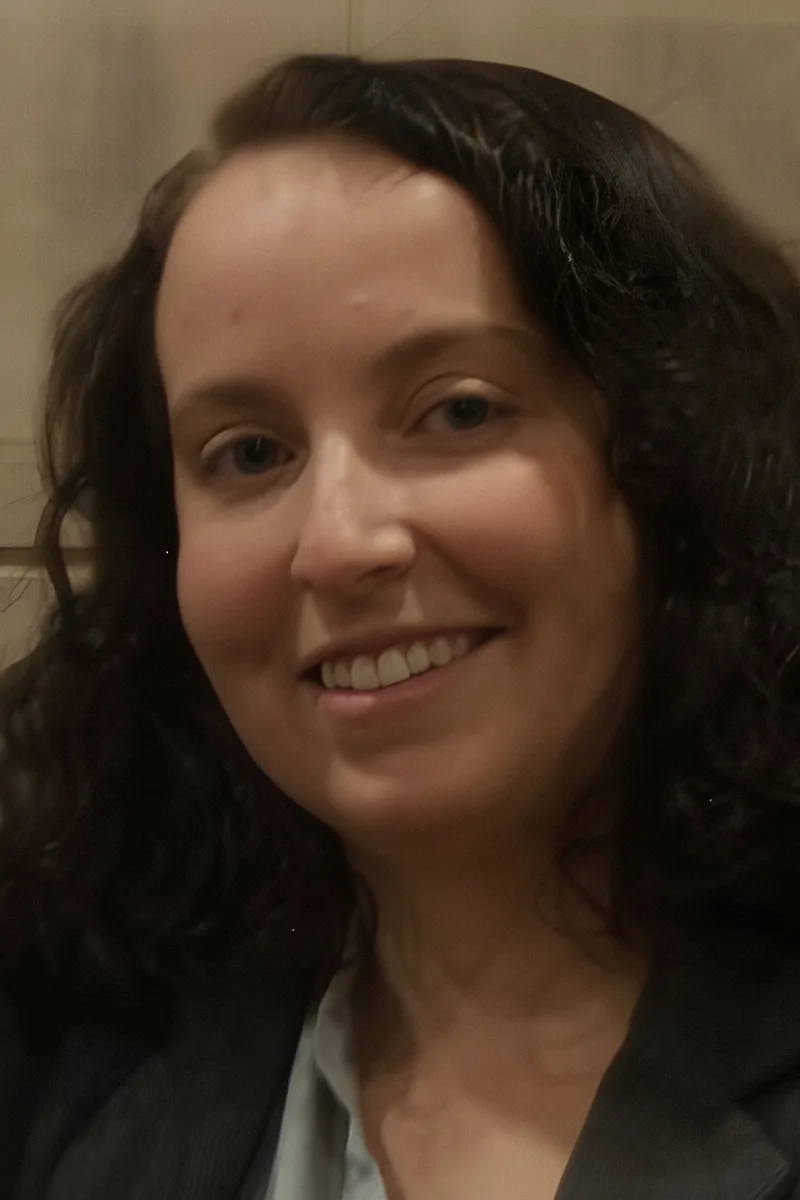
As a multivariable calculus teaching assistant at Harvard's Math Department, Kristi spent semesters watching exactly where students' BC foundations cracked under pressure — shaky series intuition, mechanical convergence testing, parametric reasoning that never quite solidified. Her astrophysics training means she learned these tools by necessity, using Taylor expansions to model orbital mechanics and integration techniques to analyze planetary data, so she teaches the logic driving each method rather than just the steps. Rated 5.0 by students.
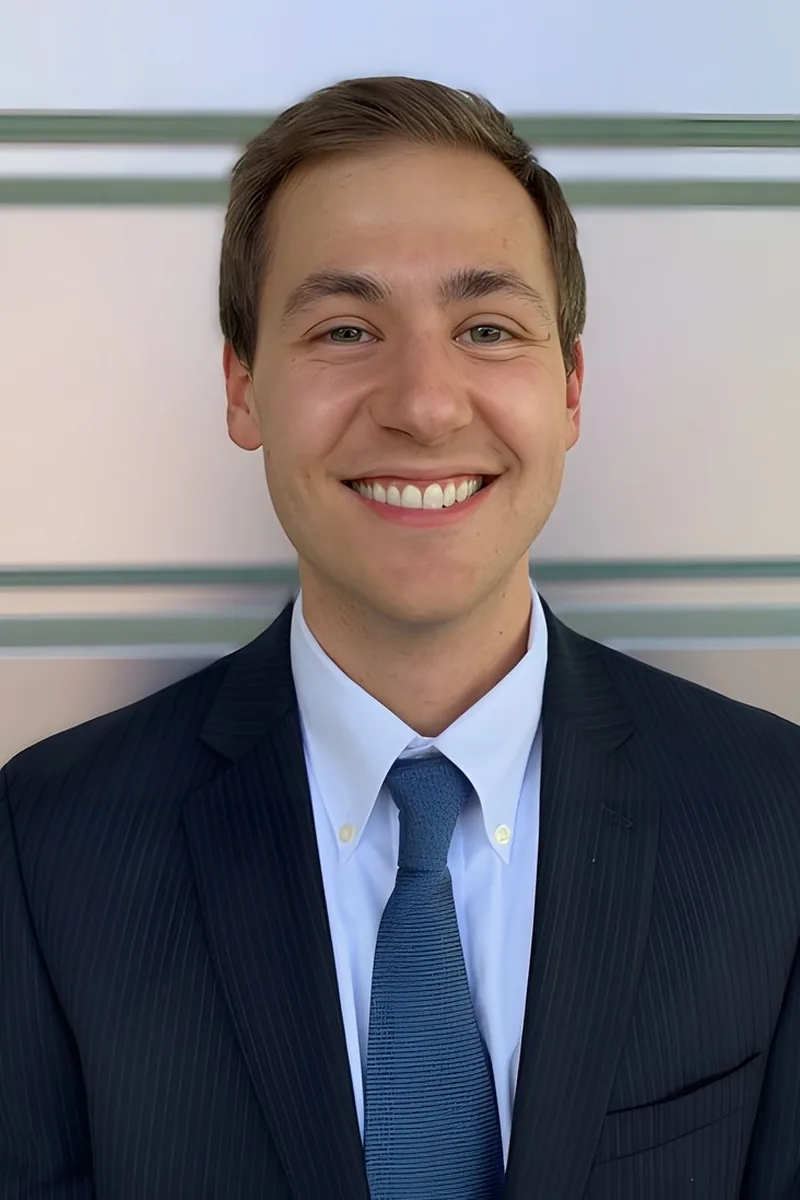
BC Calculus piles on convergence tests, parametric equations, and polar curves right when students think they've mastered AB material. Jake tackles series and sequences by teaching students to build a decision tree for which convergence test applies, turning one of the most overwhelming units into a systematic process.
Grad-level chemical engineering at ASU Barrett means Alex is knee-deep in the calculus that most BC students only glimpse — using series to model reaction kinetics, integration techniques to solve mass and energy balances, and differential equations to predict system behavior. That daily exposure makes him especially sharp at teaching convergence tests as a structured decision process rather than a memorization exercise. Holds a 5.0 rating.
Studying both physics and mathematics at Emory means Yurok encounters BC topics like series expansions and differential equations in two different contexts every week — once as pure math, once as tools for solving physical systems — which gives him a double lens on why techniques like convergence tests or Taylor approximations actually matter. He's especially sharp at the transition from AB to BC, breaking down where parametric derivatives and polar integrals grow directly out of skills students already have. Rated 4.9 by students.
Chemical engineering undergrad coursework is essentially a stress test for everything BC Calculus covers — Adrian uses series approximations in thermodynamics, integration techniques in transport phenomena, and differential equations in reactor design on a regular basis. That active, applied relationship with the material means he can trace a stalled-out convergence problem or a messy integration back to the specific step where reasoning went sideways. His 34 ACT and deep math background keep explanations tight and technically precise.
Lindsay's biology and mathematics training at the University of Arizona means she didn't just pass through calculus — she relied on series approximations and integration techniques in upper-level coursework where getting the math wrong meant getting the science wrong. That dual fluency is especially useful in BC, where she breaks down the logic behind convergence tests and parametric derivatives by connecting them to the AB concepts students already trust. Rated 4.9 by students.
When I was in high school, I remember seeing the joy of my math teachers when they would teach in class. This inspired me to become a high school math teacher. The first step was becoming a peer tutor to my classmates. This lead to tutoring math to college students. Then tutoring students while working as a TA. Then I worked as a data scientist which not only did I understand more how to apply math in the workspace, but also learned how to explain math concepts to coworkers without a strong math background. This helped me to shape my tutoring philosophy to relate to the person being tutored and this opened the door to me teaching high school calculus 1 & calculus 2! I am currently teaching precalculus at a community college.
Studying pure mathematics at Rice gives Aaron a perspective on BC topics that goes deeper than computation — when he teaches convergence tests or constructs Taylor series, he draws on the rigorous proof-based training that makes those ideas precise rather than just procedural. He's especially sharp at identifying the exact AB concept a student needs to solidify before a BC extension like parametric derivatives or Lagrange error bounds will make sense. Rated 4.9 by students.
BC Calculus layers convergence tests, parametric equations, and series onto an already demanding AB foundation, and each topic builds on the last. Yuxuan tackles these by connecting them to the applied math she uses in her chemical biology coursework at UC Berkeley, where Taylor series and differential equations aren't abstract exercises — they model real systems. Rated 4.9 by students.
BC Calculus piles on fast — Taylor series, parametric equations, and convergence tests all land within a few weeks of each other. Jack passed the AP Calculus BC exam himself and now uses his civil engineering coursework at ASU to show students how these concepts connect to real applications like modeling curves and approximating complex functions. Rated 5.0 by students.
BC Calculus throws students into deep water fast — Taylor and Maclaurin series, parametric equations, and convergence tests all pile up in a single semester. Rahi's applied mathematics engineering background means he can unpack these topics by connecting them to the real-world modeling problems they were designed to solve. He builds each concept from its AB foundation so students see how the BC extensions actually work.
Princeton's public policy program is surprisingly calculus-heavy — Gianna's coursework in economic modeling and quantitative analysis means she's applied integration techniques and series approximations to real policy questions, not just problem sets. She's especially sharp at walking through the logic of convergence tests and parametric curves, connecting each BC topic back to the AB reasoning that makes it click.
BC Calculus piles on topics like Taylor series, parametric equations, and convergence tests at a pace that leaves little room for falling behind. As a Penn math major who also tutors multivariable calculus and linear algebra, Ben understands these concepts at a depth that lets him explain not just the how but the why behind each technique. That deeper perspective makes integration methods and series analysis click faster.
Scoring a perfect 1600 on the SAT while studying computer science at MIT suggests Brice isn't just comfortable with calculus — he's fluent in it, and BC's extension into series, parametric equations, and advanced integration techniques sits squarely in his daily coursework. He breaks down topics like convergence tests by tracing each one back to the limit reasoning students already built in AB, turning what feels like a grab bag of rules into a coherent decision-making process. Rated 4.9 by students.
Having TA'd Calculus I and II at Rice while pursuing a graduate degree in computational and applied mathematics, Sakibul knows exactly where the AB-to-BC transition trips students up — particularly when series convergence and parametric differentiation demand a sharper kind of reasoning than anything before. He breaks down topics like interval of convergence arguments and integration techniques by rebuilding the logic from scratch rather than handing over shortcuts. His applied math background means he treats Taylor approximations and error bounds as precision tools, not abstract busywork.
Studying applied physics at Cornell, Ritesh encounters BC-level calculus constantly — parametric motion in mechanics, series approximations in wave theory, integration techniques in electromagnetism — so he teaches these topics as interconnected tools rather than isolated chapters. He's especially sharp at walking through the logic of convergence tests, where students often memorize steps without understanding which test to reach for and why. His 1440 SAT and 4.6 rating speak to that clarity.
Most BC students can follow a convergence test step by step but freeze when asked to choose which test to apply — that decision-making is where Nima, a physics major heading to Duke on a full merit scholarship, spends most of his teaching energy. His physics training means he treats series and parametric equations as descriptions of real motion and real forces, which gives students an intuitive anchor when the abstraction piles up. A 1580 SAT and 4.7 rating back up his ability to make that AB-to-BC jump feel manageable.
A year as a course assistant in Harvard's math department teaching introductory calculus gave Richard a close-up view of exactly where students' AB foundations crack under the weight of BC material — particularly when series convergence and parametric functions demand a more flexible kind of reasoning. He breaks down topics like interval of convergence arguments and integration techniques by rebuilding the underlying logic rather than layering on new formulas. His perfect 1600 SAT and 36 ACT suggest the kind of precision he brings to each explanation.
Studying applied mathematics at Stanford means Alex isn't just recalling BC topics from a past exam — he's actively using series, parametric equations, and advanced integration in his current coursework, which keeps his explanations sharp and grounded in how the math actually behaves. He's especially good at tracing a tricky convergence test or Lagrange error bound back to the core AB reasoning that makes it click. Rated 4.8 by students.
Running a peer-tutoring program in high school meant Ryan spent years diagnosing exactly where classmates got stuck on calculus problems — a skill he's sharpened further through his civil engineering coursework at Cornell, where series expansions and integration techniques show up constantly in structural analysis and fluid mechanics. He breaks down the BC-specific leap into convergence tests and Taylor polynomials by grounding each new idea in the derivative and integral logic students built in AB. His 35 ACT and 4.7 rating speak to the precision he brings to every session.
Electrical engineering at Duke means Brooke is actively using series expansions to analyze circuits and integration techniques to model signal behavior — so when she teaches convergence tests or Taylor polynomial construction, she knows exactly which conceptual gaps trip students up because she's recently closed those gaps herself. Her 1550 SAT and 5.0 tutoring rating back up what her coursework suggests: she can break down the leap from AB to BC in precise, concrete terms that make parametric curves and polar integrals feel like logical next steps rather than foreign territory.
Studying both mathematics and computer science at Rice, William is taking the courses that treat BC topics like series convergence and parametric integration as foundational tools rather than standalone exam material. His 1540 SAT reflects the kind of precise, structured reasoning he brings to breaking down the jump from AB to BC — especially when Taylor polynomial construction or convergence tests start feeling like they came out of nowhere.
Testimonials
Because the right AP Calculus BC tutor makes all the difference.
Average Session Rating – Based on 3.4M Learner Ratings
Practice AP Calculus BC
Free practice tests, flashcards, and AI tutoring for AP Calculus BC
Other Tucson Tutors
Related Math Tutors in Tucson
Frequently Asked Questions
AP Calculus BC covers all of AP Calculus AB content plus additional topics including parametric equations, polar coordinates, and infinite series. The course focuses on limits, derivatives, integrals, differential equations, and applications of calculus. For students in Tucson, understanding this expanded scope early helps with course planning and identifying which areas may need extra support.
AP Calculus BC builds on AB fundamentals and adds more complex topics, making it more challenging overall. The BC exam requires mastery of series, parametric and polar functions, and more sophisticated integration techniques. Many students find the pacing faster and the conceptual depth greater, which is why personalized 1-on-1 instruction can be especially valuable for staying on track.
Score improvement depends on your starting point and consistency with practice, but students typically see meaningful gains—often 1-2 points on the 1-5 scale—when working with tutors who focus on weak areas and test-taking strategy. The key is identifying which specific topics (limits, derivatives, integrals, or series) are holding you back and building targeted practice around those concepts. Regular practice tests and timed problem sets are essential for translating understanding into exam performance.
Students often struggle with the transition from procedural problem-solving to conceptual understanding, especially with limits and derivatives. Series convergence tests, parametric/polar calculus, and applying calculus to unfamiliar contexts are also frequent pain points. Time management during the exam is another challenge—the BC exam requires working through problems efficiently without sacrificing accuracy. Tutors can help you develop strategies for each of these areas.
A strong study plan includes regular practice with full-length exams under timed conditions, targeted review of weak topics, and spaced repetition of key concepts throughout the year. Start by taking a diagnostic practice test to identify your weakest areas, then dedicate focused study sessions to those topics before broader review. In the final weeks before the exam, shift toward full practice tests and timing strategies. Personalized tutoring helps you create a realistic schedule and stay accountable to it.
Test anxiety often stems from uncertainty about problem-solving approaches or time pressure. Building confidence through repeated exposure to exam-style questions, practicing your pacing strategy, and developing a pre-exam routine can significantly reduce anxiety. Tutors can help you work through challenging problems in a low-pressure setting, build problem-solving confidence, and practice staying calm when you encounter unfamiliar question formats.
Look for tutors with strong mathematical backgrounds—ideally with college-level calculus experience or advanced mathematics education. Experience teaching or tutoring AP Calculus specifically, familiarity with the current exam format, and a track record of helping students improve their scores are important indicators. Varsity Tutors connects you with expert tutors who understand both the content and the test-taking strategies that matter for success.
Your first session typically involves assessing your current understanding of key calculus concepts, identifying specific areas where you need the most help, and discussing your goals for the exam. The tutor may ask about your comfort level with derivatives, integrals, and series, and may work through a few practice problems to understand your problem-solving approach. This helps create a personalized study plan focused on your biggest challenges and timeline before test day.
Let’s find your perfect tutor
Answer a few quick questions. We’ll recommend the right plan and match you with a top 5% tutor.